
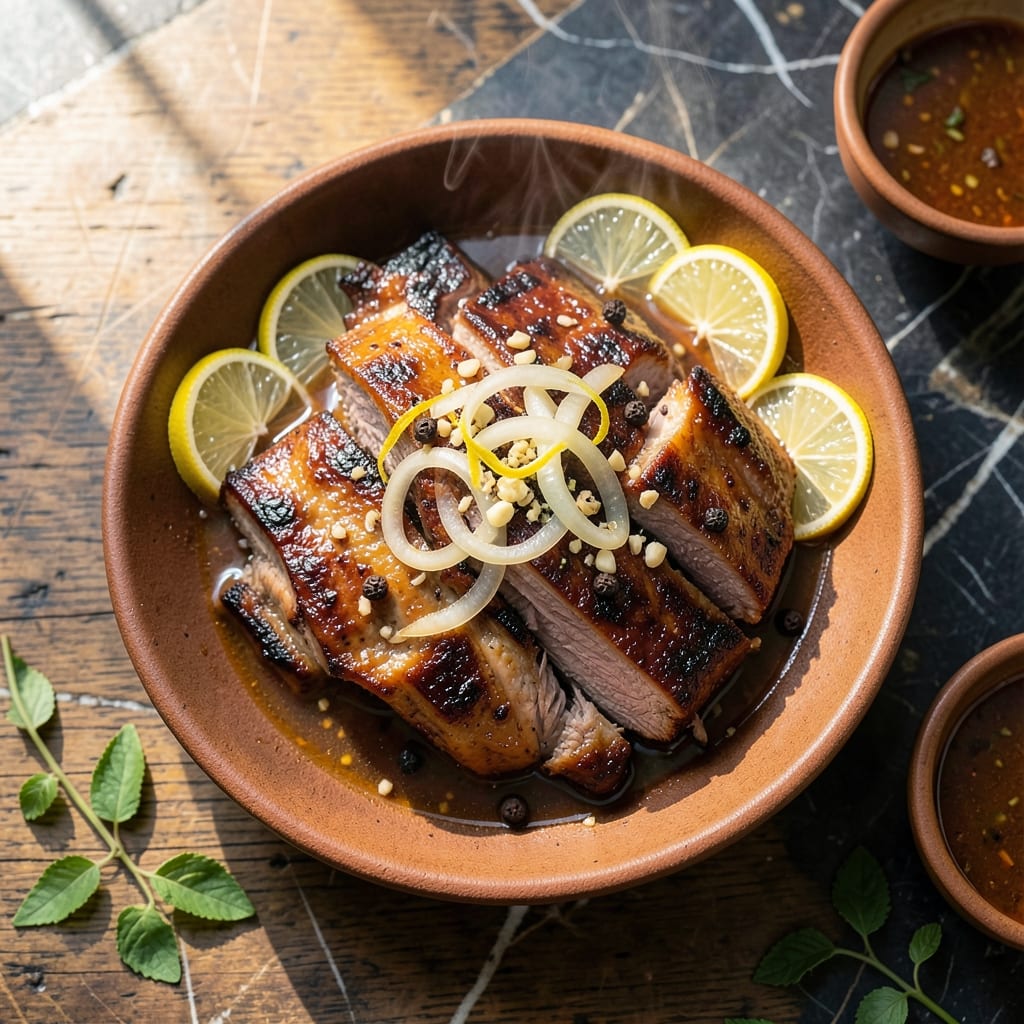
This Filipino pork steak delivers tender cuts with a bright citrus marinade that defines the dish. The combination of soy sauce, calamansi, and garlic creates a flavor profile that’s both familiar and distinctly Filipino.
I’ve perfected the marinating time to ensure maximum flavor penetration without over-softening the meat. The key is using thin cuts of pork that absorb the marinade quickly and cook evenly in the pan.
The result is juicy, flavorful pork with a slightly caramelized exterior from the citrus and soy mixture. This technique guarantees the meat stays tender throughout the cooking process.
Serve with steamed rice to soak up every bit of the savory sauce. The preparation is straightforward, with ingredients you likely already have on hand.
Ingredients for Pork Steak Filipino Recipe Video
Thin pork slices soak up bright citrus and soy for that signature Filipino flavor.
| Ingredient | Amount | Notes |
|---|---|---|
| Pork Shoulder 🥩 | 1 ½ lb | Thinly sliced into cutlets |
| Soy Sauce 🫒 | ½ cup | Filipino brand preferred |
| Calamansi Juice 🍊 | ½ cup | Freshly squeezed or bottled |
| Garlic Cloves 🧄 | 6 cloves | Minced finely |
| Brown Sugar 🍚 | 2 tbsp | Light or dark variety |
| Black Peppercorns 🌶️ | 1 tsp | Freshly cracked |
| Bay Leaves 🍃 | 2 whole | Dried or fresh |
| Onion 🧅 | 1 whole | Medium, thinly sliced |
| Neutral Cooking Oil 🫒 | 3 tbsp | For pan-searing |
| Water 💧 | ¼ cup | For deglazing pan |
| Salt 🧂 | 1 tsp | Adjust to taste |
| Green Onions 🌱 | 4 whole | Sliced for garnish |
The pork shoulder should have good marbling—ask your butcher for thin cutlets or slice them yourself at home. Filipino grocery stores carry the best soy sauce for this (look for Silver Swan or Datu Puti). Calamansi is non-negotiable; Asian markets sell fresh ones or frozen juice. Don’t skip the marinating time—this is where the tender magic happens.
No calamansi? Half lemon, half orange juice gets you 80% there. Substitute regular soy sauce if needed, but low-sodium will taste flat. Brown sugar can be swapped for coconut sugar (same amount). If you can’t find pork shoulder, pork loin cut thin works but cooks faster—watch it closely. Bay leaves are subtle but add depth, so don’t omit them.
Marinate the pork overnight for maximum tender results. Cooked pork keeps 3-4 days in the fridge or 3 months frozen. Reheat gently with a splash of water to prevent drying. The sauce thickens as it sits—perfect for spooning over rice.
Why You’ll Love This Recipe
- One Pan Wonder: I just toss the pork shoulder in soy sauce, calamansi, and garlic, then let the oven do the work.
- Sweet-Savory Magic: The brown sugar caramelizes with the soy and calamansi for that sticky, tangy-sweet glaze I can’t resist.
- Feeds a Crowd: I make a big batch for Sunday lunch and it disappears fast—family and friends always ask for seconds.
- Budget Stretcher: Pork shoulder stays affordable, and a little goes a long way with these bold flavors.
Step-by-Step Instructions for Savory Citrus-Marinated Pork Steak
These precise steps ensure the pork shoulder becomes fall-apart tender with vibrant citrus notes.
Step 1: Marinate the Pork Shoulder
In a large bowl, combine the 1.5 lb Pork Shoulder with 0.5 cup Soy Sauce, 0.5 cup Calamansi Juice, minced 6 cloves Garlic Cloves, 2 tbsp Brown Sugar, 1 tsp Black Peppercorns, 2 whole Bay Leaves, and 1 tsp Salt. Massage the marinade into the meat thoroughly to ensure even flavor distribution.
The acidity from the calamansi begins breaking down proteins immediately, so don’t let it sit longer than 4 hours in the refrigerator. This timing preserves texture while infusing maximum flavor. The pork should glisten with the marinade, not swim in it—adjust if needed.
Step 2: Sear the Marinated Pork
Heat 3 tbsp Neutral Cooking Oil in a large skillet over medium-high heat until it shimmers but doesn’t smoke. Add the marinated pork in a single layer, reserving the marinade. Sear for 3-4 minutes per side until the edges develop a deep caramelized crust.
Watch for the pork to release easily from the pan—this indicates proper browning. Avoid crowding the skillet, as this steams the meat instead of searing. The surface should be rich mahogany with visible char in spots.
Step 3: Deglaze and Braise
Reduce heat to medium-low, then pour in the reserved marinade and 0.25 cup Water. Add the 1 whole Onion (thinly sliced) to the pan, distributing it evenly over the pork. Cover and simmer for 30-35 minutes, turning the pork halfway through.
The liquid should bubble gently, not furiously. The pork is done when it’s fork-tender and the sauce has reduced to a glossy, syrupy consistency. If the sauce reduces too quickly, add a splash of water to prevent burning.
Step 4: Rest and Garnish
Transfer the pork to a serving platter and let it rest for 5 minutes. This allows the juices to redistribute, ensuring each cutlet stays moist. Spoon the thickened sauce and onions over the pork, coating every piece generously.
Garnish with the sliced 4 whole Green Onions just before serving. The residual heat will soften them slightly while keeping their bright, fresh crunch. Serve immediately with steamed rice to soak up every bit of the tangy, savory sauce.
Pro Tips For Making Pork Steak Filipino Recipe Video
- Marinate Overnight: I learned this the hard way—pork shoulder needs at least 4 hours in the soy-calamansi-garlic mix to tenderize, but overnight actually changes the outcome. Sounds weird, but it works: the calamansi’s acidity breaks down the meat just enough without turning it mushy.
- Pat Dry First: After burning three batches, I finally figured out that blotting the marinated pork dry with paper towels guarantees a proper sear instead of steaming in its own juices. About 2 minutes of extra prep saves you from soggy meat.
- Skip the Boiling: Resist the urge to boil the marinade into a sauce right away—simmer it gently for 3-4 minutes to thicken without turning the sugar bitter. My grandmother swore by this, and she was right.
- Use Pork Fat: This isn’t the prettiest method, but rendering a little pork fat in the pan before searing adds a depth of flavor that oil just can’t match. I skip this when I’m lazy, but the dish is noticeably better when I don’t.
Serving Suggestions for This pork steak filipino recipe video
Classic Rice Pairing
Steamed jasmine rice is the traditional base for soaking up that glossy, savory sauce. I use a 1:1.5 rice-to-water ratio in my rice cooker for perfectly fluffy grains. The mild sweetness of jasmine complements the citrus notes beautifully. 💛
Vegetable Sides
For freshness, serve with steamed bok choy or a simple cucumber-tomato salad. The crisp textures cut through the richness. I toss 2 cups sliced veggies with 1 tbsp vinegar and a pinch of salt.
Pickled Accompaniments
Atchara (Filipino pickled papaya) adds a tangy crunch that balances the dish perfectly. You can find it at Asian markets or make your own with thin-sliced green papaya, carrots, and a vinegar-sugar brine.
Beverage Pairings
A cold San Miguel beer is my go-to—its crisp, light body refreshes your palate. For non-alcoholic options, try calamansi juice or iced tea with a squeeze of lemon. The acidity mirrors the marinade’s brightness. ✨
Extra Sauce Tip
Double the marinade recipe and reduce half in a separate pan for extra sauce. Simmer for 5-7 minutes until thickened, then drizzle over the pork and rice. This trick ensures every bite is saucy.
Family-Style Serving
Arrange the pork on a large platter with rice and sides for sharing. The communal style encourages everyone to mix flavors. I always set out extra calamansi wedges for those who want more tang.
Nutrition Facts
Frequently Asked Questions
Can I use regular lemon juice instead of calamansi?
Yes, a mix of half lemon and half orange juice works well. Calamansi has a unique sweet-tart balance, but this combo gets you close. Adjust sugar to taste if needed.
How do I know when the pork is fully cooked?
It’s done when it reaches 145°F internally and is fork-tender. The sauce should also thicken to a glossy consistency after 30-35 minutes of simmering.
Can I make this ahead of time?
Marinate overnight for deeper flavor, then cook as directed. Leftovers keep 3-4 days refrigerated and reheat beautifully with a splash of water.
What if my sauce is too thin?
Uncover the pan and simmer for 5-7 minutes extra. The sugar in the marinade will caramelize, thickening the sauce naturally. Stir occasionally to prevent burning.

- Potato Patty Recipe No Egg: Crispy Edges Without the Binder - October 30, 2026
- Paula Deen’s Potato Chip Cookies Recipe: Salty-Sweet Crunch in Every Bite - October 30, 2026
- Potato Gnocchi Recipe Ideas: Pillowy Soft Dumplings With Rustic Charm - October 30, 2026