
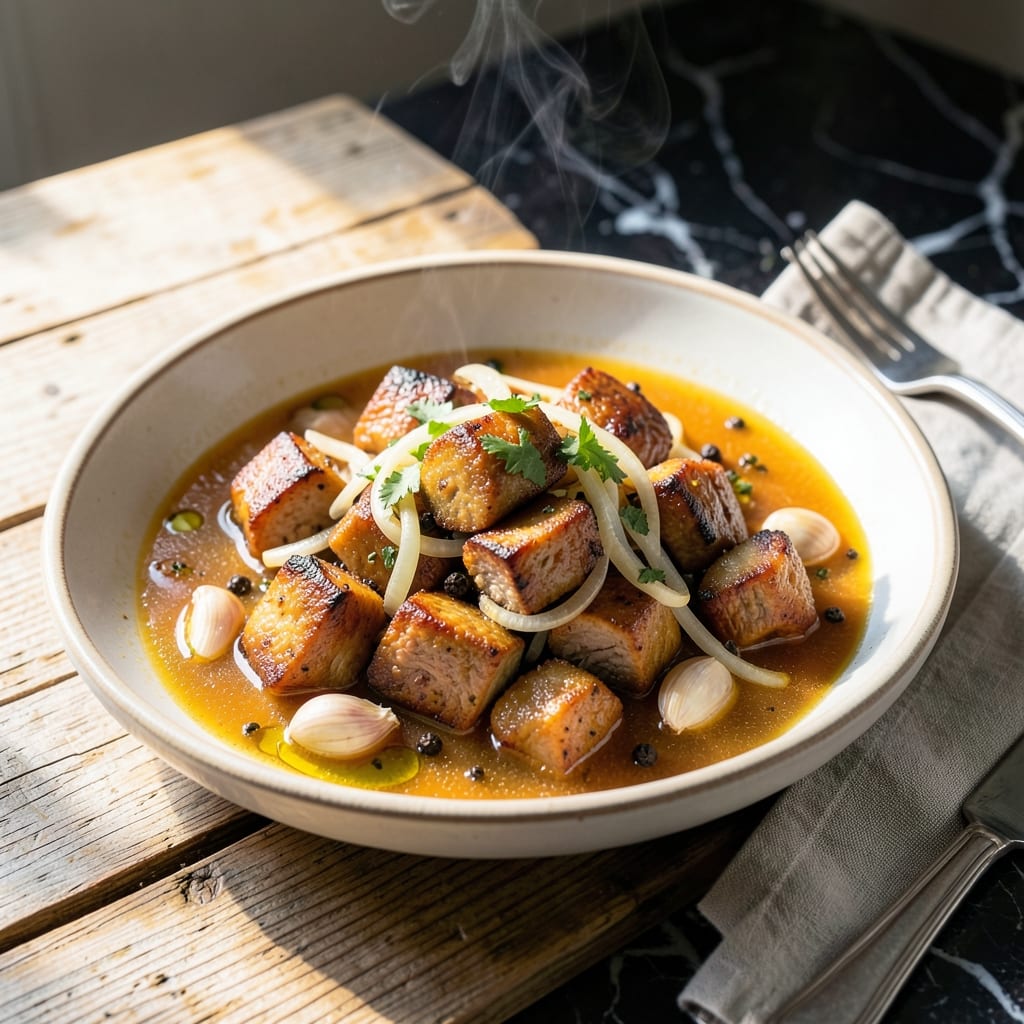
My grandmother’s handwritten recipe cards were maddeningly vague, but her pork souse was always perfectly balanced—tender meat with a bright citrus tang. This Florida-style version captures that same magic.
What sets this apart is the citrus infusion, a nod to the state’s abundant oranges and limes. The pork is simmered until fall-apart tender, then pickled in a vinegar brine with fresh citrus juice for a refreshing finish.
The result is a dish that’s both hearty and bright, with layers of flavor that develop as it chills. It’s ideal for warm climates, where a cool, tangy bite cuts through the heat.
Serve it chilled for the best texture and taste. This is comfort food with a citrus twist.
Ingredients for Pork Souse Recipe Florida Style
Bright citrus meets tender pork in this Florida-inspired pickled delight with pantry staples.
| Ingredient | Amount | Notes |
|---|---|---|
| Pork Shoulder 🐖 | 2 lb | Boneless, cut into 2-inch pieces |
| White Vinegar 🧪 | 2 cups | Distilled for clean flavor |
| Orange Juice 🍊 | 1 cup | Freshly squeezed preferred |
| Lime Juice 🍈 | ½ cup | Freshly squeezed preferred |
| Onion 🧅 | 1 whole | Medium, thinly sliced |
| Garlic Cloves 🧄 | 4 cloves | Peeled and smashed |
| Bay Leaves 🍃 | 2 whole | Dried, for simmering |
| Whole Cloves 🌿 | 6 whole | For aromatic depth |
| Brown Sugar 🍚 | 2 tbsp | Light or dark variety |
| Kosher Salt 🧂 | 1 tbsp | Plus more to taste |
| Black Peppercorns 🌶️ | 1 tsp | Whole, lightly crushed |
| Fresh Thyme 🍃 | 4 sprigs | Optional, for garnish |
| Orange Zest 🍊 | 1 tbsp | Finely grated |
| Lime Zest 🍈 | 1 tsp | Finely grated |
The pork shoulder is non-negotiable for the right texture—bone-in adds flavor but boneless is easier to cube. Look for good marbling at Publix or your local butcher. The vinegar should be plain white distilled (no apple cider here) for that clean, sharp bite. Fresh citrus is key—Florida oranges and limes if you can find them, but any navel or Valencia will work.
No fresh citrus? Bottled juice in a pinch (though fresh is brighter). Swap pork shoulder for pork butt—similar fat content, same result. If you’re missing whole cloves, ground cloves at one-fifth the amount works. Brown sugar can be replaced with white, but you’ll lose a bit of depth. The thyme can be dried at one-third the amount, but fresh adds a nice pop of color.
This tastes better after 24-48 hours in the fridge—let those flavors meld. Keeps for 1 week refrigerated, or freeze for up to 3 months. The brine can be reused once (just boil it first) for another batch.
Why You’ll Love This Recipe
- Set It and Forget: I toss everything in one pot and let the vinegar and citrus do the work.
- Zesty Punch: The lime and orange juice cut through the rich pork shoulder like nothing else.
- Potluck Star: I bring this to every gathering, and the bowl always comes back empty.
- Stretches Far: Pork shoulder is cheap, and leftovers taste even better the next day.
Step-by-Step Instructions for Pork Souse Florida Style
This method delivers tangy, citrus-infused pork with the perfect balance of sweetness and acidity.
Step 1: Prepare the Pork and Aromatics
Cut the 2 lb pork shoulder into 2-inch pieces, trimming away any large fat deposits. Thinly slice the onion and smash the 4 cloves garlic cloves with the flat side of your knife. Lightly crush the 1 tsp black peppercorns—this releases their aroma without making them too fine.
In a large pot, combine the pork with the onion, garlic, 2 whole bay leaves, 6 whole cloves, 2 tbsp brown sugar, 1 tbsp kosher salt, 1 tbsp orange zest, and 1 tsp lime zest. This layering of spices ensures every bite is packed with flavor.
Step 2: Add the Liquid Base
Pour in the 2 cups white vinegar, 1 cup orange juice, and 0.5 cup lime juice. The vinegar should fully submerge the pork—if it doesn’t, add a splash of water to cover. Stir gently to distribute the spices and ensure the brown sugar begins to dissolve.
This liquid ratio is crucial: the vinegar preserves the meat while the citrus juices tenderize it and add that signature Florida brightness. The orange juice and lime juice should be freshly squeezed for the best flavor, though bottled works in a pinch.
Step 3: Simmer Until Tender
Bring the mixture to a boil over medium-high heat, then reduce to a gentle simmer. Cover and cook for 1.5 to 2 hours, stirring occasionally, until the pork is fork-tender and the liquid has taken on a rich, golden hue.
You’ll know it’s ready when the pork shreds easily with a fork and the onion slices have softened into the broth. Keep an eye on the liquid level—if it reduces too much, add a bit of water to maintain coverage. This slow simmer allows the flavors to meld deeply.
Step 4: Finish and Chill
Remove the pot from the heat and let it cool to room temperature, about 1 hour. The pork will continue to absorb the flavors as it cools. Once cooled, transfer the contents to a large bowl or jar, ensuring the pork is fully submerged in the liquid.
Cover and refrigerate for at least 8 hours, though 24 hours is ideal for the most developed flavor. The fresh thyme can be added now as a garnish, or reserved for serving. The souse is ready when the pork is cold and the broth has a tangy, slightly sweet taste with a citrusy finish.
Pro Tips For Making Pork Souse Recipe Florida Style
- Boil Then Simmer: Start the pork shoulder in a rolling boil for 10 minutes to render fat, then drop to a low simmer—this keeps the meat tender instead of tough.
- Balance the Acid: I learned this the hard way—use 2 parts orange juice to 1 part lime juice and 1 part vinegar to avoid that harsh, puckering taste.
- Skim the Foam: As the pork cooks, skim off the gray foam that rises to the top every 15 minutes or so—it makes the broth cleaner and less bitter.
- Rest Before Slicing: Pull the pork out and let it rest for 10 minutes under foil before slicing—it holds together better and soaks up more of that citrusy broth.
Dietary Considerations for This Recipe
Gluten-Free Friendly
This recipe is naturally gluten-free as written, with no wheat, barley, or rye ingredients. The only potential concern would be cross-contamination if using store-bought spices. I always check my bay leaves and cloves labels to ensure they’re processed in dedicated facilities. 💪
Low-Carb Option
The brown sugar can be reduced to 1 tbsp or replaced with a sugar substitute like Swerve for a lower-carb version. The 2 tbsp in the original recipe adds about 26g net carbs total, which is manageable for most low-carb diets when divided among servings.
Dairy-Free and Nut-Free
This dish is completely dairy-free and nut-free, making it suitable for those with lactose intolerance or nut allergies. The pickling process relies on vinegar and citrus rather than any dairy or nut-based ingredients. I love that it’s so universally approachable.
Sodium Considerations
The recipe calls for 1 tbsp kosher salt, which can be reduced to 1 tsp for a lower-sodium version. Alternatively, use a low-sodium salt blend. Remember that the vinegar and citrus will still provide plenty of flavor even with reduced salt. The pork absorbs the brine, so a little goes a long way. 💡
Pregnancy Note
Since this dish involves pickling in vinegar, it’s generally safe during pregnancy when fully cooked and refrigerated properly. However, I’d recommend avoiding if you’re concerned about raw or undercooked meats. The pork reaches a safe internal temperature during simmering, but always verify with a meat thermometer.
Nutrition Facts
Frequently Asked Questions
Can I use a different cut of pork?
Pork shoulder works best for its marbling and tenderness. Pork butt is a good alternative with similar fat content. Avoid lean cuts like tenderloin as they can dry out during the long simmer.
How long does it keep in the fridge?
It stays fresh for up to 1 week refrigerated in an airtight container. For longer storage, freeze for up to 3 months. The flavors actually improve after 24-48 hours.
Can I make it without citrus?
Citrus is key for the Florida-style flavor, but in a pinch, increase vinegar by 1/2 cup and add 1 tsp mustard seeds for complexity. Fresh is always best though.
Why did my pork turn out tough?
This usually means it didn’t simmer long enough. Pork shoulder needs 1.5-2 hours to become fork-tender. Also, check that the liquid fully covered the meat during cooking.

- Potato Patty Recipe No Egg: Crispy Edges Without the Binder - October 30, 2026
- Paula Deen’s Potato Chip Cookies Recipe: Salty-Sweet Crunch in Every Bite - October 30, 2026
- Potato Gnocchi Recipe Ideas: Pillowy Soft Dumplings With Rustic Charm - October 30, 2026