
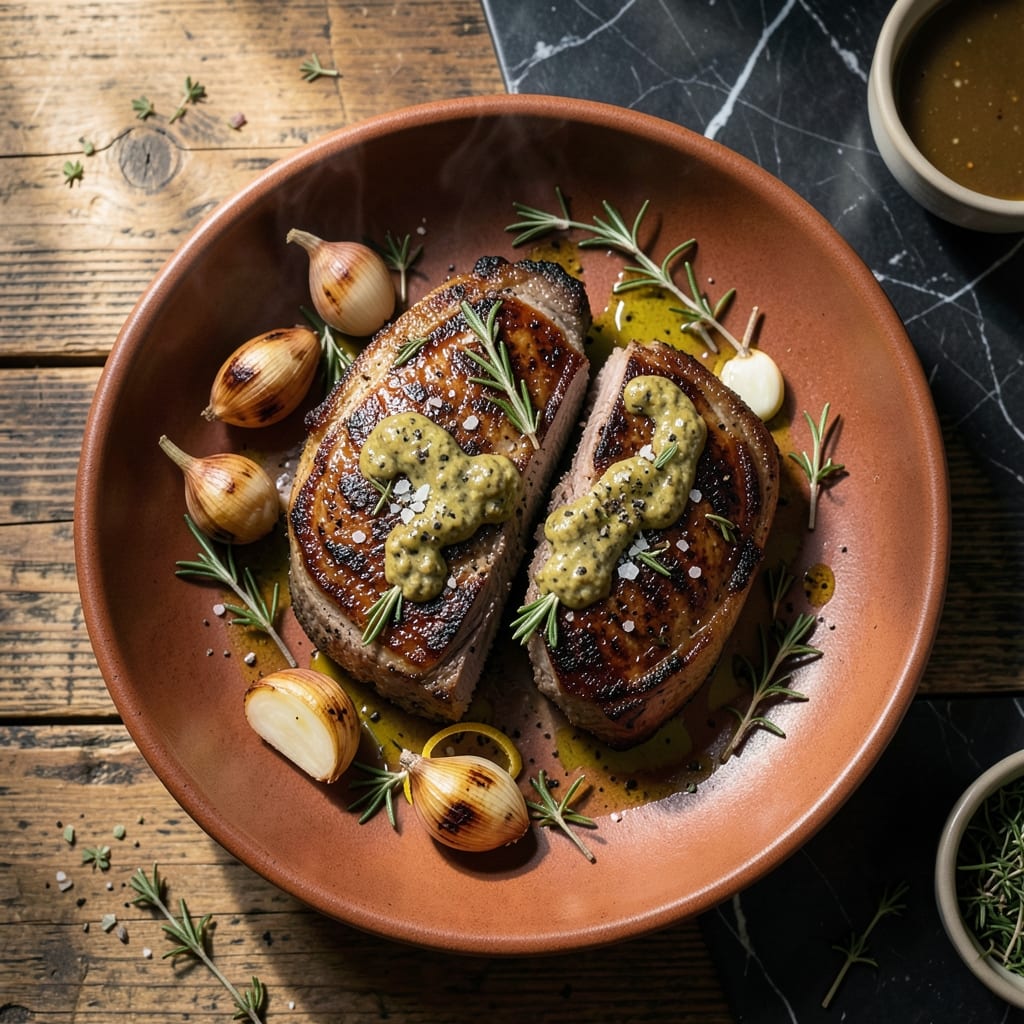
I’ve spent years refining this pan-searing technique to achieve perfectly crisp, herb-crusted pork steaks every time. The method relies on patience and precise timing, not fancy equipment.
This approach transforms affordable pork shoulder into a dish worthy of a restaurant menu. A hot pan and careful seasoning create a golden crust while keeping the meat tender and juicy inside.
Jamie Oliver’s influence shows in the simplicity—fresh herbs, garlic, and a touch of mustard elevate the flavors without overcomplicating the process.
You’ll end up with a dish that’s impressive enough for guests but straightforward enough for a weeknight. The herb crust adds texture and aroma that make each bite memorable.
Ingredients for Pork Steak Recipe Jamie Oliver
Transform affordable pork shoulder into restaurant-worthy steaks with these precise ingredients.
| Ingredient | Amount | Notes |
|---|---|---|
| Pork Shoulder Steaks 🥩 | 1 ½ lb | Bone-in, 1-inch thick, trimmed of excess fat |
| Kosher Salt 🧂 | 1 ½ tsp | Diamond Crystal preferred for even seasoning |
| Freshly Ground Black Pepper 🌶️ | 1 tsp | Coarse grind for texture |
| Fresh Rosemary 🌿 | 2 tbsp | Finely chopped, stems discarded |
| Fresh Thyme Leaves 🍃 | 2 tbsp | Stripped from stems, loosely packed |
| Garlic Cloves 🧄 | 4 cloves | Minced to fine paste consistency |
| Dijon Mustard 🟡 | 2 tbsp | Whole-grain or smooth, high-quality brand |
| Extra-Virgin Olive Oil 🫒 | 3 tbsp | Divided for searing and finishing |
| Unsalted Butter 🧈 | 2 tbsp | For basting during searing |
| All-Purpose Flour 🌾 | ¼ cup | For dusting steaks before searing |
| Fresh Parsley 🌿 | ¼ cup | Roughly chopped for garnish |
| Lemon 🍋 | 1 whole | Zested and juiced for brightness |
The pork shoulder steaks are non-negotiable here—bone-in, 1-inch thick cuts from a trusted butcher or Whole Foods meat counter ensure proper texture and juiciness. Look for good marbling throughout the meat. Diamond Crystal kosher salt is the professional standard for even seasoning without over-salting. Fresh herbs should be vibrant and aromatic—avoid any with wilting leaves or brown spots.
No fresh rosemary or thyme? Dried herbs at one-third the amount work in a pinch, though the crust won’t have the same texture. Substitute whole-grain mustard for Dijon if that’s what you have. For a deeper flavor, add 1 tsp of smoked paprika to the herb mix. The butter can be omitted, but it adds a richness that’s hard to replicate with oil alone.
Store fresh herbs wrapped in damp paper towels in a sealed bag for up to 5 days. Pork steaks can be seasoned and refrigerated overnight for deeper flavor penetration. Leftovers reheat well and keep for 3-4 days in the fridge, though they’re best served fresh.
Why You’ll Love This Recipe
- One Pan Wonder: I just season the pork shoulder steaks with salt, pepper, and fresh herbs, then sear them—minimal effort, maximum payoff.
- Herb-Infused Crust: The rosemary and thyme create this insane aroma while cooking, and the flavor sticks to every bite.
- Weeknight Lifesaver: Honestly, it’s ready before I can even set the table, and it pairs with anything from mashed potatoes to a simple salad.
- Budget Stretch: Pork shoulder steaks are affordable, and leftovers (if there are any) make killer sandwiches the next day.
Step-by-Step Instructions for Herb-Crusted Pan-Seared Pork Steaks
Master this technique for perfectly seared pork steaks with a fragrant herb crust every time.
Step 1: Prepare the Herb Marinade and Season the Steaks
In a small bowl, combine the 2 tbsp Dijon mustard, 2 tbsp fresh rosemary, 2 tbsp fresh thyme leaves, and 4 cloves garlic cloves. Stir in 1 tbsp extra-virgin olive oil to create a thick paste. This paste will form the aromatic base of your crust.
Pat the 1.5 lb pork shoulder steaks completely dry with paper towels. Season both sides generously with the 1.5 tsp kosher salt and 1 tsp freshly ground black pepper. The dry surface ensures a proper sear, while the salt penetrates the meat for even seasoning.
Step 2: Dredge and Sear the Steaks to Golden Perfection
Lightly dust the seasoned pork shoulder steaks with the 0.25 cup all-purpose flour, shaking off any excess. The flour creates a delicate crust that locks in juices while adding a subtle crispness to the exterior.
Heat 2 tbsp extra-virgin olive oil in a large cast-iron skillet over medium-high heat until shimmering. Add the steaks and sear for 4-5 minutes per side until a deep golden-brown crust forms. Avoid moving the steaks to allow the crust to develop fully.
Step 3: Baste with Herb Butter for Added Flavor
Reduce the heat to medium and add the 2 tbsp unsalted butter to the skillet. As the butter melts, tilt the pan slightly and baste the steaks continuously with a spoon, coating them in the foaming butter and herb mixture.
Cook for an additional 1-2 minutes until the internal temperature reaches 145°F. The butter basting enriches the crust with layers of flavor while ensuring the pork shoulder steaks remain juicy and tender.
Step 4: Rest and Garnish for Serving
Transfer the pork shoulder steaks to a cutting board and tent loosely with foil. Let them rest for 5-10 minutes to allow the juices to redistribute. This resting period ensures every slice is moist and flavorful.
While the steaks rest, zest and juice the 1 whole lemon into a small bowl. Drizzle the lemon juice over the steaks and sprinkle with the 0.25 cup fresh parsley for a bright, fresh finish. Slice against the grain and serve immediately.
Pro Tips For Making Pork Steak Recipe Jamie Oliver
- Dry the Steaks: Pat the pork shoulder steaks thoroughly dry with paper towels before seasoning—this guarantees a proper sear instead of steaming in the pan. I learned this the hard way after wondering why my steaks looked boiled.
- Smash the Herbs: Lightly crush the rosemary and thyme with the flat of your knife before sprinkling them on. Sounds weird, but it works: the oils release better and actually stick to the meat.
- Skip the Cold Pan: Get your pan screaming hot before adding the steaks—about 2 minutes on medium-high. After burning three batches, I finally figured out that a cold start just makes tough, pale pork.
- Rest Under Foil: Tent the steaks with foil and let them rest 5-10 minutes after cooking. My grandmother swore by this, and she was right: the juices redistribute instead of pooling on the cutting board.
Storing and Reheating This Dish
Refrigerator Storage
Let your pork steaks cool for no more than 2 hours before transferring to an airtight container. I use glass containers with snap-tight lids from my local Boston market. Store at 40°F or below for up to 3-4 days. The herb crust stays surprisingly crisp even after refrigeration. ❄️
Freezer Storage
For longer storage, wrap each steak individually in plastic wrap, then place in a freezer-safe bag. Squeeze out all air to prevent freezer burn. These will keep beautifully for up to 3 months. I always label with the date—I learned this the hard way after a freezer archaeology session.
Stovetop Reheating
This is my preferred method for maintaining texture. Heat a skillet over medium-low heat with 1 tbsp olive oil. Add steaks and cover for 3-4 minutes per side. The crust re-crispens while the inside stays juicy. I often add a splash of water and cover to steam briefly.
Oven Reheating
Preheat oven to 350°F and place steaks on a wire rack over a baking sheet. Reheat for 8-10 minutes until reaching 145°F internal temperature. This method works great for larger batches. Baste with pan juices halfway through for extra moisture.
Microwave Reheating
For quick meals, place a steak on a microwave-safe plate, cover with a damp paper towel, and heat on 50% power for 1-2 minutes. Check temperature and repeat in 30-second intervals until warmed through. The damp towel prevents drying. 💡
Nutrition Facts
Frequently Asked Questions
Can I use pork loin instead of shoulder?
Pork loin works but tends to be leaner and less flavorful. Shoulder’s marbling keeps it juicy during searing. If using loin, reduce cooking time to 3-4 minutes per side to prevent drying out.
Why rest the steaks before serving?
Resting redistributes juices throughout the meat. Slicing immediately causes juices to pool on the board, leaving the steaks dry. 5-10 minutes is ideal for maximum moisture.
Can I make this without a cast-iron skillet?
Use any heavy-bottomed pan, but avoid nonstick for high-heat searing. Stainless steel works well if preheated properly. The key is maintaining medium-high heat consistently.
How do I know when it’s done?
Use a meat thermometer for accuracy—145°F internal temperature is safe. The crust should be deep golden-brown, and the meat should spring back slightly when pressed.

- Potato Patty Recipe No Egg: Crispy Edges Without the Binder - October 30, 2026
- Paula Deen’s Potato Chip Cookies Recipe: Salty-Sweet Crunch in Every Bite - October 30, 2026
- Potato Gnocchi Recipe Ideas: Pillowy Soft Dumplings With Rustic Charm - October 30, 2026