
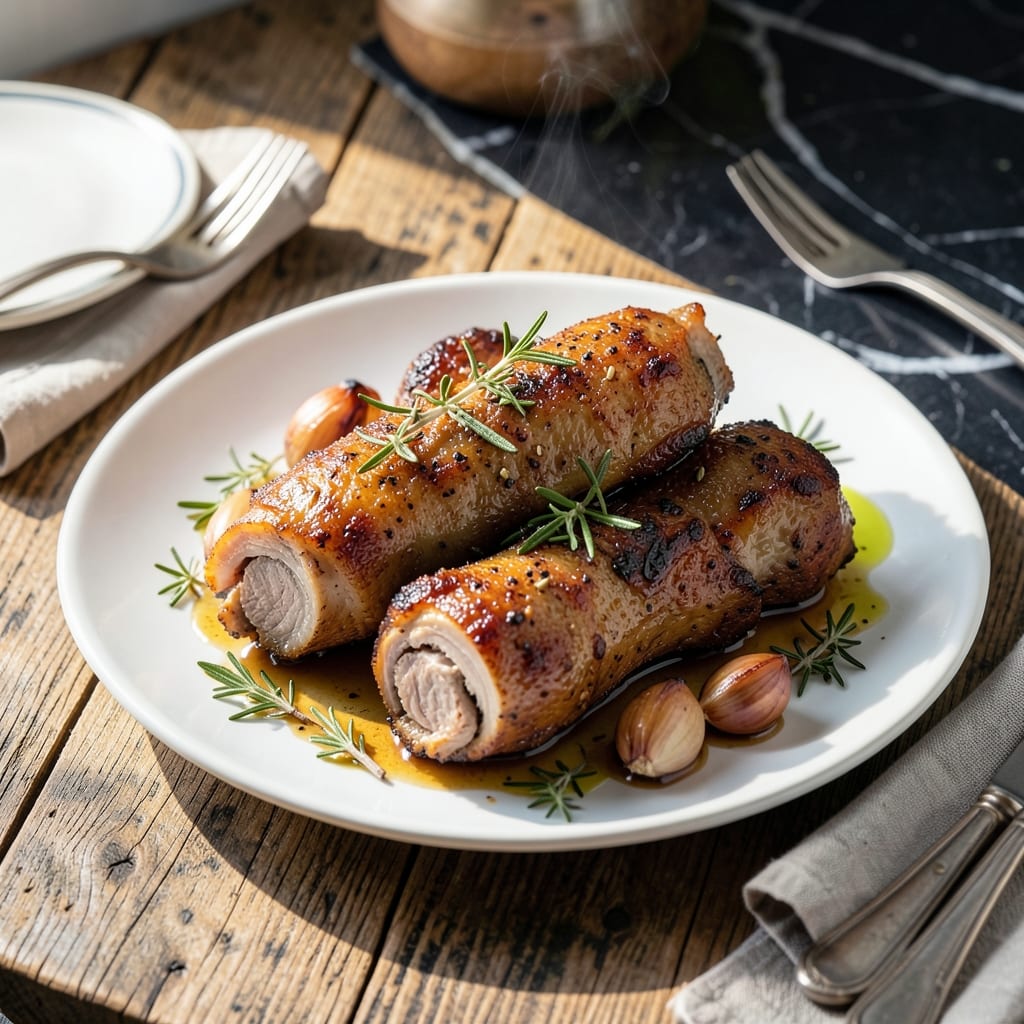
Oven-braised pork shank delivers fall-off-the-bone tenderness with minimal effort. This method transforms tough cuts into melt-in-your-mouth perfection through slow, even cooking.
The herb crust creates a fragrant, flavorful exterior that complements the rich, succulent meat. A simple rub of fresh rosemary, thyme, and garlic elevates the dish without complicating the process.
Low and slow is the key—3-4 hours at 325°F allows the collagen to break down completely. The result is meat that pulls apart with just a fork, soaked in its own savory juices.
Serve with roasted vegetables or mashed potatoes to soak up every bit of flavor. This dish proves that patience pays off in the most delicious way.
Ingredients for Pork Shank Recipe Oven
Pantry staples plus fresh herbs. That’s all you need for this showstopper.
| Ingredient | Amount | Notes |
|---|---|---|
| Pork Shanks 🍖 | 4 whole | Bone-in, skin-on, about 1.5 lb each |
| Kosher Salt 🧂 | 2 tbsp | Diamond Crystal preferred for texture |
| Black Pepper 🌶️ | 1 tbsp | Freshly ground, coarse |
| Fresh Rosemary 🌿 | 2 tbsp | Finely chopped, stems removed |
| Fresh Thyme Leaves 🍃 | 2 tbsp | Stems discarded, loosely packed |
| Garlic Cloves 🧄 | 8 cloves | Minced for maximum flavor infusion |
| Olive Oil 🫒 | ¼ cup | Extra-virgin for richness |
| Chicken Stock 🥘 | 2 cups | Low-sodium preferred for control |
| Dry White Wine 🍷 | 1 cup | Sauvignon Blanc or Pinot Grigio |
| Yellow Onion 🧅 | 1 whole | Large, roughly chopped |
| Carrots 🥕 | 3 whole | Peeled, cut into 2-inch chunks |
| Celery Stalks 🌿 | 3 whole | Cut into 2-inch pieces |
| Bay Leaves 🍃 | 2 whole | Dried, for aromatic depth |
| Tomato Paste 🍅 | 2 tbsp | Double-concentrated preferred |
The pork shanks are the star here. Look for bone-in, skin-on cuts at your butcher or Whole Foods—they’ll have the marbling you need for that melt-in-your-mouth texture. Aim for about 1.5 lb each, which serves 4 generously. If they’re pre-packaged, check the label for added solutions (skip those). The fresh herbs? Buy more than you think you need—rosemary and thyme wilt fast.
No dry white wine? Extra chicken stock plus a splash of lemon juice works in a pinch. Fresh out of rosemary? Dried at one-third the amount, but fresh really shines here. The tomato paste can be from a can (just use the rest within a week) or those Trader Joe’s squeeze tubes. For the stock, I always keep Better Than Bouillon on hand—it’s concentrated, so you can mix up exactly what you need.
Braise today, eat tomorrow. This actually gets better overnight. Keeps in the fridge for 4-5 days, freezes beautifully for 3 months. Leftovers make insane tacos or sandwiches—just shred the meat and crisp it up in a pan (don’t skip this part).
Why You’ll Love This Recipe
- Set It and Forget: The oven does all the work while the rosemary and thyme slowly work their magic into the pork shank.
- Fall-Off-Bone Tender: Honestly, the meat just melts—salt and pepper bring out the natural richness like nothing else.
- Sunday Dinner Star: I serve this for holidays or just because it feels special enough for a lazy Sunday with family.
- Leftovers for Days: One shank feeds us twice, and the flavor only gets deeper the next day.
Step-by-Step Instructions for Pork Shank Oven
Here’s the method that guarantees melt-in-your-mouth pork every single time.
Step 1: Season and Sear the Pork Shanks
Pat the 4 whole pork shanks dry with paper towels—this is non-negotiable for achieving a proper sear. Rub them generously with the 2 tbsp kosher salt, 1 tbsp black pepper, 2 tbsp fresh rosemary, and 2 tbsp fresh thyme leaves. I press the herbs into the meat so they adhere well during cooking.
Heat the 0.25 cup olive oil in a large Dutch oven over medium-high heat. Sear the shanks on all sides until deep golden brown, about 5 minutes per side. You’ll know it’s ready to flip when the meat releases easily from the pan. Transfer to a plate and set aside.
Step 2: Build the Aromatic Base
In the same Dutch oven, add the 1 whole yellow onion, 3 whole carrots, and 3 whole celery stalks. Cook for 5-7 minutes until the vegetables are softened and beginning to caramelize. The fond left from searing the pork will deepen the flavor of your base.
Stir in the 8 cloves garlic cloves and 2 tbsp tomato paste, cooking for 1-2 minutes until the tomato paste darkens slightly. This step builds the rich foundation for your braising liquid. Pour in the 1 cup dry white wine, scraping up any browned bits from the bottom of the pan.
Step 3: Braise to Tender Perfection
Return the pork shanks to the Dutch oven, along with any accumulated juices. Add the 2 cups chicken stock and 2 whole bay leaves. The liquid should come about halfway up the shanks—add a splash of water if needed.
Cover and transfer to a 325°F oven. Braise for 2.5 to 3 hours, turning the shanks halfway through, until the meat is fall-off-the-bone tender. You’ll know it’s done when a fork slides in with no resistance.
Step 4: Finish and Serve
Carefully remove the shanks from the Dutch oven and set aside. Skim any excess fat from the surface of the braising liquid, then simmer the sauce on the stovetop for 5-10 minutes until it reduces slightly and intensifies in flavor.
Spoon the reduced sauce over the pork shanks before serving. The meat should pull away from the bone with gentle pressure, and the sauce will be rich with the deep, herby flavors from the long cook. Serve hot with crusty bread or polenta to soak up every last bit.
Pro Tips For Making Pork Shank Recipe Oven
- Start Low and Slow: I learned this the hard way—pork shanks need 275°F for at least 3 hours to get that fall-off-the-bone tenderness. Cranking the heat just dries them out.
- Dry the Shanks: Pat them bone-dry with paper towels before seasoning. Sounds weird, but it works: the salt and herbs stick better, and you’ll get a deeper sear if you brown them first.
- Skip the Old Herbs: Fresh rosemary and thyme lose their punch fast. If they’ve been in your fridge more than a week, grab new—dried won’t cut it here.
- Rest Before Carving: Give the shanks a solid 15 minutes under foil after roasting. My grandmother swore by this, and she was right: the juices redistribute, or they’ll all end up on the cutting board.
Common Mistakes When Making This Recipe
Skipping the Sear
Never skip searing the pork shanks before braising. The deep golden brown crust creates the Maillard reaction, adding complex flavors that can’t be achieved otherwise. I use my Lodge cast iron for this step—it retains heat perfectly. 🔥
Insufficient Liquid
The braising liquid should come about halfway up the shanks. Using too little (less than 1.5 cups) causes the meat to steam rather than braise, resulting in dry, tough pork. If your liquid reduces too much during cooking, add hot water or stock to maintain the level.
Rushing the Cook
Pork shanks need 2.5 to 3 hours at 325°F to break down the collagen. Removing them early—even if they look done—means you’ll miss that melt-in-your-mouth texture. I set a timer for 2 hours, then check every 30 minutes until perfectly tender.
Overcrowding the Pot
All 4 pork shanks must fit comfortably in your Dutch oven with space between them. Overcrowding prevents proper browning and even cooking. If needed, use two pots or cook in batches. I learned this the hard way when my first attempt steamed instead of seared.
Ignoring the Rest
Let the shanks rest 10-15 minutes after removing from the oven. This allows the juices to redistribute throughout the meat. Cutting too soon causes those precious juices to spill out onto the cutting board, leaving your pork dry.
Skipping the Sauce Reduction
The braising liquid is packed with flavor but needs reducing. Simmer it for 5-10 minutes after removing the meat to concentrate the flavors. I strain mine through a fine-mesh sieve for a silkier sauce that coats the back of a spoon beautifully. 💫
Nutrition Facts
Frequently Asked Questions
What temperature should the oven be set to?
Set your oven to 325°F for perfect results. This low temperature allows the collagen in the pork to break down slowly, ensuring tender meat without drying it out.
How long does it take to cook?
Plan for 2.5 to 3 hours of braising time. The meat is done when it pulls away from the bone with just a fork. Turn the shanks halfway through for even cooking.
Can I use a different cut of pork?
Pork shanks are ideal, but pork shoulder works too. Adjust cooking time to 2-2.5 hours as it cooks faster. Avoid lean cuts like tenderloin—they’ll dry out.
What if my sauce is too thin?
Simmer the braising liquid on the stovetop for 5-10 minutes after removing the meat. This reduces and thickens the sauce naturally. For extra richness, stir in a pat of butter at the end.

- Potato Patty Recipe No Egg: Crispy Edges Without the Binder - October 30, 2026
- Paula Deen’s Potato Chip Cookies Recipe: Salty-Sweet Crunch in Every Bite - October 30, 2026
- Potato Gnocchi Recipe Ideas: Pillowy Soft Dumplings With Rustic Charm - October 30, 2026