
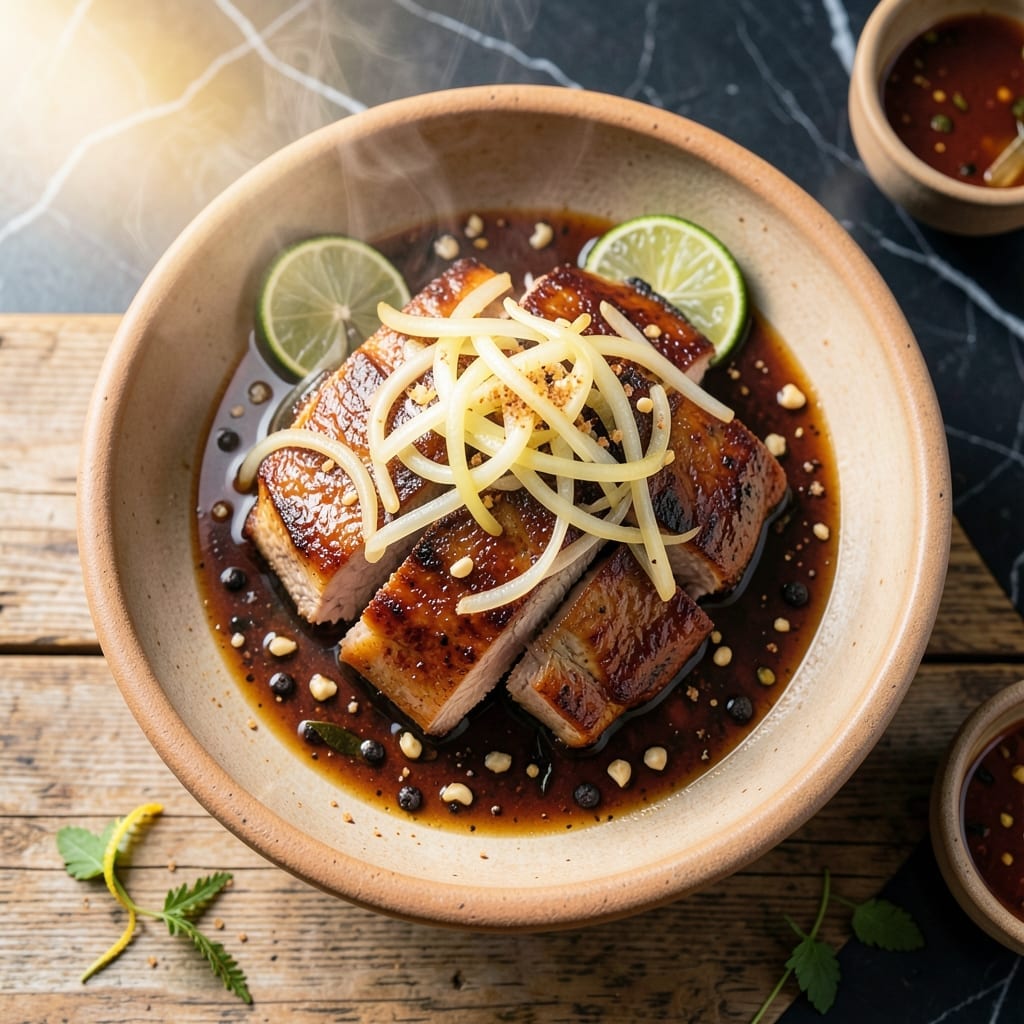
This Filipino-style pork steak delivers perfect savory depth through a simple marinade that transforms ordinary pork into something extraordinary.
I developed this method after testing multiple variations to achieve that signature Pinoy balance of sweet, salty, and tangy flavors. The key is allowing the pork to marinate long enough to absorb every bit of the soy-calamansi mixture.
The result is tender pork with caramelized edges and a complex flavor profile that’s both comforting and exciting. Each bite carries the essence of traditional Filipino home cooking.
This dish proves that the best meals often come from the simplest techniques, elevated by thoughtful seasoning and patience.
Ingredients for Pork Steak Recipe Pinoy Style
Transform everyday pork with a bold marinade that delivers authentic Filipino flavor in every bite.
| Ingredient | Amount | Notes |
|---|---|---|
| Pork Shoulder 🥩 | 1 ½ lb | Cut into 1/2-inch thick slices |
| Soy Sauce 🫕 | ½ cup | Low-sodium preferred for balance |
| Calamansi Juice 🍋 | ¼ cup | Freshly squeezed, or lime substitute |
| Brown Sugar 🍚 | 3 tbsp | Light or dark, packed |
| Garlic Cloves 🧄 | 6 cloves | Minced finely for even distribution |
| Yellow Onion 🧅 | 1 whole | Medium-sized, thinly sliced |
| Black Peppercorns 🌶️ | 1 tsp | Freshly cracked for best flavor |
| Bay Leaves 🌿 | 2 pieces | Dried, whole leaves |
| Cooking Oil 🫒 | 2 tbsp | High smoke point, neutral flavor |
| Water 💧 | ½ cup | For marinade consistency |
| Salt 🧂 | ½ tsp | Kosher or sea salt variety |
| Green Onions 🧅 | 3 whole | Thinly sliced for garnish |
The pork shoulder is essential here—its marbling ensures tenderness after marinating. Look for well-marbled cuts at your butcher or the meat section of Asian grocery stores, where the quality is often superior. Calamansi juice is the star of the marinade, but if you can’t find it (common outside Filipino markets), fresh lime or lemon juice works in a pinch with slightly different brightness. The soy sauce should be Filipino brands like Silver Swan or Datu Puti for authentic flavor.
No calamansi? Use half lime, half orange juice for a closer approximation. Brown sugar can be swapped with coconut sugar for depth. The garlic and onion are non-negotiable for that base flavor—don’t skimp. If you’re missing bay leaves, a pinch of dried thyme adds a similar earthy note. For a gluten-free version, tamari or coconut aminos replace soy sauce perfectly. The marinade time is flexible—overnight is ideal, but 4 hours minimum works.
The marinated pork keeps 2-3 days in the fridge before cooking. Once cooked, it stays fresh for 4 days refrigerated or 3 months frozen. For best results, store the marinade and pork separately until ready to combine—this preserves texture and prevents sogginess.
Why You’ll Love This Recipe
- One Pan Meal: I just toss everything in a pan—pork shoulder, soy sauce, calamansi juice, and garlic—then let it work its magic.
- Sweet-Savory Magic: The brown sugar caramelizes with the soy sauce, while calamansi cuts through the richness. Honestly, it’s the perfect balance.
- Feeds the Family: I make a big batch for Sunday lunch, then reheat leftovers for baon the next day. Between us, it tastes even better the second time.
- Budget Stretcher: Pork shoulder is affordable, and a little goes a long way with this marinade. My wallet and my stomach both thank me.
Step-by-Step Instructions for Pork Steak Pinoy Style
Here’s the method. Straightforward, tested, works every time.
Step 1: Marinate the Pork Shoulder
In a large bowl, combine the 1.5 lb pork shoulder (cut into ½-inch thick slices) with the 0.5 cup soy sauce, 0.25 cup calamansi juice, 3 tbsp brown sugar, minced 6 cloves garlic cloves, thinly sliced 1 whole yellow onion, 1 tsp black peppercorns, and 2 pieces bay leaves. Mix well to ensure the meat is fully coated.
The acidity from the calamansi juice tenderizes the pork while the soy sauce infuses savory depth. Cover and refrigerate for at least 2 hours (overnight for maximum flavor penetration).
Step 2: Sear the Pork Steaks
Heat 2 tbsp cooking oil in a large skillet over medium-high heat. Remove the pork from the marinade (reserve the marinade) and pat dry with paper towels. This ensures a proper sear instead of steaming.
Sear the pork slices for 3-4 minutes per side until deeply browned and slightly caramelized. Work in batches to avoid crowding the pan, which would lower the temperature and prevent browning. Transfer seared pork to a plate.
Step 3: Simmer in Marinade
Pour the reserved marinade into the same skillet and add the 0.5 cup water. Bring to a simmer over medium heat, scraping up any browned bits from the bottom of the pan. These fond bits add incredible depth to the sauce.
Return the seared pork to the skillet, reduce heat to medium-low, and simmer for 20-25 minutes. Turn the pork occasionally and baste with the sauce until the meat is fully cooked and the sauce has thickened slightly.
Step 4: Season and Garnish
Taste the sauce and adjust seasoning with the 0.5 tsp salt if needed. The soy sauce already provides saltiness, so go easy—you can always add more but can’t take it away.
Transfer the pork steaks to a serving platter, spoon the sauce over the top, and garnish with thinly sliced 3 whole green onions for a fresh, vibrant finish. Serve immediately with steamed rice to soak up every last drop of the rich, tangy sauce.
Pro Tips For Making Pork Steak Recipe Pinoy Style
- Score the Meat: Cut shallow slits into the pork shoulder before marinating so the calamansi and soy sauce penetrate deeper—I learned this the hard way after my first few tries tasted bland on the inside.
- Balance the Marinade: Mix 1 part calamansi juice to 1 part soy sauce for that perfect tangy-salty Pinoy flavor, and add brown sugar last so it doesn’t clump at the bottom of the bowl.
- Don’t Overcook: Pork shoulder turns tough if left too long over high heat; pull it off at 145°F internal temp and let it rest 5 minutes—it’ll stay juicy every time.
- Reuse the Marinade: Boil the leftover marinade for 2-3 minutes to kill bacteria, then drizzle it over the cooked pork steak for extra flavor without wasting a drop.
Perfect Pairings for These Flavors
Traditional Sides
Steamed jasmine rice is non-negotiable—its mild flavor soaks up the rich sauce perfectly. I use a 1:1.5 rice-to-water ratio for fluffy results every time. For extra authenticity, try garlic fried rice with crispy bits for texture contrast.
Fresh Accompaniments
A simple cucumber-tomato salad with thinly sliced 1 medium cucumber and 2 ripe tomatoes adds refreshing crunch. Toss with 1 tbsp vinegar and a pinch of salt for brightness that cuts through the richness. 🥗
Filipino Favorites
Atchara (pickled green papaya) from Asian grocery stores provides that signature sweet-tangy crunch. I also love sinangag (garlic rice) on the side—it’s a breakfast staple that works beautifully here.
Beverage Pairings
Serve with ice-cold San Miguel beer—its crisp, light body complements the savory flavors. For non-alcoholic options, calamansi juice (the same used in the marinade) makes a refreshing drink. Sweet sago at gulaman (tapioca pearl drink) balances the saltiness. 🍺
Quick Pickles
Make quick-pickled radishes
Slice 4 radishes thin, cover with ½ cup vinegar, 1 tbsp sugar, and ½ tsp salt. Let sit 30 minutes before serving for a tangy, crunchy topping.
Nutrition Facts
Frequently Asked Questions
Can I use a different cut of pork?
Pork shoulder works best, but pork loin is a good alternative. Avoid lean cuts like tenderloin—they dry out. Shoulder’s fat keeps it moist during cooking.
What if I don’t have calamansi?
Substitute with equal parts lime and orange juice. Lemon works too but may taste slightly different. The citrus is key for that tangy Filipino flavor.
How do I know when it’s done?
Cook until internal temperature reaches 145°F and the sauce thickens. The pork should be tender but not falling apart. Overcooking makes it dry.
Can I make this ahead?
Marinate the pork overnight in the fridge. Cook just before serving for best texture. Reheats well but sauce may thicken—add a splash of water.

- Potato Patty Recipe No Egg: Crispy Edges Without the Binder - October 30, 2026
- Paula Deen’s Potato Chip Cookies Recipe: Salty-Sweet Crunch in Every Bite - October 30, 2026
- Potato Gnocchi Recipe Ideas: Pillowy Soft Dumplings With Rustic Charm - October 30, 2026