
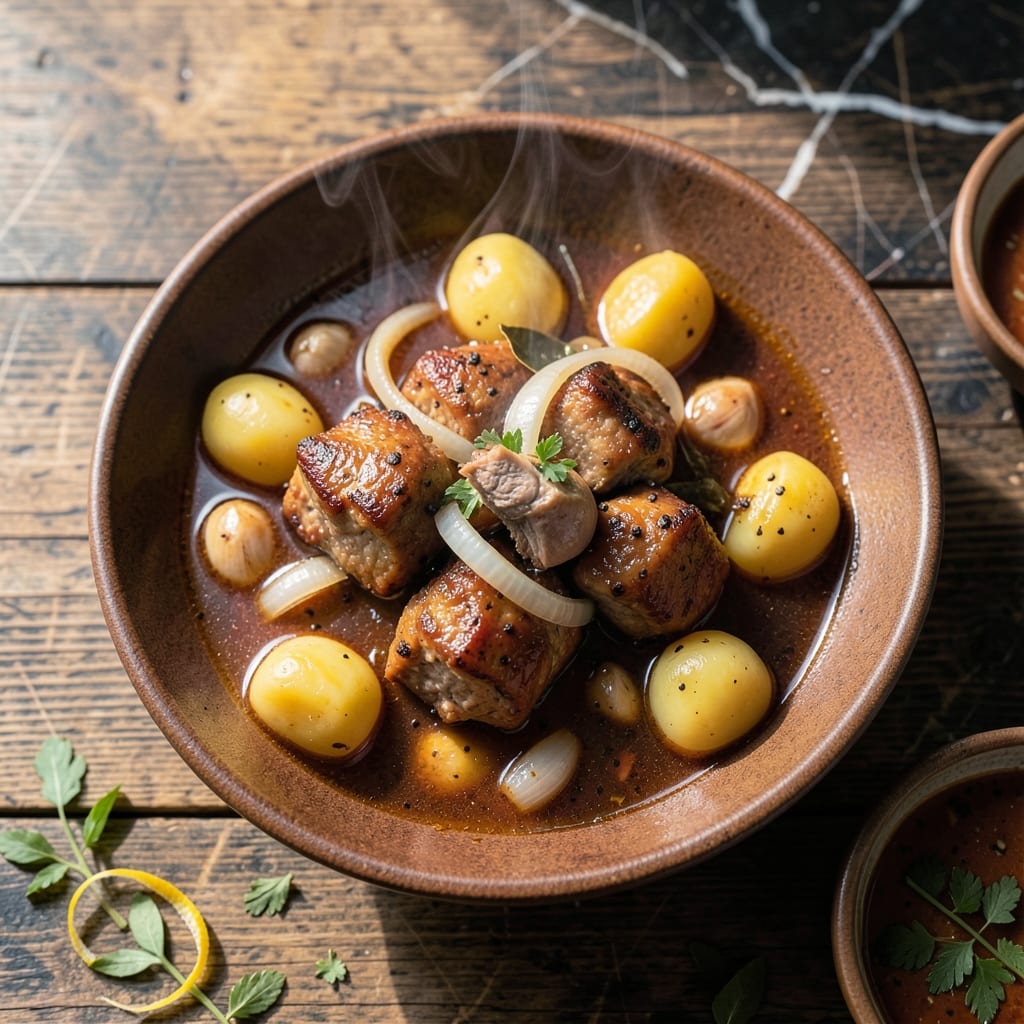
This Filipino-style pork stew delivers slow-simmered richness that transforms humble ingredients into something extraordinary. The key lies in the balance of savory, tangy, and slightly sweet flavors that develop over time.
I’ve adapted traditional techniques to create a foolproof version that works in any home kitchen. Tender pork, potatoes, and a deeply flavored sauce come together through patient simmering, allowing every bite to absorb the complexity of the dish.
The result is a hearty, comforting meal with pork so tender it falls apart and a sauce thick enough to cling to every potato. It’s the kind of dish that tastes like it’s been cooking all day—because it has.
Perfect for family dinners or when you crave a taste of home. Here’s how to make it.
Ingredients for Pork Stew Recipe Filipino Style
Pantry staples plus a few fresh items create this rich, comforting dish.
| Ingredient | Amount | Notes |
|---|---|---|
| Pork Shoulder 🥩 | 2 lb | Cut into 2-inch chunks |
| Yukon Gold Potatoes 🥔 | 1 ½ lb | Peeled and quartered |
| White Onion 🧅 | 1 whole | Large, chopped |
| Garlic Cloves 🧄 | 6 cloves | Minced for depth |
| Tomato Sauce 🍅 | 1 cup | Smooth, no chunks |
| Soy Sauce 🫒 | ½ cup | Use low-sodium for control |
| White Vinegar 💧 | ¼ cup | For tangy balance |
| Brown Sugar 🍚 | 2 tbsp | Packed, for sweetness |
| Bay Leaves 🌿 | 2 pieces | Dried, whole leaves |
| Black Peppercorns 🌶️ | 1 tsp | Whole, cracked lightly |
| Water 💧 | 2 cups | For simmering liquid |
| Green Bell Pepper 🌶️ | 1 whole | Seeded, chopped |
| Carrots 🥕 | 2 whole | Peeled, sliced thick |
| Vegetable Oil 🫒 | 2 tbsp | For searing pork |
| Salt 🧂 | 1 tsp | Adjust to taste later |
The pork shoulder is non-negotiable here—bone-in for extra flavor if your butcher has it. Costco sells big packs that are perfect for this, or ask your local butcher to cube it for you (saves time). Yukon Golds hold their shape better than russets during the long simmer. Don’t skip the vinegar—it cuts through the richness and balances the sweetness from the brown sugar.
No tomato sauce? Crushed tomatoes blended smooth work in a pinch. Out of soy sauce? Tamari or coconut aminos can substitute, but taste as you go—they’re saltier. Fresh garlic only (the jarred stuff lacks punch). If you want more veg, toss in extra carrots or a handful of green beans at the end. The bay leaves are subtle but worth it—fresh or dried both work.
This stew tastes even better the next day. Keeps in the fridge for 4-5 days or freezes for 3 months. Portion leftovers into containers for easy weekday lunches. The potatoes will absorb more liquid as it sits, so add a splash of water when reheating.
Why You’ll Love This Recipe
- One Pot Wonder: I just brown the pork shoulder, toss in the potatoes and onions, then let it simmer—no fancy techniques needed.
- Rich Garlic Depth: The garlic cloves melt into the tomato sauce, creating that deep, savory base I crave.
- Feeds the Crew: Honestly, it’s my go-to for family dinners, potlucks, or even meal-prepping lunches for the week.
- Budget Stretcher: Pork shoulder is affordable, and the potatoes bulk it up—one batch gives me leftovers for days.
Step-by-Step Instructions for Pork Stew Filipino Style
This method delivers rich, tender pork with potatoes in a savory-sweet sauce every time.
Step 1: Brown the Pork Shoulder
Heat the 2 tbsp vegetable oil in a large pot over medium-high heat. Add the 2 lb pork shoulder chunks in a single layer, making sure not to overcrowd the pan. I like to work in batches if needed—this ensures each piece gets a proper sear.
Cook undisturbed for 4-5 minutes until the pork develops a deep golden-brown crust. Flip and brown the other side for another 4-5 minutes. This searing step locks in juices and builds the flavor foundation for your stew.
Step 2: Sauté Aromatics and Build the Sauce Base
Remove the pork and set it aside. In the same pot, add the 1 whole white onion, 6 cloves minced garlic cloves, 1 whole green bell pepper, and 2 whole carrots. Sauté for 3-4 minutes until the onions soften and become translucent.
Pour in the 1 cup tomato sauce, 0.5 cup soy sauce, 0.25 cup white vinegar, and 2 tbsp brown sugar. Stir well to combine, scraping up any browned bits from the bottom of the pot. These bits are packed with flavor and will dissolve into your sauce.
Step 3: Simmer with Potatoes and Spices
Return the pork to the pot and add the 1.5 lb Yukon Gold potatoes, 2 pieces bay leaves, 1 tsp black peppercorns, 2 cups water, and 1 tsp salt. Stir to combine and bring to a boil.
Once boiling, reduce the heat to low, cover, and let it simmer for 1 to 1.5 hours. You’ll know it’s ready when the pork is fork-tender and the potatoes are soft. Stir occasionally to prevent sticking and ensure even cooking.
Step 4: Adjust and Finish the Stew
After the pork and potatoes are tender, taste and adjust the seasoning if needed. If the sauce is too thin, let it simmer uncovered for an additional 5-10 minutes to thicken. If it’s too thick, add a splash of water to reach your desired consistency.
Discard the bay leaves and serve hot. The stew should have a rich, slightly tangy, and savory-sweet flavor with melt-in-your-mouth pork and soft potatoes. This dish tastes even better the next day as the flavors continue to meld together.
Pro Tips For Making Pork Stew Recipe Filipino Style
- Brown the Pork: I learned this the hard way—sear the pork shoulder in small batches over medium-high heat until deeply browned, about 3-4 minutes per side. This builds the rich, caramelized base flavor that defines Filipino pork stew.
- Cut Potatoes Evenly: Slice the Yukon Gold potatoes into 1.5-inch chunks so they cook at the same rate as the pork. Sounds obvious, but I used to end up with mushy or undercooked pieces until I standardized the size.
- Skip the Watery Sauce: After adding the tomato sauce, let it simmer uncovered for 5-10 minutes first to thicken slightly before adding liquid. My grandmother swore by this, and she was right—it prevents a thin, watery stew.
- Add Garlic Late: I was skeptical until I tried it: add half the minced garlic when browning the pork, and the rest halfway through cooking. This keeps the garlic flavor bright and aromatic instead of bitter.
Common Mistakes When Making This Recipe
Overcrowding the Pot
When browning the 2 lb pork shoulder, resist the urge to dump it all in at once. Overcrowding steams the meat instead of searing it. I sear in batches—this ensures each piece develops that deep golden-brown crust that builds flavor. Trust me, the extra 5 minutes makes all the difference. 🔥
Skipping the Fond
Those browned bits stuck to the pot after searing? That’s fond, and it’s pure flavor. When you add the 1 cup tomato sauce and other liquids, scrape the bottom with a wooden spoon to dissolve every last bit. This step transforms good stew into great stew.
I learned this trick during my apprenticeship—Master Chef Chen would never let us waste a single speck of fond.
Wrong Liquid Ratio
Too much liquid and your stew will be watery; too little and it’ll scorch. For this recipe, 2 cups water plus the sauce ingredients is perfect for 2 lb pork. If it reduces too much during the 1 to 1.5 hours simmer, add small splashes of water as needed.
Impatience With Simmering
This isn’t a 30-minute meal. The pork needs that full simmering time to become fork-tender. I’ve seen people try to rush it with higher heat, but that just toughens the meat. Low and slow is the only way to get that melt-in-your-mouth texture.
Ignoring the Vinegar
The 0.25 cup white vinegar might seem like a small addition, but it’s crucial. It balances the richness of the pork and the sweetness of the 2 tbsp brown sugar. Without it, the stew can taste flat. Don’t skip it—this is what gives Filipino-style stew its signature tang. 💡
Nutrition Facts
Frequently Asked Questions
Can I use a different cut of pork?
Pork shoulder is ideal, but pork butt works well too. Avoid lean cuts like tenderloin—they dry out during the long 1 to 1.5 hours simmer.
Why is vinegar added to the stew?
The 0.25 cup white vinegar brightens the rich flavors and balances the 2 tbsp brown sugar. It’s a signature touch in many Filipino dishes.
Can I add other vegetables?
Green beans, peas, or eggplant pair well. Add them during the last 30 minutes of cooking to avoid mushiness.
How do I thicken the sauce?
Simmer uncovered for an extra 5-10 minutes after the pork is tender. For a quicker fix, mix 1 tbsp cornstarch with water and stir in.

- Potato Patty Recipe No Egg: Crispy Edges Without the Binder - October 30, 2026
- Paula Deen’s Potato Chip Cookies Recipe: Salty-Sweet Crunch in Every Bite - October 30, 2026
- Potato Gnocchi Recipe Ideas: Pillowy Soft Dumplings With Rustic Charm - October 30, 2026