
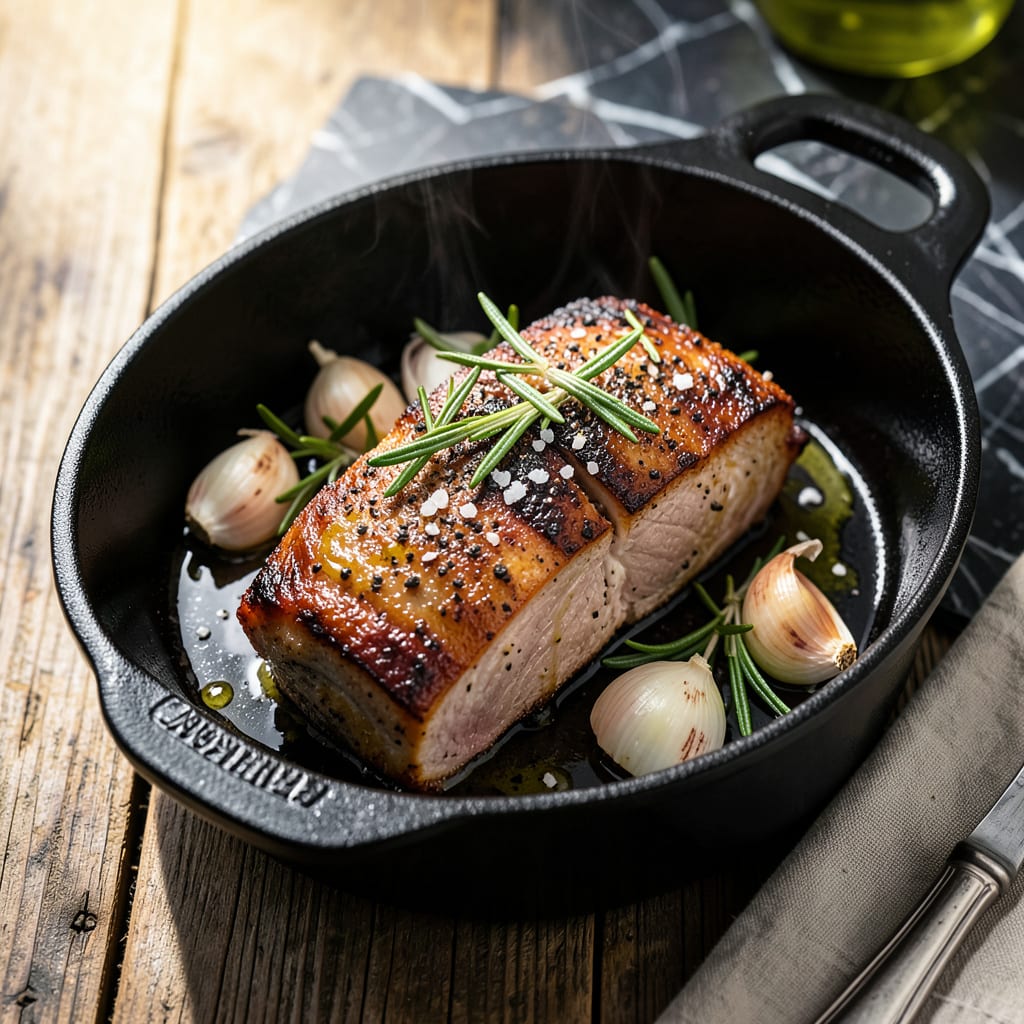
This Dutch oven method guarantees a tender pork tenderloin with a flavorful herb crust and juicy interior every time. The even heat distribution creates perfect results with minimal effort.
I’ve refined this technique to lock in moisture while developing a golden, aromatic crust. The process is straightforward, yet delivers restaurant-quality results at home.
Ingredients for Pork Tenderloin Dutch Oven
Fifteen ingredients transform Dutch oven pork into a herb-crusted, juice-rich masterpiece with minimal effort.
| Ingredient | Amount | Notes |
|---|---|---|
| Pork Tenderloin 🥩 | 1 ½ lb | Trimmed of silver skin |
| Olive Oil 🫒 | 2 tbsp | Divided for searing and crust |
| Kosher Salt 🧂 | 1 ½ tsp | Diamond Crystal preferred |
| Black Pepper 🌶️ | 1 tsp | Freshly ground coarse |
| Garlic Cloves 🧄 | 4 cloves | Minced finely for crust |
| Fresh Rosemary 🌿 | 2 tbsp | Finely chopped leaves |
| Fresh Thyme 🍃 | 2 tbsp | Leaves stripped from stems |
| Dijon Mustard 🟡 | 1 tbsp | Whole grain acceptable |
| Dry White Wine 🍷 | ½ cup | Sauvignon Blanc recommended |
| Low-Sodium Chicken Broth 🥣 | ½ cup | Homemade or quality store-bought |
| Unsalted Butter 🧈 | 2 tbsp | For finishing sauce |
| Shallot 🧅 | 1 whole | Minced for aromatic base |
| All-Purpose Flour 🌾 | 1 tsp | For thickening pan sauce |
The pork tenderloin quality is paramount. Look for uniform thickness and a rosy color when purchasing—Whole Foods or Costco consistently offer superior cuts. Trim any silver skin yourself (butchers often leave it on). For the herbs, fresh rosemary and thyme from the produce section outperform dried by miles. The wine should be something you’d drink—a crisp Sauvignon Blanc adds brightness without overpowering.
No white wine? Substitute with chicken broth plus a squeeze of lemon. Dried herbs work at one-third the amount, though the crust won’t be as vibrant. For shallots, yellow onion at half the quantity suffices. The Dijon mustard can be swapped for whole grain for texture, but avoid sweet varieties. If avoiding alcohol entirely, apple cider with a splash of vinegar mimics the wine’s acidity.
Pork keeps in the fridge 3-4 days pre-cooking, or freeze for 6 months. The herb crust mixture can be prepped 1 day ahead—store covered in the refrigerator. Leftover cooked pork reheats beautifully, though the crust softens slightly. Always bring pork to room temperature before cooking for even results.
Why You’ll Love This Recipe
- One Pan Magic: I toss the pork tenderloin with olive oil, salt, pepper, and garlic, then let the Dutch oven do all the work.
- Garlic Infused: The garlic cloves roast right alongside the pork, infusing every bite with rich, aromatic flavor.
- Weeknight Hero: Between us, this is my go-to for busy evenings—minimal prep, maximum payoff.
- Leftovers Win: Honestly, the pork tastes even better the next day in sandwiches or salads.
Step-by-Step Instructions for Herb-Crusted Pork Tenderloin in a Dutch Oven
This method guarantees a perfectly seared exterior with juicy, tender meat that melts in your mouth.
Step 1: Prepare the Herb Crust and Season the Pork
Pat the 1.5 lb pork tenderloin completely dry with paper towels. This ensures a proper sear and prevents the herb crust from steaming instead of browning. Trim any remaining silver skin if needed.
In a small bowl, combine the 1.5 tsp kosher salt, 1 tsp black pepper, 4 cloves minced garlic cloves, 2 tbsp finely chopped fresh rosemary, 2 tbsp fresh thyme leaves, and 1 tbsp Dijon mustard. Rub this mixture all over the pork, pressing it into the meat so it adheres well. Let it sit at room temperature for 15-20 minutes while you preheat your Dutch oven.
Step 2: Sear the Pork Tenderloin to Develop Flavor
Place your Dutch oven over medium-high heat and add 1 tbsp olive oil. Once the oil shimmers and is nearly smoking, carefully add the pork tenderloin. Sear for 3-4 minutes per side until the surface is deep golden brown and a crust has formed.
Use tongs to rotate the pork as needed to sear all sides evenly. The herb mixture will create a fragrant crust as it contacts the hot oil. Don’t rush this step—proper searing builds the foundation of flavor for the finished dish. Transfer the seared pork to a plate and set aside.
Step 3: Build the Pan Sauce and Finish Cooking
Reduce the heat to medium and add the remaining 1 tbsp olive oil to the Dutch oven. Add the 1 minced shallot and cook for 1-2 minutes until softened and translucent. Sprinkle the 1 tsp all-purpose flour over the shallot and stir to create a light roux.
Pour in the 0.5 cup dry white wine and 0.5 cup low-sodium chicken broth, scraping up any browned bits from the bottom of the pan. Return the pork tenderloin to the Dutch oven along with any accumulated juices. Bring the liquid to a gentle simmer.
Step 4: Roast to Perfection and Rest
Cover the Dutch oven and transfer it to a preheated 375°F oven. Roast for 15-20 minutes until the pork reaches an internal temperature of 145°F. The meat should feel firm yet springy to the touch.
Remove the Dutch oven from the oven and transfer the pork to a cutting board. Stir the 2 tbsp unsalted butter into the pan sauce until melted and fully incorporated. Tent the pork loosely with foil and let it rest for 10 minutes before slicing. This allows the juices to redistribute, ensuring each slice is moist and flavorful.
Slice the pork against the grain into 1-inch thick medallions. Spoon the pan sauce over the top and serve immediately. The sauce should be glossy and coat the back of a spoon, with a rich, herb-infused depth that complements the tender meat perfectly.
Pro Tips For Making Pork Tenderloin Dutch Oven
- Sear First, Roast Later: Get your Dutch oven screaming hot before adding the pork—2 minutes per side for a deep brown crust, then transfer to the oven to finish cooking through.
- Season Aggressively: Pork tenderloin needs more salt than you think, especially with just kosher salt and pepper. Coat it thoroughly before searing, almost like you’re overdoing it.
- Don’t Overcrowd the Pan: If the tenderloin is too big, cut it in half so it fits in a single layer. Crowding steams the meat instead of browning it, and nobody wants pale pork.
- Rest Under Foil: Let it rest 10 minutes under foil after cooking—this keeps the juices inside where they belong, not all over your cutting board. I learned this the hard way after slicing into a dry, weeping tenderloin.
Troubleshooting Perfect Results
Overcooked Pork
If your pork feels dry, it likely went past 145°F internal temperature. Pull it at 140°F—it’ll rise to 145°F while resting. Use a Thermoworks instant-read thermometer for accuracy. 🌡️
Weak Herb Crust
The crust won’t adhere if the pork isn’t dry. Pat it thoroughly with paper towels before applying the herb mix. Press the mixture firmly into the meat so it sticks during searing.
Thin Pan Sauce
If your sauce is watery, simmer it uncovered for 3-5 minutes after removing the pork. A slurry of 1 tsp flour and 1 tsp water can thicken it quickly if needed.
Uneven Searing
Pork tenderloin tapers at one end. Sear the thicker part first, then flip. For even browning, hold the thinner end with tongs to sear it directly in the hot oil for 1-2 minutes. 🔥
Stuck Browned Bits
If deglazing isn’t lifting the fond, let the pan sit off heat for 1 minute—the residual heat will loosen bits. Use a wooden spoon to scrape aggressively while the liquid simmers.
Resting Skipped
Never slice immediately. Resting for 10 minutes lets juices redistribute. If you cut too soon, they’ll spill onto the board, leaving the meat dry. Tent loosely with foil to keep it warm.
Nutrition Facts
Frequently Asked Questions
What’s the ideal internal temperature?
Remove from heat at 140°F—it will rise to 145°F while resting. Use a meat thermometer for perfect results every time.
Can I substitute dried herbs?
Yes, but use 1/3 the amount since dried herbs are more concentrated. Fresh rosemary and thyme give the best flavor and crust texture.
How long should I rest the pork?
Always rest for 10 minutes before slicing. This lets juices redistribute, keeping the meat moist and flavorful.
What if my pan sauce is too thin?
Simmer uncovered for 3-5 minutes or stir in a 1 tsp flour and 1 tsp water slurry to thicken quickly.

- BBQ Sausage Recipe Oven: Smoky Depth Without the Grill - September 28, 2026
- BBQ Chicken Bowl Recipe Rice: Smoky Sweetness Over Fluffy Grains - September 28, 2026
- Beef Cutlet Recipe Ideas: Crispy Breaded Patties With Bold Seasonings - September 28, 2026