
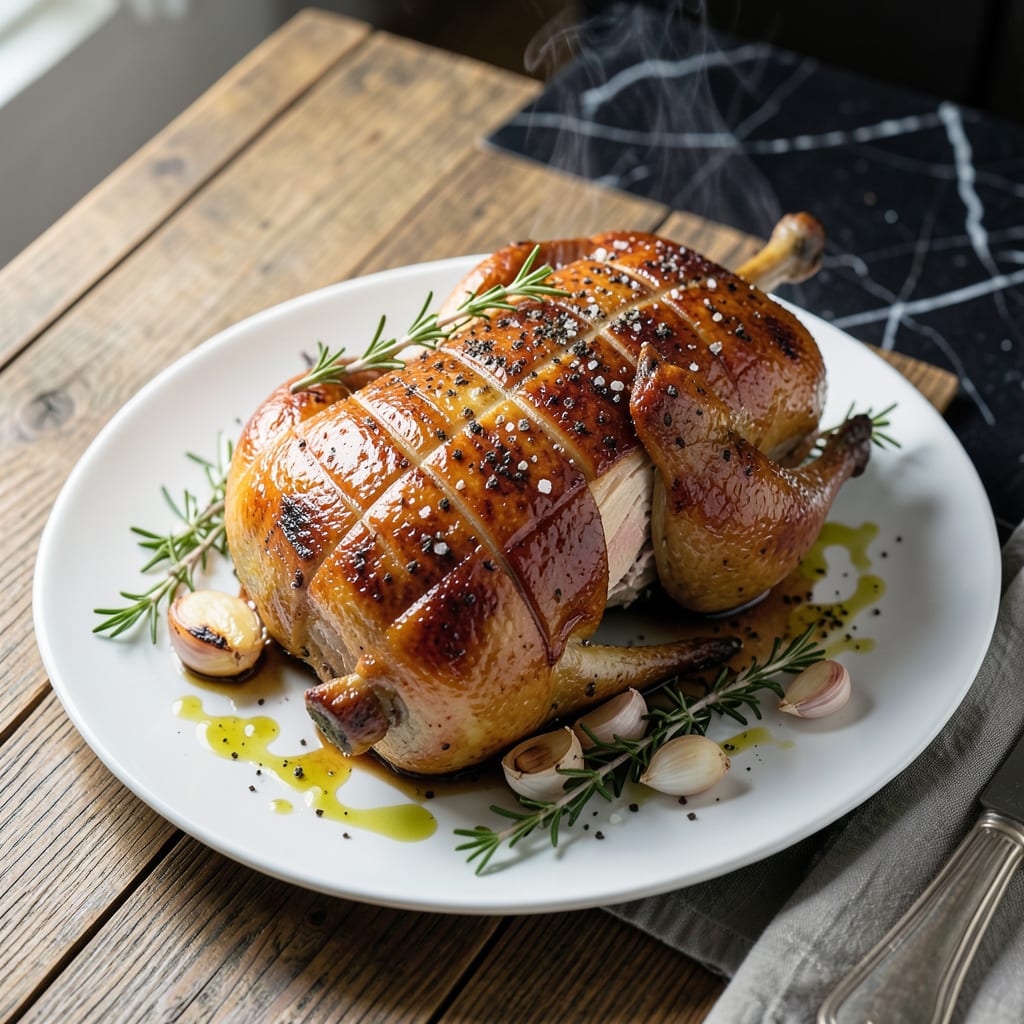
Achieving crisp skin and rich depth with duck requires precision in technique and timing. This method delivers restaurant-quality results at home.
By scoring the skin and rendering fat slowly, you create a golden crust while keeping the meat juicy. The process transforms a simple bird into an elegant centerpiece.
Ingredients for Roast Duck Recipe Gordon Ramsay
These quality ingredients create an elegant centerpiece with crisp skin and rich depth.
| Ingredient | Amount | Notes |
|---|---|---|
| Whole Duck 🦆 | 5 lb | Pekin or Long Island variety |
| Kosher Salt 🧂 | 2 tbsp | Diamond Crystal preferred |
| Freshly Ground Black Pepper 🌶️ | 1 tbsp | Coarse grind ideal |
| Fresh Thyme Sprigs 🌿 | 6 pieces | Stems removed before serving |
| Fresh Rosemary Sprigs 🍃 | 4 pieces | Woody stems discarded |
| Garlic Cloves 🧄 | 6 cloves | Lightly crushed, unpeeled |
| Lemon 🍋 | 1 whole | Halved for cavity |
| Medium Yellow Onion 🧅 | 1 whole | Quartered for cavity |
| Honey 🍯 | 2 tbsp | For glaze, optional |
| Soy Sauce 🥢 | 1 tbsp | Low-sodium variety preferred |
| Dry White Wine 🍷 | ½ cup | For deglazing pan |
| Chicken Stock 🥣 | 1 cup | Low-sodium or homemade |
| Unsalted Butter 🧈 | 2 tbsp | For basting, melted |
The duck is paramount. Pekin or Long Island offers the ideal fat-to-meat ratio for rendering and crisping. Source from a reputable butcher or specialty grocer like Whole Foods—their birds are consistently well-sized. Look for plump, unblemished skin with a even fat layer. Avoid pre-brined ducks; you want full control over the seasoning. Fresh herbs should be vibrant—avoid wilted sprigs at all costs.
No white wine? Dry vermouth or apple cider vinegar with water works in a pinch. Skip the honey? A maple syrup glaze adds similar sheen. If soy sauce isn’t available, tamari or coconut aminos are acceptable. For the stock, vegetable stock can substitute, though chicken stock provides deeper flavor. The butter can be omitted, but it contributes to the golden crust development.
Store the duck uncovered in the fridge for 1-2 days prior to cooking to dry the skin. Fresh herbs keep 5-7 days wrapped in damp paper towels. Once cooked, leftovers—if any—hold 3-4 days refrigerated, or freeze for 2 months.
Why You’ll Love This Recipe
- Minimal Effort: I just rub the duck with salt, pepper, and those fresh thyme and rosemary sprigs—no fancy steps, just hands-on simplicity.
- Crispy & Herby: That skin gets so golden and crackling, while the rosemary and thyme infuse every bite with that rich, aromatic depth.
- Feeds a Crowd: One whole duck means a showstopping centerpiece for dinner parties or a cozy Sunday roast with leftovers for sandwiches.
- Budget Luxury: Honestly, it feels fancy but costs less than a restaurant duck—and I get two meals out of it with the leftovers.
Step-by-Step Instructions for Roast Duck
Master the technique for restaurant-quality results with perfectly crisp skin and tender meat.
Step 1: Score and Cure the Duck
Pat the 5 lb whole duck completely dry inside and out with paper towels. This step is non-negotiable—moisture prevents crispy skin. Using a sharp knife, score the skin in a crosshatch pattern, being careful not to cut into the meat. This allows fat to render out while the skin crisps.
Rub the duck generously with the 2 tbsp kosher salt and 1 tbsp freshly ground black pepper, ensuring you coat every surface, including the cavity. Place the duck on a wire rack set over a tray and refrigerate uncovered for 12-24 hours. This dry-brining process seasons the meat deeply and dries the skin for maximum crispiness.
Step 2: Aromatize and Truss
Remove the duck from the refrigerator and let it sit at room temperature for 1 hour before roasting. Stuff the cavity with the 1 whole lemon (halved), 1 whole medium yellow onion (quartered), 6 cloves garlic cloves (lightly crushed, unpeeled), 6 pieces fresh thyme sprigs, and 4 pieces fresh rosemary sprigs. These aromatics infuse the meat with subtle herbal notes.
Truss the duck by tying the legs together with kitchen twine and tucking the wings under the body. This compact shape ensures even cooking and prevents the wings from over-browning. The skin should now appear taut and dry to the touch.
Step 3: Roast and Baste for Even Browning
Preheat your oven to 375°F. Place the duck breast-side up on a wire rack set in a roasting pan. Roast for 1 hour, then flip the duck breast-side down and roast for another 30 minutes. This two-stage roasting ensures the fat renders completely while the skin crisps evenly.
Flip the duck breast-side up again and increase the oven temperature to 425°F. Brush the skin with a mixture of the 2 tbsp honey and 1 tbsp soy sauce for a glossy, caramelized finish. Continue roasting for 20-30 minutes, basting every 10 minutes with the 2 tbsp unsalted butter (melted), until the skin is deep mahogany brown and crisp to the touch.
Step 4: Rest and Carve
Remove the duck from the oven when the internal temperature at the thickest part of the thigh reaches 165°F. Transfer the duck to a cutting board, breast-side up, and let it rest for 15-20 minutes. This resting period allows the juices to redistribute, ensuring moist, flavorful meat.
While the duck rests, pour off all but 2 tablespoons of fat from the roasting pan. Place the pan on the stovetop over medium heat, add the 0.5 cup dry white wine, and deglaze, scraping up the browned bits. Add the 1 cup chicken stock and simmer for 5 minutes to create a rich pan sauce. Carve the duck and serve with the sauce spooned over the top.
Pro Tips For Making Roast Duck Recipe Gordon Ramsay
- Score the Skin: Use a sharp knife to make crosshatches in the duck skin—this renders fat evenly and gives you that crispy texture Ramsay insists on.
- Dry Overnight: Pat the duck dry, then refrigerate uncovered for 12-24 hours; the skin crisps up perfectly when it’s bone-dry before roasting.
- Don’t Skip the Herb Cavity: Stuff the cavity with thyme and rosemary sprigs—it infuses the meat with aroma as it roasts, and I learned this the hard way when I tried skipping it.
- Rest Before Carving: Let the duck rest 15-20 minutes after roasting; it keeps the juices locked in instead of all over your cutting board.
Common Mistakes When Making Great roast duck recipe gordon ramsay
Skipping the Dry Brine
Never skip the 12-24 hour dry brine in the fridge. This step is crucial for crisp skin and well-seasoned meat. Without it, you’ll end up with rubbery skin and bland flavors. I learned this the hard way my first attempt. 💡
Inconsistent Scoring
Score the skin in a uniform crosshatch pattern without cutting into the meat. Shallow or uneven scores prevent fat from rendering properly, leaving you with greasy skin instead of that perfect crunch. Use a sharp chef’s knife for precision.
Rushing the Rest
Always let the duck rest for 15-20 minutes after roasting. Slicing too soon causes all those precious juices to spill out, leaving the meat dry. The internal temp will also rise 5-10°F during resting, ensuring perfect doneness.
Overcrowding the Pan
Use a wire rack in a roasting pan to elevate the duck. This allows air to circulate and fat to drain away. Without elevation, the duck steams in its own fat, resulting in soggy skin. I use a V-rack for even airflow.
Neglecting to Baste
Baste with the honey-soy glaze and melted butter every 10 minutes during the final roasting phase. This builds layers of flavor and helps achieve that deep mahogany color Ramsay is known for. Skipping this step means missed depth.
Wrong Internal Temp
Don’t rely on time alone—use a meat thermometer. The duck is done at 165°F in the thickest part of the thigh. Overcooking dries out the breast meat, while undercooking risks chewy texture. My ThermoWorks instant-read never lets me down. ✨
Nutrition Facts
Frequently Asked Questions
What temperature should the duck reach internally?
Use a meat thermometer to check the thickest part of the thigh. The duck is done at 165°F. This ensures juicy meat without undercooking.
Can I skip the dry brine step?
No—this 12-24 hour step is critical for crisp skin and deep seasoning. Skipping it results in rubbery skin and bland meat.
How do I get the skin extra crispy?
Score the skin in a crosshatch pattern, dry it thoroughly, and roast on a wire rack. Baste with honey-soy glaze and butter in the final 20-30 minutes at 425°F.
What if I don’t have a wire rack?
Improvise with crumpled foil or a bed of chopped vegetables to elevate the duck. This prevents steaming in its own fat.

- BBQ Sausage Recipe Oven: Smoky Depth Without the Grill - September 28, 2026
- BBQ Chicken Bowl Recipe Rice: Smoky Sweetness Over Fluffy Grains - September 28, 2026
- Beef Cutlet Recipe Ideas: Crispy Breaded Patties With Bold Seasonings - September 28, 2026