
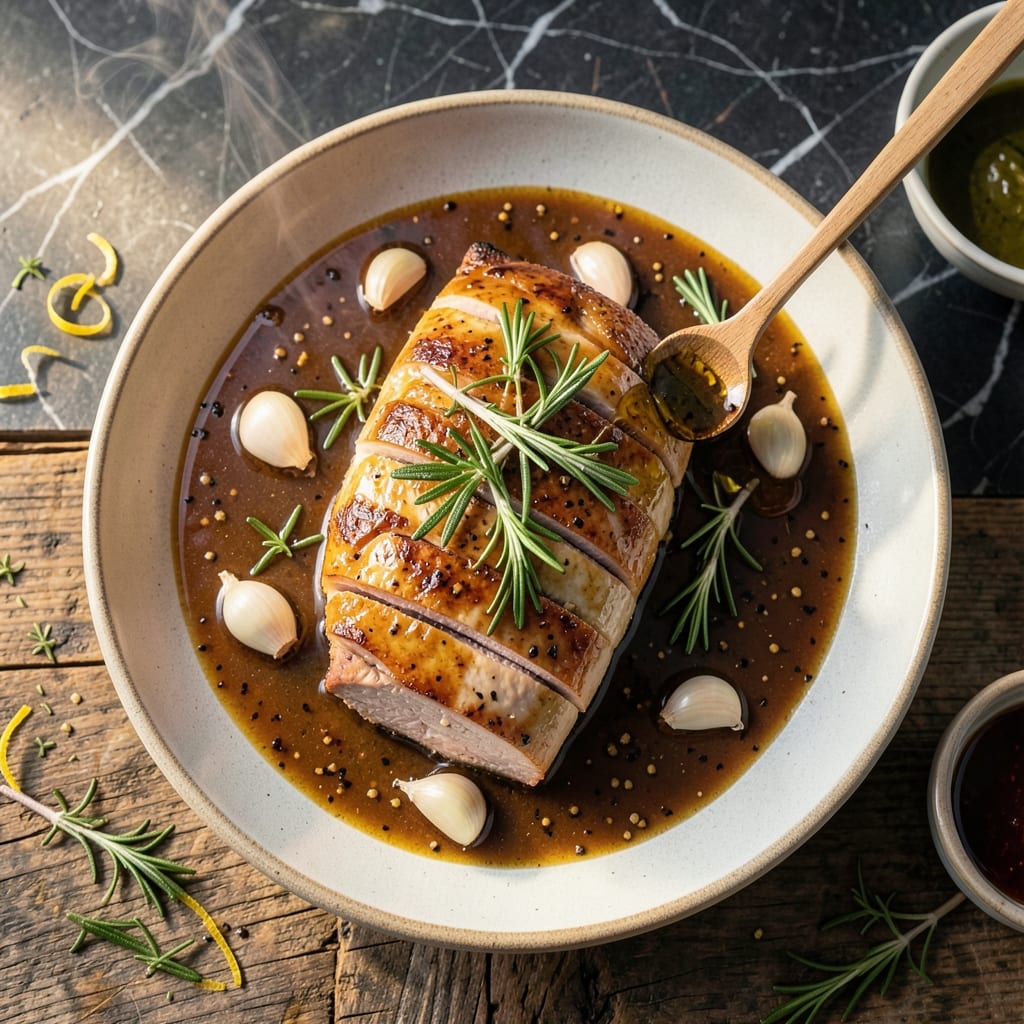
This marinade transforms pork tenderloin into a juicy, flavor-packed centerpiece for any meal. I developed this blend after years of testing to perfect the balance between tangy balsamic and bold seasonings.
The balsamic vinegar doesn’t just add flavor—it helps break down proteins for tender results. Honey and garlic create depth while rosemary adds an earthy note that complements the pork beautifully.
With just 10 minutes of prep and a minimum 30-minute marinating time, you’ll have a foundation for grilling that delivers restaurant-quality taste. The acidity works its magic without overpowering the meat.
Use this for grilling, roasting, or broiling—it adapts perfectly to any cooking method. Here’s how to make it.
Ingredients for Pork Tenderloin Marinade Recipe with Balsamic Vinegar
Nine ingredients blend into a marinade that elevates pork tenderloin beautifully.
| Ingredient | Amount | Notes |
|---|---|---|
| Balsamic Vinegar 🍷 | ½ cup | Aged for best depth |
| Extra-Virgin Olive Oil 🫒 | ½ cup | High quality for richness |
| Honey 🍯 | 3 tbsp | Balances acidity naturally |
| Garlic Cloves 🧄 | 4 cloves | Minced for even distribution |
| Fresh Rosemary 🌿 | 2 tbsp | Finely chopped, stems removed |
| Dijon Mustard 🟡 | 2 tbsp | Adds sharp, tangy kick |
| Kosher Salt 🧂 | 1 tsp | Diamond Crystal preferred |
| Black Pepper 🌶️ | 1 tsp | Freshly ground for best flavor |
| Worcestershire Sauce 🍶 | 1 tbsp | Anchovy-free if preferred |
| Red Pepper Flakes 🔥 | ½ tsp | Adjust for heat preference |
The balsamic vinegar is non-negotiable here. Aged balsamic from Trader Joe’s or Costco gives you that perfect balance of sweet and tangy without being harsh. The olive oil should be good quality—this isn’t the place for that old bottle at the back of your cabinet. Fresh rosemary makes a difference (that piney aroma is key), but if you’re in a pinch, dried works at half the amount.
No honey? Maple syrup or agave swap in one-to-one. Short on time? Garlic powder at one-third the amount works, but fresh is better. Dijon mustard can be swapped for regular yellow if needed, but you’ll lose some complexity. The Worcestershire adds umami depth—soy sauce or coconut aminos are solid alternatives if you’re avoiding anchovies.
This keeps 1 week in the fridge—olive oil solidifies when cold, so let it sit at room temp before using. For longer storage, freeze in ice cube trays for 3 months. Perfect for batch prep.
Why You’ll Love This Recipe
- Five Minute Mix: I just whisk the olive oil, balsamic, honey, and chopped rosemary in a bowl—no blender, no fuss.
- Sticky Sweet Tang: The honey caramelizes while the balsamic cuts through with that sharp, fruity bite I crave.
- Feeds a Crowd: One batch marinated two tenderloins for our Sunday supper, with leftovers for sandwiches the next day.
- Budget Hero: Pork tenderloin stays affordable, and this marinade uses pantry staples I always have on hand.
Step-by-Step Instructions for Pork Tenderloin Marinade
This method ensures maximum flavor penetration and that perfect tender bite every time.
Step 1: Combine the Acidic Base and Sweetener
In a medium bowl, whisk together the 0.5 cup balsamic vinegar and 3 tbsp honey until the honey fully dissolves. The aged balsamic provides that deep, complex tang we’re after, while the honey rounds out the sharpness with natural sweetness.
I always use a bowl with a spout for this—it makes pouring the marinade over the pork later much cleaner. The mixture should look slightly syrupy at this stage, with no visible honey streaks.
Step 2: Emulsify with Olive Oil and Aromatics
Slowly drizzle in the 0.5 cup extra-virgin olive oil while whisking vigorously to create a temporary emulsion. This helps the oil-based and water-based ingredients blend together, ensuring even distribution of flavors.
Add the 4 cloves minced garlic, 2 tbsp Dijon mustard, and 2 tbsp finely chopped fresh rosemary. The mustard acts as a natural emulsifier while adding its characteristic sharpness. The garlic and rosemary will infuse the oil with their aromatic compounds as the marinade sits.
Step 3: Season and Balance the Flavors
Stir in the 1 tbsp Worcestershire sauce, 1 tsp kosher salt, 1 tsp black pepper, and 0.5 tsp red pepper flakes. The Worcestershire adds umami depth, while the salt begins the tenderizing process by breaking down muscle proteins.
The red pepper flakes provide just enough heat to balance the sweetness without overpowering. Taste the marinade now—it should be bold and well-balanced, with the acidity from the vinegar mellowed by the honey and oil.
Step 4: Apply and Marinate for Maximum Tenderness
Place your pork tenderloin in a resealable plastic bag or shallow dish and pour the marinade over it. Turn to coat completely, ensuring all surfaces are covered. For best results, marinate in the refrigerator for at least 4 hours, but overnight is ideal for maximum flavor penetration.
I like to massage the bag occasionally during the first hour to help the marinade penetrate. The acid in the vinegar will begin to break down the surface proteins, while the oil carries the fat-soluble flavors deep into the meat. This dual action guarantees that tender, flavorful result we promised.
Pro Tips For Making Pork Tenderloin Marinade Recipe With Balsamic Vinegar
- Marinate overnight: I learned this the hard way—pork tenderloin needs at least 4 hours in the balsamic-honey marinade to really soak up the flavor, but 12 hours makes it next-level tender.
- Crush the garlic: Sounds weird, but it works: smashing the garlic cloves before adding them to the marinade releases more flavor than just mincing.
- Skip the metal: After ruining a batch with a reactive bowl, I now always use glass or ceramic for the marinade—balsamic vinegar can react with metal and leave a funny taste.
- Reduce the marinade: Don’t toss that leftover marinade—simmer it for 3-5 minutes to kill bacteria, then drizzle it over the cooked pork for extra shine and flavor.
Wine and Beer Pairings for This Dish
Red Wine Pairings
This marinade’s bold balsamic notes pair beautifully with medium-bodied reds. I love a Chianti Classico from Tuscany—its bright acidity and cherry notes complement the dish perfectly. For a budget option, Bogle Old Vine Zinfandel from California offers jammy fruit that stands up to the rosemary. 🍷
White Wine Options
Surprisingly, some whites work well here. A dry Rosé from Provence has enough body to handle the pork while its crispness cuts through the richness. Pinot Gris from Oregon, with its stone fruit notes, also makes a refreshing match.
Beer Pairings
For beer lovers, a Belgian dubbel like Chimay Red brings caramel and dark fruit notes that echo the marinade’s sweetness. A Portland IPA from Breakside Brewery works too—its citrusy hops balance the balsamic tang. I always keep a few local craft options on hand for grilling days. 🍺
Non-Alcoholic Choices
Try a sparkling apple cider from my home state of Ohio—its effervescence cleanses the palate. For a sophisticated option, balsamic-infused sparkling water (like San Pellegrino with a splash of aged balsamic) creates a perfect harmony.
Nutrition Facts
Frequently Asked Questions
How long should I marinate the pork?
For best results, marinate for at least 4 hours in the refrigerator. Overnight is ideal for maximum flavor penetration and tenderness.
Can I use dried rosemary instead of fresh?
Yes, but use half the amount. 1 tablespoon dried rosemary replaces 2 tablespoons fresh. Dried is more concentrated, so adjust carefully.
Why does the marinade include olive oil?
The oil helps distribute fat-soluble flavors and prevents the meat from drying out. It also creates a temporary emulsion that coats the pork evenly.
Can I reuse leftover marinade?
Never reuse marinade that touched raw meat. If you want extra for basting, set aside a portion before adding the pork. Safety first!

- Potato Patty Recipe No Egg: Crispy Edges Without the Binder - October 30, 2026
- Paula Deen’s Potato Chip Cookies Recipe: Salty-Sweet Crunch in Every Bite - October 30, 2026
- Potato Gnocchi Recipe Ideas: Pillowy Soft Dumplings With Rustic Charm - October 30, 2026