
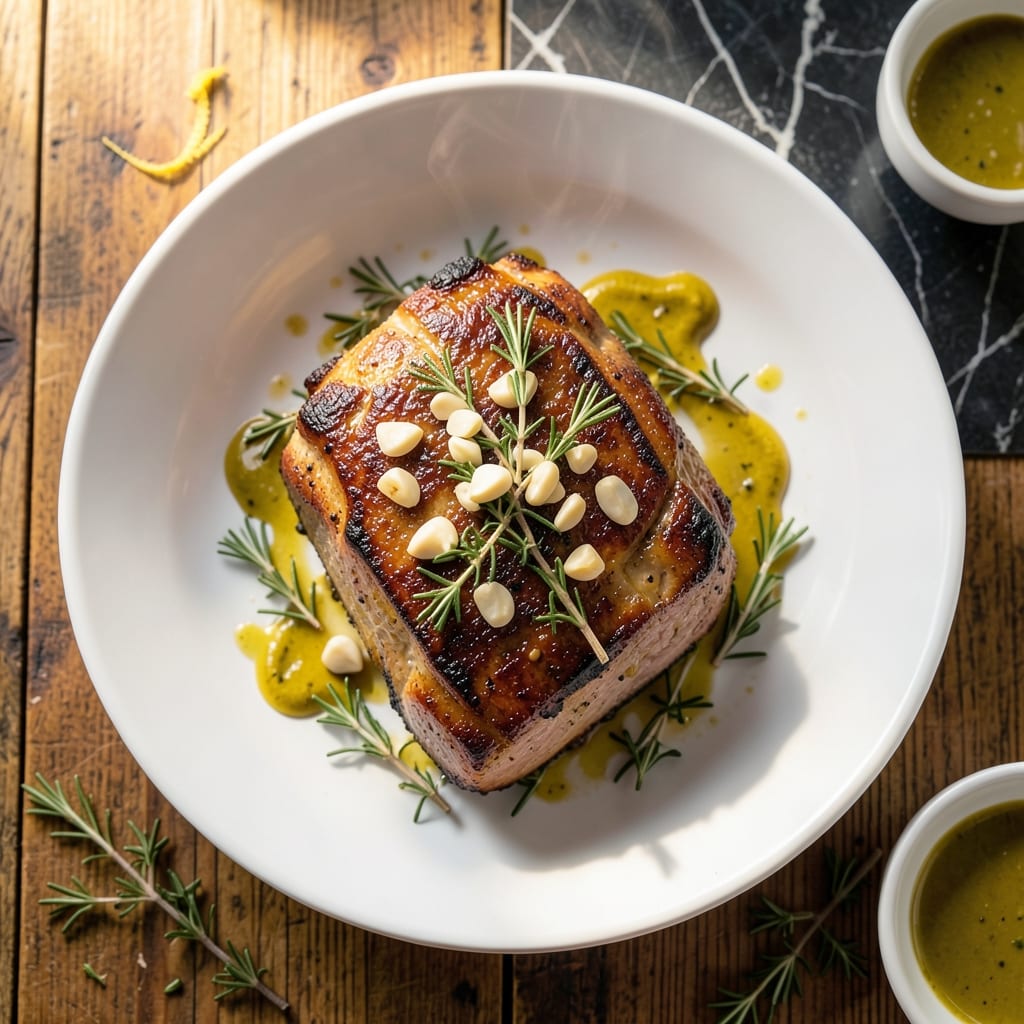
There’s a simple science to achieving tender pork tenderloin every time. This method relies on a consistent oven temperature to transform lean meat into juicy perfection.
I’ve tested this approach in countless home kitchens, always with the same result: meat that’s succulent throughout with a golden herb crust. The key lies in the preparation before it even hits the oven.
What emerges is pork so tender it cuts like butter, with a crust that adds just the right amount of texture. The aroma alone will have everyone gathering around the table.
This technique works for both weeknight dinners and special occasions. The results speak for themselves.
Ingredients for Pork Tenderloin Recipe 350 Degrees
These quality ingredients create an herb-crusted pork tenderloin that delivers juicy, tender perfection every time.
| Ingredient | Amount | Notes |
|---|---|---|
| Pork Tenderloin 🥩 | 1 ½ lb | Trimmed of silver skin |
| Olive Oil 🫒 | 2 tbsp | Extra-virgin preferred |
| Dijon Mustard 🟡 | 2 tbsp | Smooth, not grainy |
| Fresh Thyme Leaves 🌿 | 2 tbsp | Stems removed, chopped |
| Fresh Rosemary Leaves 🍃 | 2 tbsp | Finely chopped |
| Garlic Cloves 🧄 | 4 cloves | Minced finely |
| Kosher Salt 🧂 | 1 ½ tsp | Diamond Crystal preferred |
| Black Pepper 🌶️ | 1 tsp | Freshly ground |
| Dried Oregano 🌿 | 1 tsp | Mediterranean variety |
| Panko Breadcrumbs 🍞 | ½ cup | For crust texture |
| Grated Parmesan Cheese 🧀 | ¼ cup | Freshly grated for best results |
| Dry White Wine 🍷 | ¼ cup | For deglazing pan |
The pork tenderloin must be uniform in thickness for even cooking. Whole Foods or Costco typically carry high-quality options with good marbling. Look for pieces around 1.5 lb—any larger and you risk uneven doneness. The herb crust relies on fresh thyme and rosemary; Trader Joe’s has reliable fresh herbs year-round. Avoid pre-ground black pepper—it lacks the aromatic punch of freshly ground.
No Dijon? Whole-grain mustard at one-third the amount works, though the texture differs. Out of fresh herbs? Dried thyme and rosemary at half the quantity substitute adequately. For the wine, any dry white like Sauvignon Blanc or Pinot Grigio is ideal. Skip the Parmesan? Pecorino Romano offers a sharper, saltier alternative. The breadcrumbs must be panko—regular breadcrumbs yield a softer crust.
Store the pork in its original packaging for up to 2 days in the fridge. The herb mixture can be prepped 1 day ahead and refrigerated. Leftovers keep for 4 days refrigerated or freeze for up to 3 months with minimal quality loss.
Why You’ll Love This Recipe
- Set and Forget: I rub the tenderloin with olive oil, mustard, and herbs, pop it in at 350, and walk away—no babysitting required.
- Herb-Crusted Perfection: The Dijon mustard forms this sticky, savory base that lets the thyme and rosemary cling to every bite, giving it that restaurant-quality crust.
- Weeknight MVP: It’s my go-to for busy evenings—equally at home on a fancy Sunday dinner table or sliced thin for weekday lunches.
- Budget Stretcher: One inexpensive pork tenderloin feeds my family of four with leftovers for sandwiches the next day. Honestly, it’s my secret to saving without sacrificing flavor.
Step-by-Step Instructions for Pork Tenderloin at 350 Degrees
This method guarantees tender, herb-crusted pork with a golden, crispy exterior every time.
Step 1: Prepare the Herb Crust Mixture
In a medium bowl, combine the 2 tbsp Fresh Thyme Leaves, 2 tbsp Fresh Rosemary Leaves, 4 cloves Garlic Cloves, 1.5 tsp Kosher Salt, 1 tsp Black Pepper, and 1 tsp Dried Oregano. Stir until evenly distributed and the herbs release their aroma.
Add the 0.5 cup Panko Breadcrumbs and 0.25 cup Grated Parmesan Cheese to the bowl. Mix thoroughly until the breadcrumbs are fully coated with the herb mixture. The texture should be crumbly but hold together when pressed—this ensures a uniform crust that adheres to the pork.
Step 2: Sear and Coat the Pork Tenderloin
Pat the 1.5 lb Pork Tenderloin dry with paper towels to ensure the crust adheres properly. Heat the 2 tbsp Olive Oil in a large oven-safe skillet over medium-high heat until shimmering. Sear the tenderloin on all sides for 2-3 minutes per side until lightly browned.
Remove the skillet from heat and brush the seared pork evenly with the 2 tbsp Dijon Mustard. Press the herb-breadcrumb mixture onto all sides of the tenderloin, ensuring a thick, even coat. The mustard acts as a binder, creating a crispy, flavorful crust during roasting.
Step 3: Roast at 350 Degrees to Perfection
Preheat your oven to 350°F. Place the skillet with the coated pork tenderloin in the oven and roast for 25-30 minutes, or until the internal temperature reaches 145°F on an instant-read thermometer. The crust should be golden brown and the juices should run clear when pierced.
If the crust begins to darken too quickly, tent the skillet loosely with foil to prevent over-browning. This step ensures the pork remains tender while developing a crispy, aromatic exterior. Avoid opening the oven door unnecessarily to maintain a consistent temperature.
Step 4: Rest and Deglaze for Serving
Transfer the pork tenderloin to a cutting board and let it rest for 10 minutes before slicing. This resting period allows the juices to redistribute, ensuring each slice remains moist and flavorful.
Place the skillet on the stovetop over medium heat and add the 0.25 cup Dry White Wine. Scrape up any browned bits from the bottom of the pan and simmer for 2-3 minutes until the liquid reduces slightly. Drizzle this pan sauce over the sliced pork before serving for added depth of flavor.
Pro Tips For Making Pork Tenderloin Recipe 350 Degrees
- Sear Before Roasting: I learned this the hard way—start with a hot pan and 2 minutes per side in olive oil to get that golden crust before transferring to the 350°F oven.
- Pat It Dry: Sounds obvious, but I used to skip this and wondered why my pork never browned properly. Dry the tenderloin thoroughly with paper towels before seasoning.
- Use Fresh Herbs: After using dried herbs once, I realized fresh thyme and rosemary actually change the outcome—their oils release a brightness that dried just can’t match.
- Rest 10 Minutes: Resist the urge to slice right away—tent it with foil and wait a full 10 minutes so the juices redistribute. (your future self will thank you)
Common Mistakes When Making This Recipe
Skipping the Sear
I’ve learned the hard way that skipping the sear step results in a pale, sad crust. Those 2-3 minutes per side in the skillet create the Maillard reaction that builds flavor. Even in my tiny Boston kitchen, I make room for this crucial step. 🔥
Overcooking the Meat
Pork tenderloin can go from perfect to dry in minutes. Always pull it at 145°F internal temperature—it will rise to 150°F while resting. I use a ThermoWorks instant-read thermometer for accuracy.
Uneven Coating
The herb crust needs to be thick and even. Press it firmly into the mustard-coated meat. I find using my hands works better than a spoon. If it won’t stick, your pork might still be too wet from packaging.
Rushing the Rest
That 10-minute rest isn’t optional. Slicing too soon sends all those precious juices onto the cutting board. I set a timer—even when I’m hungry and the aroma is torturing me.
Crowding the Pan
Use a skillet large enough to accommodate the tenderloin with space around it. Crowding steams the meat instead of searing it. My 12-inch Lodge cast iron is perfect for this.
Ignoring the Pan Sauce
Those browned bits in the skillet are pure flavor. Always deglaze with the ¼ cup white wine—it takes 2-3 minutes and transforms good pork into restaurant-quality. I never skip this step. 💫
Nutrition Facts
Frequently Asked Questions
What’s the ideal internal temperature?
Pull it at 145°F—it’ll rise to 150°F while resting. This keeps it juicy and safe to eat. Use a meat thermometer for accuracy.
Can I use a different pan?
A 12-inch oven-safe skillet works best, but a baking dish is fine if needed. Avoid glass if preheating—it may shatter.
How do I prevent a dry crust?
Press the herb mixture firmly onto the mustard-coated meat. If it browns too fast, tent with foil during the last 10 minutes.
What if I don’t have white wine?
Substitute with ¼ cup chicken broth or apple cider. The acidity helps deglaze the pan, but the flavor will differ slightly.

- Potato Patty Recipe No Egg: Crispy Edges Without the Binder - October 30, 2026
- Paula Deen’s Potato Chip Cookies Recipe: Salty-Sweet Crunch in Every Bite - October 30, 2026
- Potato Gnocchi Recipe Ideas: Pillowy Soft Dumplings With Rustic Charm - October 30, 2026