
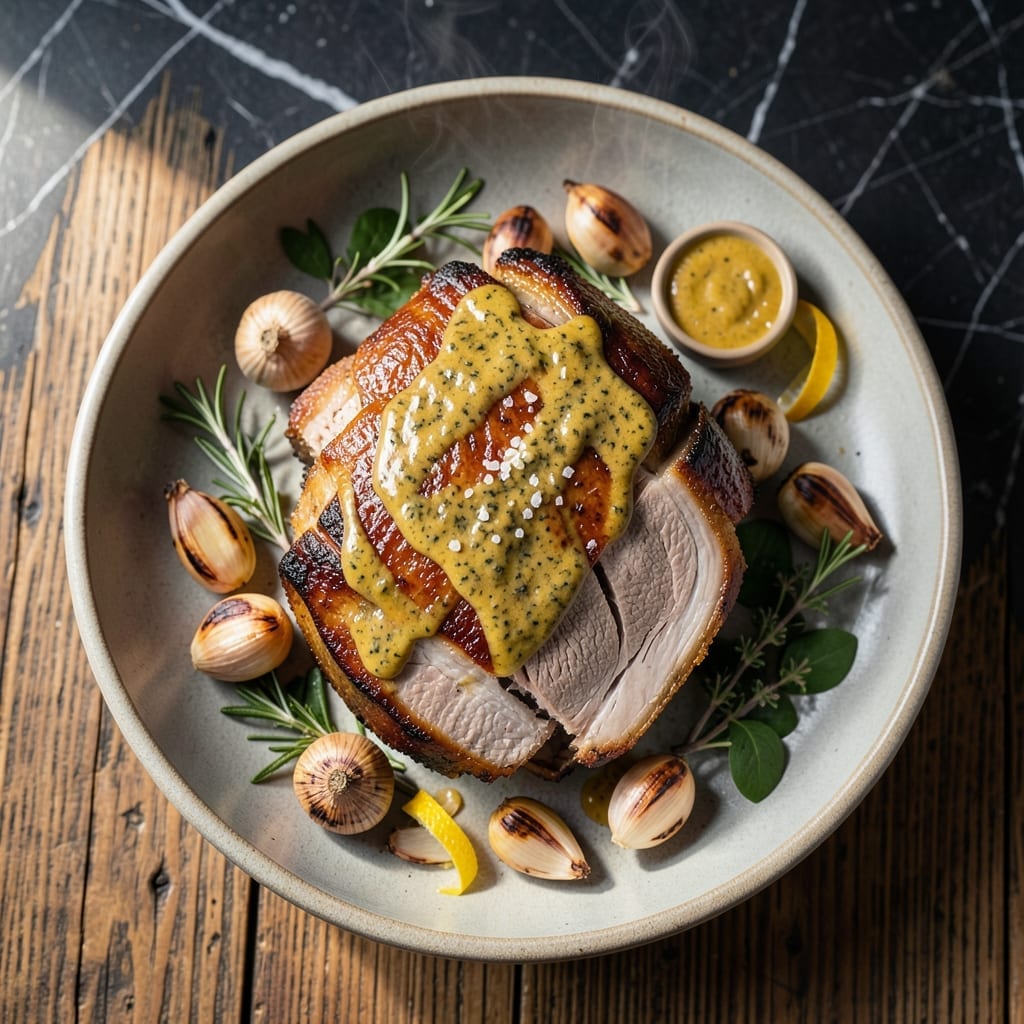
This herb-crusted pork roast delivers tender results with a bold dijon mustard finish. I developed this method after testing multiple approaches in my small Boston kitchen, ensuring it works in any home setup.
The mustard forms a golden crust that locks in juices while the herbs add aromatic depth. A simple dry rub before roasting guarantees flavor in every bite, and the oven does most of the work for you.
You’ll get perfectly cooked pork with a crisp exterior and moist interior, ready to slice and serve. The mustard glaze adds a tangy contrast that elevates each bite without overpowering the meat.
Ideal for Sunday dinners or special occasions, this dish proves that impressive results don’t require complicated techniques.
Ingredients for Pork Roast Recipe with Dijon Mustard
Simple ingredients create a showstopping herb-crusted roast with mustard glaze.
| Ingredient | Amount | Notes |
|---|---|---|
| Pork Shoulder Roast 🥩 | 3 lb | Bone-in for extra flavor |
| Dijon Mustard 🟡 | ½ cup | Smooth, not whole grain |
| Garlic Cloves 🧄 | 6 cloves | Minced for the rub |
| Fresh Rosemary 🌿 | 2 tbsp | Finely chopped leaves |
| Fresh Thyme 🍃 | 2 tbsp | Leaves stripped from stems |
| Kosher Salt 🧂 | 1 ½ tbsp | Plus more to taste |
| Black Pepper 🌶️ | 1 tbsp | Freshly ground preferred |
| Olive Oil 🫒 | 2 tbsp | For searing and rub |
| Dry White Wine 🍷 | ½ cup | For deglazing pan |
| Chicken Broth 🥣 | 1 cup | Low-sodium preferred |
| Honey 🍯 | 1 tbsp | Balances mustard's tang |
| Unsalted Butter 🧈 | 2 tbsp | For basting glaze |
The pork is the star here. Pork shoulder (sometimes called picnic shoulder) gives the best texture—marbled, juicy, and forgiving during cooking. Whole Foods and Costco both carry excellent bone-in options. Ask the butcher to leave the skin on if you want extra crisp (worth it). Look for pieces with good fat cap—this keeps the meat moist during the long roast.
No fresh herbs? Dried at one-third the amount works in a pinch, but fresh really shines here. Trader Joe’s has great pre-minced garlic if you’re short on time. Swap the white wine for apple cider vinegar plus broth if avoiding alcohol. The honey can be maple syrup (use the same amount) for a deeper flavor twist.
Leftovers keep beautifully—actually taste better the next day. Store sliced pork in its juices for up to 4 days in the fridge, or freeze for 3 months. The mustard glaze thickens as it cools, so reheat gently with a splash of broth.
Why You’ll Love This Recipe
- Minimal Effort: I just rub, roast, and let the oven do the work—no babysitting required.
- Dijon Magic: That tangy mustard crust with garlic and herbs? I could eat it straight off the roast.
- Feeds Everyone: From Sunday dinner to meal prep, this pork shoulder stretches for sandwiches, tacos, or salads all week.
- Leftovers Win: Honestly, the flavor gets even better the next day—if it lasts that long.
Step-by-Step Instructions for Herb-Crusted Pork Roast
Here’s how I achieve fall-apart tender pork with a crispy, flavorful crust every time.
Step 1: Create the Herb and Mustard Rub
In a small bowl, combine the 0.5 cup Dijon Mustard, minced 6 cloves Garlic Cloves, 2 tbsp Fresh Rosemary, 2 tbsp Fresh Thyme, 1.5 tbsp Kosher Salt, and 1 tbsp Black Pepper. I like to mash the garlic into the mustard first to create a smooth paste.
This paste will form the base of your flavor crust. The mustard’s tang cuts through the richness of the pork while the herbs add aromatic depth. Don’t skimp on the salt—it ensures the meat stays seasoned all the way through.
Step 2: Sear the Pork Shoulder
Pat the 3 lb Pork Shoulder Roast dry with paper towels—this guarantees a good sear. Heat the 2 tbsp Olive Oil in a large Dutch oven over medium-high heat until it shimmers. Sear the pork on all sides for about 3-4 minutes per side until deeply browned.
You’ll know it’s ready to flip when the meat releases easily from the pan. The searing step locks in juices and creates the foundation for a rich pan sauce later. Real talk: if your pan isn’t hot enough, the pork will steam instead of sear.
Step 3: Apply the Rub and Begin Roasting
Once seared, brush the entire surface of the pork with the mustard-herb paste, pressing it in so it adheres well. Place the roast fat-side up in the Dutch oven. This position allows the fat to baste the meat as it cooks, keeping it moist.
Pour the 0.5 cup Dry White Wine and 1 cup Chicken Broth into the pot, being careful not to wash off the rub. The liquid should come about halfway up the roast. Cover and transfer to a 325°F oven.
Step 4: Baste and Glaze to Perfection
After 2 hours of roasting, mix the 1 tbsp Honey and 2 tbsp Unsalted Butter in a small bowl. Uncover the pork and brush this glaze over the top. The honey adds a subtle sweetness that balances the mustard’s sharpness, while the butter enriches the crust.
Return the pork to the oven, uncovered, and roast for another 30-45 minutes until the internal temperature reaches 195-200°F. At this point, the meat should be fork-tender and nearly falling apart.
Step 5: Rest and Serve
Transfer the pork to a cutting board and tent loosely with foil. Let it rest for 15-20 minutes—this allows the juices to redistribute, ensuring every slice is moist and flavorful. Skim excess fat from the pan juices and serve them alongside the pork for drizzling.
Shred or slice the pork against the grain. The result should be tender enough to pull apart with a fork, with a crisp, golden crust on the outside. This dish tastes even better the next day, so don’t hesitate to make it ahead.
Pro Tips For Making Pork Roast Recipe With Dijon Mustard
- Sear the Pork First: I learned this the hard way—skipping the sear leaves your roast pale and lacking depth. Use a hot pan with a little oil to brown all sides before applying the mustard rub.
- Score the Fat Cap: Sounds weird, but it works: cut 1/4-inch slits in the fat cap so the Dijon, garlic, and herbs penetrate deeper as it roasts.
- Don’t Rush the Rest: After pulling it from the oven, give it a solid 15 minutes under foil before slicing—this keeps the juices from running all over the cutting board.
- Use Whole Garlic Cloves: My grandmother swore by this, and she was right: smashing whole cloves and stuffing them into slits in the meat infuses way more flavor than minced garlic.
Pro Cooking Tips for pork roast recipe with dijon mustard
Perfect Searing Technique
Pat the pork completely dry with paper towels before searing—this prevents steaming. Use a heavy Dutch oven (I love my Lodge) over medium-high heat until the oil shimmers. Sear 3-4 minutes per side until deep brown. Honestly, this step makes all the difference. 💡
Rub Application Pro Tip
Press the mustard-herb paste into the meat so it adheres well. Don’t rush this step—the thicker the paste layer, the better the crust. I use the back of a spoon to really work it into all the nooks and crannies of the roast.
Oven Temperature Control
Maintain 325°F throughout cooking for even doneness. If your oven runs hot, check 15 minutes early. A meat thermometer is non-negotiable—I use a ThermoWorks for accuracy. The pork is done at 195-200°F internal temp.
Basting for Maximum Flavor
After 2 hours, uncover and brush with the honey-butter glaze. Baste every 15 minutes during the final 30-45 minutes. This builds layers of flavor and creates that beautiful golden crust we all love. 🔥
Resting is Non-Negotiable
Let the pork rest 15-20 minutes before slicing. Tent loosely with foil to keep warm. Skim the fat from the pan juices and serve them alongside—this liquid gold elevates every bite.
Carving Like a Pro
Slice against the grain for maximum tenderness. The muscle fibers run in different directions in the shoulder, so rotate your cutting board as needed. Use a sharp carving knife—I swear by my Wüsthof for clean slices.
Nutrition Facts
Frequently Asked Questions
Can I use a different type of mustard?
Whole grain mustard works but creates a rustic texture. Avoid yellow mustard—it lacks depth. For milder flavor, mix Dijon with 1 tsp stone-ground mustard for complexity.
What if my pork isn’t falling apart at 195°F?
Give it more time! Pork shoulder needs 200°F internal temp to fully break down. Cover and return to oven, checking every 15 minutes until tender.
How do I prevent the crust from burning?
Tent loosely with foil after applying the honey-butter glaze. This protects the crust while allowing the meat to finish cooking. Remove foil during the final 10 minutes for browning.

- Potato Patty Recipe No Egg: Crispy Edges Without the Binder - October 30, 2026
- Paula Deen’s Potato Chip Cookies Recipe: Salty-Sweet Crunch in Every Bite - October 30, 2026
- Potato Gnocchi Recipe Ideas: Pillowy Soft Dumplings With Rustic Charm - October 30, 2026