
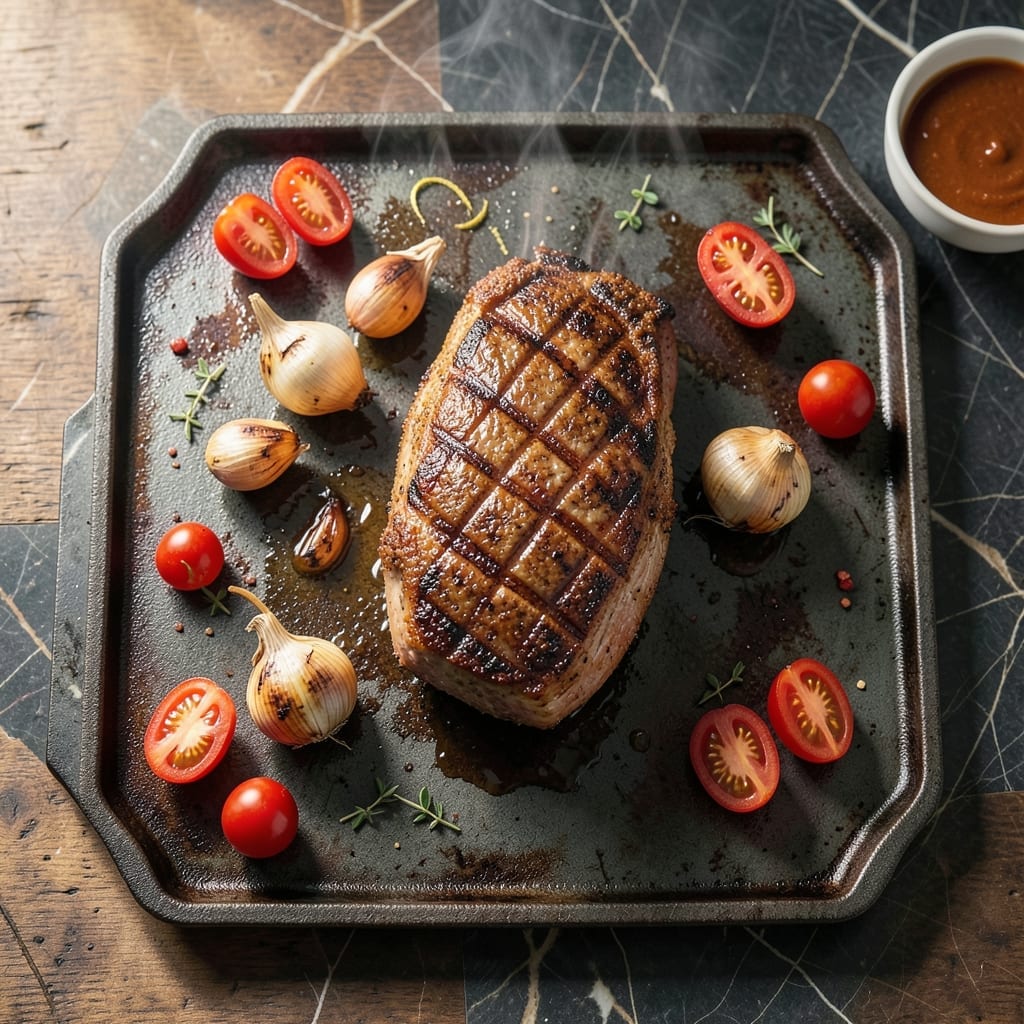
Achieving tender pork tenderloin with those coveted grill marks is simpler than you think on a Blackstone griddle. This method delivers juicy, flavorful results with minimal effort and maximum flavor impact.
The key lies in proper seasoning and precise heat control. Preheating the griddle ensures a perfect sear while locking in moisture. A simple dry rub enhances the natural pork flavor without overpowering it.
You’ll end up with a centerpiece that’s juicy inside with a beautifully caramelized exterior. The smoky char from the griddle adds depth that elevates this dish beyond ordinary pork tenderloin.
Pair with roasted vegetables or a fresh salad for a complete meal that impresses every time. The results speak for themselves.
Ingredients for Pork Tenderloin Recipe Blackstone
Simple seasonings and one stellar cut of pork. That’s all it takes.
| Ingredient | Amount | Notes |
|---|---|---|
| Pork Tenderloin 🥩 | 1 ½ lb | Trimmed of excess fat |
| Kosher Salt 🧂 | 1 tsp | Diamond Crystal preferred |
| Freshly Ground Black Pepper 🌶️ | 1 tsp | Coarse grind for texture |
| Garlic Powder 🧄 | 1 tsp | Not garlic salt |
| Onion Powder 🧅 | 1 tsp | Balances sweetness |
| Smoked Paprika 🌶️ | 1 tsp | Adds depth to rub |
| Dried Thyme 🍃 | ½ tsp | Earthy undertone essential |
| Olive Oil 🫒 | 2 tbsp | High smoke point preferred |
| Yellow Mustard 🟡 | 1 tbsp | Helps rub adhere |
| Brown Sugar 🟤 | 1 tbsp | Light or dark variety |
| Butter 🧈 | 2 tbsp | For basting during cooking |
The pork tenderloin is the star here—look for 1-1.5 lb pieces with even thickness (avoid the tapered ends). Costco has great options, but any grocery store with a solid meat counter will do. The dry rub spices should be fresh (Penzeys or bulk bins at natural food stores are ideal). If your paprika’s been in the cabinet for years, it’s time to replace it—old spices lose their punch.
No smoked paprika? Regular paprika plus a pinch of chipotle powder gets you close. Out of thyme? Rosemary at half the amount works in a pinch. The mustard can be any kind you’ve got (Dijon adds a nice kick). If you’re skipping the brown sugar, a drizzle of honey or maple syrup on the finished pork adds that caramelized touch.
Pork tenderloin cooks fast—use it within 3 days of purchase or freeze for up to 6 months. The dry rub keeps indefinitely in an airtight container. Leftovers? Slice thin for sandwiches or chop for fried rice (trust me, it’s amazing).
Why You’ll Love This Recipe
- One Pan Magic: I love that this cooks entirely on the Blackstone—no oven, no extra dishes.
- Flavor Bomb: The garlic and onion powder crust on the tenderloin is ridiculously good.
- Weeknight Hero: Honestly, it’s my go-to for busy evenings when I need dinner fast.
- Leftovers Win: The slices reheat beautifully for sandwiches the next day.
Step-by-Step Instructions for Pork Tenderloin on Blackstone
Here’s the method that delivers perfect grill marks and smoky depth every time.
Step 1: Create the Flavor-Packed Rub
In a small bowl, combine the 1 tsp Kosher Salt, 1 tsp Freshly Ground Black Pepper, 1 tsp Garlic Powder, 1 tsp Onion Powder, 1 tsp Smoked Paprika, and 0.5 tsp Dried Thyme. I like to crush the dried thyme between my fingers to release its aroma before mixing.
Add the 1 tbsp Brown Sugar and stir until fully incorporated. This sweet-spicy-savory blend creates a crust that caramelizes beautifully on the Blackstone. The smoked paprika is the secret to that deep, smoky char flavor even on a griddle.
Step 2: Prep and Season the Pork Tenderloin
Pat the 1.5 lb Pork Tenderloin completely dry with paper towels. This ensures the rub adheres properly and promotes even browning. Trim any remaining silver skin or excess fat—this prevents curling during cooking.
Brush the tenderloin all over with the 1 tbsp Yellow Mustard. The mustard acts as a binder for the rub and adds a subtle tang. I’ve found it doesn’t impart a strong mustard flavor, just helps create that perfect crust. Coat the pork evenly with the rub mixture, pressing gently to make it stick.
Drizzle with 2 tbsp Olive Oil and let it sit at room temperature for 15-20 minutes while you preheat the Blackstone. This rest allows the salt to penetrate the meat slightly.
Step 3: Sear and Baste on the Blackstone
Preheat your Blackstone griddle over medium-high heat until it’s ripping hot—a drop of water should sizzle and evaporate immediately. Place the tenderloin on the griddle and sear undisturbed for 4-5 minutes until you see a deep brown crust forming.
Flip the tenderloin and add the 2 tbsp Butter to the griddle. As it melts, use a spoon to baste the pork continuously for 3-4 minutes. The butter creates a beautiful golden finish and adds richness. You’ll notice the internal temperature climbing quickly—this is where that tender result comes from.
Step 4: Finish and Rest for Maximum Tenderness
Reduce heat to medium and continue cooking, turning occasionally, until the internal temperature reaches 145°F. This usually takes 8-10 minutes total cooking time depending on thickness. Use an instant-read thermometer inserted into the thickest part for accuracy.
Transfer the pork to a cutting board and let it rest for 10 minutes before slicing. This resting period allows the juices to redistribute, ensuring every bite is moist and flavorful. Slice against the grain into ½-inch thick medallions for the most tender texture.
Pro Tips For Making Pork Tenderloin Recipe Blackstone
- Preheat the Griddle: Get your Blackstone ripping hot—at least 400°F—before the pork hits the surface, or you’ll steam it instead of searing. I learned this the hard way after my first few attempts came out gray and sad.
- Pat It Dry: Blot the tenderloin with paper towels before seasoning—any moisture left on the surface will block the crust from forming. Sounds tedious, but it’s the difference between a steakhouse sear and a sad, soggy exterior.
- Skip the Overcrowding: Leave space between pieces on the griddle, or the temp will drop and your pork will boil in its own juices. After burning three batches, I finally figured out that patience here means better flavor.
- Rest Before Slicing: Tent the pork with foil and give it a solid 5-10 minutes off the heat—cutting too soon lets all the juices run out. My grandmother swore by this, and she was right: it keeps every bite tender.
Common Mistakes When Making Great pork tenderloin recipe blackstone
Overcrowding the Griddle
Resist the urge to cook multiple tenderloins at once. The Blackstone needs space for proper heat circulation. I learned this the hard way—crowding causes steaming instead of searing, leaving you with pale, soggy pork instead of that beautiful caramelized crust. 🔥
Skipping the Rest
Cutting into your pork immediately after cooking sends all those precious juices onto the cutting board. Always rest for the full 10 minutes—this is when the meat reabsorbs its moisture. I set a timer to avoid temptation.
Inconsistent Thickness
Look for tenderloins with even thickness to ensure uniform cooking. The tapered ends cook faster and can dry out. If yours is uneven, fold the thin end under and secure with skewers before cooking. This simple trick prevents overcooking one part while waiting for the rest.
Neglecting Temperature
Pork tenderloin cooks fast—pull it at exactly 145°F internal temperature. Overcooking even by 5°F turns it dry. I use a ThermoWorks instant-read thermometer for precision. Remember, the temperature continues rising 5-10°F during resting.
Poor Preheating
Your griddle must be ripping hot before the pork hits it. Test with a water drop—it should dance and evaporate immediately. I preheat for 10-15 minutes to ensure even heat distribution. Skipping this step means no proper sear or grill marks.
Ignoring the Grain
Always slice against the grain into ½-inch thick medallions. This shortens the muscle fibers, making each bite more tender. I find the grain direction by looking at the meat’s surface before cooking—it’s easier to spot when raw.
Nutrition Facts
Frequently Asked Questions
What temperature should the griddle be?
Preheat to medium-high heat until a water drop sizzles and evaporates immediately. This ensures a proper sear and prevents steaming.
How do I know when it’s done?
Use an instant-read thermometer to check for 145°F internal temperature. Pull it at this point—the temperature will rise another 5-10°F while resting.
Can I use a different cut of pork?
Stick with tenderloin for best results. Other cuts may require different cooking times and temperatures. The tenderloin’s uniform shape ensures even cooking.
Why does my pork come out dry?
Overcooking is the main culprit. Pull at exactly 145°F and let it rest for 10 minutes before slicing. This keeps it juicy.

- Bluefin Tuna Recipe Ideas: Sushi-Grade Seared and Sesame-Crusted - September 28, 2026
- Blue Zone Recipe Ideas: Longevity-Boosting Meals for Vibrant Living - September 28, 2026
- Beefaroni Recipe With Tomato Soup: One-Pot Nostalgic Comfort - September 28, 2026