
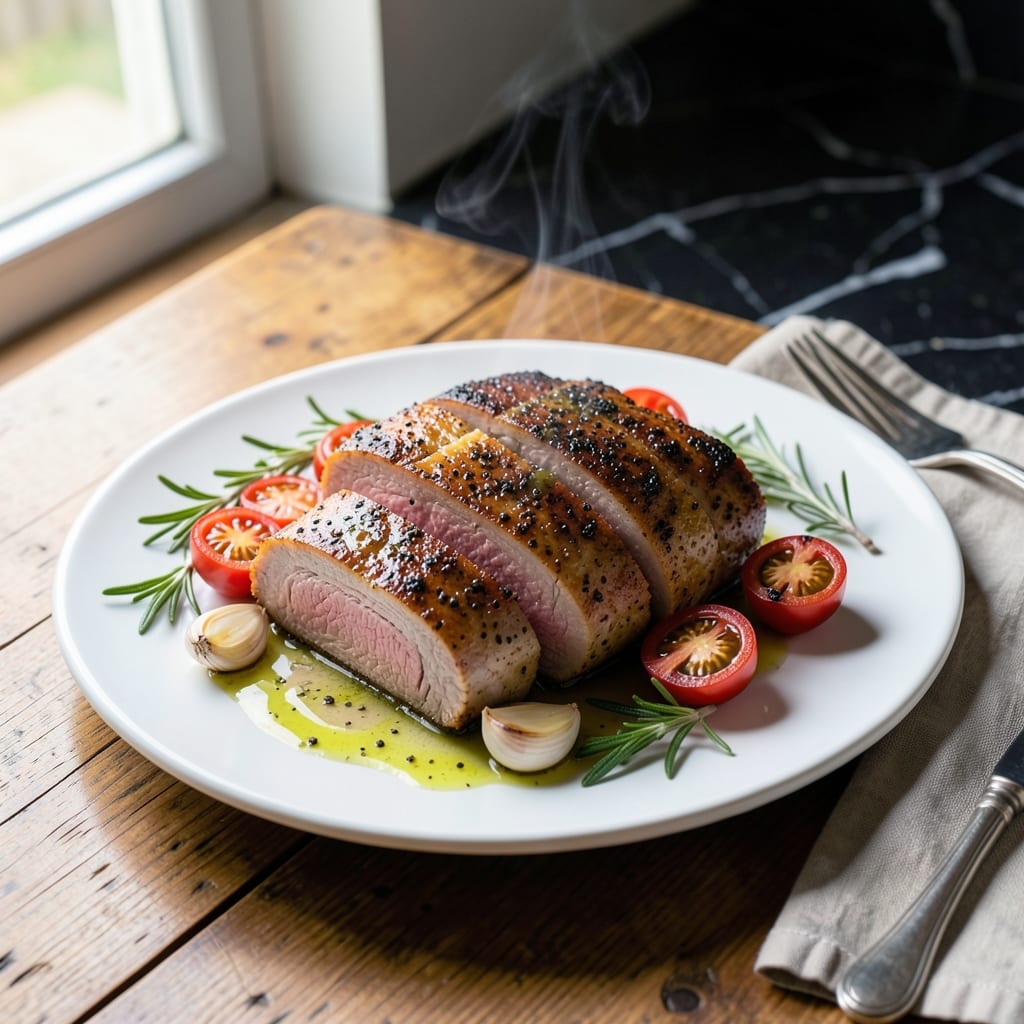
This recipe transforms a simple cut into something extraordinary. I’ve tested it multiple times in my tiny Boston kitchen to ensure it delivers tender, juicy results every time.
The secret lies in the garlic-rosemary infusion, which penetrates the pork as it cooks, creating layers of flavor that feel gourmet without the fuss.
With a high-heat sear and a finish in the oven, you’ll achieve a golden crust while keeping the inside perfectly moist and tender.
Serve it sliced, with pan juices drizzled over the top, for a dish that feels restaurant-worthy but is entirely approachable at home.
Ingredients for Pork Tenderloin Recipe Bobby Flay
A handful of fresh herbs, a bold sear, and one perfect cut of pork.
| Ingredient | Amount | Notes |
|---|---|---|
| Pork Tenderloin 🥩 | 1 ½ lb | Trimmed of excess fat |
| Garlic Cloves 🧄 | 6 cloves | Minced for infusion |
| Fresh Rosemary Sprigs 🌿 | 4 sprigs | Finely chopped, stems discarded |
| Extra-Virgin Olive Oil 🫒 | 3 tbsp | Divided for searing and infusion |
| Kosher Salt 🧂 | 1 ½ tsp | Diamond Crystal preferred |
| Freshly Ground Black Pepper 🌶️ | 1 tsp | Coarse grind ideal |
| Dry White Wine 🍷 | ½ cup | Sauvignon Blanc recommended |
| Chicken Stock 🥣 | ½ cup | Low-sodium preferred |
| Unsalted Butter 🧈 | 2 tbsp | For finishing sauce |
| Dijon Mustard 🟡 | 1 tbsp | Smooth, not whole grain |
| Shallot 🧅 | 1 whole | Finely minced |
| Fresh Thyme Sprigs 🍃 | 3 sprigs | Leaves stripped, stems discarded |
The pork tenderloin is the hero here—look for 1.5 lb pieces with even thickness for consistent cooking. Whole Foods or Costco usually have the best selection. Don’t skip trimming the silver skin (that thin white membrane), or it’ll curl during cooking. The rosemary and thyme? Fresh only—dried just won’t give you that bright, aromatic punch this dish deserves.
No white wine? Apple cider vinegar diluted with broth (2 tbsp vinegar + 6 tbsp broth) gets you close. Out of Dijon? Whole-grain mustard at half the amount works fine. For the stock, vegetable broth is an easy swap if you’re avoiding chicken. The butter at the end? Totally optional, but it adds a glossy finish that’s hard to beat (trust me on this).
Pork tenderloin cooks fast—use it within 2 days of purchase or freeze for 3 months. The garlic-rosemary infusion can be prepped ahead (keep it in the fridge, covered, for up to 24 hours). Leftovers? Slice thin and toss into sandwiches or salads the next day.
Why You’ll Love This Recipe
- I’ll be real: it reheats beautifully, so I make extra for lunches all week.
- One Pan Wonder: Honestly, I just toss the tenderloin with olive oil, garlic, and rosemary on a sheet pan—minimal cleanup, maximum flavor.
- Garlic-Rosemary Magic: The combo of fresh rosemary and garlic cloves makes this so crave-worthy, it’s my go-to for impressing guests.
- Meal Prep Hero: I’ll be real: it reheats beautifully, so I make extra for lunches all week.
Step-by-Step Instructions for Garlic-Rosemary Pork Tenderloin
This method delivers restaurant-quality results with minimal effort and maximum flavor.
Step 1: Prep and Season the Tenderloin
Pat the 1.5 lb Pork Tenderloin completely dry with paper towels. This is crucial—any moisture will prevent proper browning. Trim off any remaining silver skin or excess fat that the butcher might have missed.
Rub the tenderloin all over with 1 tbsp Extra-Virgin Olive Oil, then season generously with the 1.5 tsp Kosher Salt and 1 tsp Freshly Ground Black Pepper. I like to press the seasoning into the meat so it adheres well and creates a beautiful crust. Let it sit at room temperature for 20-30 minutes before cooking.
Step 2: Infuse Oil with Aromatics
In a small saucepan, heat 2 tbsp Extra-Virgin Olive Oil over low heat. Add the 6 cloves Garlic Cloves (minced), 4 sprigs Fresh Rosemary Sprigs (chopped), and 3 sprigs Fresh Thyme Sprigs (leaves stripped).
Let this infuse for 5-7 minutes until the garlic turns light golden and the herbs release their fragrance. Don’t let the garlic brown or it’ll turn bitter. Strain the oil through a fine-mesh sieve, reserving both the infused oil and the aromatics separately—you’ll use both.
Step 3: Sear and Roast to Perfection
Preheat your oven to 400°F. Heat an oven-safe skillet over medium-high heat. Add the infused oil and sear the tenderloin on all sides for 2-3 minutes per side until deeply browned. The crust should be golden brown and slightly crisp.
Transfer the skillet to the oven and roast for 15-20 minutes or until the internal temperature reaches 145°F. The meat should feel firm but still springy to the touch. Remove from the oven and transfer the pork to a cutting board, tenting loosely with foil to keep warm.
Step 4: Create the Pan Sauce
Place the same skillet back on the stove over medium heat. Add the 1 whole Shallot (minced) and sauté for 1-2 minutes until softened. Pour in the 0.5 cup Dry White Wine and deglaze the pan, scraping up all the browned bits with a wooden spoon.
Let the wine reduce by half, then add the 0.5 cup Chicken Stock, 2 tbsp Unsalted Butter, and 1 tbsp Dijon Mustard. Whisk until the butter melts and the sauce thickens slightly—about 3-4 minutes. Stir in the reserved garlic and herbs from the infusion. Taste and adjust seasoning if needed.
Step 5: Slice and Serve
Let the pork rest for 10 minutes before slicing. This allows the juices to redistribute, ensuring every bite is tender and moist. Slice the tenderloin into 1-inch thick medallions and arrange on a platter.
Spoon the warm pan sauce over the top, letting it pool slightly on the serving dish. The sauce should be silky and rich, complementing the tender pork perfectly. Serve immediately while warm.
Pro Tips For Making Pork Tenderloin Recipe Bobby Flay
- Sear It Hot: Get your pan screaming hot before adding the tenderloin—I learned this the hard way after too many pale, sad pork cuts. That high heat is what gives you the deep golden crust Bobby’s version is known for.
- Smash the Garlic: Press the garlic cloves with the flat side of your knife before using. Sounds weird, but it works: it releases more flavor into the oil and rosemary without burning the cloves to a bitter crisp.
- Skip the Overcrowding: If your pan isn’t big enough, sear the tenderloin in batches. Steaming from overcrowding gives you gray meat instead of that perfect brown edge, and I’ve ruined enough dinners to know it’s not worth the risk.
- Rest Under Foil: Let the pork rest under loose foil for 8-10 minutes after cooking. My grandmother swore by this, and she was right: it keeps the juices inside where they belong instead of all over your cutting board.
Essential Equipment for This Dish
Oven-Safe Skillet
An oven-safe skillet is non-negotiable here—I swear by my Lodge cast iron for its heat retention and even browning. A 12-inch size gives the pork room to sear without crowding. Avoid nonstick pans; they can’t handle the 400°F oven finish.
Instant-Read Thermometer
Precision matters with pork. I use a ThermoWorks ThermoPop for instant readings. Pull the tenderloin at 145°F internal temp for perfect doneness. The probe should slide in like butter when it’s ready. 🌡️
Fine-Mesh Sieve
Straining the infused oil requires a fine-mesh sieve to catch all the garlic and herb bits. I keep a 5-inch one in my Boston kitchen—just the right size for small batches. Press the solids gently to extract maximum flavor.
Wooden Spoon
Deglazing the pan calls for a wooden spoon to scrape up those flavorful browned bits. The flat edge gets into corners better than silicone. I’ve had my OXO Good Grips spoon for years—it’s my go-to for sauces.
Cutting Board
Give your pork space to rest on a large cutting board. I prefer teak wood with a juice groove to catch drippings. The board should be big enough to hold the whole tenderloin plus slices.
Kitchen Tongs
Turn the tenderloin with 12-inch tongs for safe handling during searing. I like OXO’s locking tongs—they grip securely without piercing the meat. Essential for that perfect crust on all sides. 💪
Nutrition Facts
Frequently Asked Questions
What temperature should the oven be set to?
Preheat your oven to 400°F for even cooking. This ensures a golden crust while keeping the inside juicy and tender.
Can I substitute the white wine in the sauce?
Yes! Use 2 tbsp apple cider vinegar mixed with 6 tbsp chicken stock for a similar tang. The acidity helps deglaze the pan and build flavor.
How long should the pork rest before slicing?
Let it rest for 10 minutes after cooking. This allows juices to redistribute, preventing dryness when you slice into 1-inch medallions.
What if my pork tenderloin is thicker on one end?
Fold the thinner end under itself and secure with kitchen twine. This creates even thickness for consistent cooking at 145°F internal temp.

- Potato Patty Recipe No Egg: Crispy Edges Without the Binder - October 30, 2026
- Paula Deen’s Potato Chip Cookies Recipe: Salty-Sweet Crunch in Every Bite - October 30, 2026
- Potato Gnocchi Recipe Ideas: Pillowy Soft Dumplings With Rustic Charm - October 30, 2026