
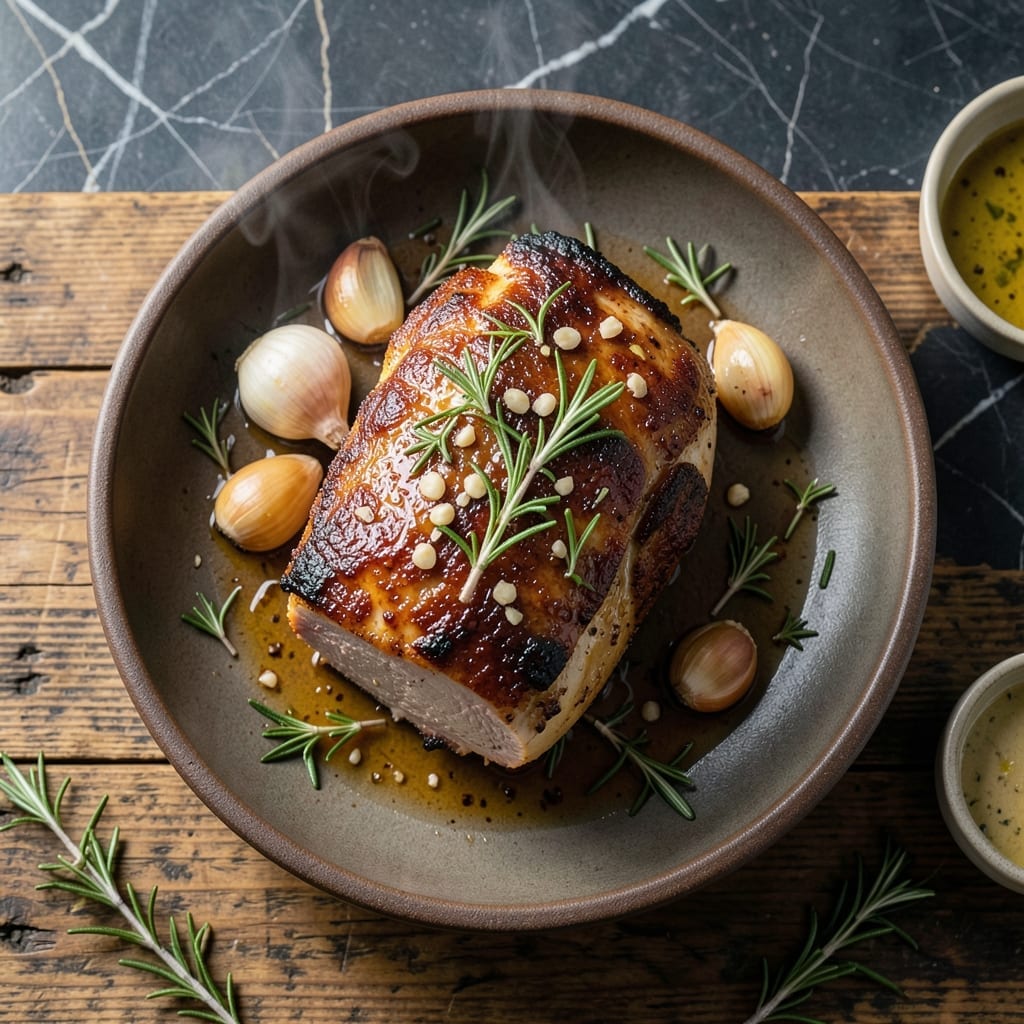
Slow-roasting transforms a simple pork shoulder into a tender, flavorful centerpiece for any meal. This method, honed through years of testing in my Boston kitchen, guarantees juicy meat with a golden crust.
The combination of fresh rosemary and garlic creates an aromatic infusion that penetrates every bite. I’ve perfected the timing and temperature to ensure the herbs shine without overpowering the pork’s natural richness.
With just a handful of ingredients and a hands-off approach, this dish delivers restaurant-quality results. The slow roast allows the flavors to meld, resulting in meat so tender it nearly falls apart.
Serve it with roasted vegetables or mashed potatoes to soak up every last drop of the savory juices. This is comfort food at its finest.
Ingredients for Pork Roast Recipe with Rosemary and Garlic
A handful of quality ingredients yields restaurant-quality results with minimal effort.
| Ingredient | Amount | Notes |
|---|---|---|
| Pork Shoulder 🥩 | 3 lb | Bone-in, skin-on preferred |
| Fresh Rosemary Sprigs 🌿 | 4 whole | Stems removed, finely chopped |
| Garlic Cloves 🧄 | 8 cloves | Peeled, minced |
| Olive Oil 🫒 | 3 tbsp | Extra-virgin preferred |
| Kosher Salt 🧂 | 1 ½ tsp | Diamond Crystal brand recommended |
| Black Pepper 🌶️ | 1 tsp | Freshly ground |
| Dijon Mustard 🟡 | 2 tbsp | Smooth, not grainy |
| Dry White Wine 🍷 | ½ cup | Sauvignon Blanc or Pinot Grigio |
| Chicken Stock 🥫 | 1 cup | Low-sodium preferred |
| Honey 🍯 | 1 tbsp | For caramelized crust |
| Fresh Thyme Sprigs 🌿 | 3 whole | Optional, for garnish |
| Yellow Onion 🧅 | 1 whole | Medium, sliced |
The pork shoulder is critical—bone-in, skin-on yields the juiciest results. Source from Whole Foods or your local butcher for best marbling. Fresh rosemary and garlic are non-negotiable; avoid dried substitutions for this recipe. In Boston, I’ve found Market Basket consistently stocks high-quality herbs at fair prices. The skin crisps beautifully when scored before roasting.
No white wine? Substitute apple cider vinegar mixed with water at a 1:1 ratio. For the stock, vegetable broth works equally well. Honey can be replaced with maple syrup, though the flavor profile shifts slightly. If fresh thyme isn’t available, dried at one-third the amount is acceptable, but fresh truly elevates the dish.
Store raw pork in the fridge for up to 3 days or freeze for 6 months. Leftovers keep for 4-5 days refrigerated and reheat beautifully. The rosemary and thyme can be wrapped in damp paper towels and stored in the fridge for about 1 week.
Why You’ll Love This Recipe
- Hands-Off Cooking: I just rub the pork with olive oil, salt, rosemary, and garlic, then let the oven do all the work.
- That Rosemary-Garlic Magic: The fat from the pork shoulder soaks up the fresh rosemary and roasted garlic—every bite is ridiculously flavorful.
- Feeds My Sunday Crowd: This one roast stretches to feed six, with leftovers that make killer sandwiches all week.
- Budget-Friendly Centerpiece: Pork shoulder is always affordable, and I get a showstopper meal without the steakhouse price tag.
Step-by-Step Instructions for Pork Roast With Rosemary And Garlic
This method ensures tender meat with a caramelized crust and aromatic herb infusion.
Step 1: Prepare the Herb and Garlic Rub
Finely chop the stems from the 4 whole fresh rosemary sprigs to yield about 2 tablespoons of needles. In a small bowl, combine the chopped rosemary with the 8 cloves minced garlic cloves, 3 tbsp olive oil, 2 tbsp Dijon mustard, 1 tbsp honey, 1.5 tsp kosher salt, and 1 tsp black pepper.
Mix thoroughly until the ingredients form a cohesive paste. I prefer using a fork for this as it helps break down the rosemary needles. The mustard and honey will create a beautiful caramelized crust while the garlic and rosemary infuse every bite with aromatic flavor.
Step 2: Season and Sear the Pork
Pat the 3 lb pork shoulder dry with paper towels. Using your hands, rub the herb-garlic paste all over the pork, ensuring every surface is well coated. This step is crucial for maximum flavor penetration.
Place the 1 whole yellow onion slices in the bottom of a Dutch oven or heavy roasting pan. Position the pork shoulder on top of the onions, fat-side up. The onions will create a natural rack and add sweetness to the pan juices. Sear the pork in the pan over medium-high heat for 3-4 minutes per side until deeply browned.
Step 3: Deglaze and Begin Roasting
Carefully pour the 0.5 cup dry white wine into the hot pan, using a wooden spoon to scrape up any browned bits from the bottom. This deglazing step captures all the flavorful fond that will enhance your sauce.
Allow the wine to simmer for 2-3 minutes until reduced by half. Then add the 1 cup chicken stock around the pork, being careful not to wash off the herb rub. The liquid should come about halfway up the pork.
Step 4: Slow Roast to Perfection
Cover the pan tightly with a lid or foil and transfer to a preheated 325°F oven. Roast for 3 to 3.5 hours, turning the pork every 45 minutes to ensure even cooking and basting.
The pork is done when it’s fork-tender and the internal temperature reaches 195-200°F. You’ll notice the meat easily pulls apart with a fork. The 3 whole fresh thyme sprigs can be added during the last 30 minutes of cooking for additional aromatic depth if desired.
Step 5: Rest and Serve
Carefully transfer the pork to a cutting board, leaving the pan juices behind. Tent loosely with foil and let rest for 20-30 minutes. This allows the juices to redistribute, ensuring moist, tender meat.
Skimming excess fat from the pan juices and reducing them slightly makes a perfect sauce to serve with the pork. Slice or shred the pork and arrange on a platter, spooning the reduced pan juices over the top. The result will be fall-apart tender meat with a deeply flavorful herb-infused crust.
Pro Tips For Making Pork Roast Recipe With Rosemary And Garlic
- Rest Before Slicing: Let the roast rest under foil for at least 15-20 minutes after pulling it from the oven—I learned this the hard way when all the juices ended up on the cutting board instead of in the meat.
- Score the Fat: Cut 1/4-inch slits into the pork shoulder’s fat cap before seasoning so the rosemary and garlic can penetrate deeper, and the salt actually sticks where it matters.
- Don’t Skip Dry Brining: Salt the pork shoulder the night before and leave it uncovered in the fridge; it’s the thing that matters most for even seasoning and a better crust.
- Smash the Garlic: Lightly crush the garlic cloves with the side of your knife before stuffing them into the slits—this releases way more flavor without turning them bitter.
Storing and Reheating This Dish
Refrigerator Storage
After cooling for no more than 2 hours, transfer leftovers to airtight containers—I swear by glass Pyrex with snap lids. Store at 40°F or below for up to 4 days. The flavors deepen overnight as the rosemary and garlic meld further. ❄️
Freezer Storage
For longer storage, portion the pork with some pan juices in quart-sized freezer bags. Squeeze out excess air to prevent freezer burn. It keeps beautifully for up to 3 months without losing texture or flavor.
Stovetop Reheating
My preferred method: place portions in a skillet with ¼ cup chicken stock over medium-low heat. Cover and warm for 8-10 minutes, stirring occasionally. This keeps the meat moist and revives that just-cooked tenderness.
Oven Reheating
Preheat to 300°F, wrap pork in foil with 2 tbsp stock, and heat for 15-20 minutes. This works well for larger portions. I learned this trick during my pot pie disaster days—gentle heat is key.
Microwave Option
For quick meals, cover individual portions with a damp paper towel. Heat on 50% power for 2-3 minutes, then check. Add 1-2 minutes more if needed. The damp towel prevents drying. 🔥
Sauce Revival
If the pan juices have thickened, thin with 1-2 tbsp water or stock before reheating. Simmer for 3-4 minutes to restore the perfect consistency. I always taste and adjust seasoning with a pinch of salt if needed.
Nutrition Facts
Frequently Asked Questions
Can I use dried rosemary instead of fresh?
Use 1 tbsp dried rosemary to replace 4 fresh sprigs. The flavor is more concentrated, so reduce slightly to avoid bitterness. Fresh is preferred for the brightest aromatic profile.
Why rest the pork before slicing?
Resting for 20-30 minutes lets juices redistribute, preventing dry meat. Skipping this step means flavorful liquid ends up on the cutting board, not in the meat.
Can I cook this in a slow cooker?
Yes! Sear first, then cook on low for 8-10 hours or high for 5-6 hours. Add ½ cup extra stock since slow cookers don’t reduce liquid like ovens.
How do I know when it’s done?
The pork is ready at 195-200°F internal temp and should pull apart easily with a fork. The meat will be fall-apart tender and the crust deeply caramelized.

- Potato Chip Cookie Recipe With Pecans: Buttery Crunch Meets Nutty Richness - October 30, 2026
- Potato Patty Recipe No Egg: Crispy Edges Without the Binder - October 30, 2026
- Paula Deen’s Potato Chip Cookies Recipe: Salty-Sweet Crunch in Every Bite - October 30, 2026