
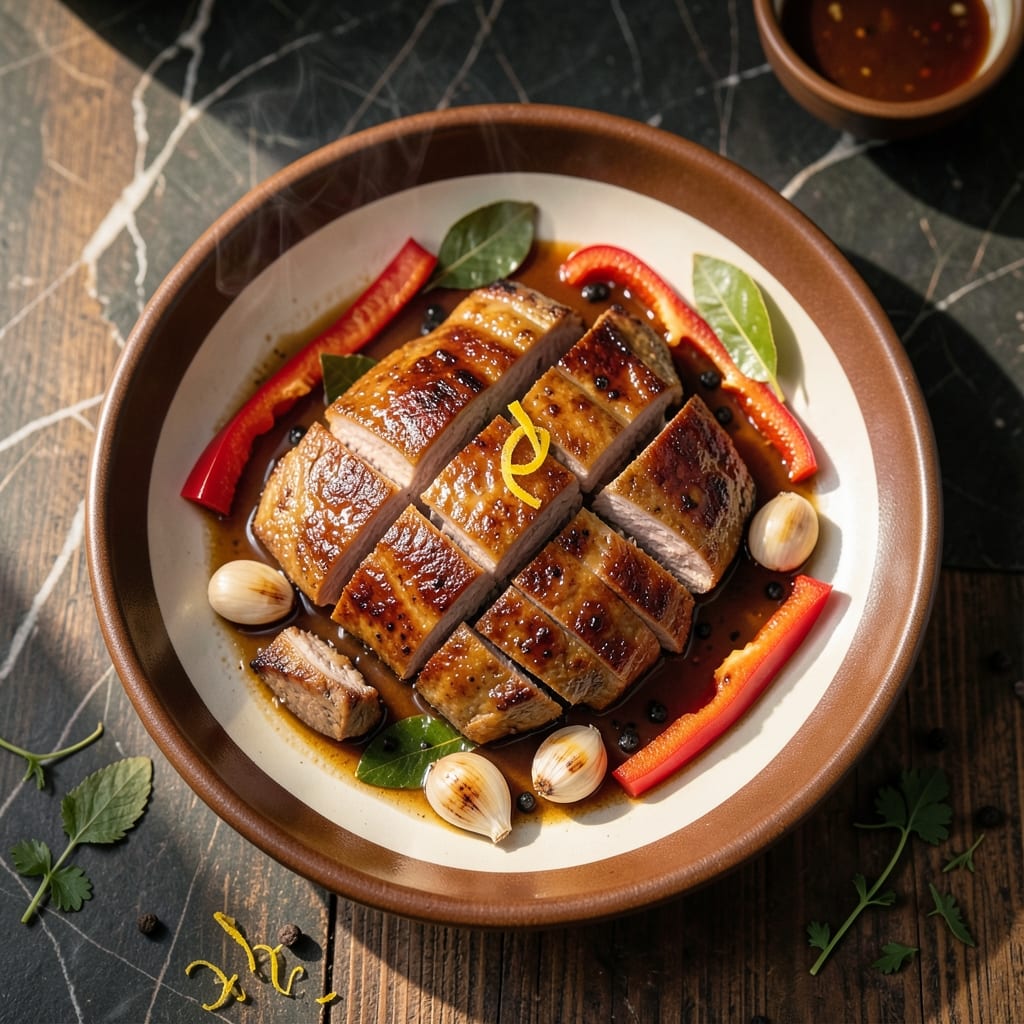
This Filipino-style pork tenderloin delivers tender, juicy results with a bold adobo marinade that defines the dish. The combination of soy sauce, vinegar, and garlic creates an unmistakable depth of flavor.
I developed this method to maximize flavor while keeping the process simple. The pork marinated overnight absorbs every savory note, ensuring each bite is packed with authentic taste.
The secret lies in the balance of salty, tangy, and garlicky elements that make this dish a standout. Searing the tenderloin locks in moisture before finishing in the oven for perfect doneness.
Serve with steamed rice to soak up the rich sauce. This is comfort food that feels special without demanding complicated techniques.
Ingredients for Pork Tenderloin Recipe Filipino Style
Bold adobo flavors start with quality pork and a few pantry staples for authentic taste.
| Ingredient | Amount | Notes |
|---|---|---|
| Pork Tenderloin 🥩 | 1 ½ lb | Trimmed of excess fat |
| Soy Sauce 🫙 | ½ cup | Low-sodium preferred for balance |
| White Vinegar 💧 | ½ cup | Cane or distilled for authenticity |
| Garlic Cloves 🧄 | 8 cloves | Peeled and crushed |
| Bay Leaves 🌿 | 4 whole | Dried, whole leaves preferred |
| Black Peppercorns 🌶️ | 1 tsp | Freshly cracked for best flavor |
| Brown Sugar 🍚 | 2 tbsp | Light or dark, packed |
| Olive Oil 🫒 | 2 tbsp | For searing pork tenderloin |
| Water 💧 | ¼ cup | For marinade consistency |
| Green Onions 🧅 | 4 whole | Thinly sliced for garnish |
| Jasmine Rice 🍚 | 1 ½ cups | Uncooked, for serving |
| Salt 🧂 | ½ tsp | Kosher or sea salt |
The pork tenderloin quality is non-negotiable here. Look for firm, pink flesh with minimal fat—Whole Foods or your local butcher are reliable sources. Avoid pre-marinated versions; they’ll dilute the adobo’s impact. The soy sauce should be a Filipino brand like Silver Swan or Datu Puti for authentic salinity. Bay leaves must be whole and dried—crumbled versions lose their aromatic potency.
No Filipino soy sauce? Use low-sodium soy sauce with a pinch of salt to adjust. Short on vinegar? Apple cider vinegar works in a pinch but reduces intensity. Garlic is essential—fresh only, no jarred substitutes. For the sugar, coconut sugar can replace brown sugar at a 1:1 ratio. The rice must be jasmine—basmati or long-grain won’t absorb the sauce the same way.
Marinate the pork overnight for maximum flavor penetration. Store leftovers airtight in the fridge for up to 4 days. The dish reheats well—3 months frozen. Rice absorbs sauce best when served immediately.
Why You’ll Love This Recipe
- One Pan Wonder: I just toss the pork with soy sauce, vinegar, garlic, and bay leaves, then let it simmer—hardly any cleanup.
- Umami Bomb: That soy-vinegar-garlic combo hits all the right notes, tangy and savory in every bite.
- Feeds a Crowd: I make a big batch for potlucks, and it’s always the first dish to disappear.
- Budget Stretch: Pork tenderloin stays affordable, and leftovers taste even better the next day.
Step-by-Step Instructions for Pork Tenderloin Filipino Style
Master the technique for tender, juicy adobo-marinated slices with authentic Filipino flavor and texture.
Step 1: Prepare the Adobo Marinade
In a large bowl, combine the 0.5 cup soy sauce, 0.5 cup white vinegar, 8 cloves garlic cloves, 4 whole bay leaves, 1 tsp black peppercorns, 2 tbsp brown sugar, and 0.25 cup water. Whisk until the brown sugar dissolves completely and the spices are evenly distributed.
This balance of salty, tangy, and sweet creates the signature adobo profile. The vinegar tenderizes the pork while preserving its natural moisture. I always crush the garlic cloves slightly before adding them to release more flavor into the marinade.
Step 2: Marinate the Pork Tenderloin
Pat the 1.5 lb pork tenderloin dry with paper towels to ensure the marinade adheres properly. Place it in the marinade, turning to coat completely. Cover and refrigerate for at least 4 hours, or ideally overnight for maximum flavor penetration.
For even coverage, I turn the pork tenderloin every 2 hours during marinating. The longer it sits, the more the flavors develop. You’ll notice the meat darkens slightly as it absorbs the marinade—a good sign the seasoning is working.
Step 3: Sear and Cook the Pork
Remove the pork tenderloin from the marinade (reserve the marinade) and pat dry. Heat the 2 tbsp olive oil in a large skillet over medium-high heat. Sear the pork on all sides for 2-3 minutes per side until deeply browned. This creates a flavorful crust while locking in juices.
Pour in the reserved marinade and add the 0.5 tsp salt. Reduce heat to medium-low, cover, and simmer for 25-30 minutes, turning occasionally, until the internal temperature reaches 145°F. The pork should be tender enough to pull apart slightly with a fork.
Step 4: Rest and Slice
Transfer the pork tenderloin to a cutting board and let it rest for 10 minutes before slicing. This allows the juices to redistribute throughout the meat. I tent it loosely with foil to keep it warm during this crucial resting period.
Slice the pork tenderloin against the grain into ½-inch thick pieces. The grain runs lengthwise along the tenderloin, so your knife should cut perpendicular to this direction. This shortens the muscle fibers, ensuring each bite is maximally tender.
Step 5: Serve with Jasmine Rice and Garnish
Cook the 1.5 cups jasmine rice according to package instructions. Arrange the sliced pork over the hot rice and spoon some of the reduced marinade on top. The sauce should be thick enough to cling to the meat but still pourable.
Garnish with the 4 whole green onions, thinly sliced. The fresh, crisp green onions provide a bright contrast to the rich, savory pork. Serve immediately while the pork is still warm and at its most juicy.
Pro Tips For Making Pork Tenderloin Recipe Filipino Style
- Sear First, Simmer Later: Brown the tenderloin hard in a hot pan for 2-3 minutes per side before adding the soy-vinegar-garlic mixture—this locks in flavor and prevents the meat from boiling in the sauce.
- Crush the Garlic: Smash the garlic cloves with the side of your knife before mincing; it releases more oils and makes the adobo sauce more aromatic.
- Skip the Overcrowding: If your pan is too small, cook the tenderloin in two batches—steaming from too much liquid or crowded meat will make it tough instead of tender.
- Rest Before Slicing: Let the pork rest for at least 5 minutes after cooking, tented with foil, so the juices redistribute—I learned this the hard way after serving dry slices.
Flavor Customization for This Recipe
Sweet and Tangy Twist
For a sweeter profile, increase the brown sugar to 3 tbsp or add 2 tbsp pineapple juice to the marinade. The natural sweetness balances the vinegar’s tang beautifully. I love this version for weeknight meals when I want something vibrant. 💛
Spicy Adobo Kick
Add 1-2 chopped siling labuyo (Filipino bird’s eye chili) or ½ tsp red pepper flakes to the marinade for heat. For extra depth, include 1 tbsp gochujang—it adds umami without overpowering the adobo base. The heat builds gradually, so taste as you go.
Citrus Brightness
Swap ½ cup white vinegar for ½ cup calamansi juice or a mix of lemon and lime juice. The citrus brightens the dish and pairs perfectly with the soy’s saltiness. I often add 1 tsp zest from the fruit for extra aroma.
Coconut Milk Richness
For a creamier sauce, stir in ½ cup coconut milk during the final 10 minutes of cooking. This variation, inspired by Bicol-style adobo, adds a luxurious texture. The coconut mellows the acidity while keeping the dish light.
Extra Garlicky Depth
Double the garlic to 16 cloves for a more robust flavor. Roast 4 cloves first, then mash them into the marinade for a deeper, sweeter garlic note. I find this works especially well when serving with extra rice to soak up the sauce. ✨
Herb-Infused Adobo
Add 5-6 fresh thyme sprigs or 1 tbsp dried oregano to the marinade for an earthy layer. These herbs complement the bay leaves and add complexity. Remove the thyme sprigs before serving for a clean presentation.
Nutrition Facts
Frequently Asked Questions
Can I use a different cut of pork?
Pork shoulder works well but needs 45-60 minutes to become tender. Avoid lean cuts like loin—they dry out during cooking. Tenderloin stays juicy and absorbs marinade best.
How do I prevent the sauce from being too salty?
Use low-sodium soy sauce and balance with extra brown sugar or vinegar. Taste the marinade before adding pork and adjust as needed.
Can I make this in a slow cooker?
Yes! Sear the pork first, then cook on low for 6-7 hours or high for 3-4 hours. Add ¼ cup water to prevent drying out. Slice and serve over rice.
What if my marinade isn’t thickening?
Simmer uncovered for 5-10 minutes after cooking the pork. The vinegar reduces naturally. For faster results, mix 1 tsp cornstarch with water and stir in.

- Potato Patty Recipe No Egg: Crispy Edges Without the Binder - October 30, 2026
- Paula Deen’s Potato Chip Cookies Recipe: Salty-Sweet Crunch in Every Bite - October 30, 2026
- Potato Gnocchi Recipe Ideas: Pillowy Soft Dumplings With Rustic Charm - October 30, 2026