
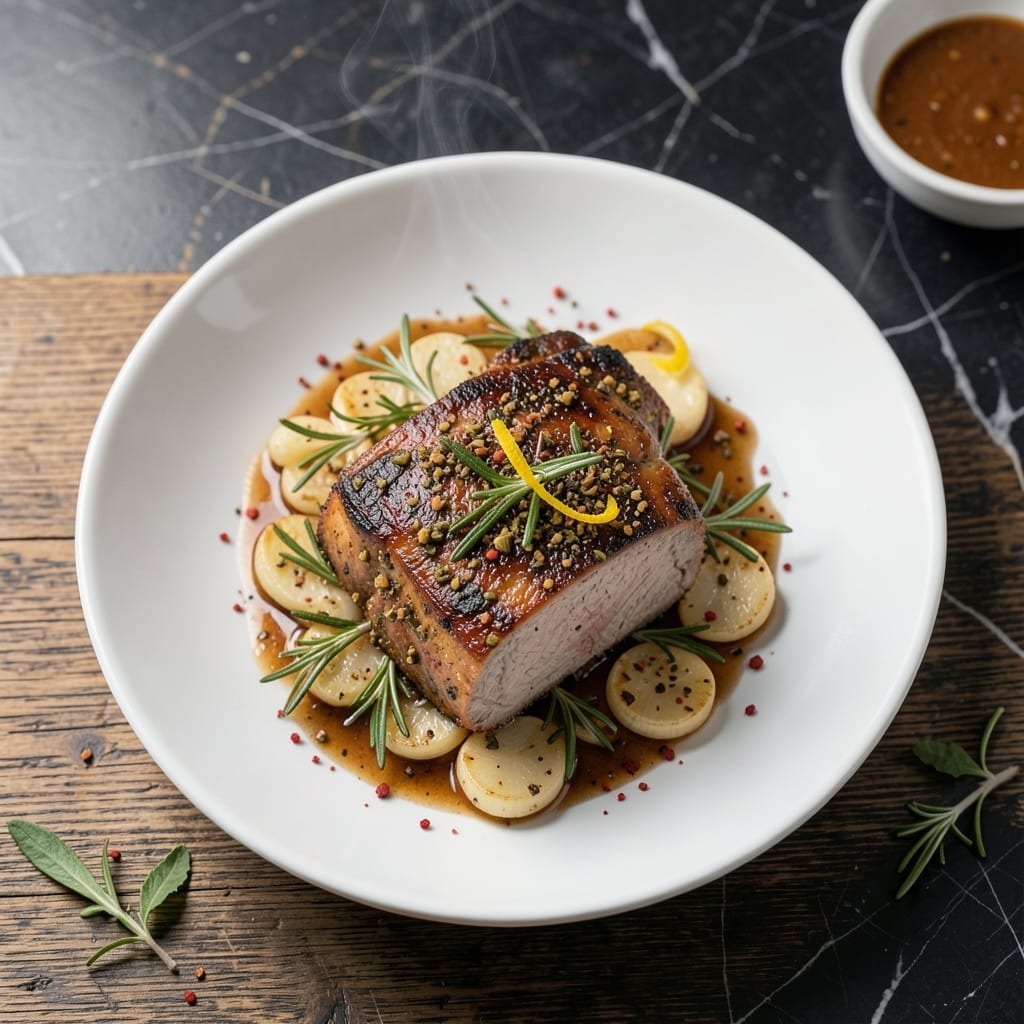
This pork tenderloin with Italian seasoning transforms a simple cut into a tender, herb-crusted centerpiece worthy of any dinner table. My approach maximizes flavor while keeping the method effortless.
The secret lies in a well-balanced rub of Italian herbs and spices that creates a golden, aromatic crust. A quick sear locks in juices, while a brief oven finish ensures perfect doneness without drying out the meat.
What emerges is a dish with a beautifully caramelized exterior and moist, flavorful interior. The herb blend adds depth without overpowering the natural richness of the pork.
Serve with roasted vegetables or a simple salad for a complete meal that feels special but requires minimal effort.
Ingredients for Pork Tenderloin Recipe Italian Seasoning
A select tenderloin and aromatic herbs create this elegant, golden-crusted dish with minimal effort.
| Ingredient | Amount | Notes |
|---|---|---|
| Pork Tenderloin 🥩 | 1 ½ lb | Trimmed of silver skin |
| Dried Basil 🌿 | 1 tbsp | Crushed between fingers |
| Dried Oregano 🍃 | 1 tbsp | Mediterranean variety preferred |
| Dried Rosemary 🌿 | 1 tsp | Finely crushed |
| Dried Thyme 🍃 | 1 tsp | Rubbed to release oils |
| Garlic Powder 🧄 | 1 tsp | Not garlic salt |
| Onion Powder 🧅 | 1 tsp | Freshly ground if possible |
| Kosher Salt 🧂 | 1 tsp | Diamond Crystal preferred |
| Black Pepper 🌶️ | ½ tsp | Freshly ground for best flavor |
| Red Pepper Flakes 🔥 | ¼ tsp | Optional for heat |
| Olive Oil 🫒 | 2 tbsp | Extra-virgin for searing |
| Dijon Mustard 🟡 | 1 tbsp | For crust adhesion |
The pork tenderloin should be uniform in thickness for even cooking. Whole Foods and Costco consistently carry high-quality options with good marbling. For the dried herbs, Penzeys offers superior potency and freshness. Look for vibrant color and strong aroma in your spices—dull, dusty herbs won’t deliver the depth this dish requires.
No dried rosemary? Fresh rosemary at double the amount, finely chopped, works beautifully. Out of Dijon? Whole-grain mustard adds pleasant texture. The olive oil can be any high-smoke-point variety if extra-virgin isn’t available. For a milder flavor, reduce the garlic powder by half the quantity and add a pinch of sugar to balance.
The herb blend keeps in an airtight container for 6-12 months, but the pork should be used within 2-3 days of purchase. For best results, bring the tenderloin to room temperature before applying the rub—this ensures even cooking and optimal crust formation.
Why You’ll Love This Recipe
- Minimal Effort: Honestly, it’s just rub, sear, and bake—no marinating, no fuss.
- Herb Heaven: That mix of basil, oregano, rosemary, and thyme gives it a warm, earthy flavor that’s ridiculously good.
- Feeds the Week: I make it Sunday and we’re set for lunches—tastes just as great cold in a sandwich.
- Budget Hero: One pork tenderloin, a few pantry spices, and it stretches to feed four without breaking the bank.
Step-by-Step Instructions for Herb-Crusted Pork Tenderloin
Master this method for a perfectly tender result with a golden, aromatic crust every time.
Step 1: Prepare the Herb Rub
In a small bowl, combine the 1 tbsp dried basil, 1 tbsp dried oregano, 1 tsp dried rosemary, 1 tsp dried thyme, 1 tsp garlic powder, 1 tsp onion powder, 1 tsp kosher salt, 0.5 tsp black pepper, and 0.25 tsp red pepper flakes.
Crush the herbs between your fingers to release their essential oils. This step intensifies the flavor profile significantly. The mixture should be fragrant and uniform in texture, ready to adhere to the pork.
Step 2: Coat the Pork Tenderloin
Pat the 1.5 lb pork tenderloin dry with paper towels to ensure the rub adheres properly. Brush the entire surface with the 1 tbsp Dijon mustard, which acts as a binder for the herb mixture.
Rub the herb blend all over the tenderloin, pressing firmly to create an even coating. The mustard and oil combination will form a beautiful crust during cooking. Let the seasoned pork sit at room temperature for 15-20 minutes to allow the flavors to penetrate.
Step 3: Sear the Tenderloin
Heat the 2 tbsp olive oil in a large oven-safe skillet over medium-high heat until shimmering. Add the pork tenderloin and sear, turning occasionally, until all sides are golden brown. This should take about 6-8 minutes total.
The searing process develops a flavorful crust and locks in the juices. You’ll hear a satisfying sizzle when the pork hits the pan—this is the sound of the Maillard reaction creating complex flavors.
Step 4: Finish in the Oven
Transfer the skillet to a preheated 400°F oven. Roast the pork tenderloin for 15-20 minutes or until the internal temperature reaches 145°F on an instant-read thermometer.
The pork is done when the juices run clear and the meat feels slightly firm but still yields to pressure. The herb crust will be deeply browned and fragrant, signaling that the flavors have fully developed.
Step 5: Rest and Serve
Remove the pork from the oven and transfer it to a cutting board. Tent loosely with aluminum foil and let it rest for 10 minutes. This resting period allows the juices to redistribute throughout the meat, ensuring a tender result.
Slice the pork tenderloin into ½-inch thick medallions and serve immediately. The internal temperature will rise a few degrees during resting, reaching the ideal serving temperature of 150-155°F for perfectly tender pork.
Pro Tips For Making Pork Tenderloin Recipe Italian Seasoning
- Sear It Hot: Crank your pan to medium-high before adding the pork—this gives the tenderloin a golden crust that locks in juices while the Italian seasoning forms a fragrant crust.
- Bloom Your Spices: Toast the dried basil, oregano, rosemary, and thyme in the pan for 10-15 seconds before adding the pork to wake up their flavors and prevent a dull, dusty taste.
- Don’t Overcook: Pull the pork at 145°F internal temp—it’ll rise to 150°F while resting, and anything higher turns tenderloin dry, no matter how good your seasoning is.
- Rest Under Foil: Tent the cooked pork with foil and let it sit for 5-10 minutes; this keeps it moist and lets the Italian herbs reabsorb into the meat instead of pooling on the cutting board.
Make-Ahead Tips for Leftovers
Prep the Rub Ahead
Mix your herb blend up to 3 days before cooking and store in an airtight container. This gives the dried herbs time to meld together. I always make a double batch so I have it ready for next time. 💡
Season the Pork
Coat the tenderloin with the Dijon mustard and herb rub up to 12 hours ahead. Wrap it tightly in plastic wrap and refrigerate. The longer it sits, the deeper the flavors penetrate.
Sear Before Storing
For maximum convenience, sear the tenderloin as directed, then let it cool completely. Store in the fridge for up to 24 hours before finishing in the oven. This cuts your active cooking time in half.
Oven Finish Later
When ready to cook, let the seared tenderloin sit at room temperature for 30 minutes before transferring to the 400°F oven. This ensures even cooking throughout.
Rest and Reheat
If serving later, let the cooked pork rest, then slice and store in the fridge for up to 3 days. Reheat slices in a skillet over medium heat with a splash of water. ⏰
Freeze for Later
Cooked tenderloin freezes beautifully for up to 3 months. Slice before freezing for easy portion control. Thaw overnight in the fridge before reheating.
Nutrition Facts
Frequently Asked Questions
Can I use fresh herbs instead of dried?
Yes, use 3 times the amount of fresh herbs. For example, 3 tbsp fresh basil replaces 1 tbsp dried. Finely chop them for even distribution.
Why rest the pork before slicing?
Resting for 10 minutes lets juices redistribute. Slicing too soon causes dry meat as the juices spill out. The temperature also rises to 150-155°F for perfect doneness.
Can I cook this without an oven-safe skillet?
Transfer the seared pork to a baking dish. Use the same 400°F oven and time. You’ll lose some fond flavors but still get great results.
How can I tell when it’s done without a thermometer?
Press the thickest part—it should feel firm but springy. Juices should run clear, not pink. For safety, always aim for 145°F internally.

- Potato Patty Recipe No Egg: Crispy Edges Without the Binder - October 30, 2026
- Paula Deen’s Potato Chip Cookies Recipe: Salty-Sweet Crunch in Every Bite - October 30, 2026
- Potato Gnocchi Recipe Ideas: Pillowy Soft Dumplings With Rustic Charm - October 30, 2026