
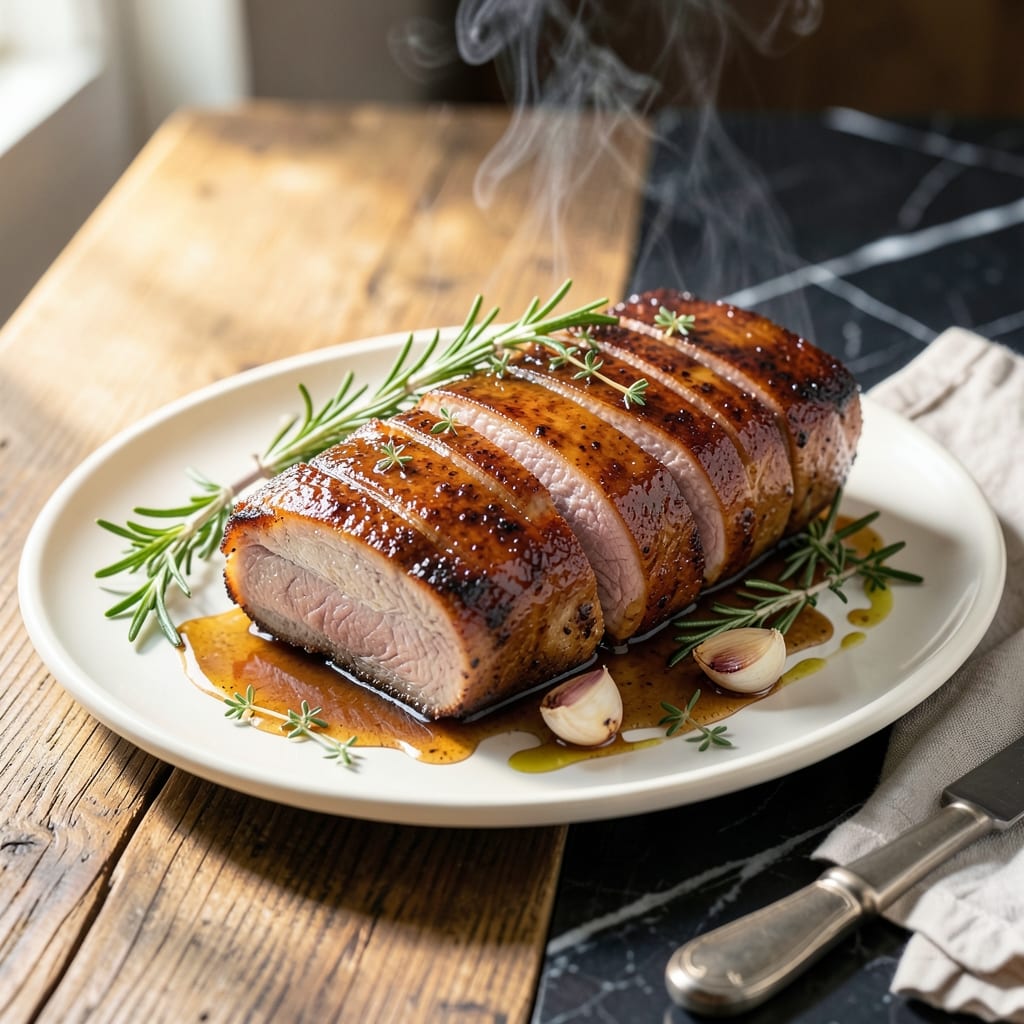
This recipe transforms pork tenderloin into a tender, restaurant-quality centerpiece with minimal effort. The maple syrup glaze caramelizes beautifully, creating a sticky-sweet crust that complements the herb-infused meat.
I developed this method after years of testing different approaches, settling on a simple technique that guarantees juicy results every time. The herb crust adds depth, while the glaze balances sweetness with savory notes.
The pork cooks quickly at high heat, allowing the outside to develop a rich brown color while the inside stays perfectly tender. A meat thermometer ensures precision without overcooking.
Serve this dish for a weeknight dinner or special occasion—it’s versatile enough for both. The leftovers, if any remain, reheat beautifully.
Ingredients for Pork Tenderloin Recipe Maple Syrup
Transform pork tenderloin into restaurant-quality perfection with these carefully selected ingredients for sweet-savory success.
| Ingredient | Amount | Notes |
|---|---|---|
| Pork Tenderloin 🥩 | 1 ½ lb | Trimmed of excess fat |
| Pure Maple Syrup 🍁 | ⅓ cup | Grade A or B preferred |
| Dijon Mustard 🟡 | 2 tbsp | Smooth, not whole grain |
| Fresh Rosemary 🌿 | 2 tbsp | Finely chopped, stems removed |
| Fresh Thyme Leaves 🍃 | 1 tbsp | Stems discarded, loosely packed |
| Garlic Cloves 🧄 | 4 cloves | Minced for maximum flavor |
| Olive Oil 🫒 | 2 tbsp | Extra-virgin preferred |
| Kosher Salt 🧂 | 1 ½ tsp | Diamond Crystal brand recommended |
| Black Pepper 🌶️ | 1 tsp | Freshly ground for best results |
| Unsalted Butter 🧈 | 2 tbsp | For basting during cooking |
| Apple Cider Vinegar 🍏 | 1 tbsp | Balances sweetness of glaze |
| Brown Sugar 🟤 | 2 tbsp | Light or dark, packed |
The pork tenderloin quality is non-negotiable. Whole Foods or Costco offer excellent options—look for even coloring and minimal marbling. The maple syrup should be 100% pure; skip the pancake syrup. For herbs, fresh is mandatory—dried won’t deliver the vibrant flavor needed for the crust. Always buy rosemary and thyme in small quantities; they lose potency quickly.
No maple syrup? Honey at a 1:1 ratio works in a pinch (though less complex). Out of Dijon? Whole grain mustard adds texture but similar flavor. Brown sugar can be replaced with coconut sugar, though the caramelization differs slightly. For the vinegar, white wine vinegar is a suitable substitute. The butter is essential for that glossy finish—don’t skip it.
Store pork in the coldest part of your fridge—use within 2 days or freeze for up to 6 months. The glaze ingredients keep indefinitely in the pantry. Once cooked, leftovers reheat beautifully and stay tender for 4-5 days refrigerated. Always bring pork to room temperature before cooking for even doneness.
Why You’ll Love This Recipe
- One Pan Wonder: I just sear the tenderloin, brush on the maple-Dijon glaze, and let the oven do the rest—hardly any cleanup.
- Sweet & Savory Magic: The maple syrup caramelizes into this sticky glaze while the rosemary and thyme cut through with earthy warmth.
- Dinner to Lunch: Leftovers slice beautifully for sandwiches or salads the next day—no dry meat here, just juicy bites.
- Budget-Friendly Feast: A single pork tenderloin feeds four generously, and the glaze ingredients are pantry staples I already have.
Step-by-Step Instructions for Maple Glazed Pork Tenderloin
This method ensures tender, perfectly glazed pork with a fragrant herb crust each time.
Step 1: Prepare and Season the Pork Tenderloin
Pat the 1.5 lb Pork Tenderloin dry with paper towels to remove excess moisture. This step is crucial for achieving a proper sear. Trim any remaining silver skin or excess fat from the surface.
Rub the tenderloin evenly with 2 tbsp Olive Oil, then season generously with 1.5 tsp Kosher Salt and 1 tsp Black Pepper. The seasoning should form a visible crust on all sides.
Combine 2 tbsp Fresh Rosemary and 1 tbsp Fresh Thyme Leaves in a small bowl. Press this herb mixture onto the pork, ensuring it adheres well to the oil-coated surface.
Step 2: Sear the Pork for Maximum Flavor
Heat a large oven-safe skillet over medium-high heat until hot. Add the seasoned pork tenderloin and sear for 3-4 minutes per side until deeply browned. The surface should develop a rich, caramelized crust.
During the final minute of searing, add 2 tbsp Unsalted Butter to the pan. Tilt the skillet slightly and baste the pork with the melted butter using a spoon. This adds richness and enhances the Herb Crust.
Add the 4 cloves Garlic Cloves to the pan during the last minute of searing. Allow them to cook just until fragrant but not browned to prevent bitterness.
Step 3: Create and Apply the Maple Glaze
In a small bowl, whisk together 0.33 cup Pure Maple Syrup, 2 tbsp Dijon Mustard, 1 tbsp Apple Cider Vinegar, and 2 tbsp Brown Sugar until smooth. The vinegar balances the sweetness while the mustard adds depth.
Transfer the skillet with the pork to a preheated 375°F oven. Brush the tenderloin generously with the maple glaze, coating all sides. Reserve the remaining glaze for later use.
Step 4: Roast to Perfection and Finish
Roast the pork in the oven for 15-20 minutes, or until the internal temperature reaches 145°F. Baste with the remaining glaze every 5 minutes to build layers of flavor and create a glossy finish.
Remove the skillet from the oven and transfer the pork to a cutting board. Tent loosely with foil and let it rest for 10 minutes. This resting period allows the juices to redistribute, ensuring the meat remains tender and moist.
The pork should have a deep amber glaze with visible herb flecks throughout. The internal temperature will rise to 150-155°F during resting, which is ideal for tender, juicy meat.
Pro Tips For Making Pork Tenderloin Recipe Maple Syrup
- Sear First, Baste Later: Get a hard sear on the tenderloin in a screaming-hot pan before adding the maple syrup glaze—this keeps the meat from steaming and gives you that caramelized crust. I learned this the hard way after ending up with boiled pork in a sad, thin sauce.
- Pat the Meat Dry: Blot the tenderloin with paper towels before seasoning and searing. Sounds obvious, but even a little moisture prevents the Maillard reaction, and your maple-Dijon glaze won’t cling as well.
- Skip the Cold Syrup: Warm the maple syrup slightly before mixing it with Dijon and herbs—cold syrup makes the glaze thick and clumpy, and it won’t coat the pork evenly. A quick 20-second microwave zap does the trick.
- Rest Under Foil: Tent the cooked tenderloin loosely with foil and let it rest for 8–10 minutes before slicing. This keeps the juices inside where they belong, not all over your cutting board.
Essential Equipment for This Recipe
Oven-Safe Skillet
An oven-safe skillet is non-negotiable for this recipe. I swear by my 12-inch Lodge cast iron—it sears beautifully and transitions perfectly to the oven. A stainless steel skillet with an oven-safe handle works too, but avoid non-stick for high-heat searing. 🔥
Instant-Read Thermometer
Precision matters with pork tenderloin. My ThermoWorks Thermapen gives accurate readings in 2-3 seconds, ensuring you pull the meat at exactly 145°F. Even budget models from Taylor or Habor will work—just avoid cheap dial thermometers.
Heat-Resistant Brush
Use a silicone basting brush for applying the maple glaze. I prefer the OXO Good Grips version—it withstands 400°F heat and won’t melt. Natural bristle brushes work too but require more care. The brush helps create that glossy, even glaze coating.
Cutting Board
A large, stable cutting board is essential for resting and slicing. My bamboo board from Teakhaus has a juice groove that catches all the precious drippings. Avoid small boards—they make slicing this 1.5 lb tenderloin awkward and messy.
Tongs
Long-handled locking tongs let you flip the pork safely during searing. I use 12-inch tongs from Mercer Culinary—they give great control without getting your hands too close to the heat. Look for tongs with a firm grip that won’t slip. 💪
Mixing Bowls
Small stainless steel bowls are perfect for mixing the herb crust and glaze. I keep a set of 3 nested bowls from Winco in my kitchen—they’re durable, nest for storage, and clean up easily. Glass bowls work too but can be heavier.
Nutrition Facts
Frequently Asked Questions
What can I use instead of maple syrup?
Honey works as a 1:1 substitute for a similar sweetness level. For a deeper flavor, try agave nectar or brown sugar mixed with water. Each brings a slightly different taste profile but maintains the glaze consistency.
How do I prevent the glaze from burning?
Monitor the oven temperature closely—keep it at 375°F. Baste frequently and remove the pork as soon as it reaches 145°F internally. The residual heat will finish the cooking without scorching the glaze.
Can I use dried herbs instead of fresh?
Yes, but reduce the amount by half—dried herbs are more concentrated. Use 1 tbsp dried rosemary and 1.5 tsp dried thyme. The flavor won’t be as bright, but it’ll still work well.

- Potato Patty Recipe No Egg: Crispy Edges Without the Binder - October 30, 2026
- Paula Deen’s Potato Chip Cookies Recipe: Salty-Sweet Crunch in Every Bite - October 30, 2026
- Potato Gnocchi Recipe Ideas: Pillowy Soft Dumplings With Rustic Charm - October 30, 2026