
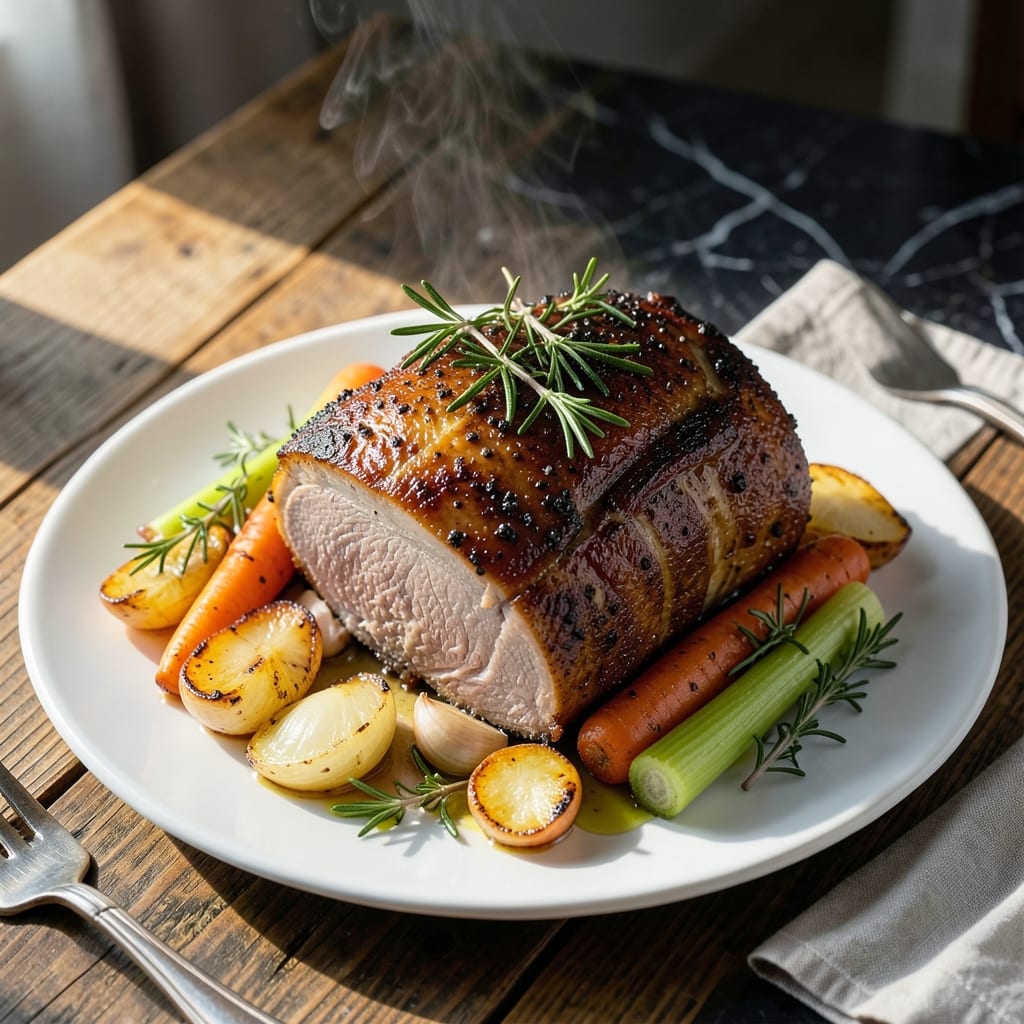
Mastering pork roast starts with the right oven temperature and timing. This method guarantees perfectly tender results every time, with juicy meat and a golden crust.
I’ve tested countless approaches, and the key is a steady 325°F oven. This allows the roast to cook evenly without drying out, locking in moisture and flavor.
The process is simple: season, sear, then roast low and slow. The result is meat so tender it falls apart with a touch, yet holds its shape for beautiful slices.
Whether for Sunday dinner or a special occasion, this technique delivers perfect results with minimal effort. The aroma alone will have everyone gathering in the kitchen.
Ingredients for Pork Roast Recipe Oven Temperature
Pork shoulder, fresh herbs, and a few pantry staples create tender, juicy perfection.
| Ingredient | Amount | Notes |
|---|---|---|
| Pork Shoulder Roast 🍖 | 3 lb | Bone-in for best flavor |
| Kosher Salt 🧂 | 2 tbsp | Diamond Crystal preferred |
| Black Pepper 🌶️ | 1 tbsp | Freshly ground coarse |
| Garlic Cloves 🧄 | 6 cloves | Minced for even distribution |
| Fresh Rosemary 🌿 | 2 tbsp | Chopped, stems removed |
| Fresh Thyme 🍃 | 2 tbsp | Leaves stripped from stems |
| Olive Oil 🫒 | ¼ cup | For searing and moisture |
| Dijon Mustard 🟡 | 2 tbsp | For crust formation |
| Yellow Onion 🧅 | 1 whole | Roughly chopped for bed |
| Carrots 🥕 | 3 whole | Peeled and cut in chunks |
| Celery Stalks 🌿 | 3 whole | Cut into large pieces |
| Chicken Stock 🍲 | 1 cup | Low-sodium preferred for control |
| Dry White Wine 🍷 | ½ cup | For deglazing pan |
The pork shoulder is non-negotiable for this application. Bone-in roasts from Whole Foods or Costco offer superior marbling and flavor retention. Look for pieces with visible fat cap—this bastes the meat as it cooks. 3-4 pounds is the sweet spot for even cooking and leftovers. Avoid pre-brined or enhanced cuts, as they can throw off the seasoning balance and moisture content.
No fresh rosemary or thyme? Dried herbs at one-third the quantity work, but rehydrate them in warm water first. Out of Dijon? Whole-grain mustard adds pleasant texture. Wine isn’t mandatory—additional chicken stock with a splash of apple cider vinegar mimics the acidity. The vegetable bed can be simplified to just onions if that’s what’s available.
Roast leftovers keep beautifully, actually improving in flavor. Store in airtight containers for up to 4 days in the refrigerator or freeze portions for 3 months. Slice only what you need and reheat gently in the juices to maintain moisture. The rendered fat makes incredible roasted potatoes—don’t discard it.
Why You’ll Love This Recipe
- Set and Forget: It’s just rub, roast, and relax—no babysitting required while the oven does the work.
- Garlic-Rosemary Magic: The pork soaks up the garlic and rosemary until every bite tastes like a cozy Sunday dinner.
- Feeds a Crowd: One shoulder roast means leftovers for sandwiches or tacos all week without extra effort.
- Budget Hero: Pork shoulder stays cheap, and a single roast stretches into multiple meals for my family.
Step-by-Step Instructions for Pork Roast Oven Temperature
Master the technique that guarantees fall-apart tenderness with a crisp, flavorful crust.
Step 1: Season and Sear the Pork Shoulder
Pat the 3 lb Pork Shoulder Roast dry with paper towels, then rub it all over with the 2 tbsp Kosher Salt and 1 tbsp Black Pepper. This dry brine enhances flavor penetration and ensures a well-seasoned interior.
Heat the 0.25 cup Olive Oil in a large Dutch oven over medium-high heat. Sear the roast on all sides for 3-4 minutes per side until deeply browned. The fond created here will form the base of your pan sauce. Remove the pork and set aside.
Step 2: Build the Aromatic Base
In the same Dutch oven, add the 1 whole Yellow Onion, 3 whole Carrots, and 3 whole Celery Stalks. Cook for 5 minutes, stirring occasionally, until the vegetables begin to soften and develop color.
Add the 6 cloves Garlic Cloves, 2 tbsp Fresh Rosemary, and 2 tbsp Fresh Thyme, stirring for 1 minute until fragrant. This aromatic foundation will infuse the meat with complex herbal notes as it roasts.
Step 3: Deglaze and Begin the Braise
Pour in the 0.5 cup Dry White Wine to deglaze the pan, scraping up all the browned bits with a wooden spoon. Let it simmer for 2 minutes until reduced by half. This step captures all the caramelized flavor compounds from searing.
Return the pork to the Dutch oven, then pour in the 1 cup Chicken Stock. The liquid should come about halfway up the roast. Brush the top with the 2 tbsp Dijon Mustard for a tangy, flavorful crust.
Step 4: Roast Low and Slow to Perfection
Cover the Dutch oven and transfer it to a preheated 325°F oven. Roast for 2.5 to 3 hours, turning the pork every 45 minutes to ensure even cooking and prevent drying.
You’ll know it’s done when the internal temperature reaches 195-200°F and the meat shreds easily with a fork. The collagen in the pork shoulder breaks down at this temperature range, transforming into gelatin that keeps the meat impossibly tender.
Step 5: Rest and Serve
Carefully transfer the pork to a cutting board and tent loosely with foil. Let it rest for 20-30 minutes—this allows the juices to redistribute for maximum moisture in every bite.
Skimming excess fat from the cooking liquid gives you a rich, flavorful sauce to serve alongside the pork. Shred or slice against the grain and arrange on a platter with the roasted vegetables. The result should be fork-tender with a well-browned exterior.
Pro Tips For Making Pork Roast Recipe Oven Temperature
- Start Hot, Finish Low: Sear the pork shoulder at 450°F for 20 minutes to lock in juices, then drop to 300°F for the remaining cook time—I learned this the hard way after my first roast came out dry.
- Score the Fat: Cut 1/4-inch slits into the fat cap before seasoning so the salt, garlic, and rosemary actually penetrate the meat, not just sit on top.
- Skip the Water Bath: Resist the urge to add liquid to the pan; pork shoulder has enough fat to baste itself, and excess moisture just steams the crust off.
- Rest Under Foil: Give it a solid 15-20 minutes wrapped loosely in foil after pulling it from the oven—this keeps the juices from pooling on the cutting board instead of in the meat.
Regional Styles of This Recipe
Southern US Style
Down South, we slow-roast pork shoulder at 275°F with a dry rub of paprika, brown sugar, and cayenne for a smoky-sweet bark. The lower temp and longer cook time (about 8-10 hours) create that signature pull-apart texture we love at family gatherings. 💛
Carolina Vinegar Tradition
Eastern North Carolina favors a tangy approach: roast at 300°F for 6-7 hours, then shred and toss with a vinegar-based sauce. The acidity cuts through the richness beautifully. I always add a splash of apple cider vinegar to the pan for extra brightness.
Midwest Comfort Style
In the Midwest, pork roast often means a 350°F oven with root vegetables and a sweet glaze. The higher heat creates a caramelized crust while keeping the interior moist. I like to add maple syrup and whole grain mustard to the glaze for depth.
New England Braise
New England cooks often braise their pork shoulder with hard cider and apples at 325°F. The fruit adds natural sweetness that pairs perfectly with the savory meat. The result is tender pork with a slightly tangy sauce.
Texas Smokehouse
Texas-style means low and slow at 225°F with pecan wood smoke. While traditionally done in a smoker, you can replicate this in your oven with a stainless steel smoke box and wood chips. The meat takes on a deep, smoky flavor.
Pacific Northwest
Out west, we incorporate Asian flavors—roast at 300°F with a marinade of soy sauce, ginger, and honey. The umami-rich sauce soaks into the pork as it cooks, creating a beautiful fusion of East and West. 🌟
Nutrition Facts
Frequently Asked Questions
Why cook at such a low temperature?
325°F breaks down collagen slowly for tender meat. Higher heat can dry it out before connective tissues melt.
Can I use a different cut?
Pork butt works similarly, but avoid lean cuts like tenderloin. They lack fat for long cooking and may become dry.
How do I know when it’s done?
Use a meat thermometer—it should read 195-200°F internally. The meat will pull apart easily with a fork.
Should I cover it while roasting?
Yes, covering with a lid traps steam for even cooking. Uncover for the last 30 minutes to crisp the exterior.

- Potato Chip Cookie Recipe With Pecans: Buttery Crunch Meets Nutty Richness - October 30, 2026
- Potato Patty Recipe No Egg: Crispy Edges Without the Binder - October 30, 2026
- Paula Deen’s Potato Chip Cookies Recipe: Salty-Sweet Crunch in Every Bite - October 30, 2026