
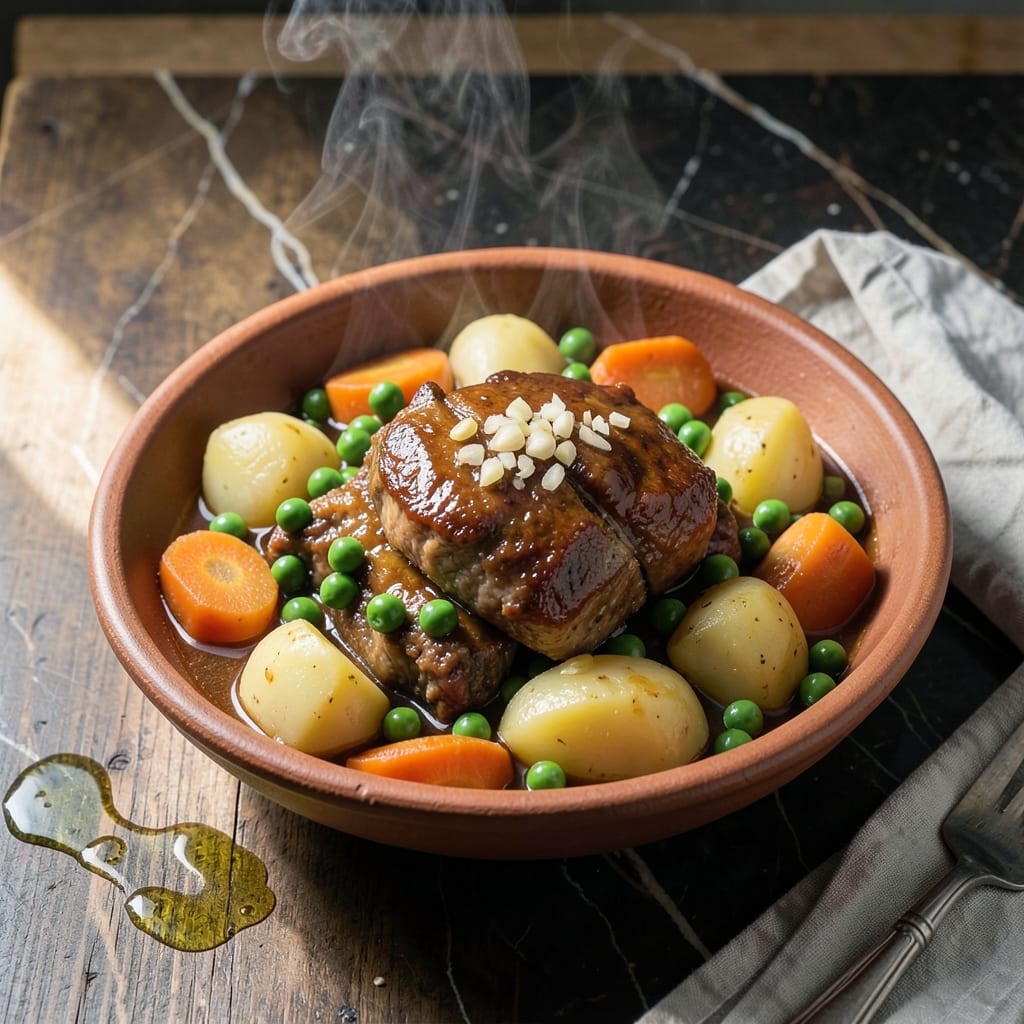
This Filipino pork and pea stew brings comforting flavors of the Philippines to your dinner table. I developed this version after testing multiple techniques to achieve the perfect balance of savory pork and sweet peas.
The dish combines tender pork pieces with vibrant green peas in a light, flavorful sauce. Traditional methods ensure the pork stays juicy while the vegetables maintain their bright color and slight crunch.
You’ll end up with a hearty stew that’s perfect over steamed rice, with each bite delivering the classic taste of home-style Filipino cooking. The sauce soaks into the pork and peas, creating a dish that’s both nourishing and deeply satisfying.
Serve it for family dinners or special occasions when you want to share the warmth of Filipino cuisine. This is authentic comfort in a bowl.
Ingredients for Pork Guisantes Recipe Panlasang Pinoy
Pantry staples meet a few fresh veggies for this hearty Filipino stew.
| Ingredient | Amount | Notes |
|---|---|---|
| Pork Shoulder 🥩 | 1 ½ lb | Cut into 1-inch cubes |
| Green Peas 🌱 | 2 cups | Fresh or frozen |
| Carrots 🥕 | 2 whole | Peeled, sliced into rounds |
| Potatoes 🥔 | 2 whole | Peeled, cubed |
| Onion 🧅 | 1 whole | Yellow or white, diced |
| Garlic Cloves 🧄 | 4 cloves | Minced |
| Tomato Sauce 🍅 | 1 cup | Canned or bottled |
| Soy Sauce 🫒 | 3 tbsp | Regular or light |
| Oyster Sauce 🫒 | 1 tbsp | Optional for depth |
| Chicken Broth 🥣 | 1 ½ cups | Low-sodium preferred |
| Bay Leaf 🍃 | 1 whole | Dried |
| Salt 🧂 | 1 tsp | Adjust to taste |
| Black Pepper 🌶️ | ½ tsp | Freshly ground |
| Vegetable Oil 🫒 | 2 tbsp | For sautéing |
The pork is the foundation here. Pork shoulder stays tender after long cooking, while leaner cuts can dry out. I grab mine from local Asian markets—they often have better prices and quality. For the peas, frozen works just as well as fresh (the good stuff, not the mushy kind). Carrots and potatoes add heartiness, so pick firm, unblemished ones for the best texture.
No oyster sauce? Fish sauce at half the amount works in a pinch, or just skip it. Fresh peas out of season? Frozen are perfect (no need to thaw). If you don’t have tomato sauce, 1 cup diced tomatoes blended smooth does the trick. For a lighter version, use low-sodium soy sauce and adjust salt at the end.
This stew tastes even better the next day. Keeps in the fridge for 3-4 days and freezes beautifully for 3 months. Store in airtight containers, and reheat gently to keep the pork moist.
Why You’ll Love This Recipe
- I’ll be real: leftovers taste even better the next day, and it feeds my family of five without breaking the bank.
- One Pot Wonder: I toss everything in—pork shoulder, peas, carrots—and let it simmer while I fold laundry. Honestly, cleanup’s just one pot.
- Sweet-Savory Magic: The pork soaks up that light, slightly sweet sauce, and the peas add this fresh pop that makes every bite addictive.
- Weeknight MVP: Between us, this is my Tuesday night hero—ready before the kids start asking what’s for dinner.
Step-by-Step Instructions for Filipino-Style Pea and Pork Stew
Here’s how I make this comforting dish with tender pork and sweet vegetables.
Step 1: Sauté Aromatics and Brown the Pork
Heat the 2 tbsp vegetable oil in a large pot over medium heat. Add the diced onion and cook for 2-3 minutes until it becomes translucent and just starts to soften. This builds the flavor base for your stew.
Stir in the minced garlic cloves and cook for 30 seconds until fragrant—don’t let it brown or it’ll turn bitter. Then add the 1.5 lb pork shoulder cubes and cook for 5-6 minutes, turning occasionally, until the meat browns on all sides. This browning creates rich, caramelized flavors.
Step 2: Build the Sauce and Add Vegetables
Pour in the 3 tbsp soy sauce, 1 tbsp oyster sauce, and 1 cup tomato sauce. Stir well to coat the pork, then add the 1.5 cups chicken broth, 1 whole bay leaf, 1 tsp salt, and 0.5 tsp black pepper.
Bring the mixture to a boil, then reduce the heat to medium-low. Add the peeled, sliced carrots and cubed potatoes. Cover and let it simmer for 20 minutes to allow the vegetables to start softening.
Step 3: Add Peas and Finish Cooking
After the carrots and potatoes have had their head start, stir in the 2 cups green peas. If using frozen peas, there’s no need to thaw them first—just add them straight from the freezer. Return the lid and let everything simmer together for another 10-12 minutes.
The stew is done when the pork is fork-tender, the carrots and potatoes are soft but still hold their shape, and the peas are heated through. Taste and adjust the seasoning with a bit more salt if needed.
Step 4: Rest and Serve
Remove the pot from the heat and let the stew rest for 5 minutes—this allows the flavors to meld together. Discard the bay leaf before serving, as it’s only there for flavor infusing, not for eating.
Ladle the hot stew into bowls and serve with steamed rice to soak up all that delicious sauce. The pork should be meltingly tender, and the vegetables should have absorbed all the savory flavors from the sauce.
Pro Tips For Making Pork Guisantes Recipe Panlasang Pinoy
- Brown the Pork: Sear the pork shoulder pieces in batches over medium-high heat until deeply browned—about 3-4 minutes per side. I learned this the hard way: skipping this step leaves the dish tasting flat, no matter how long you simmer it.
- Cut Evenly: Chop the pork, carrots, and potatoes into uniform 1-inch pieces. This guarantees everything cooks at the same rate, so you’re not left with mushy potatoes and undercooked pork.
- Skip the Frozen Peas: Use fresh or thawed green peas and add them only in the last 5 minutes of cooking. Frozen peas straight from the bag turn mealy, and adding them too early turns them to mush.
- Simmer Low and Slow: Once all ingredients are in the pot, keep the heat low enough for a gentle simmer—small bubbles, not a rolling boil. After burning a batch, I realized a hard boil toughens the pork and breaks up the potatoes.
Serving Suggestions for This pork guisantes recipe panlasang pinoy
Over Steamed Rice
This stew shines brightest ladled over hot steamed jasmine rice. I use my Zojirushi rice cooker—it makes perfectly fluffy rice every time. The rice soaks up the savory sauce, creating a comforting bite that’s hard to beat. It’s how we enjoy it most nights at home. 💛
With Crusty Bread
For a hearty twist, serve with warm pandesal or crusty French bread. I grab fresh pandesal from our local Filipino bakery in Portland. The bread’s soft interior is perfect for mopping up every last drop of sauce.
Fresh Side Salad
A light, crisp salad balances the richness of the stew. I toss 4 cups mixed greens with a simple dressing of 2 tbsp calamansi juice, 1 tbsp olive oil, and a pinch of salt. The citrus brightens each spoonful.
Pickled Vegetables
Add atchara (Filipino pickled papaya) or quick-pickled cucumbers for a tangy crunch. The acidity cuts through the stew’s savory depth. I always keep a jar of atchara in the fridge for this very purpose.
Garnish Ideas
Finish with fresh cilantro or green onions for a pop of color and freshness. A sprinkle of crispy fried shallots adds texture. Sometimes, I add a squeeze of calamansi for extra zing. ✨
Nutrition Facts
Frequently Asked Questions
Can I use a different cut of pork?
Yes! While pork shoulder is ideal, you can use pork loin or tenderloin. These cook faster, so reduce simmering time to 15 minutes to prevent dryness.
How do I prevent the peas from turning mushy?
Add peas only during the last 10-12 minutes of cooking. This preserves their bright color and slight crunch. Frozen peas work great—no thawing needed!
Can I make this ahead of time?
The stew tastes even better the next day. Store in an airtight container in the fridge for 3-4 days or freeze for 3 months. Reheat gently.
What can I substitute for oyster sauce?
Replace with 1/2 tbsp fish sauce or skip it entirely. The dish will still be flavorful, though slightly less complex. Adjust soy sauce to taste.

- Potato Chip Cookie Recipe With Pecans: Buttery Crunch Meets Nutty Richness - October 30, 2026
- Potato Patty Recipe No Egg: Crispy Edges Without the Binder - October 30, 2026
- Paula Deen’s Potato Chip Cookies Recipe: Salty-Sweet Crunch in Every Bite - October 30, 2026