
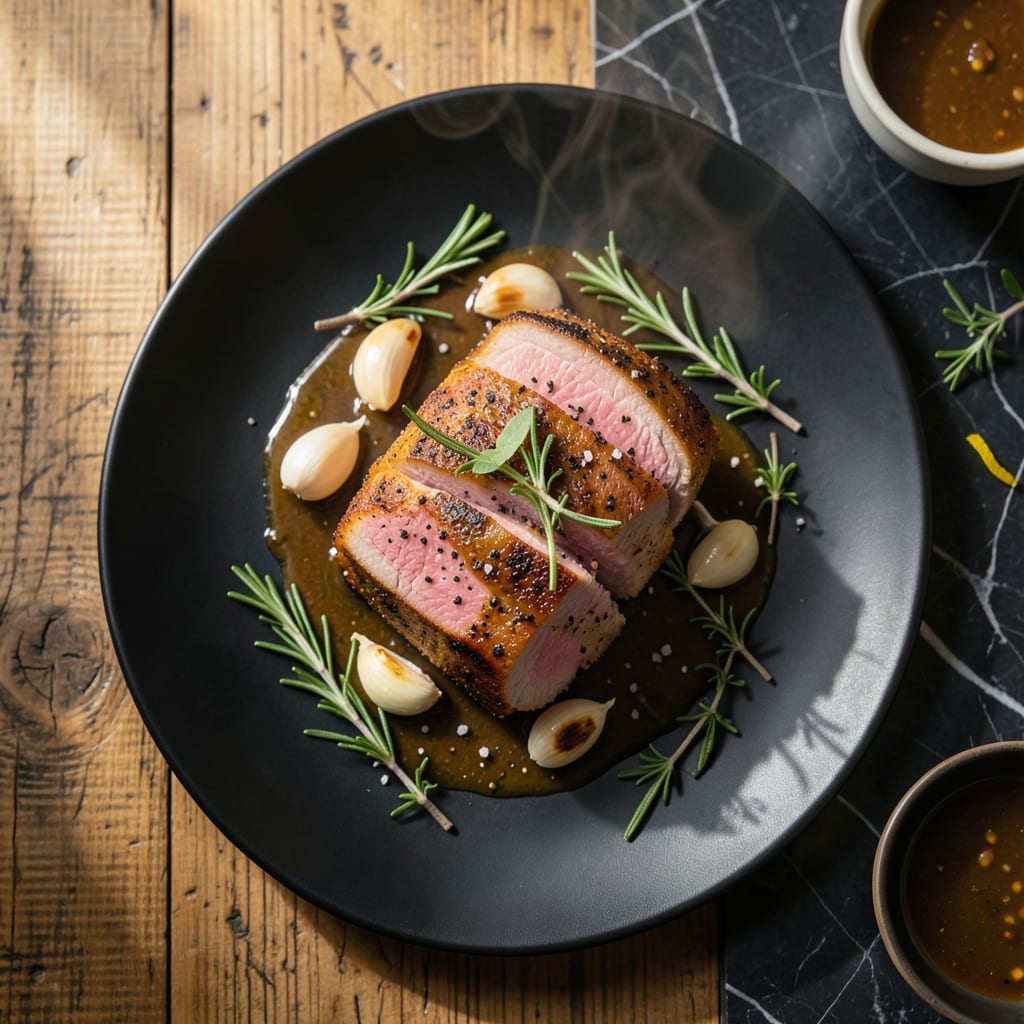
This pork tenderloin recipe delivers fork-tender medallions with a crisp herb crust that feels restaurant-worthy. The secret lies in a quick sear followed by a gentle finish in the oven.
I developed this method after years of testing to ensure the meat stays juicy while forming a golden crust. A simple herb blend and precise timing create perfect results every time.
The medallions emerge with a delicate pink center, surrounded by fragrant herbs that add depth to each bite. This technique works for both weeknight dinners and special occasions.
Serve with roasted vegetables or mashed potatoes to complete the meal. The process is straightforward but yields impressive results.
Ingredients for Pork Tenderloin Recipe Tin Eats
Simple ingredients create restaurant-worthy pork medallions with herb crust.
| Ingredient | Amount | Notes |
|---|---|---|
| Pork Tenderloin 🥩 | 1 ½ lb | Trimmed of silver skin |
| Olive Oil 🫒 | 2 tbsp | Divided for searing and finishing |
| Dijon Mustard 🟡 | 2 tbsp | For herb crust binding |
| Fresh Rosemary 🌿 | 2 tbsp | Finely chopped |
| Fresh Thyme 🍃 | 2 tbsp | Leaves stripped from stems |
| Garlic Cloves 🧄 | 3 cloves | Minced |
| Kosher Salt 🧂 | 1 ½ tsp | Divided for seasoning |
| Black Pepper 🌶️ | 1 tsp | Freshly ground |
| Breadcrumbs 🍞 | 1 cup | Panko for extra crunch |
| Butter 🧈 | 2 tbsp | Unsalted, melted |
| Dry White Wine 🍷 | ¼ cup | For deglazing pan |
| Chicken Broth 🥣 | ½ cup | Low-sodium preferred |
The pork tenderloin is the star here. Whole Foods or Costco have the best quality—look for even thickness and pale pink color. Trim the silver skin yourself (takes 2 minutes) or ask the butcher to do it. Fresh herbs make all the difference: organic rosemary and thyme from the produce section have more aroma than dried. Don’t skip the Dijon—it’s the glue for that crisp crust.
No white wine? Apple cider vinegar plus water (1 tbsp vinegar + 3 tbsp water) works as a substitute for deglazing. Out of fresh herbs? Dried at one-third the amount but toast them in the pan first to wake up the flavors. Panko breadcrumbs are ideal, but regular breadcrumbs work too (just as crispy once baked). For a gluten-free version, swap in crushed pork rinds.
Prepped tenderloin keeps in the fridge for 1-2 days before cooking. Leftovers? They reheat surprisingly well—store in an airtight container for up to 4 days. The herb crust stays crisp if you reheat in a toaster oven or air fryer rather than the microwave.
Why You’ll Love This Recipe
- One Pan Wonder: Honestly, I just toss the tenderloin with olive oil, mustard, and herbs, then roast—minimal cleanup, maximum flavor.
- Herb Crust Perfection: That combo of fresh rosemary and thyme with the Dijon creates a crust so good, I catch myself sneaking bites straight from the pan.
- Weeknight Hero: I’ve served this for casual dinners and holiday meals—always disappears fast.
- Leftovers Win: The slices reheat beautifully for sandwiches or salads, so I make extra on purpose.
Step-by-Step Instructions for Pork Tenderloin with Herb Crust
This method ensures perfectly tender medallions with a crispy, flavorful crust every time.
Step 1: Prepare and Season the Pork Tenderloin
Pat the 1.5 lb Pork Tenderloin dry with paper towels to ensure a good sear. Trim any remaining silver skin if not already done. Season the pork evenly with 1 tsp Kosher Salt and 1 tsp Black Pepper, pressing the seasoning into the meat so it adheres well.
This drying and seasoning step is crucial—it creates the foundation for a golden-brown crust and ensures the meat stays juicy throughout cooking. Let the seasoned pork sit at room temperature for 15 minutes while you prepare the herb mixture.
Step 2: Create the Herb Crust Mixture
In a medium bowl, combine the 2 tbsp Dijon Mustard, 2 tbsp Fresh Rosemary, 2 tbsp Fresh Thyme, 3 cloves Garlic Cloves (minced), 1 cup Breadcrumbs, 2 tbsp Butter (melted), and the remaining 0.5 tsp Kosher Salt. Stir until the mixture resembles wet sand and the herbs are evenly distributed.
The Dijon Mustard acts as a binder, while the Breadcrumbs provide texture. The combination of Fresh Rosemary and Fresh Thyme gives the crust its aromatic depth. I use Panko for extra crunch, but regular breadcrumbs work too.
Step 3: Sear the Pork Tenderloin
Heat 1 tbsp Olive Oil in a large oven-safe skillet over medium-high heat until it shimmers. Add the pork tenderloin and sear for 3-4 minutes per side until the surface is golden brown. This creates a flavorful crust and locks in juices.
Don’t move the pork around too much—let it develop a deep, even color. Once seared, remove the pork from the skillet and set it aside. The pan will have browned bits (fond) that we’ll use for the sauce later.
Step 4: Apply the Herb Crust and Roast
Brush the seared pork tenderloin all over with the herb crust mixture, pressing gently to ensure it adheres. Return the pork to the skillet and transfer it to a preheated 400°F oven. Roast for 15-20 minutes or until the internal temperature reaches 145°F.
The crust will turn golden brown and crispy as it bakes. If it starts to darken too quickly, tent the skillet with foil. The pork will continue to cook slightly as it rests, so remove it from the oven just before it reaches the target temperature.
Step 5: Deglaze and Finish with Pan Sauce
Transfer the pork to a cutting board and tent loosely with foil. Place the skillet back on the stovetop over medium heat and add the remaining 1 tbsp Olive Oil. Pour in the 0.25 cup Dry White Wine and scrape up the browned bits from the bottom of the pan.
Let the wine reduce by half, then add the 0.5 cup Chicken Broth and simmer for 2-3 minutes until slightly thickened. Drizzle this pan sauce over the pork before serving. Slice the pork into 1-inch thick medallions and serve immediately with the sauce spooned over the top.
Pro Tips For Making Pork Tenderloin Recipe Tin Eats
- Pat It Dry: Always blot the pork tenderloin with paper towels before seasoning—I learned this the hard way after my first few attempts came out steamed instead of seared.
- Don’t Overtrim: Leave a thin layer of fat on the tenderloin; it adds flavor and keeps the meat moist during cooking, even if it looks a little uneven.
- Rest Before Slicing: Give it a solid 5-10 minutes under foil after cooking, or all those juices will end up on the cutting board instead of in the meat.
- Crust the Mustard: Rub the Dijon mustard into the pork just before searing—it forms a sticky base for the herbs to cling to, and the heat mellows its sharpness.
Best Sauces and Condiments for This pork tenderloin recipe tin eats
Apple Mustard Sauce
Whisk ½ cup applesauce with 2 tbsp Dijon Mustard and 1 tbsp honey for a sweet-tangy glaze. I pick up local Portland-made applesauce from our farmers market—it adds a lovely depth. Brush it on medallions during the last 5 minutes of roasting. 💛
Garlic Wine Reduction
After deglazing with 0.25 cup Dry White Wine, add 2 minced Garlic Cloves and simmer for 1 minute. Finish with 1 tbsp cold butter for a glossy, restaurant-quality sauce that complements the herb crust perfectly.
Herb Butter Drizzle
Mix 4 tbsp softened Butter with 1 tbsp Fresh Rosemary and 1 tbsp Fresh Thyme. Dollop over hot medallions—it melts into every bite. I always use New Seasons Market butter for its rich flavor.
Balsamic Glaze
Simmer ½ cup balsamic vinegar with 1 tbsp brown sugar until syrupy (8-10 minutes). Drizzle over plated medallions for a sophisticated touch. The acidity cuts through the richness beautifully. 🔥
Creamy Horseradish
Combine ¼ cup sour cream, 1 tbsp prepared horseradish, and ½ tsp lemon zest. This adds a bold kick that pairs wonderfully with the tender pork. Serve on the side for dipping.
Nutrition Facts
Frequently Asked Questions
Can I use dried herbs instead of fresh?
Yes, but use 1/3 the amount since dried herbs are more concentrated. Toast them in the pan first to enhance their flavor. Fresh herbs provide better aroma and texture, though.
How do I prevent the crust from burning?
Tent the skillet with foil if the crust darkens too quickly. Roast at 400°F for 15-20 minutes and monitor closely. The crust should be golden, not charred.
What can I substitute for white wine?
Use 1 tbsp apple cider vinegar plus 3 tbsp water for deglazing. Chicken broth works too, but add 1 tsp lemon juice for acidity. Both mimic wine’s tang.
How long should I rest the pork before slicing?
Let it rest for 5-10 minutes under foil. This keeps the juices inside for tender medallions. Slice into 1-inch thick pieces after resting.

- Potato Patty Recipe No Egg: Crispy Edges Without the Binder - October 30, 2026
- Paula Deen’s Potato Chip Cookies Recipe: Salty-Sweet Crunch in Every Bite - October 30, 2026
- Potato Gnocchi Recipe Ideas: Pillowy Soft Dumplings With Rustic Charm - October 30, 2026