
Pork Tenderloin Recipe With Mustard and Brown Sugar: Sweet and Tangy Glazed Perfection

Pork Tenderloin Recipe With Mustard and Brown Sugar: Sweet and Tangy Glazed Perfection

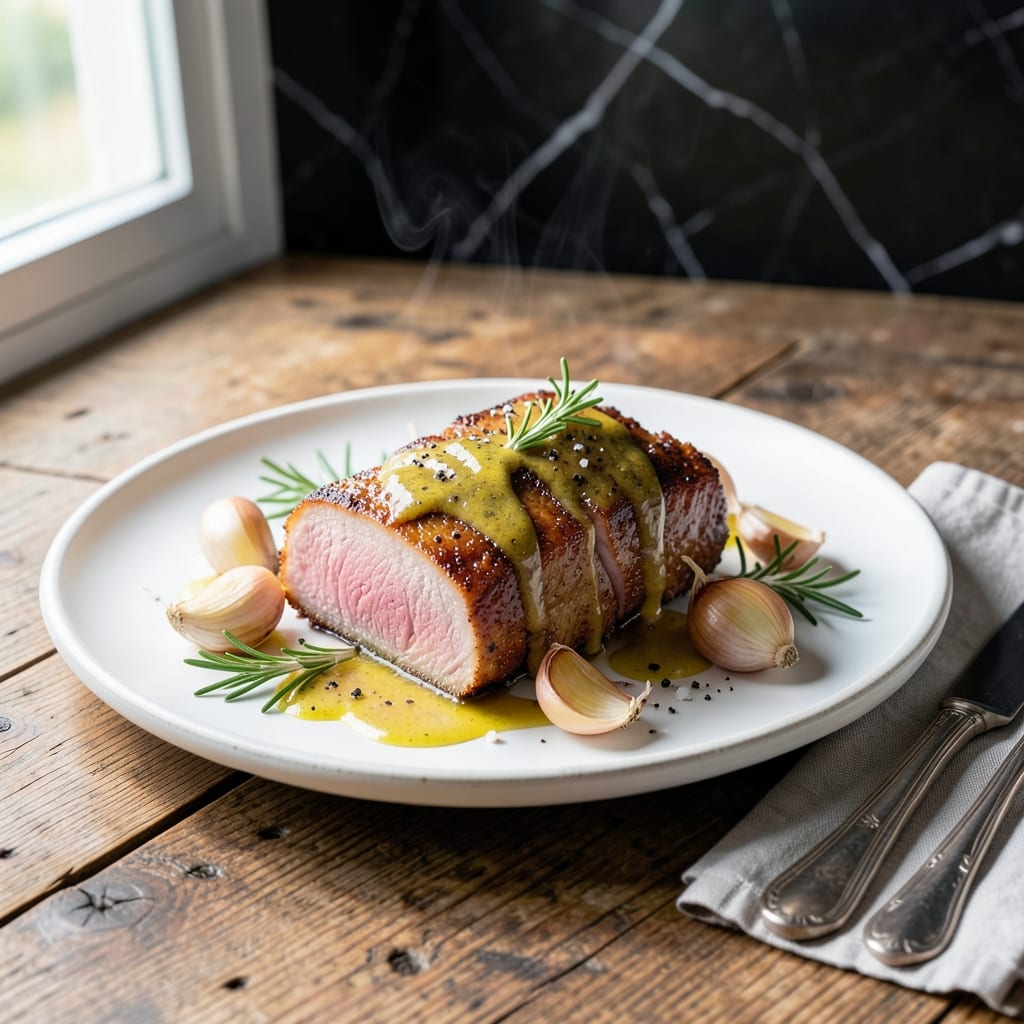
This dish delivers perfectly tender pork with a glossy glaze that balances sweet and tangy flavors beautifully. I developed this method after years of testing different ratios and cooking techniques.

The mustard adds sharpness while brown sugar creates a caramelized crust that locks in juices. A simple sear followed by oven finishing ensures even cooking without drying out the lean meat.

What results is a centerpiece-worthy roast with a sticky, golden exterior and moist, tender interior. The glaze reduces to just the right consistency for coating every slice.

Serve with roasted vegetables or mashed potatoes to complete the meal. This technique works every time.

👨‍🍳
Difficulty
Medium
🥩
Diet
Meat
⏱️
Total Time
30 min
🔥
Calories
Med Cal

Ingredients for Pork Tenderloin Recipe with Mustard and Brown Sugar

These premium ingredients create a restaurant-quality roast with minimal effort required on your part.

Ingredient Amount Notes
Pork Tenderloin 🥩 1 ½ lb Trimmed of silver skin
Dijon Mustard 🟡 3 tbsp Smooth, not whole grain
Light Brown Sugar 🫙 ½ cup Packed for measurement
Olive Oil 🫒 2 tbsp Divided for searing and glaze
Garlic Cloves 🧄 4 cloves Minced for maximum flavor
Fresh Rosemary 🌿 2 tsp Finely chopped leaves
Kosher Salt 🧂 1 ½ tsp Diamond Crystal preferred
Freshly Ground Black Pepper 🌶️ 1 tsp Medium coarse grind
Apple Cider Vinegar 💧 1 tbsp Balances sweetness in glaze
Unsalted Butter 🧈 2 tbsp For richness in glaze
Large Shallot 🧅 1 whole Finely minced for depth
Dry White Wine 🍷 ¼ cup For deglazing pan

The pork tenderloin is the star—look for uniform thickness to ensure even cooking. Whole Foods and Costco carry excellent options, but any reputable butcher will have it. Trim the silver skin yourself (it’s easy with a sharp knife) or ask the butcher to do it. The Dijon mustard should be smooth and sharp—Grey Poupon is a reliable choice for consistent quality and flavor intensity.

No white wine? Chicken broth with a splash of lemon juice works in a pinch. Honey mustard can replace Dijon at a 1:1 ratio, though the flavor profile shifts slightly sweeter. If avoiding alcohol entirely, apple juice with a teaspoon of vinegar mimics the deglazing effect. Fresh rosemary is ideal, but dried at one-third the amount is acceptable—just crush it between your fingers to release the oils.

Pork tenderloin cooks quickly, so don’t prep it too far ahead—24 hours max in the fridge. The glaze can be made 2 days ahead and reheated gently. Leftovers keep for 4-5 days and make excellent sandwiches with a smear of extra mustard.

❤️

Why You’ll Love This Recipe

  • One Pan Wonder: I just mix the mustard, brown sugar, and garlic, slather it on the tenderloin, and let the oven do the work.
  • Sweet & Tangy Magic: The brown sugar caramelizes while the Dijon cuts through with that sharp, tangy kick—every bite is balanced.
  • Weeknight Hero: I’ve served this for Sunday dinner and packed leftovers for lunch—it’s that adaptable.
  • Budget-Friendly Feast: A single tenderloin feeds four, and the pantry staples keep costs low. Honestly, it’s my go-to for impressing without spending much.

Step-by-Step Instructions for Pork Tenderloin With Mustard and Brown Sugar

Master the technique for perfectly tender pork with a glossy, sweet-tangy glaze.

Step 1: Prep and Season the Pork Tenderloin

Pat the 1.5 lb pork tenderloin completely dry with paper towels to ensure a proper sear. Trim any remaining silver skin for a uniform texture. Season all sides generously with the 1.5 tsp kosher salt and 1 tsp freshly ground black pepper, pressing gently so the seasoning adheres.

This step is crucial—dry meat sears better, and proper seasoning penetrates the surface for flavor that goes beyond the crust. Let the seasoned pork rest at room temperature for 15 minutes while you prepare the remaining components.

Step 2: Sear the Pork to Develop Flavor

Heat 1 tbsp olive oil in a large oven-safe skillet over medium-high heat until it shimmers. Add the pork tenderloin and sear undisturbed for 3-4 minutes per side until it develops a deep golden-brown crust. The pork should release easily from the pan when ready to turn.

This searing process creates the Maillard reaction, developing complex flavors and a beautiful crust. Transfer the pork to a plate and reduce heat to medium—you’ll use the same pan for the glaze to capture all the fond (browned bits) for maximum flavor.

Step 3: Build the Sweet-Tangy Glaze

In the same skillet, add the remaining 1 tbsp olive oil and the 1 whole large shallot (finely minced). Sauté for 2-3 minutes until the shallot softens and becomes translucent. Add the 4 cloves garlic cloves (minced) and 2 tsp fresh rosemary, stirring for 30 seconds until fragrant.

Pour in the 0.25 cup dry white wine to deglaze the pan, scraping up all the browned bits with a wooden spoon. Simmer for 2 minutes until the liquid reduces by half. This step is where the depth of flavor builds—don’t skip it.

Step 4: Finish with Mustard-Brown Sugar Glaze

Reduce heat to low and stir in the 3 tbsp Dijon mustard, 0.5 cup light brown sugar, 1 tbsp apple cider vinegar, and 2 tbsp unsalted butter. Cook for 1-2 minutes, stirring constantly, until the mixture thickens into a glossy glaze.

The vinegar cuts through the sweetness of the brown sugar, while the mustard adds a tangy depth that balances the richness of the butter. Return the pork to the skillet and spoon the glaze over it, turning to coat evenly.

Step 5: Rest and Serve

Transfer the glazed pork tenderloin to a cutting board and let it rest for 10 minutes. This resting period allows the juices to redistribute, ensuring every slice is moist and tender. Tent loosely with foil to keep it warm.

Slice the pork into ½-inch thick medallions and drizzle with any remaining glaze from the pan. The glaze should be thick enough to cling to the pork, with a balance of sweetness from the brown sugar and tang from the mustard. Serve immediately for the best texture and flavor.

👨‍🍳

Pro Tips For Making Pork Tenderloin Recipe With Mustard And Brown Sugar

  • Sear First, Baste Later: Start with a hot sear in olive oil to lock in juices, then lower the heat and brush with the mustard-brown sugar mix during the last 5 minutes—I learned this the hard way after burning the sugar coating twice.
  • Pat Dry the Pork: Blot the tenderloin with paper towels before seasoning; sounds weird, but it works: the mustard and brown sugar stick better and you get a proper crust instead of a soggy glaze.
  • Skip the Overcooking: Pull the pork at 145°F internal temp and let it rest under foil for 10 minutes—resist the urge to poke it repeatedly, or you’ll lose all those juices.
  • Mince the Garlic Fine: After burning three batches, I finally figured out that finely minced garlic blends into the mustard-brown sugar paste better and won’t scorch during cooking.

Essential Equipment for Great pork tenderloin recipe with mustard and brown sugar

Oven-Safe Skillet

I always reach for my 12-inch stainless steel All-Clad skillet for this recipe. It transitions beautifully from stovetop searing to oven finishing (if you choose to finish in the oven at 375°F). A heavy bottom prevents hot spots that can burn the glaze. 💛

Tongs for Turning

Use 12-inch locking tongs—I prefer OXO’s stainless steel—to turn the pork without piercing it. This preserves the juices and gives you precise control when coating the pork with that gorgeous mustard-brown sugar glaze.

Instant-Read Thermometer

Pork tenderloin cooks fast, so a reliable thermometer is non-negotiable. I trust my ThermoWorks Thermapen for accuracy within 2-3 seconds. Pull the pork at 145°F internal temperature for perfect doneness.

Wooden Spoon

When deglazing the pan, a flat-edge wooden spoon is essential for scraping up all those flavorful browned bits. It won’t scratch your skillet like metal utensils can, and the flat edge gets into the corners beautifully.

Cutting Board

Rest your pork on a large bamboo cutting board—it’s gentle on knives and provides enough space to slice the tenderloin into even ½-inch medallions. I keep one dedicated just for meats to prevent cross-contamination.

Pastry Brush

For an extra-glossy finish, use a silicone pastry brush to coat the pork with glaze during the final minutes of cooking. The heat-resistant bristles won’t melt, and they spread the glaze evenly for that restaurant-worthy shine. ✨

Nutrition Facts

Servings 4
Amount Per Serving
Calories 340kcal
% Daily Value
Total Fat 14g18%
Saturated Fat 4g20%
Cholesterol 110mg37%
Sodium 680mg29%
Total Carbohydrate 22g8%
Dietary Fiber 1g4%
Sugars 18g
Protein 32g64%
Percent Daily Values are based on a 2,000 calorie diet. Your daily values may be higher or lower depending on your calorie needs.

Frequently Asked Questions

1

Can I use honey instead of brown sugar?

Yes, substitute 1/3 cup honey for the brown sugar. It will be slightly sweeter and thinner, so simmer the glaze a bit longer to thicken.

2

What if my glaze is too thin?

Simmer it for 1-2 extra minutes over low heat while stirring. If it thickens too much, add 1 tbsp water to loosen. The key is patience and constant stirring.

3

How do I prevent dry pork?

Don’t overcook it. Pull the pork at 145°F internal temperature and let it rest for 10 minutes before slicing. This keeps it juicy.

4

Can I make this ahead of time?

Cook and glaze the pork completely, then store in the fridge for up to 4 days. Reheat gently in a 350°F oven for 10-15 minutes.

★★★★★4.5(3 reviews)
Allison Carter

Pork Tenderloin Recipe With Mustard and Brown Sugar: Sweet and Tangy Glazed Perfection

Pork Tenderloin Recipe With Mustard and Brown Sugar: Sweet and Tangy Glazed Perfection

This dish delivers perfectly tender pork with a glossy glaze that balances sweet and tangy flavors beautifully. I developed this method after years of testing different ratios and cooking techniques.

The mustard adds sharpness while brown sugar creates a caramelized crust that locks in juices. A simple sear followed by oven finishing ensures even cooking without drying out the lean meat.

What results is a centerpiece-worthy roast with a sticky, golden exterior and moist, tender interior. The glaze reduces to just the right consistency for coating every slice.

Serve with roasted vegetables or mashed potatoes to complete the meal. This technique works every time.

👨‍🍳
Difficulty
Medium
🥩
Diet
Meat
⏱️
Total Time
30 min
🔥
Calories
Med Cal

Ingredients for Pork Tenderloin Recipe with Mustard and Brown Sugar

These premium ingredients create a restaurant-quality roast with minimal effort required on your part.

Ingredient Amount Notes
Pork Tenderloin 🥩 1 ½ lb Trimmed of silver skin
Dijon Mustard 🟡 3 tbsp Smooth, not whole grain
Light Brown Sugar 🫙 ½ cup Packed for measurement
Olive Oil 🫒 2 tbsp Divided for searing and glaze
Garlic Cloves 🧄 4 cloves Minced for maximum flavor
Fresh Rosemary 🌿 2 tsp Finely chopped leaves
Kosher Salt 🧂 1 ½ tsp Diamond Crystal preferred
Freshly Ground Black Pepper 🌶️ 1 tsp Medium coarse grind
Apple Cider Vinegar 💧 1 tbsp Balances sweetness in glaze
Unsalted Butter 🧈 2 tbsp For richness in glaze
Large Shallot 🧅 1 whole Finely minced for depth
Dry White Wine 🍷 ¼ cup For deglazing pan

The pork tenderloin is the star—look for uniform thickness to ensure even cooking. Whole Foods and Costco carry excellent options, but any reputable butcher will have it. Trim the silver skin yourself (it’s easy with a sharp knife) or ask the butcher to do it. The Dijon mustard should be smooth and sharp—Grey Poupon is a reliable choice for consistent quality and flavor intensity.

No white wine? Chicken broth with a splash of lemon juice works in a pinch. Honey mustard can replace Dijon at a 1:1 ratio, though the flavor profile shifts slightly sweeter. If avoiding alcohol entirely, apple juice with a teaspoon of vinegar mimics the deglazing effect. Fresh rosemary is ideal, but dried at one-third the amount is acceptable—just crush it between your fingers to release the oils.

Pork tenderloin cooks quickly, so don’t prep it too far ahead—24 hours max in the fridge. The glaze can be made 2 days ahead and reheated gently. Leftovers keep for 4-5 days and make excellent sandwiches with a smear of extra mustard.

❤️

Why You’ll Love This Recipe

  • One Pan Wonder: I just mix the mustard, brown sugar, and garlic, slather it on the tenderloin, and let the oven do the work.
  • Sweet & Tangy Magic: The brown sugar caramelizes while the Dijon cuts through with that sharp, tangy kick—every bite is balanced.
  • Weeknight Hero: I’ve served this for Sunday dinner and packed leftovers for lunch—it’s that adaptable.
  • Budget-Friendly Feast: A single tenderloin feeds four, and the pantry staples keep costs low. Honestly, it’s my go-to for impressing without spending much.

Step-by-Step Instructions for Pork Tenderloin With Mustard and Brown Sugar

Master the technique for perfectly tender pork with a glossy, sweet-tangy glaze.

Step 1: Prep and Season the Pork Tenderloin

Pat the 1.5 lb pork tenderloin completely dry with paper towels to ensure a proper sear. Trim any remaining silver skin for a uniform texture. Season all sides generously with the 1.5 tsp kosher salt and 1 tsp freshly ground black pepper, pressing gently so the seasoning adheres.

This step is crucial—dry meat sears better, and proper seasoning penetrates the surface for flavor that goes beyond the crust. Let the seasoned pork rest at room temperature for 15 minutes while you prepare the remaining components.

Step 2: Sear the Pork to Develop Flavor

Heat 1 tbsp olive oil in a large oven-safe skillet over medium-high heat until it shimmers. Add the pork tenderloin and sear undisturbed for 3-4 minutes per side until it develops a deep golden-brown crust. The pork should release easily from the pan when ready to turn.

This searing process creates the Maillard reaction, developing complex flavors and a beautiful crust. Transfer the pork to a plate and reduce heat to medium—you’ll use the same pan for the glaze to capture all the fond (browned bits) for maximum flavor.

Step 3: Build the Sweet-Tangy Glaze

In the same skillet, add the remaining 1 tbsp olive oil and the 1 whole large shallot (finely minced). Sauté for 2-3 minutes until the shallot softens and becomes translucent. Add the 4 cloves garlic cloves (minced) and 2 tsp fresh rosemary, stirring for 30 seconds until fragrant.

Pour in the 0.25 cup dry white wine to deglaze the pan, scraping up all the browned bits with a wooden spoon. Simmer for 2 minutes until the liquid reduces by half. This step is where the depth of flavor builds—don’t skip it.

Step 4: Finish with Mustard-Brown Sugar Glaze

Reduce heat to low and stir in the 3 tbsp Dijon mustard, 0.5 cup light brown sugar, 1 tbsp apple cider vinegar, and 2 tbsp unsalted butter. Cook for 1-2 minutes, stirring constantly, until the mixture thickens into a glossy glaze.

The vinegar cuts through the sweetness of the brown sugar, while the mustard adds a tangy depth that balances the richness of the butter. Return the pork to the skillet and spoon the glaze over it, turning to coat evenly.

Step 5: Rest and Serve

Transfer the glazed pork tenderloin to a cutting board and let it rest for 10 minutes. This resting period allows the juices to redistribute, ensuring every slice is moist and tender. Tent loosely with foil to keep it warm.

Slice the pork into ½-inch thick medallions and drizzle with any remaining glaze from the pan. The glaze should be thick enough to cling to the pork, with a balance of sweetness from the brown sugar and tang from the mustard. Serve immediately for the best texture and flavor.

👨‍🍳

Pro Tips For Making Pork Tenderloin Recipe With Mustard And Brown Sugar

  • Sear First, Baste Later: Start with a hot sear in olive oil to lock in juices, then lower the heat and brush with the mustard-brown sugar mix during the last 5 minutes—I learned this the hard way after burning the sugar coating twice.
  • Pat Dry the Pork: Blot the tenderloin with paper towels before seasoning; sounds weird, but it works: the mustard and brown sugar stick better and you get a proper crust instead of a soggy glaze.
  • Skip the Overcooking: Pull the pork at 145°F internal temp and let it rest under foil for 10 minutes—resist the urge to poke it repeatedly, or you’ll lose all those juices.
  • Mince the Garlic Fine: After burning three batches, I finally figured out that finely minced garlic blends into the mustard-brown sugar paste better and won’t scorch during cooking.

Essential Equipment for Great pork tenderloin recipe with mustard and brown sugar

Oven-Safe Skillet

I always reach for my 12-inch stainless steel All-Clad skillet for this recipe. It transitions beautifully from stovetop searing to oven finishing (if you choose to finish in the oven at 375°F). A heavy bottom prevents hot spots that can burn the glaze. 💛

Tongs for Turning

Use 12-inch locking tongs—I prefer OXO’s stainless steel—to turn the pork without piercing it. This preserves the juices and gives you precise control when coating the pork with that gorgeous mustard-brown sugar glaze.

Instant-Read Thermometer

Pork tenderloin cooks fast, so a reliable thermometer is non-negotiable. I trust my ThermoWorks Thermapen for accuracy within 2-3 seconds. Pull the pork at 145°F internal temperature for perfect doneness.

Wooden Spoon

When deglazing the pan, a flat-edge wooden spoon is essential for scraping up all those flavorful browned bits. It won’t scratch your skillet like metal utensils can, and the flat edge gets into the corners beautifully.

Cutting Board

Rest your pork on a large bamboo cutting board—it’s gentle on knives and provides enough space to slice the tenderloin into even ½-inch medallions. I keep one dedicated just for meats to prevent cross-contamination.

Pastry Brush

For an extra-glossy finish, use a silicone pastry brush to coat the pork with glaze during the final minutes of cooking. The heat-resistant bristles won’t melt, and they spread the glaze evenly for that restaurant-worthy shine. ✨

Nutrition Facts

Servings 4
Amount Per Serving
Calories 340kcal
% Daily Value
Total Fat 14g18%
Saturated Fat 4g20%
Cholesterol 110mg37%
Sodium 680mg29%
Total Carbohydrate 22g8%
Dietary Fiber 1g4%
Sugars 18g
Protein 32g64%
Percent Daily Values are based on a 2,000 calorie diet. Your daily values may be higher or lower depending on your calorie needs.

Frequently Asked Questions

1

Can I use honey instead of brown sugar?

Yes, substitute 1/3 cup honey for the brown sugar. It will be slightly sweeter and thinner, so simmer the glaze a bit longer to thicken.

2

What if my glaze is too thin?

Simmer it for 1-2 extra minutes over low heat while stirring. If it thickens too much, add 1 tbsp water to loosen. The key is patience and constant stirring.

3

How do I prevent dry pork?

Don’t overcook it. Pull the pork at 145°F internal temperature and let it rest for 10 minutes before slicing. This keeps it juicy.

4

Can I make this ahead of time?

Cook and glaze the pork completely, then store in the fridge for up to 4 days. Reheat gently in a 350°F oven for 10-15 minutes.

★★★★★4.5(3 reviews)
Allison Carter