
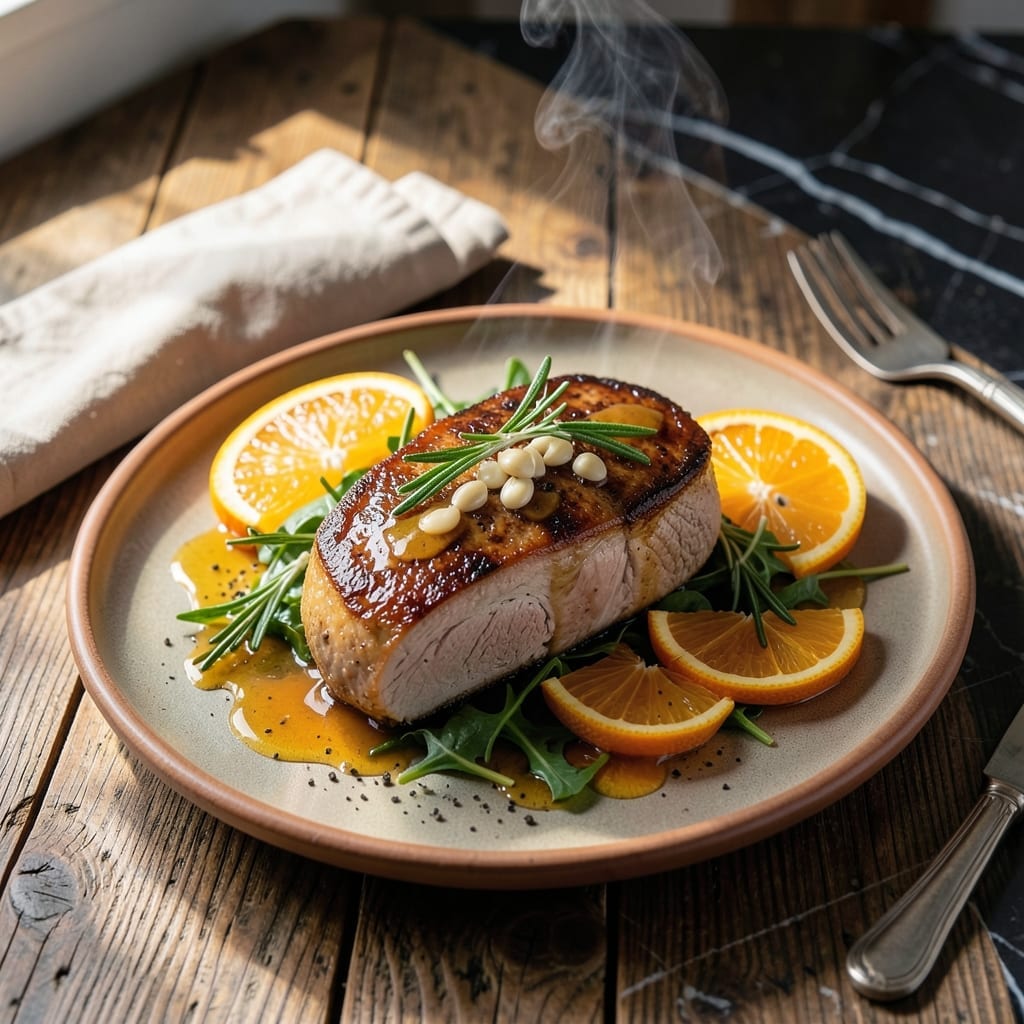
This citrus-kissed pork tenderloin delivers tender results with minimal effort. The orange juice creates a bright, slightly sweet glaze that complements the savory meat perfectly.
I developed this recipe after realizing how well citrus pairs with pork. The herb crust adds texture and depth, while the orange juice keeps the meat incredibly moist during cooking.
What you get is a main course that’s impressive enough for company but simple enough for a weeknight. The pork stays juicy and flavorful, with a subtle citrus aroma that makes it special.
Serve with roasted vegetables or a fresh salad to complete the meal. This dish proves that elegant flavors don’t require complicated techniques.
Ingredients for Pork Tenderloin Recipe with Orange Juice
A few fresh ingredients and a bright citrus glaze make this dish shine
| Ingredient | Amount | Notes |
|---|---|---|
| Pork Tenderloin 🥩 | 1 ½ lb | Trimmed of silver skin |
| Orange Juice 🍊 | ¾ cup | Freshly squeezed preferred |
| Orange Zest 🍊 | 1 tbsp | From 1 large orange |
| Olive Oil 🫒 | 2 tbsp | Divided for searing and glaze |
| Garlic Cloves 🧄 | 3 cloves | Minced finely |
| Fresh Rosemary 🌿 | 2 tbsp | Finely chopped |
| Fresh Thyme 🍃 | 2 tbsp | Finely chopped |
| Dijon Mustard 🟡 | 1 tbsp | For herb crust binding |
| Breadcrumbs 🍞 | ½ cup | Panko for extra crunch |
| Honey 🍯 | 1 tbsp | For glaze sweetness |
| Salt 🧂 | 1 tsp | Kosher or sea salt |
| Black Pepper 🌶️ | ½ tsp | Freshly ground preferred |
| Butter 🧈 | 1 tbsp | Optional for richer glaze |
The pork tenderloin is the star here—look for pieces with a rosy color and minimal fat. Whole Foods or Costco usually have great options, but any supermarket will do. For the orange juice, freshly squeezed tastes brighter than bottled (Navel or Valencia oranges work perfectly). The herb crust needs that fresh rosemary and thyme—dried just won’t give the same punch.
No fresh herbs? Dried at one-third the amount works in a pinch, but the crust won’t be as vibrant. Out of orange juice? Bottled in a carton is fine, but avoid concentrate—it’s too sweet. For the breadcrumbs, regular or panko both work (panko gives extra crunch). The honey can be swapped for maple syrup if you prefer.
The tenderloin cooks fast, so serve it right away. Leftovers keep for 3-4 days in the fridge—great sliced cold in sandwiches. The herb crust stays crispy if you reheat in the oven or air fryer (microwave makes it soggy).
Why You’ll Love This Recipe
- One Pan Wonder: I just toss the pork tenderloin with olive oil, garlic, orange juice and zest, then roast—easy cleanup, zero stress.
- Bright Citrus Punch: The orange juice and zest give it this juicy, zingy flavor that’s way more exciting than plain roasted pork.
- Weeknight Hero: Honestly, it’s my go-to for busy Tuesdays when I need something fancy-ish but fast.
- Leftovers Win: The sliced pork reheats beautifully for next-day lunches, and the citrus keeps it from drying out.
Step-by-Step Instructions for Pork Tenderloin With Orange Juice
Here’s the method that guarantees juicy, flavorful pork with minimal effort.
Step 1: Prep the Tenderloin and Herb Crust
Pat the 1.5 lb Pork Tenderloin dry with paper towels. Trim any remaining silver skin—this ensures even cooking and better texture. Season it all over with the 1 tsp Salt and 0.5 tsp Black Pepper.
In a small bowl, mix the 0.5 cup Breadcrumbs, 2 tbsp Fresh Rosemary, 2 tbsp Fresh Thyme, and 1 tbsp Dijon Mustard until it forms a crumbly paste. Press this mixture evenly over the pork, creating a thick, flavorful crust that will get crispy in the oven.
Step 2: Sear the Pork for Maximum Flavor
Heat 1 tbsp Olive Oil in an oven-safe skillet over medium-high heat. Once shimmering, sear the pork on all sides for 2-3 minutes per side until the crust turns golden brown. This step locks in juices and adds depth to the herb crust.
Don’t rush this—you want a deep golden color on each side. If the crust browns too quickly, lower the heat slightly. The pork should release easily from the pan when it’s ready to flip.
Step 3: Roast with Citrus Glaze
Preheat your oven to 400°F. While it heats, whisk together the 0.75 cup Orange Juice, 1 tbsp Orange Zest, 1 tbsp Honey, 1 tbsp Olive Oil, and 3 cloves Garlic Cloves in a small bowl. Pour this mixture around (not over) the pork in the skillet.
Transfer the skillet to the oven and roast for 15-20 minutes or until the internal temperature reaches 145°F. Baste the pork with the citrus glaze once or twice during roasting for extra flavor and shine.
Step 4: Rest and Finish with Butter
Remove the pork from the oven and transfer it to a cutting board. Tent it loosely with foil and let it rest for 10 minutes—this is non-negotiable for juicy, tender meat. The internal temperature will rise to 150-155°F during this time.
While the pork rests, place the skillet back on the stovetop over low heat. Stir in the 1 tbsp Butter to enrich the pan sauce. Slice the pork into ½-inch thick medallions and drizzle with the warm citrus sauce before serving.
Pro Tips For Making Pork Tenderloin Recipe With Orange Juice
- Sear High, Finish Low: Start with a screaming hot pan to lock in juices—about 2 minutes per side—then drop to 375°F to finish cooking without drying it out. I learned this the hard way after burning the orange glaze on my first three attempts.
- Zest Before Juicing: Always grate the orange zest before cutting the fruit for juice—it’s nearly impossible to do after, and you’ll get way more flavor. Sounds obvious, but I’ve ruined a few oranges by forgetting.
- Skip the Cold Meat: Pull the tenderloin from the fridge 30 minutes before cooking so it cooks evenly. My grandmother swore by this, and she was right: cold pork turns tough before the center warms up.
- Reduce the Glaze: Simmer the orange juice, zest, and garlic for 5-6 minutes until it thickens slightly—this concentrates the flavor and keeps it from sliding right off the pork. I was skeptical until I tried it, and now I do it every time.
Perfect Pairings for These Flavors
Wine Pairings
A crisp Pinot Grigio from Northern Italy complements the citrus notes beautifully—its bright acidity cuts through the richness. I love reaching for Santa Margherita from the Veneto region. 🍷
Beer Options
A Belgian witbier with citrus undertones, like Hoegaarden, enhances the orange flavors in the dish. The wheat beer’s light body and subtle spice won’t overpower the herb crust. For a local touch, Blue Moon works surprisingly well.
Side Dish Ideas
Roasted asparagus with lemon zest and olive oil mirrors the citrus theme. Toss 1 lb asparagus with 1 tbsp olive oil and roast at 400°F for 12-15 minutes. The veggie’s earthiness balances the pork’s brightness.
Couscous salad with cucumber, cherry tomatoes, and feta offers a light, fresh contrast. I use 1 cup couscous cooked in 1.5 cups chicken broth for extra flavor.
Bread Pairings
A crusty baguette from my neighborhood Italian deli is perfect for soaking up the citrus glaze. Warm it in the oven for 5 minutes before serving. For a softer option, focaccia with rosemary adds a complementary herb note. 🥖
Nutrition Facts
Frequently Asked Questions
Can I use bottled orange juice instead of fresh?
Yes, but choose 100% orange juice without added sugar. Fresh tastes brighter, but bottled works in a pinch. Avoid concentrate—it’s too sweet and artificial.
How do I prevent the herb crust from burning?
Sear the pork over medium-high heat just until golden, then move to the oven. If the crust darkens too fast, tent with foil during roasting.
What if my pork tenderloin is larger than 1.5 lb?
Adjust cooking time: add 5-7 minutes per extra pound. Always use a meat thermometer—remove at 145°F internally.
Can I make this recipe ahead of time?
Prep the herb crust and glaze a day ahead, but cook the pork just before serving. Leftovers keep 3-4 days refrigerated.

- Potato Patty Recipe No Egg: Crispy Edges Without the Binder - October 30, 2026
- Paula Deen’s Potato Chip Cookies Recipe: Salty-Sweet Crunch in Every Bite - October 30, 2026
- Potato Gnocchi Recipe Ideas: Pillowy Soft Dumplings With Rustic Charm - October 30, 2026