
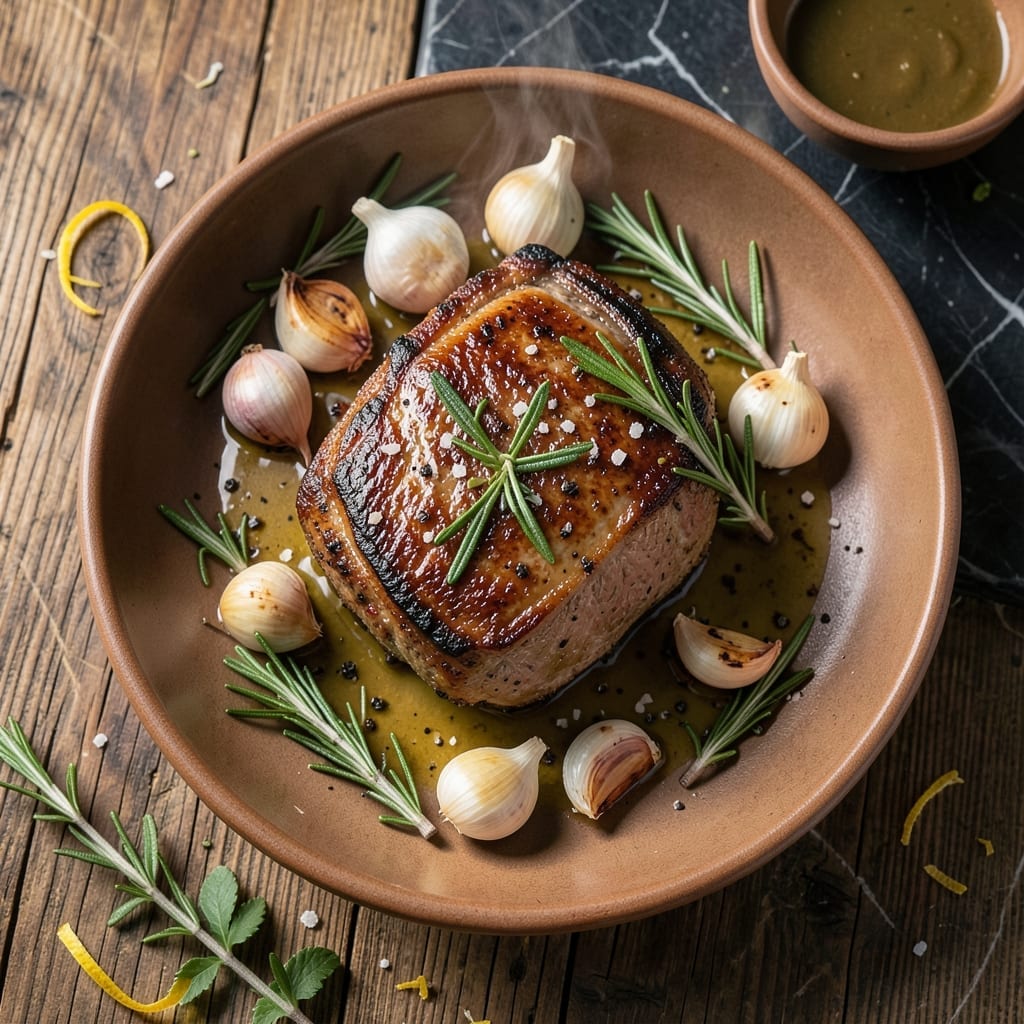
Slow-roasting pork tri-tip transforms this cut into a tender, flavorful centerpiece with minimal effort. I developed this method after testing multiple approaches in my small kitchen, always seeking the most foolproof technique for home cooks.
The garlic and rosemary create an aromatic crust that infuses the meat as it cooks. A low oven temperature ensures even cooking without drying out the pork, while a final rest guarantees juicy results every time.
This approach delivers restaurant-quality results with simple ingredients and basic equipment. The meat emerges with a golden brown exterior and a moist, perfectly seasoned interior that’s ideal for slicing against the grain.
Whether for Sunday dinner or a special occasion, this method proves that exceptional flavor doesn’t require complicated techniques. The oven does most of the work while you prepare the sides.
Ingredients for Pork Tri Tip Recipe Oven
Pantry staples plus fresh herbs create this restaurant-quality roast with minimal effort.
| Ingredient | Amount | Notes |
|---|---|---|
| Pork Tri-Tip Roast 🥩 | 2 lb | Trimmed of excess fat |
| Garlic Cloves 🧄 | 6 cloves | Minced for aromatic crust |
| Fresh Rosemary Sprigs 🌿 | 3 whole | Leaves stripped and chopped |
| Kosher Salt 🧂 | 2 tsp | Diamond Crystal preferred |
| Black Pepper 🌶️ | 1 tsp | Freshly ground for best flavor |
| Olive Oil 🫒 | 2 tbsp | Extra-virgin for richness |
| Dijon Mustard 🟡 | 1 tbsp | For tangy depth in crust |
| Red Wine Vinegar 🍷 | 1 tbsp | Balances richness of pork |
| Brown Sugar 🟤 | 1 tbsp | Light or dark variety |
| Smoked Paprika 🌶️ | 1 tsp | Adds subtle smokiness |
| Onion Powder 🧅 | 1 tsp | Enhances savory base |
| Dried Thyme 🍃 | ½ tsp | Complements rosemary well |
For optimal quality, source pork tri-tip from a reputable butcher or high-end grocery like Whole Foods. Look for a roast with even marbling and a bright red color—avoid anything with a grayish tint. The Diamond Crystal kosher salt (available at most supermarkets) is preferred for its clean flavor and consistent grain size. Fresh rosemary should have a strong aroma; if it’s wilted or brown, skip it.
No tri-tip? Bottom round roast works as a substitute, though the texture will differ slightly. Out of fresh rosemary? Use dried at one-third the amount. Dijon mustard can be swapped for whole-grain mustard. If avoiding alcohol, substitute apple cider vinegar for the red wine vinegar. The brown sugar can be omitted, but it helps create a beautiful caramelized crust.
The roast can be prepped 12 hours ahead and refrigerated before cooking. Leftovers keep in the fridge for up to 4 days or freeze for 3 months. Slice against the grain just before serving for maximum tenderness.
Why You’ll Love This Recipe
- Set It and Forget: I rub the tri tip with garlic, rosemary, salt, and pepper, pop it in the oven, and let the heat do all the work.
- Garlic-Rosemary Magic: The aroma of roasted garlic and fresh rosemary fills the kitchen, and every bite delivers that rich, herby punch.
- Feeds My Crew: One roast serves my whole family with enough left over for sandwiches the next day.
- Budget-Friendly Roast: Tri tip is an affordable cut that still feels like a special meal when roasted with simple ingredients.
Step-by-Step Instructions for Pork Tri Tip Roast
This slow-roasting method guarantees tender, flavorful meat with a perfect herb crust every time.
Step 1: Create the Herb and Spice Rub
In a small bowl, combine the 2 tsp Kosher Salt, 1 tsp Black Pepper, 1 tbsp Brown Sugar, 1 tsp Smoked Paprika, 1 tsp Onion Powder, and 0.5 tsp Dried Thyme. Stir until evenly blended, breaking up any sugar clumps with your fingers.
Add the 1 tbsp Dijon Mustard, 1 tbsp Red Wine Vinegar, and 2 tbsp Olive Oil, mixing until it forms a thick paste. The mustard and vinegar create the perfect balance of tang and richness to complement the pork.
Step 2: Prepare and Season the Roast
Pat the 2 lb Pork Tri-Tip Roast dry with paper towels, removing any remaining moisture from the surface. This ensures the seasoning adheres properly and promotes even browning.
Rub the spice paste all over the roast, pressing it into the meat with your hands. Distribute the 6 cloves Garlic Cloves (minced) and chopped leaves from the 3 whole Fresh Rosemary Sprigs evenly over the surface, pressing gently to create a flavorful crust.
Step 3: Slow-Roast to Perfection
Place the seasoned roast on a wire rack set in a baking dish, fat-side up. This elevation allows heat to circulate evenly around the meat. Let it sit at room temperature for 30 minutes to take the chill off before roasting.
Preheat the oven to 325°F. Roast the tri-tip uncovered for 1 hour to 1 hour 15 minutes, or until the internal temperature reaches 135-140°F for medium-rare. The meat should have a deep golden crust and feel slightly firm but still yield to pressure.
Step 4: Rest and Slice for Serving
Remove the roast from the oven and transfer it to a cutting board. Tent loosely with foil and let it rest for 15 minutes. This crucial step allows the juices to redistribute throughout the meat, ensuring each slice remains moist and flavorful.
Slice the tri-tip thinly against the grain, which shortens the muscle fibers for maximum tenderness. The roast should be uniformly pink inside with a well-browned exterior. Serve immediately with any accumulated juices spooned over the top.
Pro Tips For Making Pork Tri Tip Recipe Oven
- Reverse Sear First: Start at 275°F until internal temp hits 110°F, then blast with 450°F for 10 minutes to get that rosemary-garlic crust. I learned this the hard way—low and slow first keeps it juicy.
- Score the Fat Cap: Cut 1/4-inch crosshatches in the fat before seasoning so the salt, rosemary, and garlic actually penetrate. Sounds weird, but it works.
- Don’t Overcrowd the Pan: Use a rack or elevated tray so air circulates—otherwise, the bottom steams instead of roasting. After burning three batches, I finally figured this out.
- Rest Under Foil: Pull it at 135°F, tent loosely with foil, and wait 10 minutes before slicing. My grandmother swore by this, and she was right.
Perfect Pairings for This Dish
Wine Pairings
This dish calls for a medium-bodied red wine with enough acidity to cut through the richness. I love a Pinot Noir from Oregon—its bright cherry notes and earthy undertones complement the rosemary beautifully. Zinfandel from California also works wonderfully, with its jammy fruit balancing the savory crust. 🍷
Beer Options
A malty Amber Ale like Boston Brewing Company’s offering enhances the pork’s depth without overwhelming it. For something lighter, a crisp Pilsner from a local New England brewery cleanses the palate between bites.
Side Dish Ideas
Roasted root vegetables like carrots and parsnips tossed with olive oil and thyme mirror the herb notes in the crust. I roast mine at 400°F for 25 minutes until caramelized. A simple arugula salad with lemon vinaigrette adds freshness.
Bread Pairings
Crusty Italian bread from a local Boston bakery soaks up the juices perfectly. Warm it in the oven for 5 minutes before serving. Garlic mashed potatoes also make a comforting New England-style pairing.
Sauce Complements
A tangy apple compote adds brightness to the rich pork. Simmer 2 peeled apples with ¼ cup apple cider and 1 tbsp brown sugar until soft. The compote’s sweetness contrasts beautifully with the savory crust.
Nutrition Facts
Frequently Asked Questions
How do I know when the roast is done?
Use a meat thermometer to check the internal temperature. It should read 135-140°F for medium-rare. The meat will feel slightly firm but still yield to pressure.
Can I use a different cut of pork?
Yes! A bottom round roast works as a substitute, though the texture may differ slightly. Adjust cooking time based on the size and shape of your cut.
Why let the roast rest before slicing?
Resting for 15 minutes allows juices to redistribute. Slicing too soon causes them to spill out, leaving the meat dry. This step ensures each slice stays moist and flavorful.
Can I prepare the roast ahead of time?
The roast can be seasoned and refrigerated 12 hours ahead. Remove it from the fridge 30 minutes before cooking to bring it to room temperature.

- Potato Patty Recipe No Egg: Crispy Edges Without the Binder - October 30, 2026
- Paula Deen’s Potato Chip Cookies Recipe: Salty-Sweet Crunch in Every Bite - October 30, 2026
- Potato Gnocchi Recipe Ideas: Pillowy Soft Dumplings With Rustic Charm - October 30, 2026