
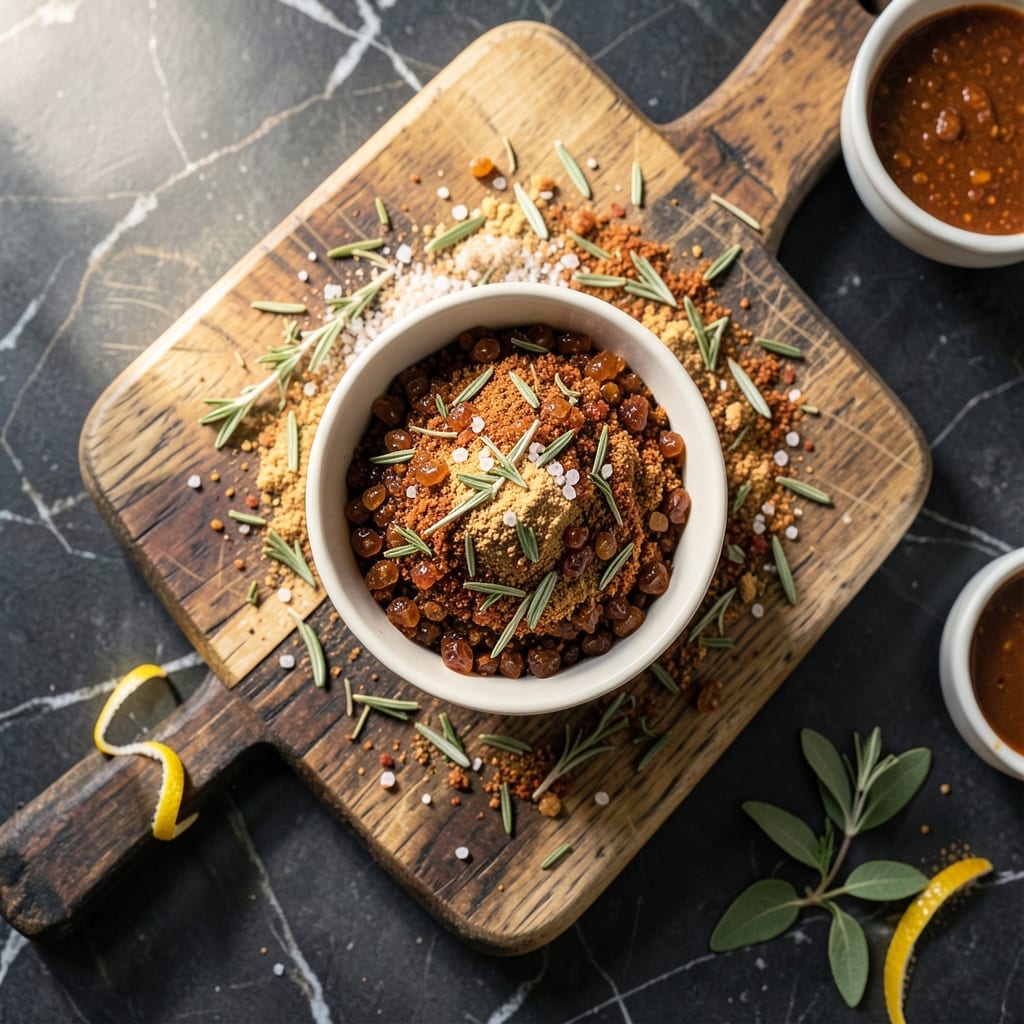
After years of smoking thousands of pounds of pork, I’ve perfected this dry rub for tender, juicy results every time. The blend of bold herbs and spices transforms simple pork tenderloin into a flavor-packed centerpiece without overwhelming the meat’s natural richness.
This foolproof seasoning works in minutes—just mix, rub, and roast. The key is balancing earthy, sweet, and smoky notes so the crust enhances the pork rather than masking it.
Once applied, the rub forms a caramelized crust in the oven, sealing in moisture while adding layers of flavor. The result is pork that stays succulent from the first bite to the last.
Make a big batch to keep on hand for spontaneous roasts or gift to fellow pork enthusiasts.
Ingredients for Pork Tenderloin Rub Recipe for Oven
Ten simple spices create that caramelized crust on your oven-roasted pork tenderloin.
| Ingredient | Amount | Notes |
|---|---|---|
| Brown Sugar 🍚 | ¼ cup | Light or dark, packed |
| Paprika 🌶️ | 2 tbsp | Sweet or smoked variety |
| Garlic Powder 🧄 | 1 tbsp | Not garlic salt |
| Onion Powder 🧅 | 1 tbsp | Fresh ground preferred |
| Dried Thyme 🍃 | 1 tsp | Rubbed between fingers |
| Dried Rosemary 🌿 | 1 tsp | Crushed to release oils |
| Ground Black Pepper 🌶️ | 1 tsp | Freshly ground preferred |
| Kosher Salt 🧂 | 1 tsp | Diamond Crystal preferred |
| Ground Cumin 🌿 | 1 tsp | Toasted for deeper flavor |
| Cayenne Pepper 🔥 | ½ tsp | Adjust for heat preference |
Spices are the soul here. Penzeys is my go-to for potency, but bulk bins at Whole Foods work great too (just check the date—old spices taste like dust). The brown sugar caramelizes beautifully, so don’t skip it. For the herbs, I always grab McCormick’s dried thyme and rosemary—they’ve got consistent quality. Freshly ground black pepper is worth the extra minute.
No brown sugar? White sugar plus a pinch of molasses mimics the depth. Want more smokiness? Swap regular paprika for smoked Spanish paprika. Out of cumin? Coriander at half the amount adds a different but complementary earthiness. The cayenne is optional—omit it if you’re sensitive to heat, or double it if you love a kick.
Glass jar, dark cabinet, done. Stays potent for about 6-12 months. I make a triple batch every time—one for the pantry, two to gift. The sugar might clump, so break it up before using (or add a few grains of rice to the jar).
Why You’ll Love This Recipe
- I’ll be real: it tastes even better the next day in sandwiches or salads.
- 5-Minute Rub: I just mix brown sugar, paprika, and the powders right in a bowl—no chopping, no fuss.
- Sweet & Smoky: The brown sugar caramelizes while the paprika gives that deep, smoky kick I crave.
- Feeds a Crowd: One tenderloin serves six, and honestly, it’s my go-to for Sunday dinner with the family.
Step-by-Step Instructions for Pork Tenderloin Rub
Here’s the method. Simple, foolproof, and it always delivers on flavor.
Step 1: Prepare All Spices and Herbs
Gather the brown sugar, paprika, garlic powder, onion powder, dried thyme, dried rosemary, ground black pepper, kosher salt, ground cumin, and cayenne pepper. I like to measure everything out first—it makes the mixing step seamless.
Take a moment to prep the dried herbs. Rub the dried thyme between your fingers to release its aromatic oils, and crush the dried rosemary lightly in your palm. This small step ensures every bite of your pork tenderloin bursts with herbaceous flavor.
Step 2: Combine Dry Ingredients Thoroughly
In a medium bowl, add the 0.25 cup brown sugar, 2 tbsp paprika, 1 tbsp garlic powder, 1 tbsp onion powder, 1 tsp dried thyme, 1 tsp dried rosemary, 1 tsp ground black pepper, 1 tsp kosher salt, 1 tsp ground cumin, and 0.5 tsp cayenne pepper. Use a whisk or fork to blend everything together.
Mix until the color is uniform and you don’t see any streaks of individual spices. The brown sugar should be evenly distributed—this ensures a balanced sweetness in every bite. If you notice clumps in the brown sugar, break them up with your fingers or the back of a spoon.
Step 3: Adjust Heat Level to Taste
Taste a tiny pinch of the rub to check the heat level. The 0.5 tsp cayenne pepper adds a subtle kick, but it won’t overpower. If you prefer a milder rub, reduce the cayenne pepper slightly. For more heat, add an extra pinch—just remember a little goes a long way.
This is also the moment to ensure the texture is right. The rub should feel fine and slightly gritty from the brown sugar, but not powdery. If it seems too coarse, give it another good whisk to break up any larger pieces.
Step 4: Apply the Rub to Pork Tenderloin
Pat the pork tenderloin dry with paper towels—this helps the rub stick better. Coat the meat evenly with the spice blend, pressing gently so it adheres to the surface. I like to use about 2-3 tablespoons of rub per pound of pork, but feel free to adjust to your preference.
Let the seasoned tenderloin sit at room temperature for 15-20 minutes before roasting. This short rest allows the spices to penetrate the surface slightly, enhancing both flavor and tenderness. You’ll notice the rub starts to look slightly moist—that’s the brown sugar drawing out a bit of the meat’s natural juices.
Step 5: Store Any Leftover Rub Properly
If you have leftover rub, transfer it to an airtight container. It’ll keep in a cool, dark place for up to 3 months. I always make a double batch—this blend is fantastic on chicken, ribs, or even roasted vegetables.
Before using the stored rub, give it a quick stir to redistribute the brown sugar and spices. Over time, the brown sugar can settle to the bottom, so mixing ensures even flavor in every use.
Pro Tips For Making Pork Tenderloin Rub Recipe For Oven
- Pat It Dry: Always blot the pork tenderloin with paper towels before applying the rub—brown sugar sticks better to dry meat, and you’ll get a deeper crust.
- Rest Before Rubbing: Let the rubbed tenderloin sit at room temperature for 20-30 minutes before roasting; the spices penetrate better and the meat cooks more evenly.
- Watch the Sugar: Brown sugar can burn easily, so roast at 375°F instead of 400°F—you’ll still get caramelization without bitter spots.
- Double the Thyme: Dried thyme loses potency over time, so use a full teaspoon even if the recipe calls for less; it adds the earthy note that balances the sweetness.
Storing and Reheating This Dish
Refrigerator Storage
After mixing your seasoning blend, store it in an airtight container in the fridge for up to 3 months. I use a small glass jar with a tight-sealing lid. The cool temperature prevents the brown sugar from clumping and preserves the potency of the spices. ❄️
Pantry Storage
For short-term storage, keep the rub in a cool, dark pantry for up to 1 month. I recommend a mason jar or a sealed spice container. Just ensure it’s away from heat sources, as direct light or warmth can dull the flavors.
Freezer Storage
If making large batches, freeze the rub in a sealed container for up to 6 months. I often portion it into small zip-top bags for easy use. When ready, thaw at room temperature and stir before applying to the pork.
Reheating Rubbed Pork
To reheat leftover pork, place it in a baking dish, add ¼ cup chicken broth, and cover with foil. Warm at 325°F for 15-20 minutes to restore moisture. The rub’s caramelized crust will soften but retain its bold flavor. 🔥
Reviving Leftover Rub
If your stored rub clumps, break it up with a fork or pulse in a spice grinder. I add 1 tsp cornstarch to absorb excess moisture if needed. This keeps the texture fine and ready for your next roast.
Nutrition Facts
Frequently Asked Questions
How long can I store the rub before using?
In an airtight container in a cool, dark place, it stays fresh for up to 3 months. For longer storage, freeze it for up to 6 months.
Can I use this rub on other meats?
It works wonderfully on chicken, ribs, or even roasted vegetables. The balanced sweet and smoky notes complement many dishes.
What if I don’t have brown sugar?
Substitute with white sugar plus a pinch of molasses to mimic the depth. The caramelization won’t be as rich, but it’ll still add sweetness.
Why press the rub into the meat?
It helps the spices adhere better and form a flavorful crust. Letting it sit for 15-20 minutes before roasting enhances the taste and tenderness.

- Potato Patty Recipe No Egg: Crispy Edges Without the Binder - October 30, 2026
- Paula Deen’s Potato Chip Cookies Recipe: Salty-Sweet Crunch in Every Bite - October 30, 2026
- Potato Gnocchi Recipe Ideas: Pillowy Soft Dumplings With Rustic Charm - October 30, 2026