
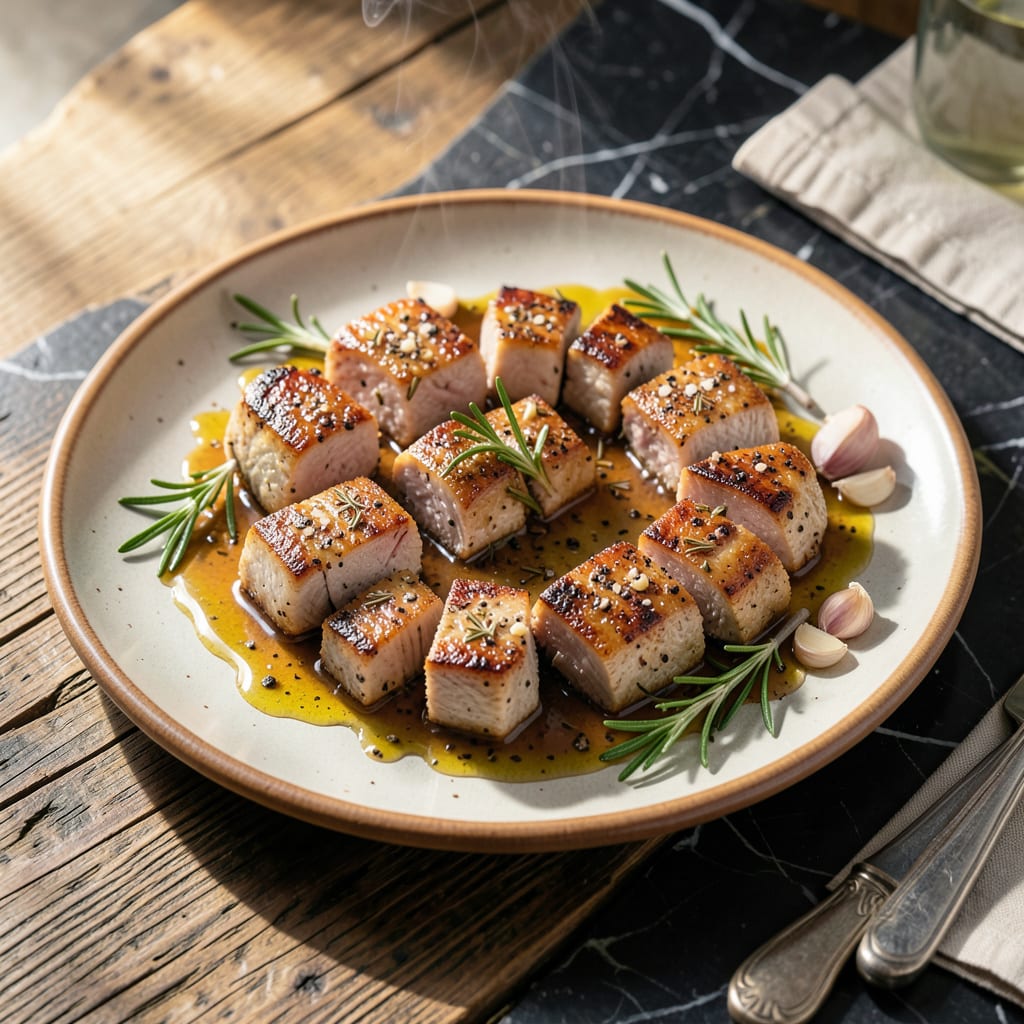
This recipe delivers quick, restaurant-quality results with minimal effort. The key is using high heat to achieve a perfect sear while keeping the pork tender and juicy.
With just a few simple ingredients and about 15 minutes, you’ll have flavorful, pan-seared pork tenderloin tips coated in a rich garlic butter sauce. The technique ensures each bite is packed with flavor.
Ingredients for Pork Tenderloin Tips
Restaurant-quality pork with minimal effort and maximum flavor in every bite.
| Ingredient | Amount | Notes |
|---|---|---|
| Pork Tenderloin 🥩 | 1 ½ lb | Trimmed and cut into 1-inch pieces |
| Unsalted Butter 🧈 | ½ cup | Divided for cooking and sauce |
| Garlic Cloves 🧄 | 4 cloves | Minced for maximum flavor |
| Olive Oil 🫒 | 2 tbsp | For high-heat searing |
| Kosher Salt 🧂 | 1 ½ tsp | Diamond Crystal preferred |
| Freshly Ground Black Pepper 🌶️ | 1 tsp | Coarse grind for texture |
| Dried Thyme 🌿 | 1 tsp | Or substitute fresh thyme |
| Dried Rosemary 🌿 | 1 tsp | Crushed to release oils |
| Low-Sodium Chicken Broth 💧 | ½ cup | For deglazing the pan |
| Fresh Parsley 🌿 | ¼ cup | Chopped, for garnish |
| All-Purpose Flour 🌾 | 2 tbsp | For light dredging |
| Worcestershire Sauce 💧 | 1 tbsp | Adds umami depth |
The pork tenderloin must be fresh with a vibrant pink color and minimal fat marbling. Whole Foods and Costco offer consistently high-quality options. For best results, select tenderloin that’s uniform in thickness—this ensures even cooking. Trim any visible silver skin before cubing, as it can toughen during cooking. The butter should be European-style for richer flavor in the sauce.
No Worcestershire? Soy sauce with a pinch of sugar works in a pinch. Fresh herbs can replace dried at a 3-to-1 ratio. If avoiding gluten, swap all-purpose flour for cornstarch—use half the amount. For extra richness, add a splash of heavy cream to the sauce at the end. The garlic can be sliced thin if mincing feels tedious (just cook it a minute longer).
Leftovers keep in an airtight container for 3-4 days in the fridge. Reheat gently in a skillet with a splash of broth to maintain moisture. The sauce solidifies when chilled—reheat slowly to restore its silky texture. Freezing is not recommended for this dish.
Why You’ll Love This Recipe
- I’ll be real: the cold tips taste even better the next day in a salad or wrapped in a tortilla.
- One Pan Magic: I sear the tips in the same skillet where I melt butter and garlic—minimal cleanup, maximum flavor.
- Garlic Butter Bliss: The combo of browned butter, fresh garlic, and a hint of kosher salt makes these tips ridiculously good.
- Weeknight MVP: Between us, this is my go-to when I need something fancy-feeling but fast for a Tuesday dinner.
Step-by-Step Instructions for Pan-Seared Pork Tenderloin Tips
Here’s the method. Straightforward, tested, works every time.
Step 1: Prep and Season the Pork Tenderloin
Pat the 1.5 lb pork tenderloin dry with paper towels to ensure a perfect sear. Cut it into 1-inch pieces and season with the 1.5 tsp kosher salt, 1 tsp freshly ground black pepper, 1 tsp dried thyme, and 1 tsp dried rosemary. I crush the rosemary between my fingers to release its aromatic oils before sprinkling.
Lightly dredge each piece in the 2 tbsp all-purpose flour, shaking off any excess. This creates a thin coating that will crisp up beautifully when seared. Set aside the floured pork tenderloin while you heat the pan—this brief rest helps the seasoning adhere.
Step 2: Sear the Pork Tips to Golden Perfection
Heat the 2 tbsp olive oil in a large skillet over medium-high heat until shimmering. Add half the pork tenderloin pieces, ensuring they’re not crowded in the pan. Cook for 3-4 minutes per side until golden brown and cooked through. Overcrowding the pan will steam the meat instead of searing it.
Transfer the seared pork tenderloin to a plate and tent with foil to keep warm. Repeat with the remaining pork tenderloin, adding a bit more olive oil if needed. The pork is done when it reaches an internal temperature of 145°F and the exterior is a rich, golden brown.
Step 3: Create the Garlic Butter Pan Sauce
Reduce the heat to medium and add 2 tbsp of the unsalted butter to the same skillet. Once melted, add the 4 cloves minced garlic cloves and cook for 30 seconds until fragrant. Be careful not to burn the garlic—it should turn just lightly golden.
Pour in the 0.5 cup low-sodium chicken broth and 1 tbsp Worcestershire sauce, scraping up any browned bits from the bottom of the pan with a wooden spoon. This deglazing step captures all the flavorful fond left from searing the pork tenderloin. Let the mixture simmer for 2-3 minutes until slightly reduced.
Step 4: Finish with Butter and Serve
Remove the skillet from heat and stir in the remaining 6 tbsp unsalted butter (¼ cup plus 2 tbsp) until fully melted and the sauce is glossy. The butter enlivens the sauce with a rich, velvety texture that coats the pork tenderloin beautifully.
Return the pork tenderloin to the skillet and toss to coat in the garlic butter sauce. Cook for an additional 1-2 minutes over low heat to allow the flavors to meld. Garnish with the 0.25 cup chopped fresh parsley just before serving to add a bright, fresh note to the dish.
Pro Tips For Making Pork Tenderloin Tips
- Sear Hot, Finish Low: Crank the pan to high for the initial sear to get that golden crust on the pork, then drop to medium-low to cook the tips through without burning the butter and garlic.
- Pat Dry First: I learned this the hard way—blot the pork tenderloin tips with a paper towel before seasoning, or they’ll steam instead of brown in the olive oil.
- Rest Under Foil: After pulling the pork from the pan, tent it loosely with foil for 5-10 minutes—this keeps the juices inside where they belong, not on your cutting board.
- Brown the Butter: Let the unsalted butter cook until it’s nutty and golden before adding the garlic; it adds a depth of flavor that raw butter just can’t match.
Dietary Considerations for This Recipe
Gluten-Free Option
Simply swap the 2 tbsp all-purpose flour for 1 tbsp cornstarch to make this dish entirely gluten-free. The cornstarch creates a similar light coating that crisps up nicely during searing. I’ve tested this with Bob’s Red Mill cornstarch with excellent results.
Dairy-Free Adaptation
Replace the ½ cup unsalted butter with olive oil or a dairy-free butter substitute like Miyoko’s Creamery. Use ¼ cup for searing and ¼ cup for the sauce. The flavor will be slightly different but still delicious and rich.
Lower-Sodium Version
Cut the 1.5 tsp kosher salt in half and use low-sodium Worcestershire sauce instead of regular. The dish will still be flavorful thanks to the garlic and herbs. I often add a pinch of lemon zest to brighten the flavors when reducing salt.
Keto-Friendly Adjustments
Omit the flour entirely for a keto-friendly version. The pork will still develop a good sear from the olive oil and natural juices. You can thicken the sauce with ½ tsp xanthan gum if desired. This keeps carbs under 5g per serving. 💪
Allergy Considerations
This recipe is naturally free from nuts, eggs, and soy (if using soy-free Worcestershire). For garlic allergies, substitute 1 tsp onion powder and ½ tsp asafoetida for the minced garlic. Always check your broth label for hidden allergens.
Protein Boost
Each serving provides about 30g of protein from the pork alone. To increase this further, serve with a side of quinoa or roasted chickpeas. The dish pairs well with these additions without overpowering the main flavors. 💫
Nutrition Facts
Frequently Asked Questions
What’s the best way to cut the tenderloin?
Cut into 1-inch pieces for even cooking. Use a sharp knife and slice against the grain for maximum tenderness. This size ensures quick cooking while maintaining juiciness.
Can I use a different cut of pork?
Stick with tenderloin for best results. Other cuts may be tougher or require longer cooking. The lean, tender nature of tenderloin works perfectly with this quick method.
How do I know when it’s done?
Use a meat thermometer – it’s done at 145°F internally. The outside should be golden brown. Overcooking will make it dry, so check early.
What if my sauce is too thin?
Simmer for 1-2 extra minutes to reduce. Or mix ½ tsp cornstarch with water and stir in. The sauce should coat the back of a spoon.

- BBQ Sausage Recipe Oven: Smoky Depth Without the Grill - September 28, 2026
- BBQ Chicken Bowl Recipe Rice: Smoky Sweetness Over Fluffy Grains - September 28, 2026
- Beef Cutlet Recipe Ideas: Crispy Breaded Patties With Bold Seasonings - September 28, 2026