
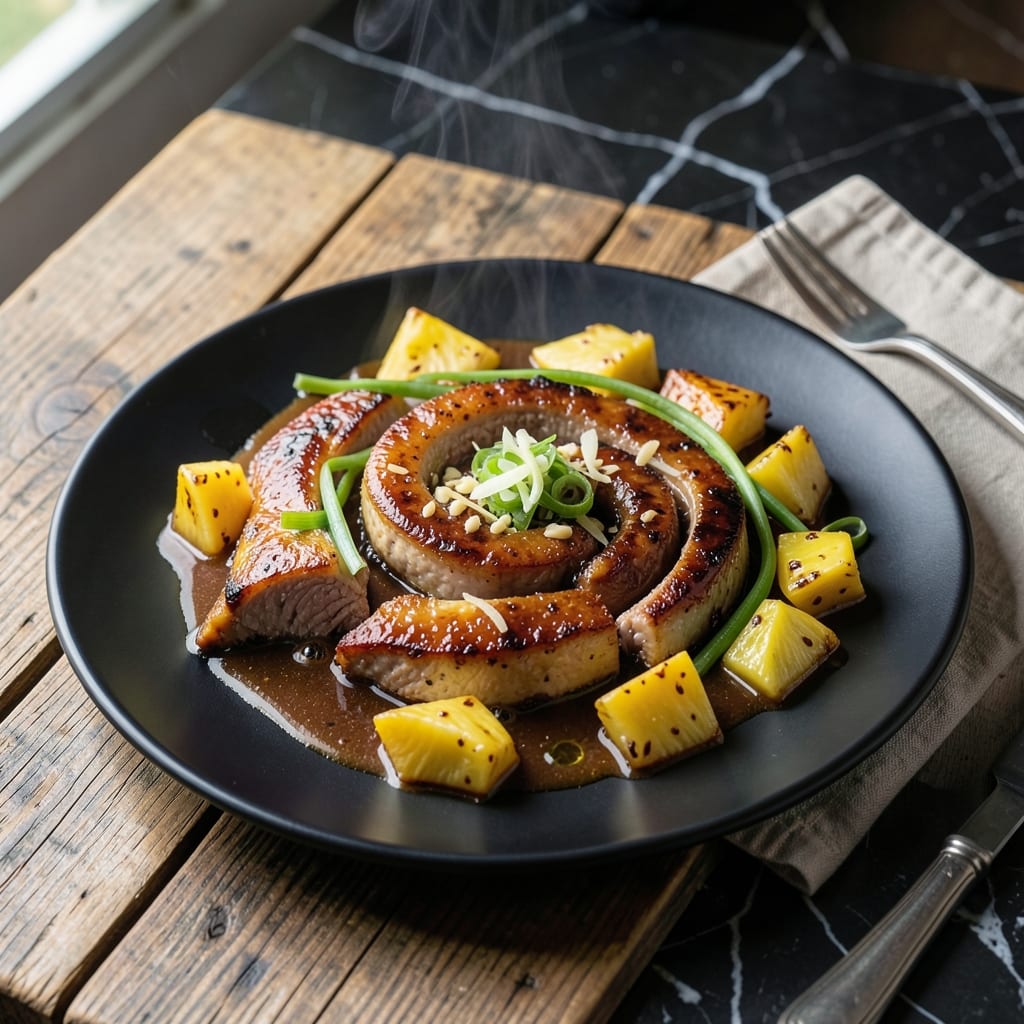
This Filipino-style teriyaki brings a tropical twist to a classic favorite. The addition of pineapple juice creates a sweet-tangy depth that perfectly balances the rich soy glaze.
I developed this version after tasting a similar dish at a Portland food cart, determined to recreate those complex flavors at home. The marinade works double duty as both tenderizer and sauce base.
The pork emerges tender and caramelized, with a glossy finish that’s irresistible over steamed rice. One taste and you’ll understand why this became a weeknight staple in our house.
Serve with garlic fried rice and steamed vegetables for a complete meal that comes together in under an hour.
Ingredients for Pork Teriyaki Recipe Filipino Style
Sweet soy glaze meets tropical pineapple for a weeknight win over rice.
| Ingredient | Amount | Notes |
|---|---|---|
| Pork Shoulder 🐖 | 1 ½ lb | Cut into thin strips |
| Soy Sauce 🫙 | ½ cup | Low-sodium preferred |
| Pineapple Juice 🍍 | 1 cup | Fresh or canned, unsweetened |
| Brown Sugar 🍚 | ⅓ cup | Packed, light or dark |
| Garlic Cloves 🧄 | 4 cloves | Minced finely |
| Fresh Ginger 🌿 | 1 tbsp | Grated or minced |
| Rice Vinegar 🫙 | 2 tbsp | Or apple cider vinegar |
| Cornstarch 🌾 | 1 tbsp | Mixed with water for slurry |
| Water 💧 | 2 tbsp | For cornstarch slurry |
| Vegetable Oil 🫒 | 2 tbsp | For browning pork |
| Green Onions 🧅 | ¼ cup | Sliced, for garnish |
| Sesame Seeds 🌰 | 1 tbsp | Toasted, for garnish |
| Steamed Rice 🍚 | 2 cups | Uncooked, for serving |
The pork shoulder is key here—look for well-marbled cuts at your butcher or Costco (they often have pre-cut strips). The fat renders down during cooking, leaving you with that melt-in-your-mouth texture the food cart version had. Fresh ginger is non-negotiable; the bottled stuff just doesn’t have the same zing. I grab mine from Asian markets where it’s always fresher and cheaper than regular grocery stores.
No pineapple juice? Crushed pineapple (drained) plus a splash of water works in a pinch. Brown sugar can be swapped for coconut sugar for a deeper caramel note. If you’re out of rice vinegar, apple cider vinegar at the same amount keeps the balance. The cornstarch slurry is what gives that glossy finish—don’t skip it. And if you’re feeling fancy, swap the vegetable oil for toasted sesame oil (just a teaspoon) for extra depth.
Marinate the pork for at least 30 minutes (overnight is even better). Leftovers keep in the fridge for 3-4 days and reheat beautifully. The sauce thickens as it cools—just loosen with a splash of water if needed. Freeze portions for up to 3 months (the pork freezes great, but the sesame seeds are best added fresh).
Why You’ll Love This Recipe
- One Pan Magic: I brown the pork shoulder, throw in the soy, pineapple, sugar, and garlic, and let the oven do the rest.
- Sweet-Savory Bomb: The brown sugar caramelizes with the soy and pineapple juice into a sticky glaze that clings to every bite.
- Feeds a Crowd: I stretch one batch into three meals—rice bowls tonight, tacos tomorrow, fried rice the next day.
- Budget Hero: Pork shoulder stays cheap, and a little goes far when it’s this flavorful.
Step-by-Step Instructions for Pork Teriyaki Filipino Style
Here’s the method. Simple steps, bold flavors, perfect every time.
Step 1: Sear the Pork Shoulder to Golden Perfection
Heat the 2 tablespoons vegetable oil in a large skillet over medium-high heat until it shimmers. Add the 1.5 lb pork shoulder strips in a single layer, working in batches if needed to avoid crowding. Let them sear undisturbed for 3-4 minutes until the edges turn deep golden brown.
Flip the strips and cook for another 2-3 minutes until evenly browned. The pork doesn’t need to be fully cooked at this stage—just well-browned. This searing creates a flavorful fond that will enrich your sauce later. Transfer the pork to a plate and set aside.
Step 2: Build the Sweet-Savory Pineapple Glaze
In the same skillet, reduce heat to medium. Add the 4 cloves garlic and 1 tablespoon fresh ginger, sautéing for 30 seconds until fragrant but not browned. Immediately pour in the 0.5 cup soy sauce, 1 cup pineapple juice, 0.33 cup brown sugar, and 2 tablespoons rice vinegar.
Stir to dissolve the brown sugar, then bring to a gentle simmer. Let it cook for 5-6 minutes until the mixture reduces slightly and takes on a syrupy consistency. The pineapple juice adds a subtle tang that balances the sweetness beautifully—this is the Filipino twist on classic teriyaki.
Step 3: Thicken the Sauce and Finish the Pork
In a small bowl, whisk together the 1 tablespoon cornstarch and 2 tablespoons water to create a slurry. Slowly pour this into the simmering sauce while stirring constantly. The mixture should thicken within 1-2 minutes to a glossy, coat-the-back-of-a-spoon consistency.
Return the seared pork strips to the skillet, coating them thoroughly in the sauce. Simmer for another 3-4 minutes until the pork is fully cooked through and the sauce has reduced to a beautiful glaze. The pork should be tender and the sauce should cling lovingly to each piece.
Step 4: Garnish and Serve with Steamed Rice
Remove from heat and let the pork rest in the sauce for 2 minutes. This allows the flavors to meld and the pork to absorb some of that incredible glaze. Sprinkle with the 0.25 cup green onions and 1 tablespoon sesame seeds just before serving.
Serve immediately over the 2 cups steamed rice, spooning extra sauce over the top. The contrast of the tender pork, sweet-savory glaze, and fluffy rice is what makes this dish truly special. The sesame seeds add a delightful crunch and visual appeal to each serving.
Pro Tips For Making Pork Teriyaki Recipe Filipino Style
- Sear the Pork First: I learned this the hard way—browning the pork shoulder in batches over medium-high heat for 3-4 minutes per side locks in juices and adds depth to the teriyaki glaze.
- Reduce the Sauce: After simmering the soy sauce, pineapple juice, and brown sugar, let it reduce by half (about 8-10 minutes) for a thicker, stickier glaze that clings to the pork.
- Skip the Overcooking: Pork shoulder can turn tough if cooked past 160°F internal temp—pull it off the heat just as it hits that mark and let it rest.
- Crush the Garlic: Sounds weird, but it works: lightly crushing the garlic cloves with the side of your knife before mincing releases more flavor into the teriyaki sauce.
Best Sauces and Condiments for This Dish
Filipino-Style Sauces
For an authentic touch, I love serving this with banana ketchup—a sweet, tangy Filipino condiment that complements the pineapple notes beautifully. Just 2 tablespoons per serving adds depth. You can find it at Asian markets or online. 🌟
Spicy Calamansi Dip
Mix 3 tablespoons calamansi juice (or lime if unavailable) with 1 tablespoon soy sauce, 1 teaspoon honey, and ½ teaspoon chili flakes. This bright, zesty dip cuts through the richness and adds a refreshing contrast.
Creamy Coconut Sauce
Whisk ½ cup coconut milk with 1 tablespoon cornstarch and 1 teaspoon brown sugar. Simmer until thickened, then drizzle over the pork. The coconut enhances the tropical vibe and adds a velvety texture.
Classic Garnishes
Stick to the basics with extra green onions and sesame seeds. I also add pickled red onions for a sharp bite—just ¼ cup thinly sliced, soaked in rice vinegar for 10 minutes. Simple but effective. 💫
Sweet Chili Glaze
Combine 3 tablespoons sweet chili sauce with 1 teaspoon lime juice for a quick glaze. Brush it on the pork during the last 2 minutes of cooking for a sticky, slightly spicy finish that’s irresistible.
Nutrition Facts
Frequently Asked Questions
Can I use chicken instead of pork?
Yes, boneless chicken thighs work beautifully. Reduce cooking time to 5-6 minutes total after adding to the sauce to prevent drying out. The flavors pair just as well with poultry.
What if I don’t have pineapple juice?
Use 1 cup orange juice with 1 tablespoon lemon juice for similar acidity. For depth, add 1 teaspoon grated pineapple zest if available. The citrus keeps the balance.
How do I prevent the sauce from burning?
Keep heat at medium and stir frequently once the sugar is added. If it thickens too fast, add 1-2 tablespoons water and reduce heat to medium-low. Patience is key.

- Potato Patty Recipe No Egg: Crispy Edges Without the Binder - October 30, 2026
- Paula Deen’s Potato Chip Cookies Recipe: Salty-Sweet Crunch in Every Bite - October 30, 2026
- Potato Gnocchi Recipe Ideas: Pillowy Soft Dumplings With Rustic Charm - October 30, 2026