
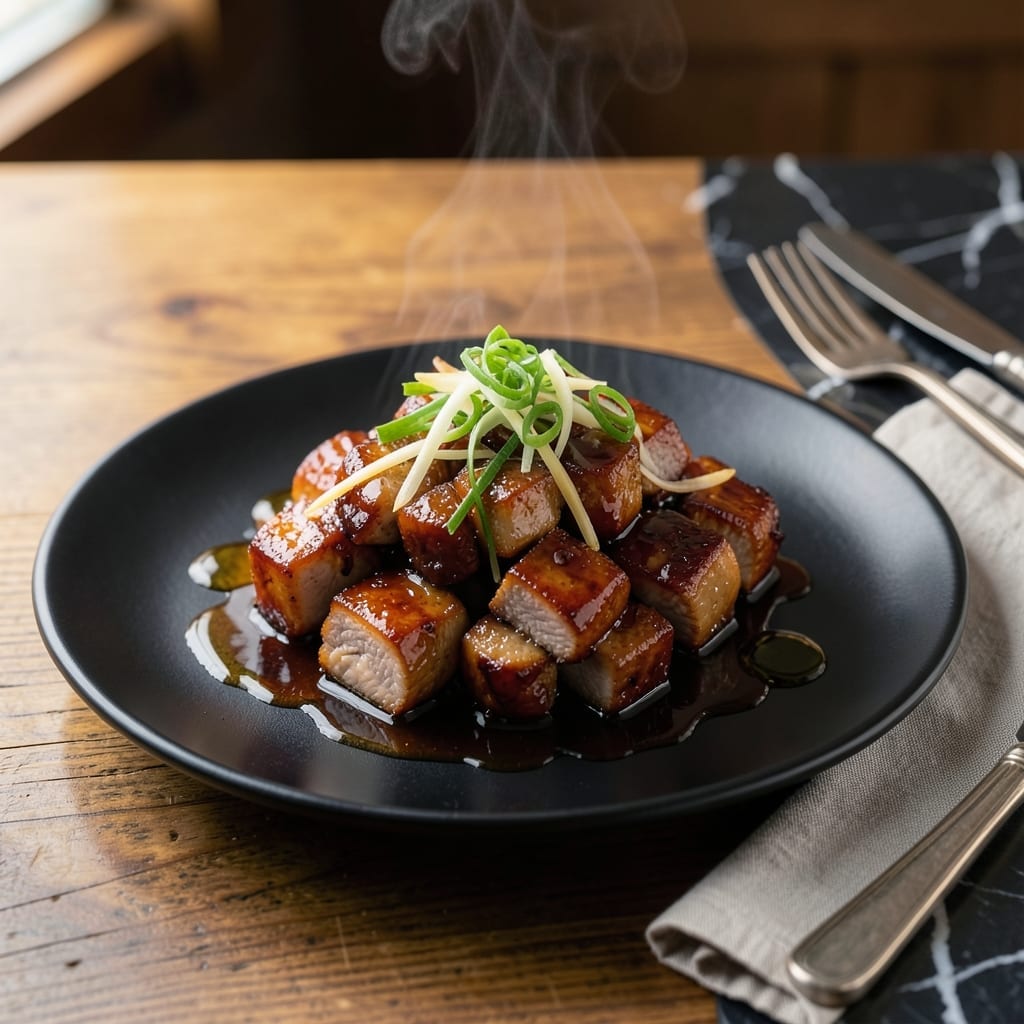
This Japanese-style teriyaki delivers the perfect balance of sweet and savory with minimal effort. The secret lies in the traditional marinade that transforms simple pork into a glossy, umami-rich masterpiece.
I developed this method after years of testing ratios and techniques to achieve authentic flavor without complicated steps. The pork soaks up the teriyaki glaze while cooking, creating layers of depth in every bite.
What emerges is tender pork coated in a thick, caramelized sauce that clings beautifully to each piece. The result is restaurant-quality teriyaki that’s surprisingly simple to recreate at home.
Serve with steamed rice and steamed vegetables for a complete meal. Here’s how to achieve that signature glossy finish.
Ingredients for Pork Teriyaki Recipe Japanese Style
Transform simple ingredients into a glossy, umami-rich Japanese-style teriyaki with these essentials.
| Ingredient | Amount | Notes |
|---|---|---|
| Pork Shoulder 🥩 | 1 ½ lb | Cut into 1-inch cubes, trimmed of excess fat |
| Soy Sauce 🫒 | ½ cup | Low-sodium Japanese variety preferred |
| Mirin 🍶 | ⅓ cup | Sweet Japanese rice wine |
| Sake 🍶 | ⅓ cup | Dry Japanese rice wine |
| Granulated Sugar 🍚 | ¼ cup | For balanced sweetness |
| Fresh Ginger 🌿 | 1 tbsp | Finely grated, peeled |
| Garlic Cloves 🧄 | 3 cloves | Minced for depth of flavor |
| Neutral Oil 🛢️ | 1 tbsp | Vegetable or canola oil |
| Cornstarch 🌾 | 1 tbsp | For thickening the sauce |
| Water 💧 | 2 tbsp | Cold, for cornstarch slurry |
| Green Onions 🧅 | 3 whole | Thinly sliced for garnish |
| Sesame Seeds 🌰 | 1 tsp | Toasted for garnish |
The pork is fundamental here. Pork shoulder offers the ideal fat-to-meat ratio for tender, juicy results—avoid lean cuts like tenderloin as they dry out. Japanese soy sauce (such as Kikkoman or Yamasa) provides depth without overpowering saltiness. For mirin and sake, authentic Japanese brands like Hinode or Gekkeikan ensure traditional flavor. Fresh ginger and garlic are non-negotiable for aromatic complexity.
No mirin? Substitute with 1 tbsp sugar plus 1 tbsp water per 1 tbsp mirin. Sake can be replaced with dry white wine in a pinch. For gluten-free, use tamari instead of soy sauce. The cornstarch slurry is essential for that signature glossy finish—skip it and you’ll lose the sauce’s cling. Pork loin works if shoulder is unavailable, but sear it quickly to avoid toughness.
The cooked teriyaki keeps beautifully for 3-4 days refrigerated in an airtight container. Reheat gently to preserve the glaze’s consistency. Freezing is possible for up to 3 months, though the sauce may separate slightly upon thawing. Garnishes like green onions and sesame seeds are best added fresh.
Why You’ll Love This Recipe
- One Pan Wonder: I brown the pork shoulder, then let it simmer in the same pan with soy, mirin, and sake—minimal cleanup, maximum flavor.
- Sweet-Savory Magic: The caramelized sugar with the umami of soy sauce creates that sticky, glossy coating I can never resist.
- Meal Prep Hero: I make a big batch on Sunday and it tastes even better reheated for lunches all week. Honestly, it’s my secret to stress-free dinners.
- Budget Stretcher: Pork shoulder is so affordable, and a little goes a long way with this rich, flavorful sauce. Feeds my family without breaking the bank.
Step-by-Step Instructions for Pork Teriyaki Japanese Style
Master the technique for restaurant-quality results with authentic Japanese flavors.
Step 1: Sear and Brown the Pork Shoulder
Heat the 1 tbsp neutral oil in a large skillet over medium-high heat until it shimmers. Add the 1.5 lb pork shoulder, cut into 1-inch cubes, in a single layer without crowding. Let it sear undisturbed for 3-4 minutes until deeply browned on one side.
Resist the urge to stir too soon—the fond (browned bits) that develops will build incredible depth of flavor in your sauce. Flip the cubes and sear the remaining sides for another 3-4 minutes until evenly browned. The pork should be just cooked through but still tender.
Step 2: Build the Teriyaki Glaze Base
Reduce heat to medium and add the 3 cloves garlic cloves and 1 tbsp fresh ginger to the skillet. Stir constantly for 30 seconds until fragrant—this blooms the aromatics without burning them. Immediately pour in the 0.5 cup soy sauce, 0.33 cup mirin, and 0.33 cup sake.
Increase heat to medium-high and bring to a gentle boil. Add the 0.25 cup granulated sugar and stir until fully dissolved. The mixture should reduce slightly and begin to coat the back of a spoon—that’s your cue it’s concentrating properly.
Step 3: Thicken and Glaze the Pork
In a small bowl, whisk together the 1 tbsp cornstarch and 2 tbsp water until smooth. Pour this slurry into the simmering sauce while stirring constantly. The mixture will thicken noticeably within 1-2 minutes into a glossy, syrupy consistency.
Return the seared pork to the skillet and coat it thoroughly in the glaze. Simmer for 2-3 minutes until the pork absorbs the flavors and the sauce clings beautifully to each piece. The glaze should be thick enough to leave a visible sheen but still fluid.
Step 4: Finish and Garnish for Presentation
Remove from heat and let the pork rest in the sauce for 2 minutes—this allows the flavors to penetrate deeply. Transfer to a serving platter and drizzle any remaining sauce from the pan over the top.
Garnish with the 3 whole green onions, thinly sliced, and sprinkle with the 1 tsp sesame seeds. The contrast of vibrant green against the deep amber glaze makes this dish as visually stunning as it is delicious. Serve immediately while the glaze is still glossy and fluid.
Pro Tips For Making Pork Teriyaki Recipe Japanese Style
- Sear High, Simmer Low: I learned this the hard way—blast the pork shoulder on high heat first for a golden crust, then drop to low for the teriyaki glaze to thicken without burning. About 2 minutes per side for searing, then 10-12 minutes simmering.
- Slice Against Grain: Pork shoulder can get chewy if you don’t cut it right. Slice thinly against the grain for melt-in-your-mouth texture, especially after cooking.
- Reduce the Sauce First: After burning three batches, I finally figured out—simmer the soy sauce, mirin, sake, and sugar for 3-4 minutes before adding the pork. This prevents a watery, weak glaze.
- Use a Lid: Sounds weird, but it works: cover the pan while simmering the pork in the sauce. It speeds up cooking and guarantees the meat soaks up every bit of flavor.
Make-Ahead Tips for This Dish
Marinade Prep Ahead
Combine the 0.5 cup soy sauce, 0.33 cup mirin, 0.33 cup sake, and 0.25 cup sugar in a bowl. This marinade keeps beautifully in the fridge for up to 3 days before using. I often make a double batch on Sunday to streamline weeknight cooking. 💡
Pork Prep Shortcut
Cut the 1.5 lb pork shoulder into 1-inch cubes and store in an airtight container with the marinade. The pork can marinate in the fridge for 4-12 hours—overnight works perfectly. This saves 20 minutes of active prep time the next day.
Partial Cook Method
Sear the pork as directed, then cool and refrigerate in its cooking juices for up to 24 hours. When ready to serve, reheat gently on the stovetop and add the cornstarch slurry to thicken. The flavors deepen overnight, making this my go-to for meal prep.
Freezing for Later
After cooking, let the teriyaki cool completely before freezing in a single layer on a baking sheet. Once frozen, transfer to a freezer bag for up to 3 months. Reheat from frozen in a skillet with a splash of water to revive the glaze. ❄️
Sauce Separation Fix
If the sauce separates after storage, simply reheat gently while stirring. Add 1 tsp cornstarch mixed with 1 tbsp water if needed to restore the glossy consistency. I’ve found this works every time without compromising flavor.
Garnish Last Touch
Store sliced green onions and toasted sesame seeds separately and add just before serving. This keeps the garnishes fresh and vibrant. A quick toast of the sesame seeds in a dry pan takes 30 seconds and boosts their nuttiness.
Nutrition Facts
Frequently Asked Questions
What cut of pork works best?
Pork shoulder is ideal for its fat marbling, ensuring tender results. Avoid lean cuts like tenderloin as they can dry out during cooking.
Can I substitute mirin or sake?
Replace mirin with 1 tbsp sugar + 1 tbsp water per tablespoon. Use dry white wine instead of sake in a pinch. Authentic versions yield the best flavor.
How do I fix a thin sauce?
Mix 1 tsp cornstarch with 1 tbsp cold water and stir into simmering sauce. It will thicken within 1-2 minutes.
Can I make this gluten-free?
Yes! Swap regular soy sauce for tamari, which is naturally gluten-free. Check all other ingredients to ensure no hidden gluten.

- Potato Patty Recipe No Egg: Crispy Edges Without the Binder - October 30, 2026
- Paula Deen’s Potato Chip Cookies Recipe: Salty-Sweet Crunch in Every Bite - October 30, 2026
- Potato Gnocchi Recipe Ideas: Pillowy Soft Dumplings With Rustic Charm - October 30, 2026