
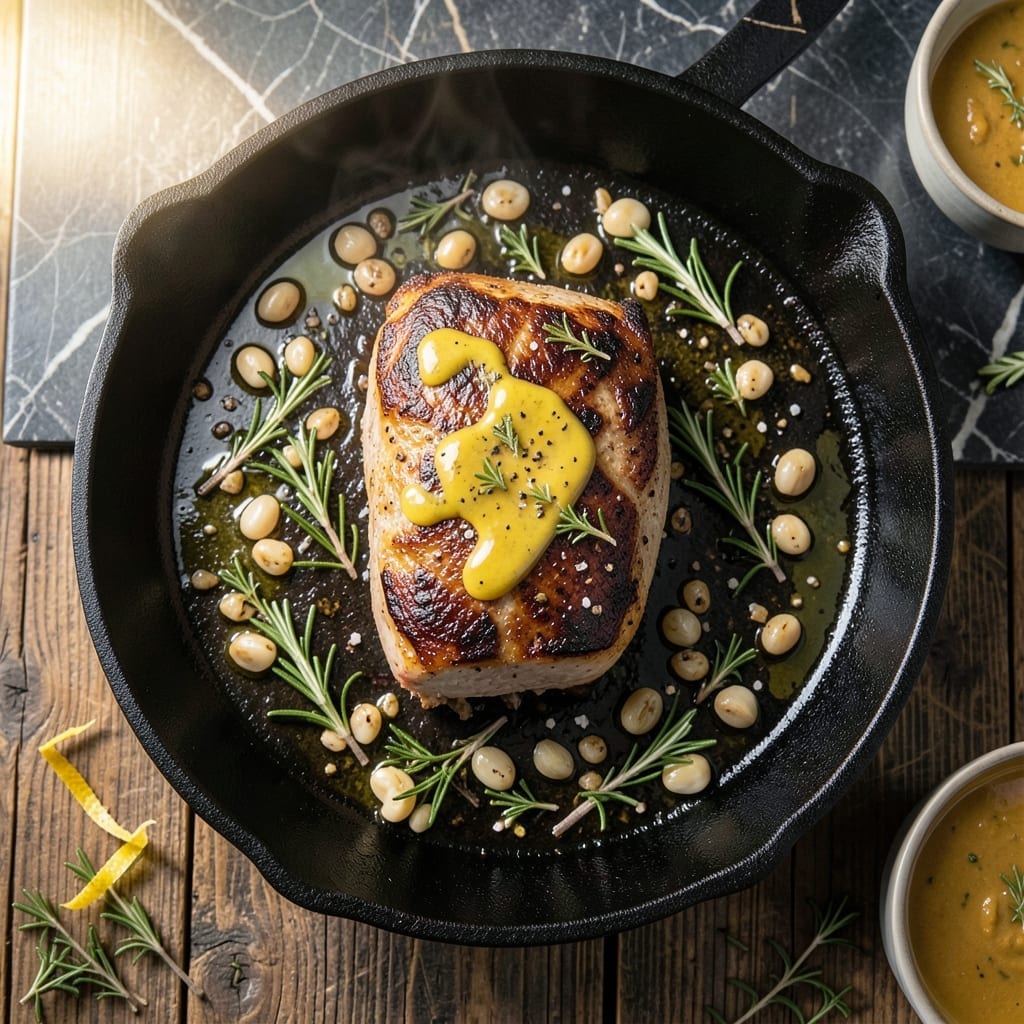
I developed this skillet method after one too many dry pork tenderloins ruined dinner. The solution was simpler than expected: high heat, careful timing, and a garlic herb crust that locks in moisture.
This approach transforms lean pork into a tender, juicy centerpiece with minimal effort. A hot skillet creates a perfect sear while the herb crust adds layers of flavor without overwhelming the natural taste.
The result is a restaurant-quality dish with a golden crust and tender interior. The pan juices form a light sauce that pairs beautifully with every bite.
Ready in under 30 minutes, it’s ideal for weeknight dinners that feel special. Here’s how to make it.
Ingredients for Pork Tenderloin Recipe Skillet
Lean pork tenderloin meets a garlic herb crust for restaurant-quality results at home.
| Ingredient | Amount | Notes |
|---|---|---|
| Pork Tenderloin 🥩 | 1 ½ lb | Trimmed of silver skin |
| Olive Oil 🫒 | 2 tbsp | Divided for searing and crust |
| Garlic Cloves 🧄 | 4 cloves | Minced for herb crust |
| Fresh Rosemary 🌿 | 2 tbsp | Finely chopped |
| Fresh Thyme 🌿 | 2 tbsp | Leaves stripped from stems |
| Dijon Mustard 🟡 | 1 tbsp | For herb crust binding |
| Kosher Salt 🧂 | 1 tsp | Plus more to taste |
| Black Pepper 🌶️ | ½ tsp | Freshly ground |
| Chicken Stock 🍲 | ½ cup | For deglazing pan |
| Unsalted Butter 🧈 | 2 tbsp | For finishing sauce |
| All-Purpose Flour 🌾 | 1 tsp | Optional for thickening |
The pork tenderloin must be fresh—look for pale pink color with minimal odor. Whole Foods or Costco have reliable quality, but most supermarkets stock decent options. Trim the silver skin yourself (takes 2 minutes) or ask the butcher to do it. The herbs should be vibrant green and fragrant; wilted or browned sprigs won’t deliver the same punch.
No fresh herbs? Dried at one-third the amount works in a pinch, though the crust won’t cling as well. Out of Dijon? Whole-grain mustard adds nice texture. For extra richness, swap the chicken stock for white wine (use what you’d drink). The butter can be omitted, but it adds a glossy finish to the pan sauce that’s worth the calories.
Cook immediately after prepping—pork doesn’t like sitting out. Leftovers keep 3-4 days refrigerated, or freeze for 2 months. Reheat gently in a skillet with a splash of stock to restore moisture.
Why You’ll Love This Recipe
- One Pan Meal: I love that everything cooks together—tenderloin, garlic, and herbs—no extra bowls or pans to wash.
- Garlic-Herb Heaven: The rosemary and thyme with that golden garlic? It smells as good as it tastes.
- Weeknight Winner: This is my go-to for busy evenings—ready before the kids start asking for snacks.
- Stretches Further: One pork tenderloin feeds my family of four, with enough left for sandwiches the next day.
Step-by-Step Instructions for Pan-Seared Pork Tenderloin with Garlic Herb Crust
This method guarantees tender, juicy pork with a fragrant herb crust every time.
Step 1: Prepare the Herb Crust
Finely chop the 2 tbsp Fresh Rosemary and strip the leaves from the 2 tbsp Fresh Thyme. Mince the 4 cloves Garlic Cloves and combine them in a small bowl with the 1 tbsp Dijon Mustard, 1 tsp Kosher Salt, and 0.5 tsp Black Pepper.
This paste will create a flavorful crust that adheres to the pork. I always let it sit for 5 minutes to allow the flavors to meld before applying. The mustard acts as a binder, ensuring the herbs stick during cooking.
Step 2: Sear the Pork Tenderloin
Pat the 1.5 lb Pork Tenderloin dry with paper towels—this ensures a good sear. Heat 1 tbsp Olive Oil in a large oven-safe skillet over medium-high heat until it shimmers. Sear the pork on all sides for 2-3 minutes per side until golden brown.
Use tongs to turn the pork, avoiding piercing the meat, which releases juices and dries it out. The pork should release easily from the pan when it’s ready to turn. Transfer it to a plate and brush the herb mixture evenly over the surface.
Step 3: Finish Cooking and Deglaze
Return the pork to the skillet and reduce the heat to medium. Add the remaining 1 tbsp Olive Oil and cook for 8-10 minutes, turning occasionally, until the internal temperature reaches 145°F.
Remove the pork from the skillet and let it rest on a cutting board. Pour the 0.5 cup Chicken Stock into the skillet, scraping up any browned bits from the bottom. This deglazing step captures all the concentrated flavor for the sauce.
Step 4: Create the Pan Sauce
Simmer the chicken stock over medium heat for 2-3 minutes until reduced by half. Sprinkle in the 1 tsp All-Purpose Flour and whisk to prevent lumps. Stir in the 2 tbsp Unsalted Butter until melted and smoothly incorporated.
The sauce should thicken slightly and coat the back of a spoon. Taste and adjust seasoning with additional Kosher Salt if needed. This rich, savory sauce ties all the flavors together beautifully.
Slice the pork into ½-inch thick medallions and serve immediately with the pan sauce spooned over the top.
Pro Tips For Making Pork Tenderloin Recipe Skillet
- Sear it hot: Crank the skillet to medium-high and let it get screaming hot before adding the pork—this gives you that golden crust without overcooking the inside.
- Pat it dry: Blot the tenderloin with paper towels before seasoning; wet meat steams instead of sears, and you’ll lose that crispy texture.
- Don’t overcrowd: If your skillet isn’t big enough, cook the tenderloin in two batches—crowding drops the temperature and leads to soggy, uneven browning.
- Rest before slicing: Tent the pork with foil and let it sit for 8-10 minutes after cooking; it reabsorbs the juices so they don’t all end up on the cutting board.
Health Benefits of This Dish
Lean Protein Power
This dish packs 26g of protein per 3-ounce serving, making it an excellent choice for muscle maintenance and repair. Lean pork tenderloin provides all nine essential amino acids your body needs. I love that it keeps me full without feeling heavy. 💪
Heart Healthy Choice
At just 140 calories per 3-ounce serving, it’s one of the leanest cuts of pork. The fat content is comparable to skinless chicken breast, with only 4g of total fat per serving. Regularly including this in your diet supports cardiovascular health.
Rich in B Vitamins
You’ll get a significant boost of vitamin B6 and B12 from each serving, which are crucial for energy metabolism and brain function. A single serving provides about 25% of your daily B6 needs and 15% of B12. These nutrients help convert food into energy.
Mineral Boost
This cut is a great source of selenium, zinc, and phosphorus. Selenium acts as a powerful antioxidant, while zinc supports immune function. A 3-ounce portion provides about 40% of your daily selenium requirements. 💛
Low Sodium Option
When prepared without added salt, pork tenderloin is naturally low in sodium, with only about 60mg per serving. This makes it ideal for those monitoring their sodium intake. The herb crust adds flavor without relying on excess salt.
Versatile Nutrition
Whether you’re watching calories, building muscle, or just want a wholesome meal, this creation fits perfectly into any balanced diet. It’s one of my go-to proteins when I want something nutritious that doesn’t sacrifice flavor.
Nutrition Facts
Frequently Asked Questions
What’s the best way to prevent dry pork?
Pat the meat completely dry before searing to get a good crust. Cook to exactly 145°F internal temperature, then let it rest for 5-10 minutes before slicing to retain juices.
Can I use dried herbs instead of fresh?
Yes, but use 1/3 the amount since dried herbs are more concentrated. The crust may not cling as well, but the flavor will still be excellent.
How do I know when it’s done cooking?
Use a meat thermometer inserted into the thickest part. It’s perfectly safe at 145°F, though it may still look slightly pink. Overcooking is the most common mistake.
What skillet works best for this recipe?
A heavy stainless steel or cast iron skillet provides the best sear. Avoid nonstick as it won’t develop the same crust and may not be oven-safe.

- Potato Patty Recipe No Egg: Crispy Edges Without the Binder - October 30, 2026
- Paula Deen’s Potato Chip Cookies Recipe: Salty-Sweet Crunch in Every Bite - October 30, 2026
- Potato Gnocchi Recipe Ideas: Pillowy Soft Dumplings With Rustic Charm - October 30, 2026