
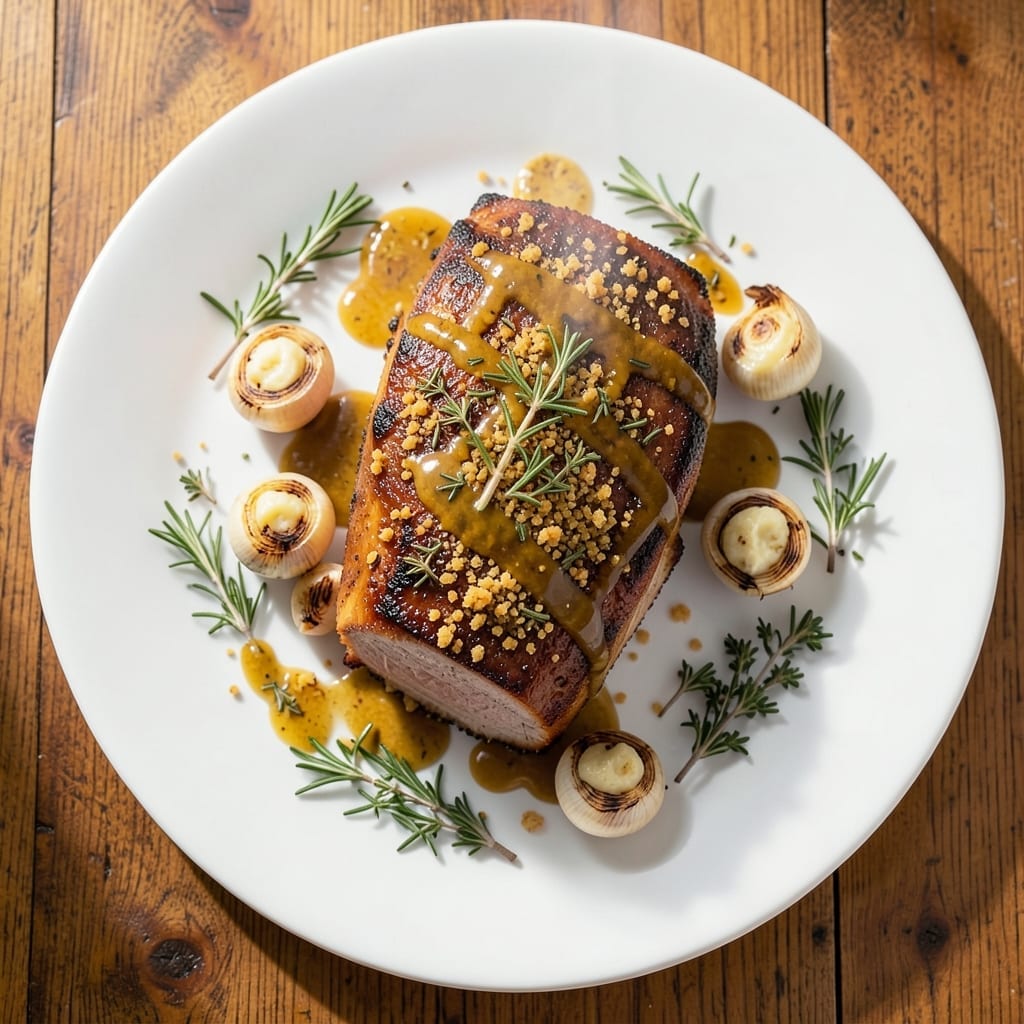
This herb-crusted pork tenderloin delivers tender results with minimal effort. My grandmother taught me that the best dishes often require just a few quality ingredients and proper technique.
The secret lies in searing the meat first to develop a golden crust, then finishing it in the oven. A simple blend of fresh herbs, garlic, and breadcrumbs creates a flavorful coating that adheres perfectly to the pork.
You’ll end up with a juicy, tender center and a crispy, aromatic exterior. The herb crust forms a beautiful golden finish that looks as impressive as it tastes.
Perfect for a weeknight dinner or a special occasion, this method ensures consistent results every time. The pork stays moist while developing deep, savory flavors.
Ingredients for Pork Tenderloin Recipe Ina Garten
Elegant herb-crusted pork tenderloin requires quality ingredients and precise technique for golden results.
| Ingredient | Amount | Notes |
|---|---|---|
| Pork Tenderloin 🥩 | 1 ½ lb | Trimmed of silver skin |
| Fresh Rosemary 🌿 | 2 tbsp | Finely chopped, stems discarded |
| Fresh Thyme 🍃 | 2 tbsp | Finely chopped, stems discarded |
| Garlic Cloves 🧄 | 4 cloves | Minced to fine paste |
| Dijon Mustard 🟡 | 2 tbsp | Whole-grain preferred for texture |
| Panko Breadcrumbs 🍞 | ¾ cup | Unseasoned variety essential |
| Olive Oil 🫒 | 3 tbsp | Divided for searing and crust |
| Kosher Salt 🧂 | 1 ½ tsp | Diamond Crystal brand recommended |
| Freshly Ground Black Pepper 🌶️ | 1 tsp | Coarse grind for texture |
| Unsalted Butter 🧈 | 2 tbsp | Melted for crust binding |
| Shallot 🧅 | 1 whole | Finely minced for depth |
| Dry White Wine 🍷 | ¼ cup | For deglazing pan |
The pork tenderloin must be fresh with a vibrant pink hue—avoid pieces with excessive fat or discoloration. Whole Foods or ButcherBox offer excellent options with consistent quality. Fresh herbs are non-negotiable; organic rosemary and thyme from the produce section provide superior aroma. For the breadcrumbs, Kikkoman Panko delivers the ideal crisp texture that adheres perfectly to the crust.
No fresh herbs on hand? Dried at one-third the amount works in a pinch, but fresh is optimal. Substitute yellow mustard for Dijon if necessary, though the flavor profile will be milder. Shallots can be replaced with red onion at half the quantity. For the wine, chicken broth with a splash of lemon juice mimics the acidity without alcohol.
Store the pork tenderloin in its original packaging in the coldest part of the refrigerator for up to 3 days. The herb crust mixture can be prepared 1 day ahead and refrigerated. Cooked pork keeps for 4 days and reheats beautifully in a low oven.
Why You’ll Love This Recipe
- One Pan Wonder: I love that everything—pork, herbs, and mustard—goes straight onto a sheet pan. One dish to wash, and the oven does all the work.
- Herb-Infused Magic: The rosemary and thyme with that sharp Dijon crust make every bite taste like a restaurant meal. Honestly, it’s the garlic that really ties it all together.
- Weeknight Hero: This feeds my family on a busy Tuesday just as well as it impresses guests at a dinner party. I’ll be real: it’s my go-to for both.
- Leftovers Win: The slices reheat beautifully for lunch the next day. Between us, I sometimes make extra just to have it waiting in the fridge.
Step-by-Step Instructions for Herb-Crusted Pork Tenderloin
This method ensures a perfectly tender result with a golden herb crust every time.
Step 1: Prepare the Herb Crust Mixture
In a medium bowl, combine the 2 tbsp Fresh Rosemary, 2 tbsp Fresh Thyme, 4 cloves Garlic Cloves, 2 tbsp Dijon Mustard, 0.75 cup Panko Breadcrumbs, and 2 tbsp Unsalted Butter. The butter should be melted to help bind the mixture together effectively.
Mix thoroughly until the panko is evenly coated and the mixture holds together when pressed. This crust will form a flavorful, crispy exterior while keeping the 1.5 lb Pork Tenderloin moist during cooking. Set the mixture aside while you prepare the meat.
Step 2: Sear the Pork Tenderloin
Pat the 1.5 lb Pork Tenderloin dry with paper towels and season all over with 1.5 tsp Kosher Salt and 1 tsp Freshly Ground Black Pepper. Heat 2 tbsp Olive Oil in a large oven-safe skillet over medium-high heat until it shimmers.
Add the tenderloin and sear for 2-3 minutes per side until uniformly golden brown. This creates a flavorful foundation for the herb crust. Transfer the seared pork to a plate and let it rest briefly while you prepare the pan sauce.
Step 3: Deglaze and Add Aromatics
Reduce the heat to medium and add the 1 whole Shallot to the skillet. Cook for 1-2 minutes until softened and just beginning to brown. Pour in the 0.25 cup Dry White Wine and scrape up all the browned bits from the bottom of the pan with a wooden spoon.
Let the wine simmer for 2-3 minutes until it reduces by half. This deglazing step incorporates all the flavorful fond into the sauce base, which will complement the herb crust.
Step 4: Apply Crust and Finish Cooking
Return the seared pork tenderloin to the skillet. Press the reserved herb crust mixture evenly onto the top and sides of the pork, using your hands to create a thick, even layer. Drizzle the remaining 1 tbsp Olive Oil over the crust to help it brown.
Transfer the skillet to a preheated 400°F oven and cook for 15-20 minutes until the pork reaches an internal temperature of 145°F and the crust is deep golden brown. The crust should be crispy to the touch when done.
Step 5: Rest and Serve
Remove the pork from the oven and transfer it to a cutting board. Tent loosely with foil and let it rest for 10 minutes before slicing. This resting period allows the juices to redistribute throughout the meat, ensuring a tender result.
Slice the pork tenderloin into 1-inch thick pieces and serve with the pan sauce spooned over each portion. The herb crust should remain crispy while the interior stays perfectly moist and tender.
Pro Tips For Making Pork Tenderloin Recipe Ina Garten
- Rest the Pork: Let it sit under foil for 10 minutes after roasting—this keeps the juices inside where they belong. I learned this the hard way after carving into a hot tenderloin and watching the juices run all over the board.
- Pat It Dry: Blot the pork tenderloin with paper towels before seasoning. Sounds tedious, but it actually changes the outcome—wet meat steams instead of searing, and you’ll miss that golden crust.
- Crush the Garlic: Smash the garlic cloves with the side of your knife before chopping. It releases more flavor into the mustard-herb rub, and you’ll taste the difference in every bite.
- Use Room Temp Meat: Pull the pork out of the fridge 30 minutes before cooking. Cold meat cooks unevenly, and you’ll end up with dry edges while waiting for the center to finish.
Pro Cooking Tips for This Dish
Perfect Searing Technique
Pat the pork completely dry before seasoning—this ensures a proper sear. Heat your oven-safe skillet (I use Lodge cast iron) until the olive oil shimmers but doesn’t smoke. Crowding the pan lowers the temperature, so give the tenderloin space to develop that golden crust. 🔥
Temperature Control
Use an instant-read thermometer to monitor internal temp. Pull the pork at 145°F—it will rise to 150°F while resting. I learned this the hard way after overcooking too many tenderloins in my early days.
Crust Application
Press the herb mixture firmly onto the pork so it adheres completely. Drizzle with remaining olive oil to help the crust brown evenly. The panko should create a thick, even layer that crisps beautifully in the oven.
Resting Matters
Never skip the 10-minute rest—this lets juices redistribute. Tent loosely with foil to keep warm. Slicing too soon results in dry meat, and nobody wants that at the dinner table.
Pan Sauce Tip
After removing the pork, place the skillet back on the stove. Add a splash of white wine or broth to deglaze, scraping up those flavorful browned bits. This sauce takes the dish to restaurant quality with minimal effort. 💡
Nutrition Facts
Frequently Asked Questions
What if my pork has silver skin still attached?
Remove it before cooking for best texture. Slide a sharp knife under the thin membrane and lift while cutting—this prevents chewy bits in your finished dish.
Can I make the herb crust ahead?
Yes! Mix and refrigerate up to 24 hours before using. Bring to room temperature before pressing onto the pork for better adhesion.
Why is my crust not browning evenly?
Ensure the oven is fully preheated to 400°F. Press the crust firmly onto the pork and drizzle with olive oil for even browning. Rotate the pan halfway through cooking if needed.
How do I know when it’s done without a thermometer?
Press the thickest part—the meat should feel firm but still slightly springy. For perfect results, invest in an instant-read thermometer to hit 145°F.

- Potato Patty Recipe No Egg: Crispy Edges Without the Binder - October 30, 2026
- Paula Deen’s Potato Chip Cookies Recipe: Salty-Sweet Crunch in Every Bite - October 30, 2026
- Potato Gnocchi Recipe Ideas: Pillowy Soft Dumplings With Rustic Charm - October 30, 2026