
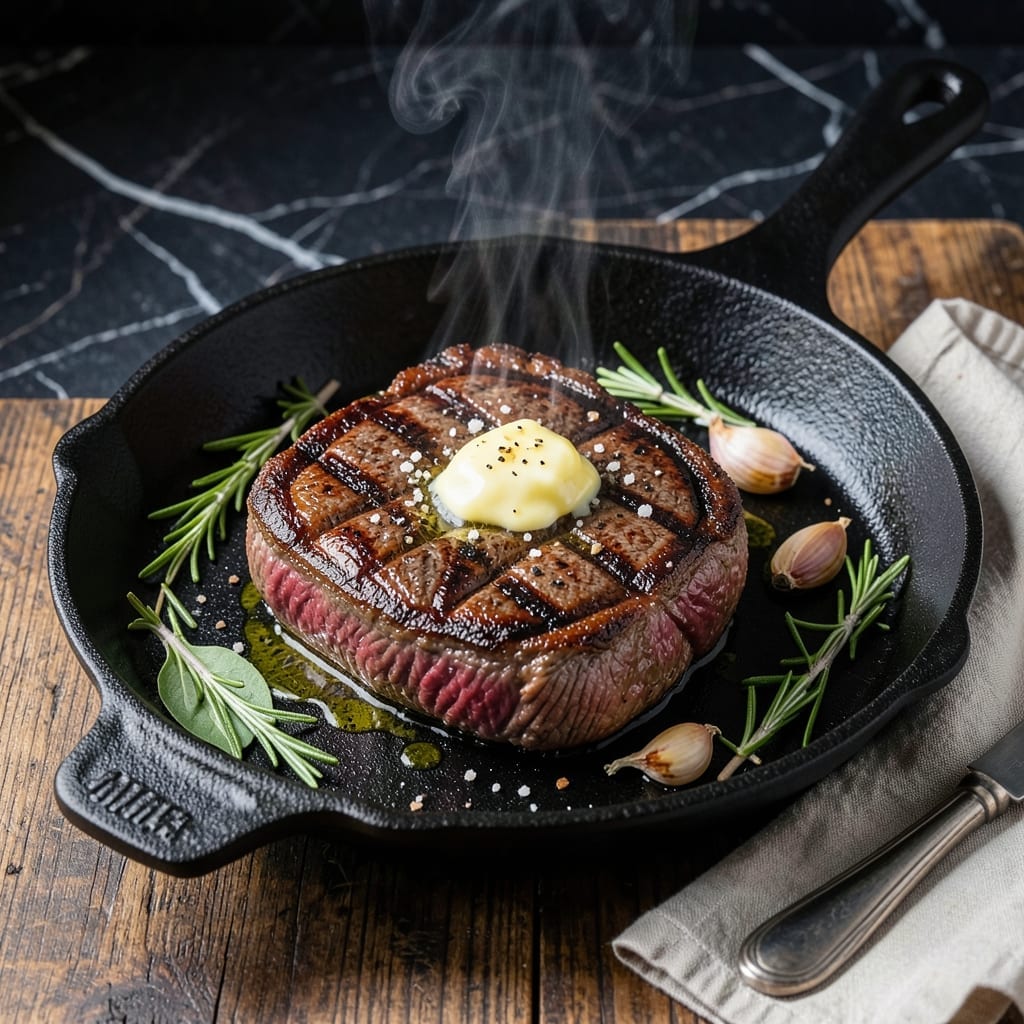
This cast iron method delivers a perfectly charred porterhouse every time. The heavy pan creates an unmatched sear while the butter baste adds rich flavor.
I learned this technique after ruining more steaks than I care to admit. The key is patience—let the pan get screaming hot before the steak touches it.
What you get is a thick, juicy cut with a deep crust outside and tender meat inside. The butter finish adds glossy richness that elevates each bite.
Serve with simple sides that let the steak shine. This is restaurant-quality at home with one pan and basic ingredients.
Ingredients for Porterhouse Steak Recipe Cast Iron
Quality cut, basic seasonings, and a screaming hot pan deliver restaurant results.
| Ingredient | Amount | Notes |
|---|---|---|
| Porterhouse Steak 🥩 | 2 whole | 1.5 inches thick, bone-in |
| Kosher Salt 🧂 | 2 tsp | Diamond Crystal preferred |
| Black Pepper 🌶️ | 1 tsp | Freshly ground for best flavor |
| Unsalted Butter 🧈 | 4 tbsp | For basting finish |
| Garlic Cloves 🧄 | 4 cloves | Smashed, peeled |
| Fresh Rosemary Sprigs 🌿 | 2 whole | Optional for aroma |
| Fresh Thyme Sprigs 🍃 | 2 whole | Optional for aroma |
| Olive Oil 🫒 | 2 tbsp | High smoke point preferred |
| Canola Oil 🫒 | 1 tbsp | For initial sear |
| Flaky Sea Salt 🧂 | ½ tsp | For finishing |
The steak is everything here. Porterhouse offers two cuts in one—tender filet and rich strip—separated by that signature T-bone. Look for 1.5-inch thickness and bright red color with good marbling. ButcherBox or Snake River Farms deliver premium quality online, but a trusted local butcher works just as well. Avoid pre-cut steaks; the bone-in version holds up better to high heat.
No porterhouse? Ribeye or New York strip work nearly as well. Skip the fresh herbs if unavailable—dried rosemary and thyme at half the amount still add depth. The butter can be ghee for higher smoke point or a neutral oil if dairy is a concern. For the salt, Diamond Crystal or Morton’s kosher are standard in professional kitchens. Don’t substitute table salt—it’s too fine and overpowers.
Bring the steak to room temperature before cooking—30-45 minutes on the counter. Leftovers (if any) keep 3-4 days in the fridge, but this is best served fresh. Reheat gently in a skillet to avoid overcooking. The fresh herbs can be stored wrapped in damp paper towels for 1 week.
Why You’ll Love This Recipe
- One Pan Wonder: I sear the porterhouse in my cast iron, then baste it with garlic butter—same pan, no extra dishes.
- Crispy & Juicy: The hot cast iron gives that perfect crust while the butter and garlic make every bite rich and flavorful.
- Impresses Every Time: I’ve served this for date nights and Sunday dinners—always feels special without the fuss.
- Leftovers? Yes Please: Honestly, cold porterhouse slices in a sandwich the next day might be my favorite part.
Step-by-Step Instructions for Porterhouse Steak Cast Iron
This method delivers a perfect sear with a buttery finish every time.
Step 1: Prep and Season the Steaks
Remove the porterhouse steaks from the refrigerator 1 hour before cooking to bring them to room temperature. This ensures even cooking throughout the thick cut. Pat them completely dry with paper towels—moisture prevents proper browning.
Season both sides generously with the 2 tsp Kosher Salt and 1 tsp Black Pepper. Press the seasoning into the meat so it adheres well. The steaks should look evenly coated with a visible layer of salt and pepper.
Step 2: Heat the Cast Iron and Initial Sear
Place a cast iron skillet over high heat until smoking hot. Add the 1 tbsp Canola Oil and 2 tbsp Olive Oil—the canola oil has a high smoke point for the initial sear, while the olive oil adds flavor. Swirl to coat the pan evenly.
Carefully add the porterhouse steaks to the pan. Sear undisturbed for 3-4 minutes until a deep, dark brown crust forms. The steaks should release easily from the pan when ready to flip. The thick bone may cause uneven cooking, so focus on the meaty portions.
Step 3: Baste with Garlic Butter and Herbs
Flip the steaks and immediately add the 4 tbsp Unsalted Butter, 4 cloves Garlic Cloves, 2 whole Fresh Rosemary Sprigs, and 2 whole Fresh Thyme Sprigs to the pan. Tilt the skillet slightly and spoon the melted butter, garlic, and oil mixture over the steaks continuously for 2-3 minutes.
The butter should foam and the garlic should turn light golden brown. Baste the edges of the steaks as well, especially near the bone where the meat is thicker. The aroma should be rich and fragrant, signaling the flavors are infusing.
Step 4: Check Temperature and Rest
Use an instant-read thermometer to check the internal temperature. For medium-rare, aim for 130-135°F in the thickest part of the meat, away from the bone. The temperature will rise 5-10 degrees during resting, so remove the steaks just before reaching your desired doneness.
Transfer the steaks to a cutting board and tent loosely with foil. Add a light sprinkle of the 0.5 tsp Flaky Sea Salt on top for a final touch. Let them rest for 10 minutes—this allows the juices to redistribute, ensuring every bite is tender and flavorful.
Step 5: Slice and Serve
To slice, separate the tenderloin from the strip steak by cutting along the bone. Then, slice each section against the grain into ½-inch thick pieces. The tenderloin should be a deep pink, while the strip side should have a slightly firmer texture.
Serve immediately, spooning any remaining garlic butter and pan juices over the top. Each slice should have a perfect crust, juicy interior, and rich buttery flavor with hints of garlic and herbs.
Pro Tips For Making Porterhouse Steak Recipe Cast Iron
- Dry the Steak: Pat the porterhouse completely dry with paper towels before seasoning—moisture is the enemy of a good sear, and I learned this the hard way after too many steaks steamed instead of browned.
- Start Hot, Finish Low: Crank the cast iron to smoking hot for the first 2 minutes per side, then drop to medium to finish cooking through without burning the butter and garlic.
- Use Thick-Cut Butter: Slice the unsalted butter into 1-inch cubes so it melts slowly while basting, instead of burning instantly in the pan—I was skeptical until I tried it.
- Let It Rest: Give the porterhouse a solid 5-10 minutes under foil after cooking, or all those juices will end up on your cutting board instead of in the meat.
Pro Cooking Tips for Great porterhouse steak recipe cast iron
Pan Temperature Control
Your cast iron must be screaming hot before the steak touches it—I test by holding my hand 6 inches above the pan. If I can’t keep it there for 3 seconds, it’s ready. This ensures a proper Maillard reaction for that deep, flavorful crust. 🔥
Dry Surface Secret
Pat the steaks bone-dry with paper towels right before seasoning. Any moisture creates steam, which prevents a good sear. I learned this the hard way after wondering why my early attempts looked boiled instead of charred.
Butter Basting Technique
Tilt your pan at a 45-degree angle and spoon the foaming butter continuously over the steak. Use a metal spoon—plastic melts. The butter should sizzle, not burn. I aim for 30 seconds per side during basting.
Bone Considerations
The T-bone conducts heat differently, so check temp in both the filet and strip sections. The strip side near the bone often needs an extra 30-60 seconds to reach the same doneness as the tenderloin side.
Resting Time
Never skip the 10-minute rest. Tent loosely with foil but don’t seal it—this traps too much steam. The internal temp will rise 5-10°F as juices redistribute. I use this time to finish any sides. 💡
Slicing Strategy
Slice the tenderloin and strip sections separately, always against the grain. The grain runs perpendicular in the strip portion and parallel in the tenderloin. Use a long, sharp knife and cut in ½-inch slices for even servings.
Nutrition Facts
Frequently Asked Questions
Why use cast iron for this steak?
Cast iron retains heat exceptionally well, creating that perfect screaming hot surface needed for a deep sear. It also goes from stovetop to oven seamlessly if you need to finish cooking.
How do I know when to flip the steak?
Wait until a deep dark brown crust forms, usually after 3-4 minutes. The steak will release easily from the pan when it’s ready. Don’t rush it—patience ensures a proper crust.
Can I use frozen steak?
Never cook from frozen. Thaw completely in the fridge for 24 hours, then bring to room temperature before cooking. This ensures even cooking throughout the thick cut.
What if my steak is thinner than 1.5 inches?
Reduce cooking time by about 1 minute per side and check internal temperature early. Thinner steaks cook faster and can overcook quickly, so keep a close eye on them.

- Potato Patty Recipe No Egg: Crispy Edges Without the Binder - October 30, 2026
- Paula Deen’s Potato Chip Cookies Recipe: Salty-Sweet Crunch in Every Bite - October 30, 2026
- Potato Gnocchi Recipe Ideas: Pillowy Soft Dumplings With Rustic Charm - October 30, 2026