
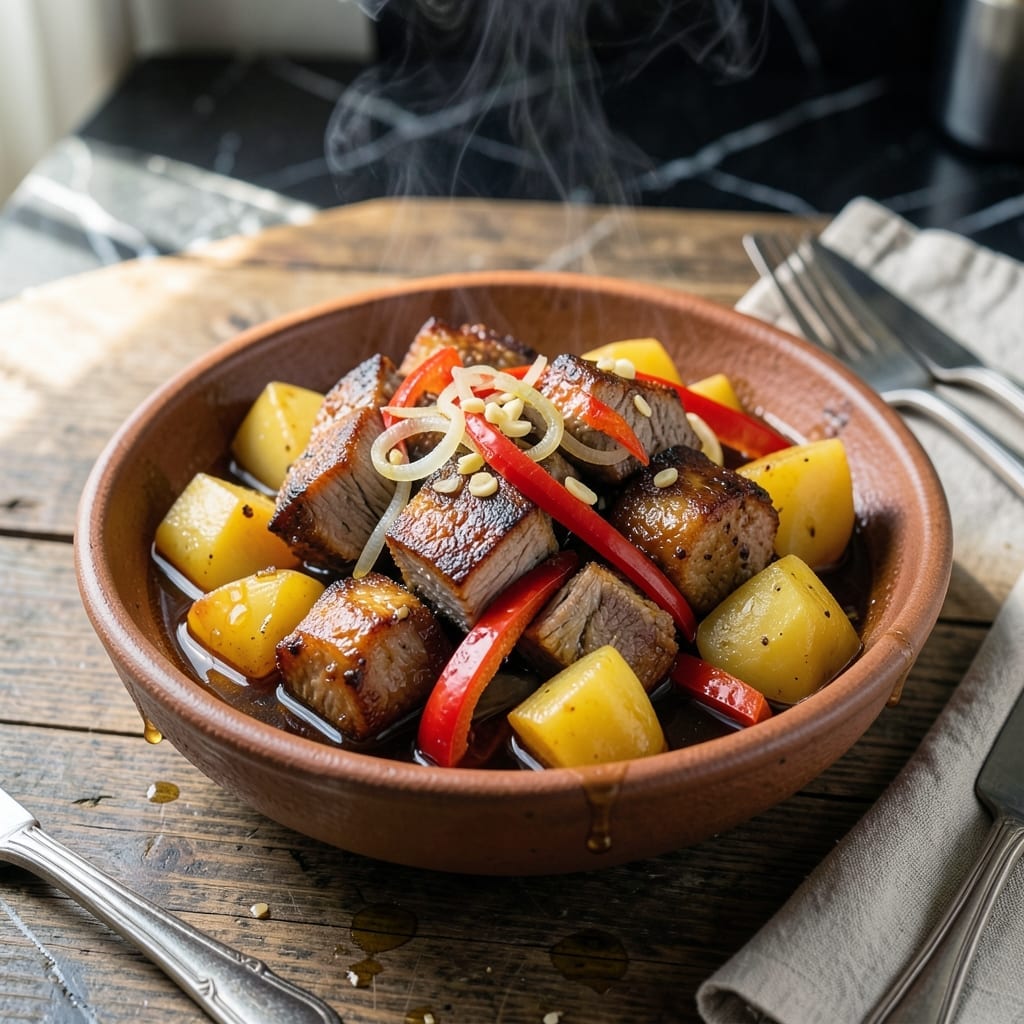
This Filipino-style pork and potato stew brings the hearty comfort of traditional Pinoy cooking to your kitchen. I first tried this dish at a local Portland food festival and was immediately hooked by its rich, savory flavors.
The recipe relies on simple ingredients like pork shoulder, potatoes, and bell peppers, all simmered in a tangy soy-vinegar sauce. It’s a one-pot dish that’s easy to prepare but delivers complex, satisfying results every time.
What makes this version special is the balance of savory and slightly sour notes, creating a sauce that coats every piece of meat and vegetable. The potatoes soak up the flavors beautifully, making each bite irresistibly tender.
Perfect for family dinners or casual gatherings, this stew tastes even better the next day as the flavors meld together.
Ingredients for Pork Igado Recipe List Pinoy
Hearty pork, potatoes, and peppers simmered in a tangy soy-vinegar sauce for classic Pinoy flavor.
| Ingredient | Amount | Notes |
|---|---|---|
| Pork Shoulder 🥩 | 1 ½ lb | Cut into 1-inch cubes |
| Potatoes 🥔 | 1 ½ lb | Peeled and cubed |
| Bell Peppers 🌶️ | 2 whole | Sliced into strips |
| Onion 🧅 | 1 whole | Thinly sliced |
| Garlic Cloves 🧄 | 4 cloves | Minced |
| Soy Sauce 🫒 | ½ cup | Regular or low-sodium |
| White Vinegar 💧 | ¼ cup | For tangy flavor |
| Water 💧 | 1 cup | Adjust as needed |
| Bay Leaves 🌿 | 2 pieces | Dried or fresh |
| Black Peppercorns 🌶️ | 1 tsp | Slightly crushed |
| Salt 🧂 | 1 tsp | Adjust to taste |
| Sugar 🍚 | 1 tbsp | Balances acidity |
| Cooking Oil 🫒 | 2 tbsp | For sautéing |
The pork shoulder is key here—look for well-marbled cuts at Asian markets or Costco for the best texture. Potatoes should be starchy (Russets work great) to soak up the sauce. Bell peppers add sweetness; red or green both work, but red adds nice color. I always grab Silver Swan soy sauce for authentic Filipino flavor, but any quality brand will do.
No pork shoulder? Pork belly works too, though it’s richer. Out of bell peppers? Green beans or carrots add good texture. The vinegar is non-negotiable for that signature tang, but cane vinegar can substitute white if you have it. If the sauce tastes too sharp, a pinch more sugar balances it out perfectly.
This stew actually improves overnight. Keeps in the fridge for 4-5 days and freezes beautifully for 3 months. Reheat gently to keep the pork tender. Always remove bay leaves before serving (nobody wants a surprise leaf in their bite).
Why You’ll Love This Recipe
- One Pan Meal: I just dump everything—Pork shoulder, potatoes, and bell peppers—into one pan and let the stove do the work.
- Garlic & Peppers Pop: The garlic cloves and bell peppers give it this rich, slightly sweet kick that’s just so Pinoy.
- Feeds the Whole Barkada: I make a big batch and it’s always the first to disappear at gatherings.
- Leftovers Taste Better: Honestly, the flavors deepen overnight—pork and potatoes soak up all that savory sauce.
Step-by-Step Instructions for Filipino-Style Pork and Potato Stew
This traditional method delivers rich, tangy flavors with perfectly tender meat and vegetables.
Step 1: Brown the Pork Shoulder
Heat the 2 tbsp cooking oil in a large pot over medium-high heat. Add the 1.5 lb pork shoulder cubes and sear until all sides develop a deep golden brown color. This step takes about 8-10 minutes and builds the flavor foundation for the stew.
Work in batches if needed to avoid crowding the pot—overcrowding steams the meat instead of browning it. The pork should release easily from the pot when properly browned. Remove the pork and set aside temporarily.
Step 2: Sauté Aromatics and Soft Vegetables
In the same pot, add the thinly sliced onion and cook for 2-3 minutes until translucent. Stir in the minced garlic cloves and cook for 30 seconds until fragrant but not browned.
Add the sliced bell peppers and cook for 2 minutes until they begin to soften. These aromatics create the base layer of flavor that defines this dish. The pot should smell rich and savory at this point.
Step 3: Combine All Ingredients and Simmer
Return the pork to the pot. Pour in the 0.5 cup soy sauce, 0.25 cup white vinegar, and 1 cup water. Add the peeled and cubed potatoes, 2 pieces bay leaves, 1 tsp black peppercorns, 1 tsp salt, and 1 tbsp sugar.
Bring to a boil, then reduce heat to medium-low. Cover and simmer for 45-50 minutes until the pork and potatoes become fork-tender. Stir occasionally to prevent sticking and ensure even cooking.
Step 4: Adjust and Finish the Stew
Once the pork and potatoes are tender, taste and adjust seasoning if needed. The vinegar should provide a pleasant tang, balanced by the sweetness of the sugar. If the stew is too acidic, add a pinch more sugar.
Simmer uncovered for an additional 5-10 minutes to allow the sauce to thicken slightly. The final texture should coat the back of a spoon but remain saucy. The bell peppers should be soft but still retain some shape.
Remove the bay leaves before serving. The stew is ready when the flavors have melded together and the sauce has a rich, glossy appearance.
Pro Tips For Making Pork Igado Recipe List Pinoy
- Pre-cook the Potatoes: Parboil the potatoes for 5-7 minutes before adding to the pork—this guarantees they’ll be tender by the time the meat is done, not rock-hard. I learned this the hard way after pulling undercooked spuds out of my igado twice.
- Brown the Pork Well: Sear the pork shoulder in batches over medium-high heat until deeply browned, about 3-4 minutes per side. Sounds tedious, but it actually changes the outcome—no more pale, bland chunks in your stew.
- Add Peppers Last: Stir in the bell peppers only in the last 5 minutes of cooking. After burning three batches, I finally figured out they turn mushy and bitter if left too long in the sauce.
- Use Pork Fat: Render some of the pork shoulder’s fat at the start and use it to sauté the onions and garlic. My grandmother swore by this, and she was right: the flavor base ends up richer and more authentic.
Pro Cooking Tips for pork igado recipe list pinoy
Perfect Pork Browning
Don’t rush browning the 1.5 lb pork shoulder—this builds the Maillard reaction flavors that define the stew. I use my Lodge cast iron for even heat. Work in batches if needed to avoid steaming the meat instead of searing it. 🔥
Layer Flavors Properly
After removing pork, sauté onion until translucent before adding garlic. This sequence prevents burning the garlic, which can make the dish bitter. The bell peppers go in last to retain some texture.
Vinegar Timing
Always add the 0.25 cup white vinegar after the pork returns to the pot. Adding it too early can prevent proper browning. The acidity tenderizes the meat while creating that signature tangy Pinoy flavor.
Simmering Secrets
Keep the heat at medium-low during the 45-50 minute simmer. Too high heat can break down the potatoes. I stir every 10 minutes to prevent sticking and ensure even cooking.
Sauce Consistency
If the stew is too thin after simmering, remove the lid and cook for an additional 5-10 minutes. The sauce should coat the back of a spoon. If too thick, add ¼ cup water at a time.
Final Adjustments
Taste before serving—Filipino cooking is all about balance. If the sauce is too sharp, add a pinch more sugar. If bland, a splash more soy sauce deepens the flavor. 💛
Nutrition Facts
Frequently Asked Questions
Can I use a different cut of pork?
Yes! While pork shoulder is traditional, you can use pork belly for a richer flavor. Just trim excess fat and adjust cooking time to 40-45 minutes.
Why is vinegar added to the stew?
The vinegar gives it that signature tangy Pinoy flavor and helps tenderize the meat. Use white vinegar for authenticity, but cane vinegar works too.
How do I fix a stew that’s too sour?
Balance the acidity with a pinch of sugar or a splash of soy sauce. Taste as you go—Filipino cooking is all about harmony!
Can I make this ahead of time?
The flavors actually deepen overnight. Store in an airtight container for up to 5 days in the fridge or freeze for 3 months.

- Potato Patty Recipe No Egg: Crispy Edges Without the Binder - October 30, 2026
- Paula Deen’s Potato Chip Cookies Recipe: Salty-Sweet Crunch in Every Bite - October 30, 2026
- Potato Gnocchi Recipe Ideas: Pillowy Soft Dumplings With Rustic Charm - October 30, 2026