
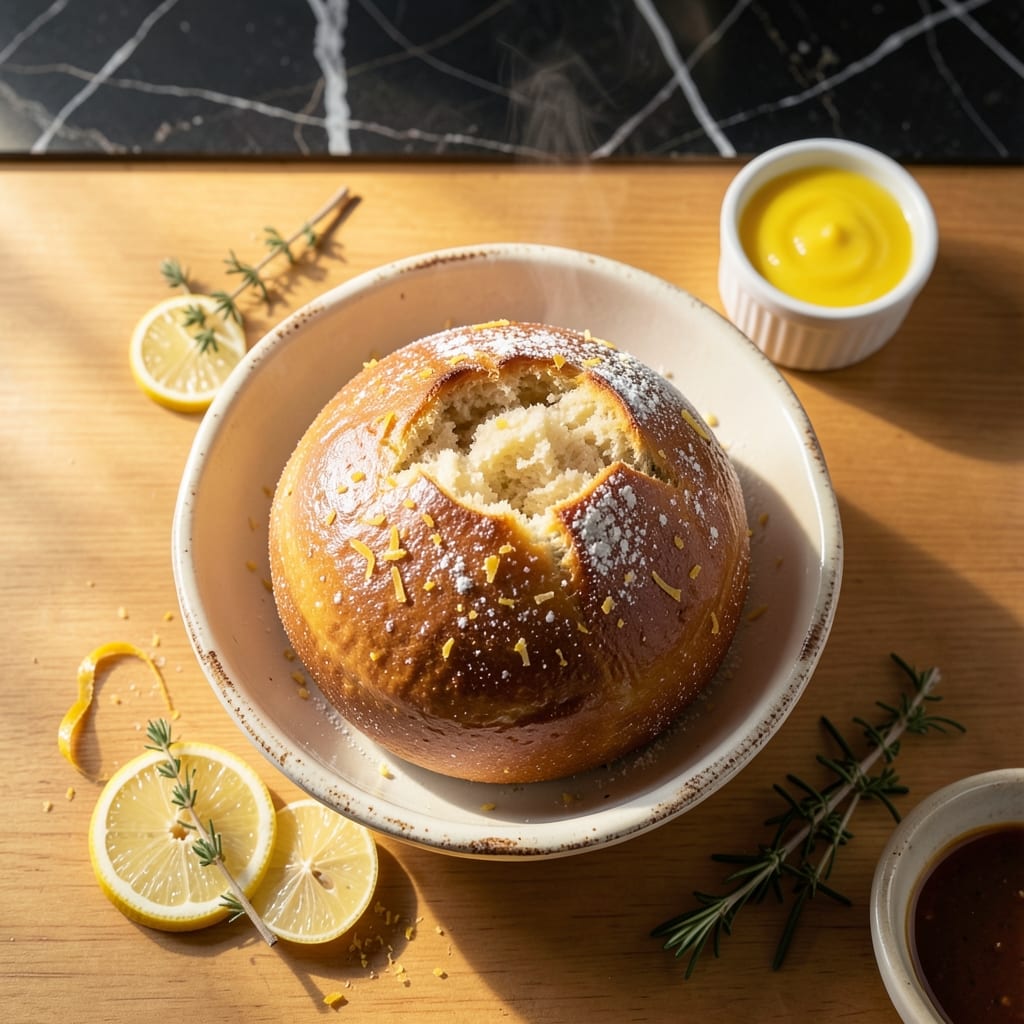
This recipe transforms the beloved Portuguese classic with a bright, citrusy twist that enhances its traditional richness. The addition of lemon zest and juice elevates the dough, creating a perfect balance between sweetness and subtle tang.
Developed through careful testing, this version maintains the soft, slightly dense texture of authentic massas sovadas while introducing a refreshing depth. The citrus doesn’t overpower but rather complements the buttery, egg-enriched dough.
What emerges from the oven is a golden, fragrant loaf with a tender crumb and a delicate lemon aroma that lingers. The subtle citrus note makes it ideal for breakfast, dessert, or as a sweet accompaniment to tea.
This approach preserves tradition while offering a modern interpretation that highlights the versatility of this timeless bread.
Ingredients for Portuguese Sweet Bread Recipe with Lemon
Bright citrus meets classic Portuguese softness in this tender, fragrant loaf.
| Ingredient | Amount | Notes |
|---|---|---|
| All-Purpose Flour 🌾 | 4 cups | Plus extra for dusting |
| Granulated Sugar 🍚 | ½ cup | Fine grain for even distribution |
| Large Eggs 🥚 | 4 whole | Room temperature preferred |
| Unsalted Butter 🧈 | ½ cup | Softened to room temperature |
| Whole Milk 🥛 | ¾ cup | Warm, about 110°F |
| Active Dry Yeast 🍞 | 2 ¼ tsp | One 0.25 oz package |
| Salt 🧂 | 1 tsp | Fine sea salt preferred |
| Lemon Zest 🍋 | 2 tbsp | Freshly grated from 2 lemons |
| Lemon Juice 🍋 | 3 tbsp | Freshly squeezed from 1 lemon |
| Vanilla Extract 🌿 | 1 tsp | Pure vanilla for best flavor |
| Honey 🍯 | 2 tbsp | Optional for added sweetness |
| Vegetable Oil 🫒 | 1 tbsp | For greasing the bowl |
The yeast is your foundation here. SAF or Red Star are reliable brands—check the expiration date, old yeast won’t rise. I grab my active dry from King Arthur’s bulk section when I’m restocking flour. For the milk, whole milk gives the best richness (the fat keeps the crumb soft), but 2% works in a pinch. Butter should be unsalted so you control the salt level yourself.
No fresh lemons? Bottled lemon juice at half the amount (it’s more concentrated), but zest is non-negotiable for that bright aroma—dried citrus peel just doesn’t cut it. Short on honey? Maple syrup works, but reduce the milk by a tablespoon to balance the liquid. If you’re out of whole milk, evaporated milk plus water at a 1:1 ratio is a solid backup.
The dough keeps rising in the fridge for up to 24 hours—perfect for baking fresh in the morning. Baked loaves stay moist wrapped in foil at room temperature for 3 days, or freeze for 3 months (slice first for easy toasting).
Why You’ll Love This Recipe
- One Bowl Wonder: I just dump flour, sugar, eggs, butter, and milk in one bowl—no fancy tools, no mess.
- Lemon Brightness: That zip of lemon cuts through the rich butter and sugar so every bite feels fresh, not heavy.
- Holiday Star: It’s my go-to for Easter brunch or Christmas morning—equally at home at a potluck.
- Stays Soft: Honestly, it’s still tender three days later, so I can bake ahead and forget about it.
Step-by-Step Instructions for Portuguese Sweet Bread With Lemon
Master the technique of traditional Massas Sovadas with this citrus-infused variation.
Step 1: Activate the Yeast and Prepare Wet Ingredients
In a small bowl, combine the 2.25 tsp active dry yeast with the 0.75 cup whole milk warmed to 110°F. Let it sit for 5-10 minutes until the mixture becomes frothy and doubles in volume. This confirms your yeast is active and ready to work.
Meanwhile, in a large mixing bowl, cream together the 0.5 cup granulated sugar and 0.5 cup unsalted butter until light and fluffy. Add the 4 whole large eggs one at a time, mixing thoroughly after each addition. This creates a rich, emulsified base for your dough.
Stir in the 3 tbsp lemon juice, 2 tbsp lemon zest, 1 tsp vanilla extract, and 2 tbsp honey. The lemon zest should be freshly grated to release its aromatic oils, which will infuse the bread with bright citrus notes.
Step 2: Combine Dry Ingredients and Form the Dough
In a separate bowl, whisk together the 4 cups all-purpose flour and 1 tsp salt. Gradually add this dry mixture to the wet ingredients, alternating with the yeast-milk mixture. Use a dough hook attachment if mixing by machine, or a sturdy wooden spoon if doing this by hand.
The dough will be sticky at first but should come together into a soft, slightly tacky ball. If it feels too wet, resist the urge to add more flour—this dough should be softer than typical bread dough to achieve the signature tender crumb of Massas Sovadas.
Step 3: Knead and First Rise
Turn the dough out onto a lightly floured surface and knead by hand for 8-10 minutes until smooth and elastic. The dough should pass the windowpane test: stretch a small piece thinly, and it should be translucent without tearing.
Lightly grease a large bowl with the 1 tbsp vegetable oil and place the dough inside, turning to coat all sides. Cover with a clean kitchen towel and let rise in a warm, draft-free place for 1.5-2 hours or until doubled in size. The dough should spring back slowly when gently pressed with a finger.
Step 4: Shape, Second Rise, and Bake
Punch down the risen dough to release air, then shape it into a round loaf. Place it on a parchment-lined baking sheet. Cover loosely and let rise again for 1-1.5 hours until nearly doubled. The loaf should look puffy and hold an indentation when lightly pressed.
Preheat your oven to 350°F during the last 30 minutes of rising. Bake the loaf for 30-35 minutes until golden brown and the internal temperature reaches 190-200°F. The top should sound hollow when tapped, and the lemon scent will be pronounced.
Remove from the oven and let cool on a wire rack for at least 20 minutes before slicing. This allows the crumb structure to set and prevents a gummy texture. The bread should have a tender, slightly sweet interior with a delicate citrus aroma.
Pro Tips For Making Portuguese Sweet Bread Recipe With Lemon
- Warm Your Eggs: Take the eggs out of the fridge 30 minutes before mixing—cold eggs can cause the butter to clump, and nobody wants a lumpy dough.
- Soften Butter Right: Use butter that’s soft but still holds its shape; if it’s greasy or melted, the dough will be sticky and hard to handle.
- Don’t Rush the Rise: Let the dough double in size, even if it takes an extra 20 minutes—underproofed bread turns out dense, and I learned this the hard way.
- Zest First, Juice Later: Add the lemon zest to the sugar and rub them together before mixing—it releases the oils and makes the flavor pop. Save the juice for a glaze if you want extra brightness.
Regional Styles of portuguese sweet bread recipe with lemon
Azores Tradition
In the Azores, massas sovadas is a festive bread often made for holidays and celebrations. The islands add orange zest alongside lemon for a more complex citrus profile. I’ve found that using 1 tbsp orange zest with the lemon creates an authentic Azorean twist. 🍋
Madeira Style
On Madeira, this bread often includes local honey from the island’s lush valleys, adding a floral depth. They also shape it into smaller rolls rather than one large loaf, perfect for sharing. The rolls bake for 20-25 minutes at 350°F.
Lisbon Variation
In Lisbon, bakers often add 1 tsp cinnamon to the dough for warmth that pairs beautifully with the lemon. The bread is commonly shaped into a crown, symbolizing the city’s historical significance. This version is a favorite at local pastelarias.
I love how the cinnamon enhances the citrus aroma without overpowering it.
Algarve Approach
The southern region of Algarve sometimes incorporates almond extract—just ½ tsp—alongside the vanilla. This reflects the area’s abundant almond groves. The bread is often served with fresh figs or medronho, a local fruit brandy.
Porto Custom
Porto bakers traditionally brush the baked loaf with a sugar syrup made from 2 tbsp sugar and 2 tbsp water for extra shine and sweetness. This creates a slightly crisp top while keeping the inside soft. The syrup is applied immediately after baking. ✨
Nutrition Facts
Frequently Asked Questions
Can I use bottled lemon juice instead of fresh?
Use half the amount, as bottled is more concentrated. However, fresh zest is essential for that bright aroma—dried peel won’t give the same flavor.
Why does my dough not rise properly?
Check your yeast expiration date and ensure the milk is 110°F. Too hot kills yeast; too cold slows activation. Also, avoid drafts during rising.
How should I store leftover bread?
Wrap tightly in foil at room temperature for up to 3 days. For longer storage, slice and freeze for up to 3 months.
Can I make this in a bread machine?
Yes! Use the dough setting, add ingredients in order, and let it knead and rise. Shape and bake as usual in the oven.

- Potato Patty Recipe No Egg: Crispy Edges Without the Binder - October 30, 2026
- Paula Deen’s Potato Chip Cookies Recipe: Salty-Sweet Crunch in Every Bite - October 30, 2026
- Potato Gnocchi Recipe Ideas: Pillowy Soft Dumplings With Rustic Charm - October 30, 2026