
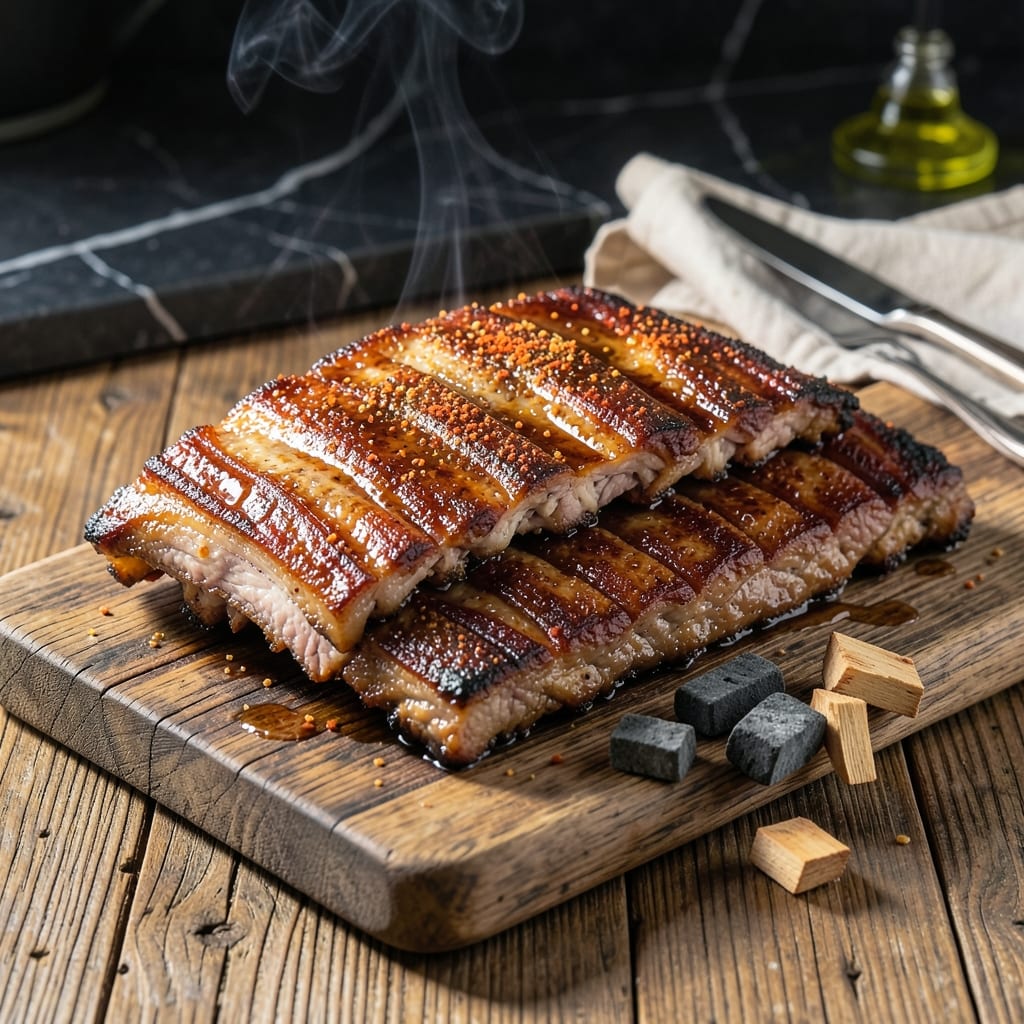
There’s nothing like the deep, smoky flavor of pork ribs cooked low and slow on a Weber kettle. This method transforms tough cuts into fall-off-the-bone tender meat infused with apple wood aroma.
I’ve perfected this technique over years of backyard cooking, learning how to maintain consistent heat and proper airflow. The key is patience—letting the ribs absorb that charcoal-kissed smoke for hours.
You’ll achieve competition-worthy results with a simple dry rub and careful temperature control. The apple wood adds a sweet, fruity note that complements the pork beautifully.
Serve these ribs with your favorite barbecue sauce or enjoy them just as they come off the grill. The process is straightforward, but the results are extraordinary.
Ingredients for Pork Ribs Recipe Weber Kettle
Pantry raid plus a quick stop at the butcher. Nothing exotic, just good stuff.
| Ingredient | Amount | Notes |
|---|---|---|
| Pork Baby Back Ribs 🐖 | 3 lb | Full rack, membrane removed |
| Apple Wood Chunks 🪵 | 4 pieces | Soaked in water 1 hour |
| Charcoal Briquettes ⚫ | 50 pieces | For consistent heat |
| Brown Sugar 🧈 | ¼ cup | Light or dark works |
| Paprika 🌶️ | 2 tbsp | Sweet or smoked variety |
| Garlic Powder 🧄 | 1 tbsp | Not garlic salt |
| Onion Powder 🧅 | 1 tbsp | Fresh ground preferred |
| Kosher Salt 🧂 | 1 tbsp | Diamond Crystal preferred |
| Black Pepper 🌶️ | 1 tbsp | Freshly ground preferred |
| Chili Powder 🌶️ | 1 tsp | Mild or hot variety |
| Cayenne Pepper 🔥 | ½ tsp | Adjust for heat preference |
| Yellow Mustard 🟡 | ¼ cup | For binder in dry rub |
| Apple Cider Vinegar 🍏 | ¼ cup | For spritzing ribs |
| Barbecue Sauce 🍯 | 1 ½ cups | Optional for serving |
The ribs are the star here. Baby back ribs are my go-to—tender, meaty, and perfect for slow cooking. Ask your butcher to remove the membrane if you’re not comfortable doing it yourself (it’s easy with a paper towel for grip). I grab mine from Costco for big batches or Whole Foods for grass-fed. The apple wood is non-negotiable—it gives that sweet, fruity smoke that makes these ribs special. Home Depot or Lowe’s usually have it.
No apple wood? Cherry or hickory work too, but avoid mesquite—it’s too strong. Out of brown sugar? Turbinado or coconut sugar at a 1:1 ratio. The mustard in the dry rub is just a binder—Dijon works if that’s what you’ve got. For the vinegar spritz, white vinegar is fine, but apple cider adds a nice touch. Don’t have a Weber kettle? Any charcoal grill with a lid will do the trick.
Ribs taste even better the next day (if they last that long). Store leftovers in the fridge for 4-5 days or freeze for 3 months. To reheat, wrap in foil with a splash of apple juice and warm in a low oven—keeps them from drying out. Perfect for meal prep or a crowd.
Why You’ll Love This Recipe
- Set It and Forget: I toss the ribs on the kettle with apple wood and charcoal, then let the smoker do the work—no babysitting required.
- Smoky Sweet Crust: That brown sugar and paprika rub caramelizes into a sticky, finger-licking bark with just the right apple wood kiss.
- Feeds a Hungry Crowd: One full rack of baby backs serves my whole family, and I’ve yet to have leftovers at a backyard get-together.
- Budget-Friendly Luxury: A single bag of briquettes and a small handful of wood chunks turn affordable ribs into something that tastes like a fancy joint.
Step-by-Step Instructions for Charcoal-Kissed Ribs With Apple Wood Smoke
Here’s the method for achieving fall-off-the-bone ribs on your Weber kettle every time.
Step 1: Season the Ribs with a Flavor-Packed Rub
Pat the 3 lb Pork Baby Back Ribs dry with paper towels to ensure the rub sticks properly. I always remove the membrane from the back of the rack first—it prevents the seasoning from penetrating and can make the ribs chewy.
In a bowl, mix together the 0.25 cup Brown Sugar, 2 tbsp Paprika, 1 tbsp Garlic Powder, 1 tbsp Onion Powder, 1 tbsp Kosher Salt, 1 tbsp Black Pepper, 1 tsp Chili Powder, and 0.5 tsp Cayenne Pepper. Brush the 0.25 cup Yellow Mustard lightly over both sides of the ribs—this acts as a binder for the rub. Then apply the spice mixture generously, pressing it into the meat so it adheres well. Let the seasoned ribs sit at room temperature for 30 minutes while you prepare the grill.
Step 2: Set Up Your Weber Kettle for Indirect Heat
Arrange the 50 pieces Charcoal Briquettes in a two-zone fire on your Weber kettle—pile them on one side of the charcoal grate, leaving the other side empty. Light the coals and let them burn until they’re covered with a light gray ash, about 15-20 minutes.
Place the 4 pieces Apple Wood Chunks directly on the hot coals. These should have been soaked in water for 1 hour prior to use. Once the wood begins to smoke, place the cooking grate on the kettle. You want a steady temperature of 225-250°F on the indirect side where the ribs will cook. Use the vents to control the heat—partially close the bottom vent on the charcoal side and adjust the top vent as needed.
Step 3: Smoke the Ribs Low and Slow
Place the ribs bone-side down on the indirect heat side of the grill, away from the coals. Cover the kettle and let the ribs smoke undisturbed for 3 hours. Maintain the temperature between 225-250°F throughout the cook.
Every 45 minutes, spritz the ribs lightly with the 0.25 cup Apple Cider Vinegar to keep them moist. This also adds a subtle tang that balances the richness of the meat. After 3 hours, the ribs should have a deep mahogany color and the meat should start to pull back from the bones slightly.
Step 4: Wrap and Finish with Sauce
Lay out a large sheet of heavy-duty aluminum foil and place the ribs meat-side down in the center. Wrap them tightly in the foil, creating a sealed packet. Return the wrapped ribs to the grill and cook for another 1.5-2 hours. This step tenderizes the meat and helps it cook through without drying out.
After the wrapped time, carefully unwrap the ribs and place them back on the grill, meat-side up. Brush them generously with the 1.5 cups Barbecue Sauce and cook for an additional 15-20 minutes to set the sauce. The ribs are done when the meat pulls back from the bones by about ¼ inch and is tender when probed with a toothpick.
Step 5: Rest and Serve
Transfer the ribs to a cutting board and let them rest for 10-15 minutes before slicing. This allows the juices to redistribute throughout the meat, ensuring each bite is moist and flavorful.
Slice the ribs between the bones and serve immediately with any remaining barbecue sauce on the side. The meat should be tender enough to pull apart with a gentle tug, with a smoky, slightly sweet crust on the outside. Enjoy your perfectly smoked ribs straight from the Weber kettle!
Pro Tips For Making Pork Ribs Recipe Weber Kettle
- Preheat Your Kettle: Always let your Weber kettle stabilize at 225°F for 10-15 minutes before adding ribs—I learned this the hard way after my first batch came out unevenly cooked.
- Trim the Membrane: Peel off that tough silver skin on the bone side of the ribs; it blocks smoke and rub from penetrating, and no one wants chewy ribs.
- Skip the Over-Smoking: Two apple wood chunks max—more than that and your ribs will taste bitter, not smoky. After burning three batches, I finally figured out less is more.
- Wrap in Foil: After 2 hours, wrap the ribs in foil with a splash of apple juice for 1 hour—it speeds up cooking and keeps them moist. Sounds weird, but it works.
Pro Cooking Tips for Perfect Results
Master the Two-Zone Fire
Set up your Weber kettle with coals banked to one side and an empty space opposite. This creates indirect heat for slow cooking. I use a chimney starter to light 50 charcoal briquettes—they’re ready when covered with gray ash in 15-20 minutes. 🔥
Control the Airflow
Keep your vents partially open to maintain 225-250°F. The bottom vent controls oxygen to the coals, while the top vent releases heat. Adjust both in small increments—never fully close them. A ThermoWorks Smoke thermometer helps me monitor without lifting the lid.
Use the 3-2-1 Method
Smoke the ribs uncovered for 3 hours, then wrap in foil with a splash of apple cider vinegar for 2 hours. Finish unwrapped with sauce for the final 1 hour. This method guarantees tender, juicy meat every time.
Spritz for Moisture
Every 45 minutes, spritz your ribs with apple cider vinegar to prevent drying. I use a clean spray bottle for even coverage. This also adds a subtle tang that cuts through the richness of the pork.
Rest Before Serving
Let the ribs rest in foil for 10-15 minutes after cooking. This step is non-negotiable—it allows the juices to redistribute. I learned this the hard way after slicing too soon and losing all that delicious moisture. ⚡
Check for Doneness
The ribs are ready when the meat pulls back from the bones by ¼ inch and bends slightly when picked up. Use a toothpick to test tenderness—it should slide in like butter. Avoid overcooking, or the meat will fall apart too much.
Nutrition Facts
Frequently Asked Questions
Do I need to remove the membrane from the ribs?
Yes, always remove the membrane first. It prevents seasoning from penetrating and can make the ribs chewy. Use a paper towel for grip to pull it off easily.
How often should I add more charcoal?
Add 10-12 briquettes every 45-60 minutes to maintain 225-250°F. Light them in a chimney first for consistent heat.
Can I use other wood besides apple?
Cherry or hickory work well, but avoid mesquite—it’s too strong. Soak wood chunks for 1 hour before use for best results.
How do I know when they’re done?
Ribs are ready when meat pulls back ¼ inch from bones and a toothpick slides in like butter. Expect 5-6 hours total cook time.

- Potato Patty Recipe No Egg: Crispy Edges Without the Binder - October 30, 2026
- Paula Deen’s Potato Chip Cookies Recipe: Salty-Sweet Crunch in Every Bite - October 30, 2026
- Potato Gnocchi Recipe Ideas: Pillowy Soft Dumplings With Rustic Charm - October 30, 2026