
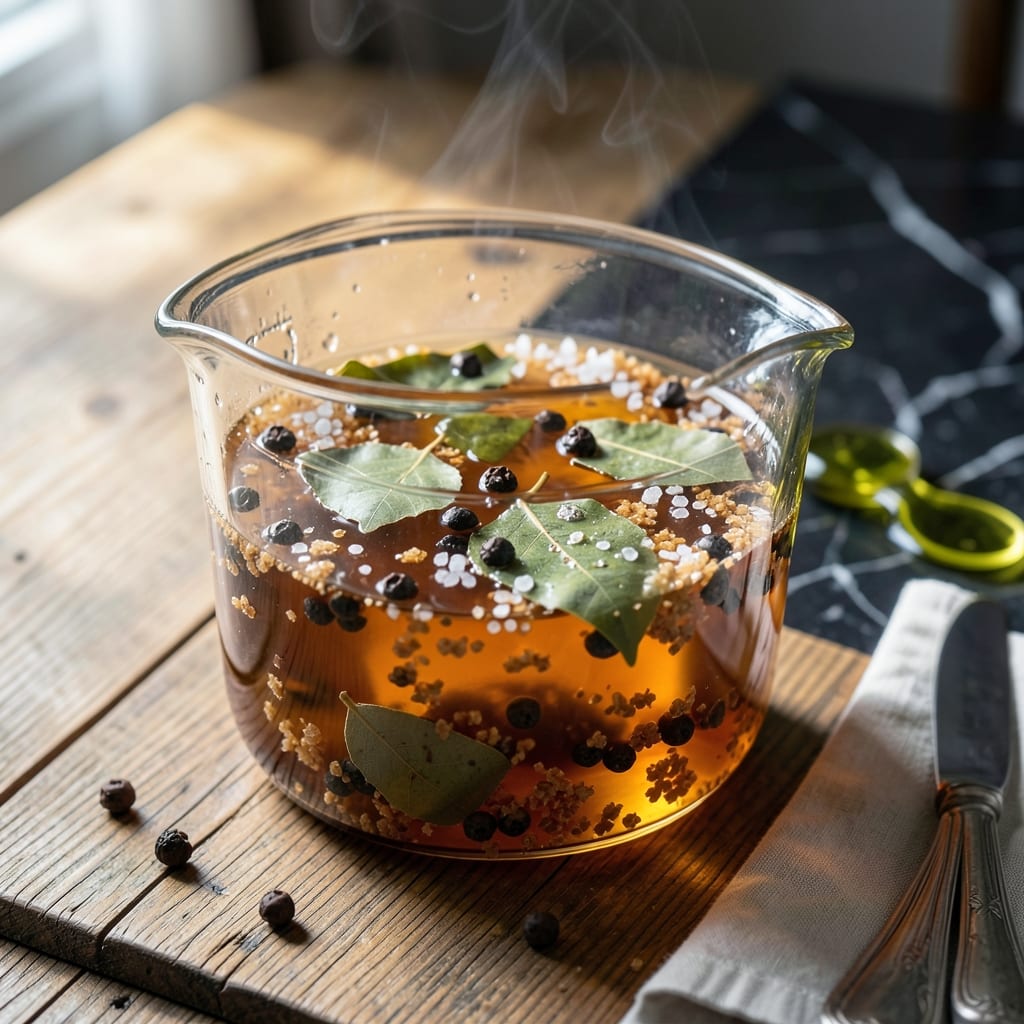
This brine transforms tough pork shoulder into juicy, flavorful meat with minimal effort. I developed this recipe after testing countless variations in my small Boston kitchen, always seeking the perfect balance of salt, sweetness, and acidity.
The apple cider vinegar is the star here, adding a bright tang that tenderizes while enhancing natural pork flavors. A touch of brown sugar balances the acidity, and whole spices like peppercorns and bay leaves add depth without overpowering.
Soak the pork for 12-24 hours to let the brine work its magic, penetrating every fiber. The result is meat that stays moist during cooking and boasts complex flavor in every bite—no dry, bland cuts here.
This method works for any cut, but pork shoulder benefits most from the extended soaking time. Here’s how to make the brine that will change your cooking.
Ingredients for Pork Shoulder Brine Recipe Apple Cider Vinegar
Eight ingredients bring that zesty tang to your pork shoulder brine.
| Ingredient | Amount | Notes |
|---|---|---|
| Apple Cider Vinegar 🍏 | 4 cups | Bright, tangy variety preferred |
| Water 💧 | 4 cups | Cold, filtered for best results |
| Kosher Salt 🧂 | ¾ cup | Diamond Crystal preferred |
| Light Brown Sugar 🍚 | ½ cup | Packed for even sweetness |
| Whole Black Peppercorns 🌶️ | 1 tbsp | Lightly crushed |
| Bay Leaves 🍃 | 4 whole | Dried, not fresh |
| Garlic Cloves 🧄 | 6 cloves | Smashed, peeled |
| Juniper Berries 🌿 | 1 tbsp | Optional for depth |
The apple cider vinegar is non-negotiable here—Bragg or Heinz are solid choices at any Whole Foods or regular grocery store. Kosher salt matters more than you think; Diamond Crystal dissolves perfectly and gives consistent results. Brown sugar adds balance, so don’t skip it. I grab mine from Trader Joe’s (their organic works great).
Out of apple cider vinegar? White vinegar plus a splash of apple juice in a pinch. No brown sugar? White sugar plus molasses (1 tbsp molasses per cup) works. Juniper berries can be skipped, but if you’ve got them (check Penzeys or bulk bins), they add a nice piney note. Bay leaves are standard—just ensure they’re dried, not fresh.
Brine keeps 1 week refrigerated in a sealed jar. Make it fresh for each use since the spices lose potency over time. Perfect for prepping ahead—just mix and store until you’re ready to brine that pork.
Why You’ll Love This Recipe
- Five Minute Mix: I just dump the vinegar, water, salt, sugar, and peppercorns in a pot and heat—no chopping, no fuss.
- Tangy Deep Flavor: The apple cider vinegar cuts through the richness while the brown sugar caramelizes the pork’s surface.
- Feeds a Crowd: I brine a whole shoulder for Sunday supper then slice leftovers for tacos, sandwiches, or fried rice all week.
- Pantry Staples Only: Between us, I always have these ingredients on hand, so I can start a brine the moment I remember to thaw the meat.
Step-by-Step Instructions for Pork Shoulder Brine
This method ensures the juiciest pork every time with bright, tangy flavor.
Step 1: Combine the Liquid Base
In a large pot, pour in the 4 cups Apple Cider Vinegar and 4 cups Water. The cold, filtered water helps dissolve the salt and sugar evenly without leaving any grainy texture. This liquid base is the foundation of your brine.
I always use a bright, tangy apple cider vinegar for this—it gives the pork that signature zesty kick. Stir the mixture gently to combine the liquids, but don’t worry about dissolving anything yet. That comes next.
Step 2: Dissolve the Salt and Sugar
Add the 0.75 cup Kosher Salt and 0.5 cup Light Brown Sugar to the pot. I use Diamond Crystal kosher salt because it dissolves cleanly and seasons evenly. The light brown sugar adds a subtle caramel note that balances the vinegar’s acidity.
Place the pot over medium heat and stir until both the salt and sugar are completely dissolved. You’ll know it’s ready when the mixture looks clear with no visible grains at the bottom. This usually takes about 3-5 minutes.
Remove from heat before it starts to simmer—you just need to dissolve, not cook. The liquid will be slightly warm, which is perfect for the next step.
Step 3: Add the Aromatics
Now add the 1 tbsp Whole Black Peppercorns, 4 whole Bay Leaves, 6 cloves Garlic Cloves, and 1 tbsp Juniper Berries. I lightly crush the peppercorns first to release their oils, and I always smash the garlic cloves to expose the inner flesh.
The bay leaves should be dried, not fresh—fresh ones can be too strong and bitter. Stir everything together and let the mixture steep for 10 minutes. This allows all those aromatic flavors to infuse into the brine.
You’ll start to smell the warm, spicy scent of the peppercorns and juniper berries blending with the tangy vinegar. That’s how you know it’s working.
Step 4: Cool and Use the Brine
Let the brine cool completely to room temperature. This is crucial—adding hot brine to pork will start cooking the meat, and we want the salt to penetrate evenly without altering the texture. I usually let it sit for about 1 hour at room temperature, or you can speed it up by placing the pot in an ice bath.
Once cooled, transfer the brine to a large container or resealable bag with your pork shoulder. Make sure the pork is fully submerged for even brining. Refrigerate and brine for 12 to 24 hours—this gives the salt and flavors time to work their magic.
You’ll notice the pork becomes slightly firmer as it absorbs the brine, which is exactly what we want. The result will be incredibly juicy, flavorful meat every time.
Pro Tips For Making Pork Shoulder Brine Recipe Apple Cider Vinegar
- Brine Overnight: I learned this the hard way—pork shoulder needs at least 12 hours in the apple cider vinegar brine to let the salt and sugar really work their magic. Anything less and the flavor just sits on the surface.
- Dissolve Sugar First: Heat a cup of the water with the brown sugar and salt until fully dissolved before adding the vinegar and peppercorns. Sounds fussy, but it prevents grainy bits clinging to your meat.
- Skip The Metal: Use a glass or food-grade plastic container for brining—apple cider vinegar can react with metal and give your pork an off flavor. I ruined a batch before switching to my old Pyrex.
- Rinse And Pat: After brining, give the pork a quick rinse under cold water and pat it bone-dry with paper towels. This keeps the surface from getting too salty and helps the skin crisp up later if you’re roasting it.
Essential Equipment for This Dish
Large Stockpot
A 5-6 quart stockpot is essential for mixing this brine—it needs room for all the liquid and spices. I use my Cuisinart Multi-Clad Pro which conducts heat evenly. Avoid nonstick pots; the acids in vinegar can damage the coating over time. 🔥
Kitchen Scale
For precise measurements, especially with kosher salt, a digital kitchen scale is invaluable. I rely on my OXO Good Grips 11lb scale—it’s accurate and easy to clean. 0.75 cup Diamond Crystal salt weighs about 6 oz if you prefer weighing.
Fine Mesh Strainer
After steeping, you’ll need to strain out the spices. A fine mesh strainer catches all the peppercorns and bay leaves. I use a RSVP Endurance strainer that fits over my stockpot perfectly. This prevents any stray spices from sticking to your pork.
Large Brining Bag
For the actual brining, a 2-gallon food-safe brining bag works best. I like the Reynolds Kitchens bags—they’re sturdy and have a zip-top for easy sealing. Make sure your pork shoulder is fully submerged in the brine for even flavor.
Cooling Rack
To cool the brine quickly, place your stockpot on a wire cooling rack. This allows air to circulate underneath. I use a simple stainless steel rack from my local Boston market. Never add warm brine to meat—it can start cooking the surface.
Tongs and Ladle
You’ll need 12-inch tongs to handle the pork and a 1-cup ladle to transfer the brine. I keep a dedicated set just for brining to avoid cross-contamination. These tools make the process cleaner and more efficient. ✨
Nutrition Facts
Frequently Asked Questions
How long should I brine pork shoulder?
Soak pork shoulder in this brine for 12-24 hours in the refrigerator. This gives the salt and flavors enough time to penetrate the meat fully. Don’t exceed 24 hours, as it can make the meat too salty.
Can I reuse the brine?
No, never reuse brine after it’s touched raw meat. The risk of bacterial contamination is too high. Always make a fresh batch for each use to ensure safety and best flavor.
What if I don’t have juniper berries?
Juniper berries add depth but aren’t essential. Skip them or substitute with 1 tsp coriander seeds or 1 tsp mustard seeds for a similar aromatic effect. The brine will still be delicious!
Can I use white vinegar instead of apple cider vinegar?
Yes, but it will taste sharper and less complex. To mimic apple cider vinegar’s flavor, add 1/4 cup apple juice to 4 cups white vinegar. The tang will be similar, though slightly different in character.

- Potato Patty Recipe No Egg: Crispy Edges Without the Binder - October 30, 2026
- Paula Deen’s Potato Chip Cookies Recipe: Salty-Sweet Crunch in Every Bite - October 30, 2026
- Potato Gnocchi Recipe Ideas: Pillowy Soft Dumplings With Rustic Charm - October 30, 2026