
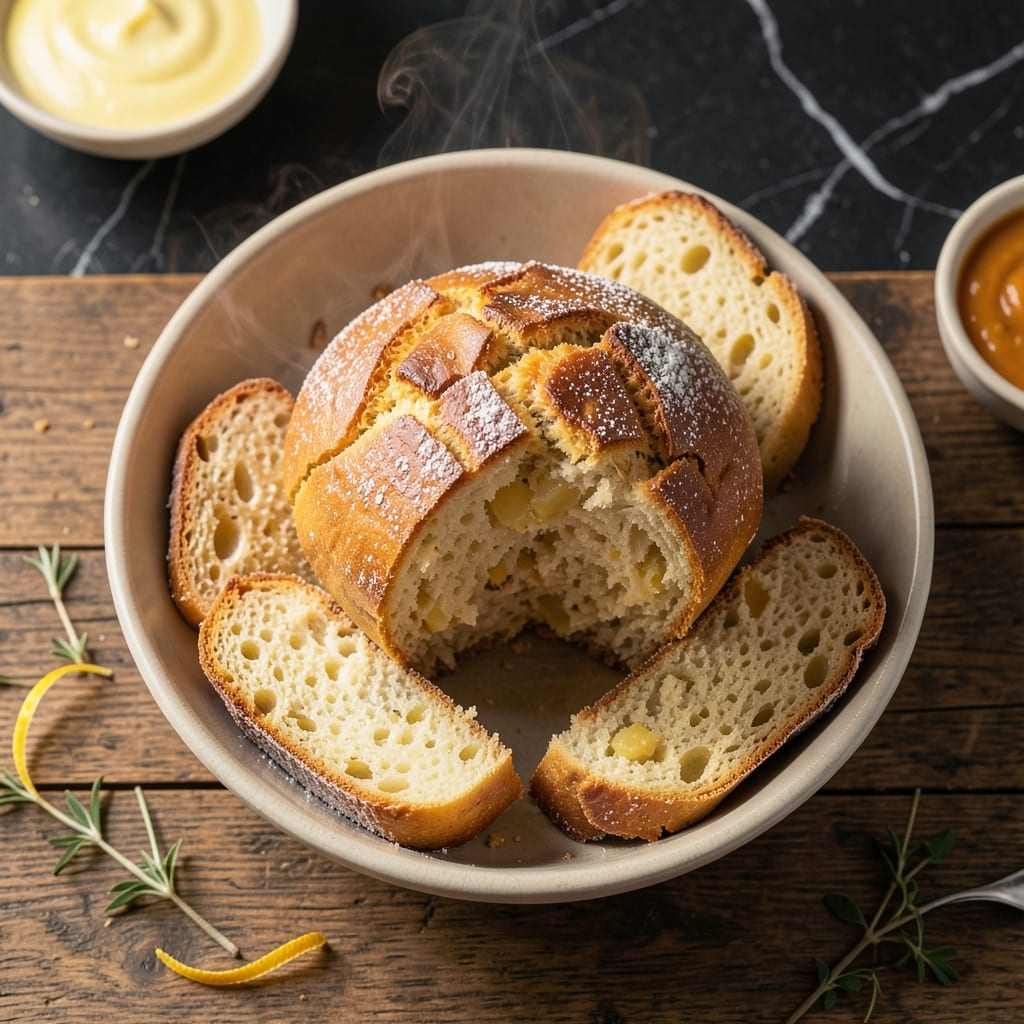
This Portuguese sweet bread with potatoes delivers a soft, pillowy texture that’s hard to resist. The secret lies in the mashed potatoes, which keep the loaf moist and tender for days.
I’ve tested this method countless times to perfect the balance of sweetness and richness. The dough comes together smoothly, and the potatoes add a subtle earthiness that complements the sugar beautifully.
The result is a golden loaf with a delicate crumb, ideal for toast or French toast. Its island roots shine through in every bite, offering a taste of tradition with minimal effort.
Follow the steps closely for a loaf that’s light, fluffy, and perfectly sweet. The process is straightforward, but the rewards are exceptional.
Ingredients for Portuguese Sweet Bread Recipe with Potatoes
Simple pantry staples plus potatoes create this traditional island-inspired sweet bread with ease.
| Ingredient | Amount | Notes |
|---|---|---|
| All-Purpose Flour 🌾 | 4 cups | Plus extra for dusting surfaces |
| Russet Potatoes 🥔 | 2 whole | Medium-sized, peeled and cubed |
| Granulated Sugar 🍚 | ½ cup | Fine white sugar for sweetness |
| Whole Milk 🥛 | 1 cup | Warm to 110°F for dough |
| Unsalted Butter 🧈 | ½ cup | Softened to room temperature |
| Large Eggs 🥚 | 2 whole | Room temperature for best rise |
| Active Dry Yeast 🍞 | 2 ¼ tsp | One standard packet for leavening |
| Salt 🧂 | 1 ½ tsp | Fine sea salt for balance |
| Vanilla Extract 🌿 | 1 tsp | Pure extract for flavor depth |
| Ground Cinnamon 🌶️ | 1 tsp | Optional for warm spice note |
| Lemon Zest 🍋 | 1 tsp | Freshly grated for brightness |
| Vegetable Oil 🫒 | 1 tbsp | For greasing the bowl |
The potatoes are non-negotiable here—Russet or Yukon Gold both work, but avoid waxy types like red potatoes (they lack the starch needed for that pillowy texture). Most grocery stores carry both, but Costco is ideal for bulk potatoes if you bake often. The flour should be all-purpose—no need for bread flour, as the potatoes provide the structure. Always check your yeast expiration date; old yeast is the most common reason for dense loaves.
No whole milk? 2% milk plus a tablespoon of melted butter gets you close, but avoid skim (it lacks the fat for richness). The butter can be salted if that’s what you have—just reduce the added salt by half. For a dairy-free version, use unsweetened almond milk and coconut oil. The cinnamon and lemon zest are optional but add that characteristic island flavor—Penzeys has excellent quality spices if you want to splurge.
The dough rises best in a warm, draft-free spot—75-80°F is ideal. Once baked, store wrapped at room temperature for up to 3 days, or freeze slices for 3 months. The loaf actually improves overnight as the flavors meld (worth the wait).
Why You’ll Love This Recipe
- One Bowl Wonder: I love that I can mix the mashed potatoes right into the dough—no extra bowls, no fuss.
- Buttery Sweet Perfection: The combo of butter, sugar, and milk gives it that melt-in-your-mouth richness I crave.
- Holiday Star: Honestly, it’s my go-to for Christmas morning or Easter brunch—everyone asks for seconds.
- Budget Friendly Loaf: Russet potatoes stretch the flour further, so I get two big loaves for the price of one.
Step-by-Step Instructions for Portuguese Sweet Bread With Potatoes
Master the technique and you’ll achieve that signature soft, pillowy texture with island-inspired flavor.
Step 1: Prepare the Potato Base
Peel and cube the 2 whole Russet Potatoes, then boil until fork-tender, about 15 minutes. Drain thoroughly and return to the pot. Mash until completely smooth with no lumps—this creates the moist, dense crumb characteristic of this bread.
Let the mashed potatoes cool to room temperature before proceeding. I’ve found that 1 cup of mashed potatoes yields the perfect texture, but your 2 whole Russet Potatoes should provide exactly that amount. The starch from the potatoes will enhance the bread’s softness and extend its freshness.
Step 2: Activate the Yeast and Combine Wet Ingredients
In a small bowl, dissolve the 2.25 tsp Active Dry Yeast in the 1 cup Whole Milk warmed to 110°F. Let it sit for 5-7 minutes until foamy—this confirms your yeast is active and ready to leaven the dough properly.
In a large mixing bowl, combine the cooled mashed potatoes, the yeast mixture, 0.5 cup Granulated Sugar, 0.5 cup Unsalted Butter, 2 whole Large Eggs, 1 tsp Vanilla Extract, 1 tsp Ground Cinnamon, and 1 tsp Lemon Zest. Whisk until the butter is mostly melted and the mixture is smooth.
Step 3: Incorporate Dry Ingredients and Knead
Add the 1.5 tsp Salt to the 4 cups All-Purpose Flour in a separate bowl and whisk to combine. Gradually add this to the wet ingredients, mixing on low speed with a dough hook until a shaggy dough forms. The dough will be soft and slightly sticky at this stage.
Increase the speed to medium and knead for 8-10 minutes until the dough becomes smooth and elastic. It should pull away from the sides of the bowl and pass the windowpane test—when stretched thin, it should be translucent without tearing. This development of gluten ensures proper structure for your loaf.
Step 4: First Rise and Shape
Lightly grease a large bowl with the 1 tbsp Vegetable Oil, then transfer the kneaded dough to it, turning once to coat. Cover with a clean kitchen towel and let rise in a warm, draft-free place for 1.5 to 2 hours, or until doubled in volume.
Once risen, punch down the dough gently to release excess air. Transfer to a lightly floured surface and shape into a smooth ball. For a traditional presentation, you can divide it into three equal portions and braid them, or simply shape into a single round loaf.
Step 5: Second Rise and Bake to Golden Perfection
Place your shaped dough on a parchment-lined baking sheet. Cover loosely and let rise again for 45 minutes to 1 hour until puffy and nearly doubled. Preheat your oven to 350°F during the last 15 minutes of rising.
Bake for 30-35 minutes until the loaf is deep golden brown and sounds hollow when tapped on the bottom. The internal temperature should reach 190-200°F. Transfer to a wire rack and let cool completely before slicing—this prevents a gummy texture and allows the flavors to meld beautifully.
Pro Tips For Making Portuguese Sweet Bread Recipe With Potatoes
- Boil Potatoes Whole: Cook the russets unpeeled in salted water until fork-tender—this keeps them from turning gluey when mashed into the dough.
- Warm the Milk: Heat the whole milk to about 110°F before mixing with yeast; cold milk slows the rise and you’ll wait twice as long for proofing.
- Don’t Overflour: The dough should stay slightly tacky—adding too much flour to keep it from sticking will make the bread dense instead of light and fluffy.
- Use Room-Temp Butter: Let the unsalted butter sit out for at least an hour so it incorporates smoothly into the dough; cold butter won’t cream properly with the sugar and potatoes.
Perfect Pairings for This Recipe
Beverage Pairings
This bread pairs beautifully with a warm cup of Portuguese coffee—try Bica for a strong espresso-like experience. The slight bitterness balances the sweetness perfectly. For tea lovers, a chamomile or cinnamon tea complements the warm spices in the loaf. 🍵
Breakfast Companions
Serve slices with cream cheese or butter for a simple breakfast treat. I love spreading it with fig jam for a touch of elegance. The combination of sweet bread and tangy jam is irresistible.
Dessert Pairings
For a decadent dessert, toast the bread and drizzle with honey or caramel sauce. Add a scoop of vanilla ice cream for contrast. The warmth of the bread with cold ice cream creates a delightful texture.
A sprinkle of cinnamon sugar on top adds extra flair and warmth. 🔥
Savory Options
Use this bread for French toast—the potato base makes it extra custardy. Dip slices in a mixture of 2 eggs, ½ cup milk, and 1 tsp vanilla before cooking. The result is a rich, golden breakfast.
Nutrition Facts
Frequently Asked Questions
Can I use instant mashed potatoes instead of fresh?
No, fresh potatoes are essential for the right texture. Instant potatoes lack the starch and moisture needed for that signature pillowy crumb. Always use Russet or Yukon Gold for best results.
Why does my bread turn out dense?
Dense loaves usually mean the yeast wasn’t active or the dough didn’t rise enough. Check your yeast expiration date and ensure the milk is 110°F for proper activation. Let it rise until truly doubled.
How do I know when it’s fully baked?
The loaf should be deep golden brown and sound hollow when tapped. For certainty, use a thermometer—the internal temperature should reach 190-200°F.
Can I make this without a stand mixer?
Knead by hand for 10-12 minutes until smooth and elastic. The dough will be sticky at first, but resist adding extra flour until the gluten develops.

- Potato Patty Recipe No Egg: Crispy Edges Without the Binder - October 30, 2026
- Paula Deen’s Potato Chip Cookies Recipe: Salty-Sweet Crunch in Every Bite - October 30, 2026
- Potato Gnocchi Recipe Ideas: Pillowy Soft Dumplings With Rustic Charm - October 30, 2026