
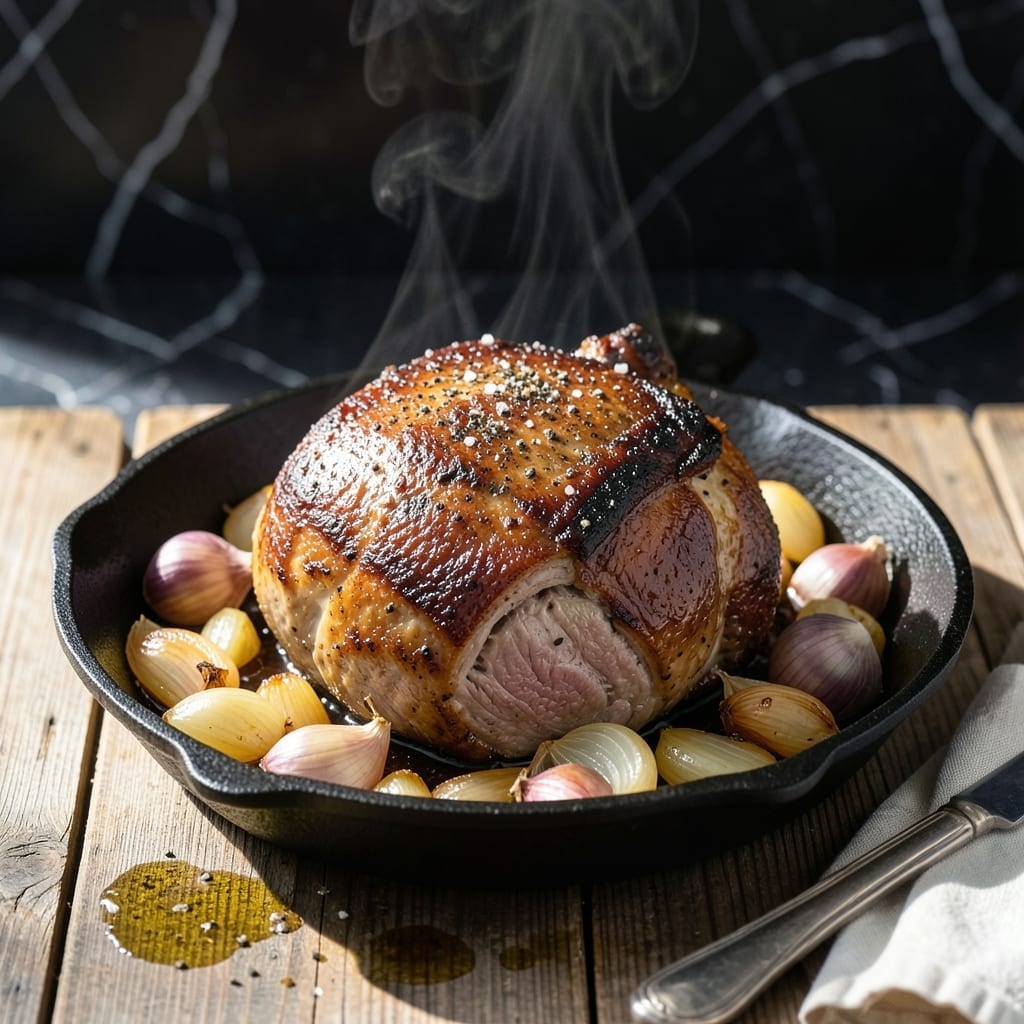
There’s something deeply satisfying about a pot roast cooked low and slow in a cast iron skillet. This method delivers fall-off-the-bone tenderness with rich, concentrated flavors that only iron can provide.
I’ve perfected this technique over years of Sunday dinners, learning exactly how to coax maximum flavor from tough cuts of beef. The skillet creates a perfect sear, while the tight-fitting lid locks in moisture for incredibly tender meat.
The carrots and potatoes absorb all that savory goodness, transforming into perfectly seasoned side dishes alongside the beef. It’s a complete meal that feels like a hug on a plate.
What emerges is a dish with depth of flavor that store-bought versions can’t match. The beef becomes so tender it practically melts, while the vegetables develop a sweetness that balances the rich sauce.
Ingredients for Pot Roast Recipe Cast Iron Skillet
Hearty beef, root vegetables, and aromatic herbs create a complete meal in one skillet.
| Ingredient | Amount | Notes |
|---|---|---|
| Chuck Roast 🥩 | 3 lb | Well-marbled, boneless preferred |
| Kosher Salt 🧂 | 2 tsp | Diamond Crystal preferred for texture |
| Coarse Black Pepper 🌶️ | 1 tsp | Freshly cracked for best flavor |
| Olive Oil 🫒 | 2 tbsp | Extra-virgin for searing |
| Yellow Onion 🧅 | 1 whole | Large, coarsely chopped |
| Garlic Cloves 🧄 | 4 cloves | Minced for depth of flavor |
| Beef Stock 🥣 | 2 cups | Low-sodium for better control |
| Red Wine 🍷 | 1 cup | Dry variety like Cabernet Sauvignon |
| Tomato Paste 🍅 | 2 tbsp | Concentrated for richness |
| Fresh Thyme Sprigs 🌿 | 3 pieces | Stems removed for ease |
| Bay Leaves 🍃 | 2 pieces | Dried, whole for aroma |
| Carrots 🥕 | 4 whole | Peeled, cut into 2-inch chunks |
| Yukon Gold Potatoes 🥔 | 1 ½ lb | Peeled, quartered for even cooking |
| Worcestershire Sauce 💧 | 1 tbsp | Adds umami depth to sauce |
The chuck roast is non-negotiable here. Look for heavy marbling—this fat renders down during the long cook, creating that unctuous sauce. Costco and Whole Foods typically carry quality chuck with good fat distribution. Avoid pre-cut stew meat; you want a whole roast to control the cut size. The beef stock should be homemade or high-quality—better base means richer final sauce.
No red wine? Substitute additional beef stock with 1 tbsp balsamic vinegar for acidity. Fresh thyme can be replaced with 1 tsp dried thyme (added with liquids). For the potatoes, russets work too but may break down more. If you’re out of tomato paste, 1/4 cup crushed tomatoes reduces to similar consistency. Worcestershire contains anchovies—use vegetarian Worcestershire if needed.
Leftovers improve overnight as flavors meld. Store in airtight containers for up to 4 days in the fridge or freeze for 3 months. Reheat gently to preserve texture. The cast iron can go straight from stove to oven—no need to transfer. Always let the meat rest before slicing to retain juices.
Why You’ll Love This Recipe
- One Pan Wonder: I brown the chuck roast and onions right in the cast iron—no extra dishes, no fuss.
- Rich Depth: The cast iron sears the meat so well that every bite tastes like it’s been slow-cooked for hours.
- Feeds the Crew: This makes enough for Sunday dinner with leftovers for sandwiches or tacos the next day.
- Budget Stretch: A chuck roast and a few pantry staples turn into a meal that feels way fancier than it costs.
Step-by-Step Instructions for Pot Roast in Cast Iron Skillet
This method delivers tender beef with rich, deeply flavored vegetables using your cast iron.
Step 1: Season and Sear the Chuck Roast
Pat the 3 lb chuck roast completely dry with paper towels. Season all sides aggressively with the 2 tsp kosher salt and 1 tsp coarse black pepper, pressing the seasoning into the meat so it adheres well during searing.
Heat the 2 tbsp olive oil in your cast iron skillet over medium-high heat until it shimmers. Add the chuck roast and sear undisturbed for 4-5 minutes per side until a deep, mahogany crust forms. This creates the flavor foundation for your entire dish.
Transfer the seared roast to a plate. The meat should release easily when properly seared—if it sticks, it’s not ready to flip yet.
Step 2: Build the Aromatic Base
In the same skillet, add the coarsely chopped yellow onion and cook for 3-4 minutes until softened and beginning to brown. Add the minced garlic cloves and cook for 30 seconds until fragrant, stirring constantly to prevent burning.
Stir in the 2 tbsp tomato paste and cook for 1-2 minutes until it darkens slightly. This step intensifies the tomato flavor and prevents a raw taste in the finished dish. Deglaze with the 1 cup red wine, scraping up all browned bits from the bottom of the skillet.
Let the wine reduce by half, about 3-4 minutes, before proceeding.
Step 3: Combine and Braise
Return the chuck roast to the skillet along with any accumulated juices. Add the 2 cups beef stock, 1 tbsp Worcestershire sauce, 3 pieces fresh thyme sprigs, and 2 pieces bay leaves. The liquid should come about halfway up the roast.
Bring to a gentle simmer, then reduce heat to low. Cover the skillet and let it braise for 2 hours, turning the roast halfway through. The meat is ready for the next step when it yields easily to a fork.
Step 4: Add Vegetables and Finish
Arrange the 4 whole carrots and 1.5 lb Yukon Gold potatoes around the roast in the skillet. The vegetables should be mostly submerged in the braising liquid. If needed, add a splash of water to ensure proper coverage.
Cover and continue cooking for another 45-60 minutes until the carrots and potatoes are fork-tender and the chuck roast shreds easily with a fork. The vegetables will absorb the rich flavors from the braising liquid.
Remove the bay leaves and thyme sprigs before serving.
Pro Tips For Making Pot Roast Recipe Cast Iron Skillet
- Sear Until Dark: Don’t rush the sear—let the chuck roast sit in the cast iron until it develops a deep, dark crust, about 3-4 minutes per side. I learned this the hard way when my first few pot roasts came out gray and bland.
- Pat It Dry: Blot the chuck roast with paper towels before seasoning—even a little moisture will steam the meat instead of searing it. My grandmother swore by this, and she was right.
- Use Enough Oil: Coat the bottom of the skillet with about 2 tablespoons of olive oil—enough to shimmer but not pool. After burning one batch, I finally figured out that a dry pan means a stuck, uneven sear.
- Rest Before Slicing: Give the pot roast a solid 10-15 minutes under foil after cooking—this lets the juices redistribute. Sounds weird, but it works: slicing too soon sends all the flavor onto the cutting board.
Essential Equipment for Perfect Results
Cast Iron Skillet
Your 10-12 inch cast iron skillet is the heart of this dish. I recommend Lodge or Le Creuset for even heat distribution. Ensure it’s well-seasoned and large enough to fit the roast with vegetables. The heavy base prevents scorching during the long braise. 🔥
Dutch Oven Alternative
If your skillet lacks a tight-fitting lid, use a Dutch oven instead. Le Creuset or Staub enameled cast iron works beautifully. The lid traps steam perfectly for fall-apart meat. Just transfer the seared roast and aromatics to the Dutch oven before braising.
Tongs and Meat Thermometer
Use 12-inch locking tongs for turning the roast. An instant-read thermometer like ThermoWorks ThermoPop ensures the meat reaches 195-205°F for perfect tenderness. I never cook a roast without one—it takes all the guesswork out of the process.
Wooden Spoon
A sturdy wooden spoon is essential for deglazing and stirring the aromatic base. It won’t scratch your cast iron like metal utensils can. I keep a dedicated spoon just for my cast iron to maintain its seasoning.
Cutting Board
Use a large, stable cutting board for prepping vegetables. A 14×20 inch board gives you room to work comfortably. I prefer end-grain boards for knife protection—they’re gentler on your blades during all that chopping.
Meat Mallet
For even cooking, use a meat mallet to pound thicker parts of the roast to uniform thickness. This helps the entire piece cook at the same rate. A simple flat-head mallet works perfectly for this task.
Nutrition Facts
Frequently Asked Questions
What size cast iron skillet works best?
A 10-12 inch skillet with a tight-fitting lid is ideal. This gives enough room for the roast and vegetables while maintaining proper braising moisture.
Can I use a different cut of beef?
Chuck roast is best, but brisket or round roast work too. Avoid lean cuts like sirloin—they won’t become as tender during the long cook.
How do I know when it’s done?
The meat should shred easily with a fork. For precise results, use a thermometer—it’s ready at 195-205°F.
Can I make this ahead of time?
The flavors actually improve overnight. Store in the fridge for up to 4 days or freeze for 3 months.

- Potato Patty Recipe No Egg: Crispy Edges Without the Binder - October 30, 2026
- Paula Deen’s Potato Chip Cookies Recipe: Salty-Sweet Crunch in Every Bite - October 30, 2026
- Potato Gnocchi Recipe Ideas: Pillowy Soft Dumplings With Rustic Charm - October 30, 2026