
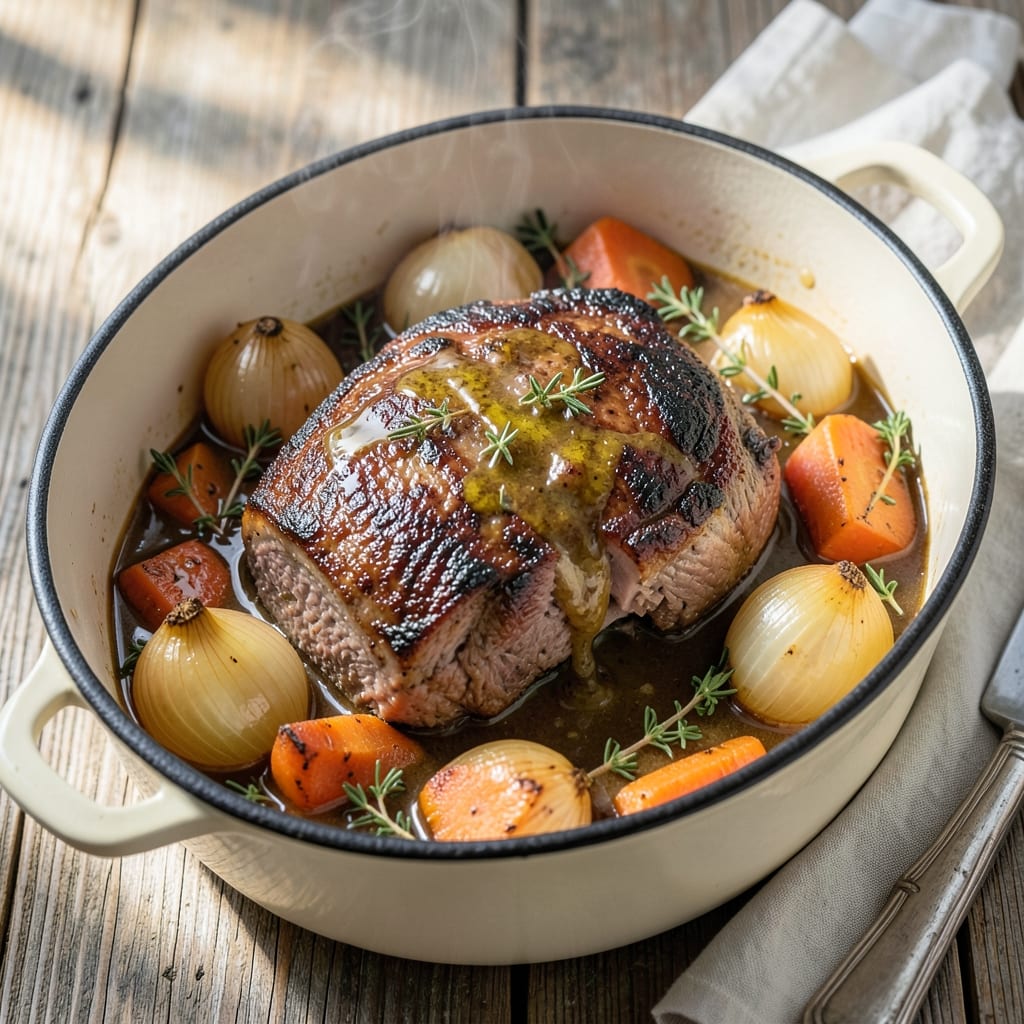
I still remember the first time I pulled a pot roast from the oven and the whole house filled with that rich, meaty aroma. Between you and me, it’s the kind of dish that makes you look like a kitchen pro with minimal effort.
This creation turns tough cuts into melt-in-your-mouth perfection through slow braising. The beef absorbs all those deep flavors from the vegetables and herbs, creating something far greater than the sum of its parts.
You’ll end up with tender beef that falls apart at the touch of a fork, swimming in a gravy so flavorful you’ll want to drink it straight from the pot. The kind of meal that makes everyone ask for seconds.
Serve it with mashed potatoes or crusty bread to soak up every last drop. Here’s everything you need to get started.
Ingredients for Pot Roast Recipe Cooking Classy
Simple, hearty ingredients transform into that unforgettable slow-cooked meal everyone loves.
| Ingredient | Amount | Notes |
|---|---|---|
| Chuck Roast 🥩 | 3 lb | Well-marbled, trimmed of excess fat |
| Olive Oil 🫒 | 2 tbsp | For searing the beef |
| Kosher Salt 🧂 | 1 ½ tsp | Divided for seasoning |
| Black Pepper 🌶️ | 1 tsp | Freshly ground preferred |
| Yellow Onion 🧅 | 2 whole | Large, quartered |
| Carrots 🥕 | 4 whole | Peeled, cut into chunks |
| Celery Stalks 🌿 | 3 whole | Cut into large pieces |
| Garlic Cloves 🧄 | 5 cloves | Minced for depth |
| Beef Broth 🍲 | 2 cups | Low-sodium preferred |
| Red Wine 🍷 | 1 cup | Dry variety like Cabernet |
| Tomato Paste 🍅 | 2 tbsp | For richness and depth |
| Dried Thyme 🌿 | 1 tsp | Or use fresh sprigs |
| Bay Leaves 🍃 | 2 whole | For aromatic infusion |
| Fresh Rosemary 🌿 | 2 whole | Sprigs, for earthy flavor |
The beef is everything here. Chuck roast is ideal—look for good marbling at your butcher or Costco. Avoid lean cuts like sirloin; they dry out during braising. I usually grab mine from Whole Foods when they have sales. The fat cap helps keep the meat moist, so don’t trim it all off. A 3-pound roast feeds four generously (with leftovers for sandwiches).
No red wine? Beef broth with a splash of balsamic vinegar works in a pinch. Fresh rosemary and thyme can replace dried (use three times the amount). If you’re out of tomato paste, 1/4 cup ketchup adds similar depth. The veggies are flexible—swap carrots for parsnips or add potatoes straight into the pot. Trader Joe’s has great pre-cut mirepoix if you’re short on time.
This tastes even better the next day—store in the fridge for up to 4 days. Freeze leftovers for 3 months (the gravy thickens slightly when reheated). I like to pull the beef apart and use it in tacos or over mashed potatoes. Always let it rest before slicing (worth the extra minute).
Why You’ll Love This Recipe
- Set and Forget: I just sear the chuck roast, add onions, salt, pepper, and let the oven do the work for hours.
- Feeds the Whole Crew: Between us, this one pot makes enough for Sunday dinner plus leftovers for sandwiches.
- Budget Friendly: Honestly, a chuck roast and a few pantry staples stretch farther than you’d think.
Step-by-Step Instructions for Pot Roast
Here’s how I make this classic dish with tender beef and rich, flavorful gravy every time.
Step 1: Sear the Chuck Roast
Heat the 2 tbsp olive oil in a large Dutch oven over medium-high heat until shimmering. Pat the 3 lb chuck roast dry with paper towels—this is crucial for a good sear. Season all sides generously with the 1.5 tsp kosher salt and 1 tsp black pepper.
Sear the roast for 4-5 minutes per side until deep brown on all surfaces. Don’t rush this step; the browned bits will create incredible flavor in your sauce. The meat should release easily from the pot when it’s ready to flip. Transfer to a plate and set aside.
Step 2: Sauté the Vegetables
In the same pot, add the 2 whole yellow onion (quartered), 4 whole carrots (in chunks), and 3 whole celery stalks (in large pieces). Cook over medium heat for 5-6 minutes, stirring occasionally, until the vegetables begin to soften and develop some color.
Add the 5 cloves garlic cloves (minced) and cook for 30 seconds until fragrant. Stir in the 2 tbsp tomato paste and cook for 1 minute to deepen its flavor. This builds the foundation for your rich, savory sauce.
Step 3: Deglaze and Add Liquids
Pour in the 1 cup red wine and scrape up all the browned bits from the bottom of the pot with a wooden spoon. Let it simmer for 2-3 minutes until reduced by about half. This step dissolves all that concentrated flavor into your sauce.
Add the 2 cups beef broth, 1 tsp dried thyme, 2 whole bay leaves, and 2 whole fresh rosemary sprigs. Stir to combine, then return the chuck roast to the pot along with any accumulated juices. The liquid should come about halfway up the meat.
Step 4: Braise Until Tender
Bring the mixture to a gentle simmer, then cover and transfer to a preheated 325°F oven. Braise for 2.5 to 3 hours, turning the roast once halfway through, until the beef is fork-tender and falls apart easily.
You’ll know it’s done when a fork slides in with no resistance and the meat shreds with a gentle tug. The vegetables should be soft and the sauce thickened. If the liquid reduces too much, add a splash of water or broth.
Step 5: Rest and Serve
Carefully remove the chuck roast from the pot and transfer to a cutting board. Skim any excess fat from the surface of the sauce, then remove and discard the bay leaves and rosemary sprigs. Shred or slice the beef against the grain.
Return the beef to the pot and stir to coat in the sauce. Let it rest for 10 minutes before serving to allow the flavors to meld. Serve hot with the braised vegetables and plenty of that rich, savory gravy spooned over the top.
Pro Tips For Making Pot Roast Recipe Cooking Classy
- Sear It Hard: Get your pan screaming hot before adding the chuck roast—about 2 tablespoons of olive oil, then don’t touch it for 3-4 minutes per side. I learned this the hard way after pulling my meat too early and ending up with a gray, steamed roast instead of that deep brown crust.
- Salt the Roast Overnight: Pat the chuck roast dry, then hit it with kosher salt at least 12 hours before cooking. Sounds weird, but it works: the salt penetrates deep, seasons evenly, and helps the meat retain moisture during the long braise.
- Don’t Crowd the Onions: Slice those yellow onions thick—about ½-inch—and give them space in the pan when browning. Steer clear of overloading, or they’ll steam instead of caramelize, leaving you with a watery, bland base for your pot roast.
- Use a Meat Thermometer: Skip guessing and pull the roast when it hits 195-200°F internally. My grandmother swore by the fork-tender test, and she was right, but a thermometer guarantees you won’t overcook it into dry, stringy disappointment.
Troubleshooting This Dish
Tough Meat Issues
If your pot roast isn’t fork-tender after 3 hours, don’t panic. First check your oven temperature with an instant-read thermometer—it should read 325°F. Low and slow is key. I once had this happen and discovered my oven was running 25°F cool. 🔥
Dry Pot Roast
This usually means there wasn’t enough liquid. Always ensure your braising liquid comes at least halfway up the meat. If it’s dry when you check, add 1 cup hot beef broth or water, cover, and continue cooking. Remember, chuck roast needs moisture to break down properly.
Sauce Too Thin
For a thicker gravy, remove the lid during the last 30 minutes of cooking to allow reduction. Alternatively, mix 1 tbsp cornstarch with 1 tbsp cold water and stir into the sauce at the end. Simmer for 2-3 minutes until thickened.
Bland Flavor
This often happens when you skip searing the meat or deglazing the pan. Those browned bits are flavor bombs. If it’s already too late, stir in 1 tbsp Worcestershire sauce or a splash of balsamic vinegar to boost depth. I keep both in my pantry for emergencies. 💡
Vegetables Mushy
If your carrots and celery turn to mush, they were likely cut too small or cooked too long. Next time, keep them in larger chunks (about 2-inch pieces). Add them during the last 1.5 hours of cooking if you prefer firmer texture.
Sauce Too Salty
Balance it by adding 1 peeled potato to the pot during the last 30 minutes—it absorbs excess salt. Or stir in 1 tsp brown sugar or 1 tbsp apple cider vinegar to counteract the saltiness. I learned this trick from my Cincinnati neighbor, Mrs. Henderson.
Nutrition Facts
Frequently Asked Questions
Can I use a different cut of beef?
Stick with well-marbled cuts like brisket or short ribs for similar results. Avoid lean options like sirloin—they lack the fat needed for tender braising. Chuck remains the gold standard for flavor and texture.
What if I don’t have a Dutch oven?
Use a heavy oven-safe pot with a tight lid, like a stainless steel stockpot. A slow cooker works too—set to low for 8 hours. The key is maintaining consistent low heat and moisture.
How do I prevent the sauce from breaking?
Simmer gently and avoid boiling. If it separates, whisk in 1 tbsp cold butter or blend briefly with an immersion blender. Fat and liquid will re-emulsify beautifully.

- Potato Patty Recipe No Egg: Crispy Edges Without the Binder - October 30, 2026
- Paula Deen’s Potato Chip Cookies Recipe: Salty-Sweet Crunch in Every Bite - October 30, 2026
- Potato Gnocchi Recipe Ideas: Pillowy Soft Dumplings With Rustic Charm - October 30, 2026