
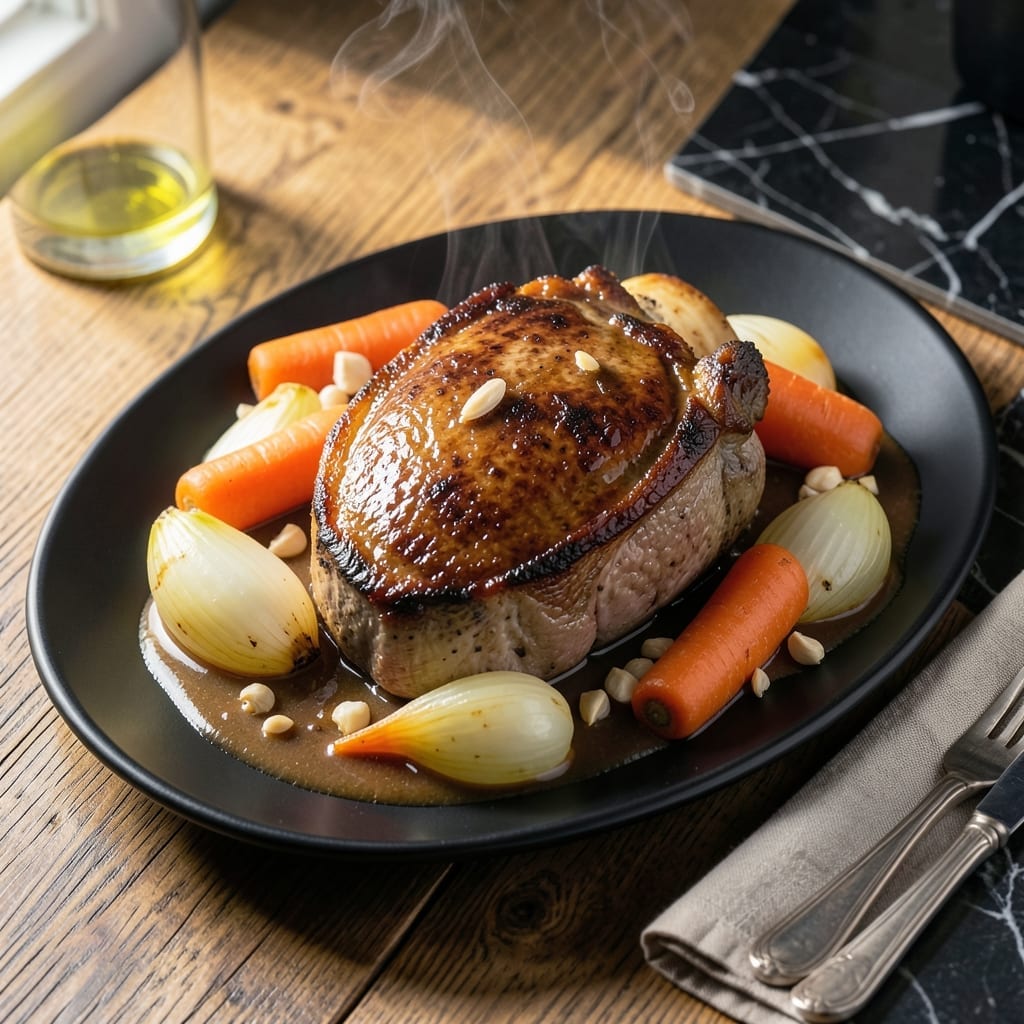
Achieving fall-apart tender pot roast in a roaster oven requires patience and the right technique. This method delivers melt-in-your-mouth meat without constant attention.
The roaster oven’s even heat circulation transforms tough cuts into succulent, flavorful meat. Proper seasoning and liquid create a rich, savory environment for slow cooking.
By the end, you’ll have a pot roast with a tender interior and deeply caramelized exterior. The vegetables absorb the meat’s juices, enhancing every bite.
This hands-off approach ensures consistent results every time. The wait is worth it for this comforting classic.
Ingredients for Pot Roast Recipe in Roaster Oven
Quality cuts and simple aromatics transform this into a showstopping meal with minimal effort.
| Ingredient | Amount | Notes |
|---|---|---|
| Chuck Roast 🥩 | 3 lb | Well-marbled, boneless preferred |
| Kosher Salt 🧂 | 2 tsp | Diamond Crystal preferred |
| Black Pepper 🌶️ | 1 tsp | Freshly ground |
| Garlic Cloves 🧄 | 6 cloves | Minced for even distribution |
| Yellow Onions 🧅 | 2 whole | Large, quartered |
| Carrots 🥕 | 4 whole | Peeled, cut into chunks |
| Russet Potatoes 🥔 | 4 whole | Peeled, quartered |
| Beef Broth 💧 | 2 cups | Low-sodium preferred |
| Red Wine 🍷 | 1 cup | Dry variety like Cabernet |
| Tomato Paste 🍅 | 2 tbsp | For depth of flavor |
| Dried Thyme 🌿 | 1 tsp | Crushed between fingers |
| Dried Rosemary 🍃 | 1 tsp | Crushed for aroma release |
| Bay Leaves 🌿 | 2 whole | Removed before serving |
| Olive Oil 🫒 | 2 tbsp | For searing meat |
The chuck roast is non-negotiable for this preparation. Look for abundant marbling—this fat renders down during the long cook, basting the meat from within. Costco and Whole Foods consistently carry well-marbled options. For the wine, any bold, dry red works; no need to splurge on premium bottles. The beef broth should be low-sodium to allow proper seasoning control throughout the cooking process.
Short on time? Pre-cut stew meat (chuck) can substitute for the whole roast—reduce cooking time by half. No red wine? Additional beef broth with a tablespoon of balsamic vinegar mimics the acidity. Fresh herbs can replace dried at three times the amount, but dried are more reliable for long cooking. The tomato paste can be swapped for 1/4 cup crushed tomatoes reduced slightly.
The roast benefits from resting 15-20 minutes before slicing to redistribute juices. Leftover meat and vegetables keep refrigerated for 4-5 days or frozen for 3 months. Reheat gently in the cooking liquid to maintain that signature tenderness.
Why You’ll Love This Recipe
- I’ll be real: a chuck roast is cheap, and this recipe stretches it into multiple meals.
- Set It & Forget: I just season the chuck roast, add onions and garlic, then let the roaster oven do the work for hours.
- Feeds Everyone: Between us, this makes enough for Sunday dinner plus leftovers for sandwiches all week.
- Budget Friendly: I’ll be real: a chuck roast is cheap, and this recipe stretches it into multiple meals.
Step-by-Step Instructions for Pot Roast in Roaster Oven
This method guarantees fall-apart tenderness with minimal effort using your roaster oven.
Step 1: Sear and Season the Chuck Roast
Pat the 3 lb Chuck Roast dry with paper towels, then season generously with 2 tsp Kosher Salt and 1 tsp Black Pepper on all sides. Heat 2 tbsp Olive Oil in a skillet over medium-high heat until shimmering.
Sear the roast on all sides for 3-4 minutes per side until deeply browned. This caramelization creates a flavor foundation. Transfer the seared roast to your roaster oven insert and let it rest while you prepare the aromatics.
Real talk: don’t rush the sear. The browned crust translates to rich, complex flavors in the finished dish.
Step 2: Build the Aromatic Base
In the same skillet, add the 6 cloves Garlic Cloves (minced), 2 whole Yellow Onions (quartered), 4 whole Carrots (peeled and cut into chunks), and 2 tbsp Tomato Paste. Cook over medium heat for 5 minutes, stirring occasionally, until the onions begin to soften and the tomato paste darkens slightly.
Deglaze the pan with 1 cup Red Wine, scraping up all browned bits from the bottom. This step captures all that concentrated flavor. Pour this mixture over the roast in the roaster oven insert.
Step 3: Add Liquids and Herbs for Braising
Pour 2 cups Beef Broth into the roaster oven insert. Sprinkle 1 tsp Dried Thyme and 1 tsp Dried Rosemary over the roast, crushing the herbs between your fingers to release their oils. Add 2 whole Bay Leaves to the liquid.
Arrange the 4 whole Russet Potatoes (peeled and quartered) around the roast, nestling them partially into the liquid. The potatoes will absorb all the delicious flavors as they cook.
Step 4: Slow Cook to Perfection
Cover the roaster oven and cook at 300°F for 3-4 hours. You’re aiming for the point where the chuck roast shreds easily with a fork and the vegetables are tender. Check the liquid level after 2 hours—if it’s too low, add a bit more beef broth to prevent drying out.
Here’s the thing—this hands-off method does the work for you. The low, steady heat breaks down the collagen in the chuck roast, transforming tough meat into buttery, melt-in-your-mouth perfection.
Step 5: Rest and Serve
Remove the 2 whole Bay Leaves and discard. Let the pot roast rest in its juices for 15-20 minutes before serving. This resting period allows the meat to reabsorb some of the cooking liquid, ensuring every bite is moist and flavorful.
Serve the roast with the vegetables and some of the braising liquid spooned over the top. The vegetables should be fork-tender and infused with the rich, savory flavors of the wine and herbs. This dish delivers on its promise of hands-off melting tenderness every time.
Pro Tips For Making Pot Roast Recipe In Roaster Oven
- Preheat the Roaster: I learned this the hard way—always preheat your roaster oven for 10 minutes at 325°F before adding the chuck roast. It guarantees even cooking from the start and prevents the meat from stewing in its own juices.
- Score the Fat Cap: Use a sharp knife to cut 1/4-inch slits in the fat cap of the chuck roast before seasoning. This lets the kosher salt and black pepper penetrate deeper and renders the fat more evenly.
- Don’t Crowd the Pan: After browning the meat, remove it before sautéing the onions and garlic. Sounds obvious, but I skipped this once and ended up with soggy, steamed aromatics instead of caramelized flavor.
- Use a Rack: Elevate the chuck roast on the roaster oven’s rack so air circulates underneath. My grandmother swore by this, and it prevents the bottom from getting mushy—plus, the onions crisp up instead of turning to mush.
Common Mistakes When Making This Recipe
Skipping the Sear
Searing the chuck roast before braising is non-negotiable. It develops the Maillard reaction that creates deep, complex flavors. Skipping this step results in bland, gray meat. I use a cast iron skillet for the best sear.
Incorrect Temperature
Cooking at too high a temperature (above 325°F) can toughen the meat. The roaster oven should stay at 300°F for the full 3-4 hours. This low-and-slow approach guarantees fall-apart tenderness. 🌡️
Insufficient Liquid
Using less than 2 cups Beef Broth risks drying out the roast. The liquid should come about halfway up the meat. Check at the 2-hour mark and add more broth if needed.
Overcrowding the Pan
Cramming all vegetables and meat into the roaster oven insert can steam rather than braise. Leave room for heat circulation. I arrange the 4 Russet Potatoes around the roast, not under it.
Not Resting the Meat
Cutting into the roast immediately after cooking causes all the juices to spill out. Let it rest for 15-20 minutes in its juices. This step ensures every bite stays moist and flavorful. 💪
Ignoring the Bay Leaves
Forgetting to remove the 2 Bay Leaves before serving can be a choking hazard. I always set a timer to remind myself to fish them out right after cooking.
Nutrition Facts
Frequently Asked Questions
Why use a roaster oven instead of a slow cooker?
A roaster oven provides more even heat distribution and better browning. It also allows you to check and baste without losing heat.
Can I use a different cut of beef?
Chuck roast is ideal, but brisket or round roast work too. Avoid lean cuts like sirloin—they won’t get as tender.
How do I know when it’s done?
The meat should pull apart easily with a fork. Internal temp should reach 195-200°F for perfect tenderness.
What if my liquid evaporates too quickly?
Add 1/2 cup more beef broth or water. Keep the pan covered to retain moisture.

- Potato Patty Recipe No Egg: Crispy Edges Without the Binder - October 30, 2026
- Paula Deen’s Potato Chip Cookies Recipe: Salty-Sweet Crunch in Every Bite - October 30, 2026
- Potato Gnocchi Recipe Ideas: Pillowy Soft Dumplings With Rustic Charm - October 30, 2026