
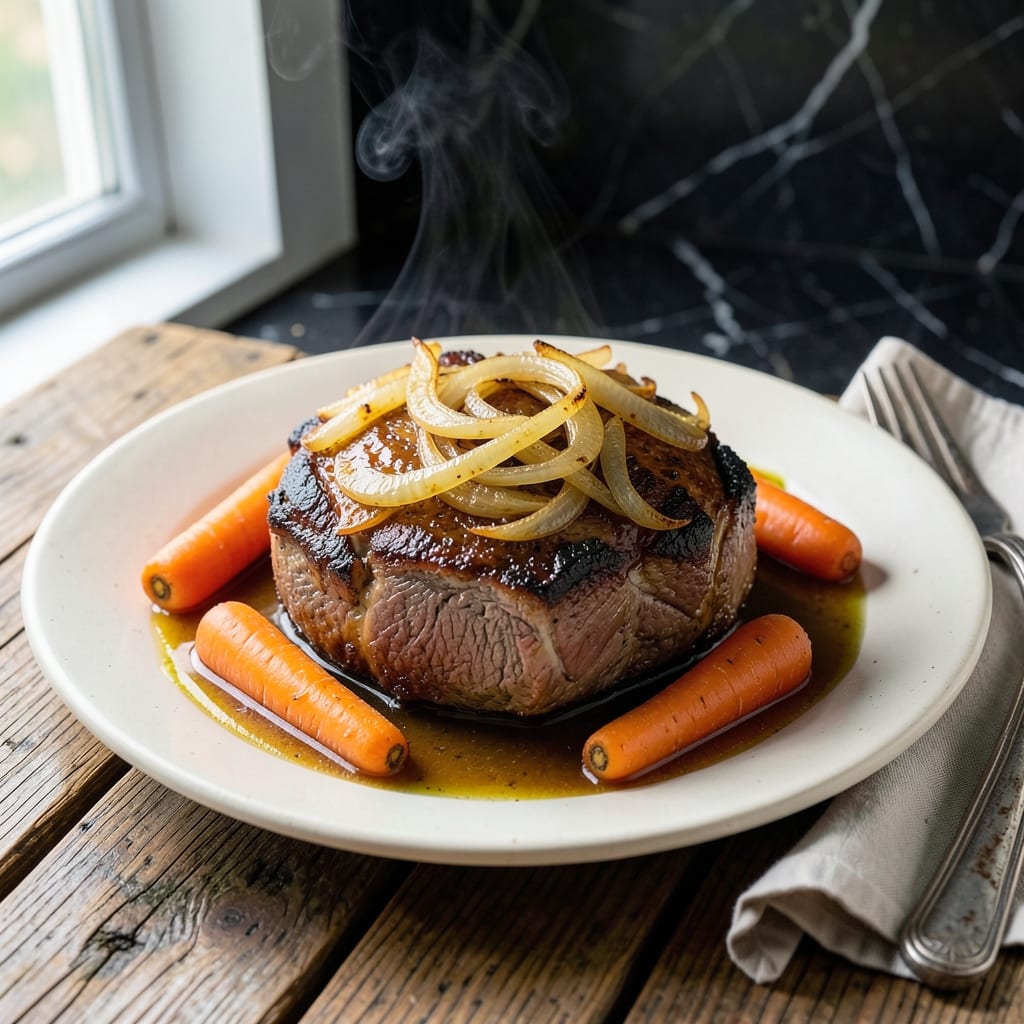
There’s something deeply comforting about a perfectly braised pot roast, where beef transforms into tender perfection surrounded by caramelized vegetables. I’ve tested this method in my tiny Boston kitchen until I got it just right.
The key is low and slow cooking, allowing tough cuts to become fork-tender while vegetables develop deep, sweet flavors. A proper sear on the beef first creates a rich foundation for the braising liquid.
What emerges after hours in the oven is melt-in-your-mouth beef with carrots, onions, and potatoes that have absorbed all that savory goodness. The sauce reduces to a velvety gravy that begs to be soaked up with crusty bread.
This is the kind of meal that turns a simple Sunday into something special. Here’s how to make it right every time.
Ingredients for Pot Roast Recipe Nyt
Pantry staples and a few fresh picks make this hearty dish come alive.
| Ingredient | Amount | Notes |
|---|---|---|
| Chuck Roast 🥩 | 3 lb | Boneless, well-marbled preferred |
| Kosher Salt 🧂 | 1 ½ tsp | Divided for seasoning |
| Black Pepper 🌶️ | 1 tsp | Freshly ground preferred |
| Olive Oil 🫒 | 2 tbsp | For searing beef |
| Yellow Onions 🧅 | 2 whole | Large, quartered |
| Carrots 🥕 | 4 whole | Peeled, cut into chunks |
| Yukon Gold Potatoes 🥔 | 1 ½ lb | Peeled, cut into chunks |
| Garlic Cloves 🧄 | 6 cloves | Smashed, peeled |
| Fresh Thyme 🌿 | 4 pieces | Sprigs, stems removed |
| Fresh Rosemary 🌿 | 2 pieces | Sprigs, stems removed |
| Bay Leaves 🍃 | 2 whole | Dried, whole leaves |
| Beef Stock 💧 | 2 cups | Low-sodium preferred |
| Red Wine 🍷 | 1 cup | Dry, bold variety |
| Tomato Paste 🍅 | 2 tbsp | For depth of flavor |
| All-Purpose Flour 🌾 | 2 tbsp | For thickening gravy |
The beef is everything here. Chuck roast is the gold standard for braising—look for good marbling at Whole Foods or your local butcher. I’ve had luck with pre-cut chunks at Trader Joe’s too. Avoid lean cuts like sirloin (they’ll dry out). For the wine, any bold, dry red works—Cabernet, Merlot, whatever’s open (just not cooking wine).
No red wine? Extra beef stock plus a splash of balsamic vinegar gets you there. Swap Yukon Golds for russet potatoes (they hold shape better). Fresh out of thyme? Dried thyme at one-third the amount works. The tomato paste can be from a can—just use what you need and freeze the rest (it’ll keep 3 months).
This tastes even better the next day. Store leftovers in an airtight container for up to 4-5 days. Freezes beautifully for 3 months—portion into containers for easy reheating (the gravy thickens up nicely when thawed).
Why You’ll Love This Recipe
- Set and Forget: I toss the chuck roast with salt, pepper, and onions, then let the oven do all the work for hours.
- Sunday or Wednesday: Honestly, it’s just as fitting for a lazy weekend as it is for a midweek dinner.
- Stretches the Budget: One affordable chuck roast feeds my family for two nights, with leftovers even better the next day.
Step-by-Step Instructions for Slow-Braised Beef With Caramelized Vegetables
Here’s the method. Straightforward, tested, works every time.
Step 1: Sear the Chuck Roast to Lock in Flavor
Pat the 3 lb chuck roast dry with paper towels, then season generously with 1.5 tsp kosher salt and 1 tsp black pepper. Heat the 2 tbsp olive oil in a large Dutch oven over medium-high heat until shimmering.
Add the beef and sear for 4-5 minutes per side until deeply browned. You’ll know it’s ready to flip when it releases easily from the pan. This creates a flavorful crust that will enrich the braising liquid later.
Step 2: Build the Aromatic Base
Remove the beef and set aside. In the same pot, add the 2 whole yellow onions, 4 whole carrots, 1.5 lb Yukon Gold potatoes, 6 cloves garlic cloves, 4 pieces fresh thyme, 2 pieces fresh rosemary, and 2 whole bay leaves.
Cook for 5-7 minutes, stirring occasionally, until the vegetables begin to caramelize and develop color. This builds the foundation of flavor for your braise.
Step 3: Deglaze and Thicken the Sauce
Stir in the 2 tbsp tomato paste and cook for 1 minute to deepen its flavor. Pour in the 1 cup red wine and scrape up any browned bits from the bottom of the pot. Let it simmer for 2-3 minutes until reduced by half.
Sprinkle the 2 tbsp all-purpose flour over the vegetables and stir to coat. This will help thicken the sauce as it cooks. Pour in the 2 cups beef stock and stir to combine.
Step 4: Braise Until Fork-Tender
Return the beef to the pot, spooning some of the vegetables and liquid over the top. Bring to a simmer, then cover and transfer to a preheated 325°F oven. Braise for 2.5-3 hours until the beef is fork-tender.
Check occasionally to ensure the liquid hasn’t reduced too much. If needed, add a splash of water or stock to maintain the braising liquid.
Step 5: Rest and Serve
Carefully remove the beef from the pot and place it on a cutting board. Skim any excess fat from the surface of the sauce, then adjust the seasoning with additional salt and pepper if needed.
Slice the beef against the grain and serve with the vegetables and sauce spooned over the top. The beef should pull apart easily with a fork, and the vegetables should be tender and caramelized.
Pro Tips For Making Pot Roast Recipe Nyt
- Sear Hard, Don’t Rush: I learned this the hard way—get your pan screaming hot before adding the chuck roast, and don’t move it for at least 3-4 minutes per side to lock in that deep, caramelized crust.
- Salt the Meat Overnight: After burning a few pot roasts, I finally started salting the chuck with 1 tablespoon of kosher salt the night before; it seasons all the way through and keeps the meat juicy.
- Skip the Cold Roast: Sounds weird, but it works: let the chuck sit at room temperature for 45 minutes before searing—cold meat steams instead of browns.
- Use a Splatter Screen: This isn’t the prettiest method, but searing a 3-pound chuck in olive oil gets messy; a splatter screen saves your stovetop and your sanity.
Pro Cooking Tips for Perfect Results
Perfect Searing
Pat the 3 lb chuck roast very dry—this is non-negotiable for a good sear. Use medium-high heat and don’t move the beef for at least 4 minutes per side. I learned the hard way that crowding the pan steams instead of sears. 🔥
Deglaze Thoroughly
After removing the beef, pour in the 1 cup red wine while scraping the browned bits—they’re pure flavor. Let it reduce by half before adding other liquids. This step separates good pot roast from great.
Use a wooden spoon to really get into those corners of your Dutch oven.
Low and Slow
Braise at 325°F—higher heat toughens the meat. Cover the pot tightly to trap steam. I check at 2 hours and add a splash of stock if the liquid looks low. The beef is done when it shreds easily with a fork.
Rest Before Slicing
Let the roast rest 15-20 minutes out of the oven. This lets juices redistribute so they don’t spill onto the cutting board. I use this time to skim excess fat from the sauce.
Vegetable Placement
Arrange carrots and potatoes around—not under—the beef so they cook evenly. Cut them into uniform chunks (2-inch pieces) for consistent doneness. Trust me, this prevents mushy spuds.
Nutrition Facts
Frequently Asked Questions
Do I need to use red wine for the braising liquid?
No, you can substitute with extra beef stock plus 1 tbsp balsamic vinegar for acidity. The wine adds depth, but the dish will still be delicious without it.
Why does my pot roast come out tough?
It likely didn’t cook long enough at a low temperature. Braise at 325°F for 2.5-3 hours until fork-tender. Higher heat or shorter time will toughen the meat.
Can I make this in a slow cooker instead?
Yes! Sear the beef first, then transfer everything to the slow cooker. Cook on low for 7-8 hours or high for 4-5 hours. The results will be just as tender.

- Pressure Cooker Ketchup Recipe With Canned Tomatoes: Homemade Tangy Richness in Half the Time - October 30, 2026
- Pottukadalai Sweet Recipe in Tamil: Festive Roasted Gram Delight - October 30, 2026
- Potato Salad Recipe With Egg and Sour Cream: Creamy Tang With Classic Crunch - October 30, 2026