
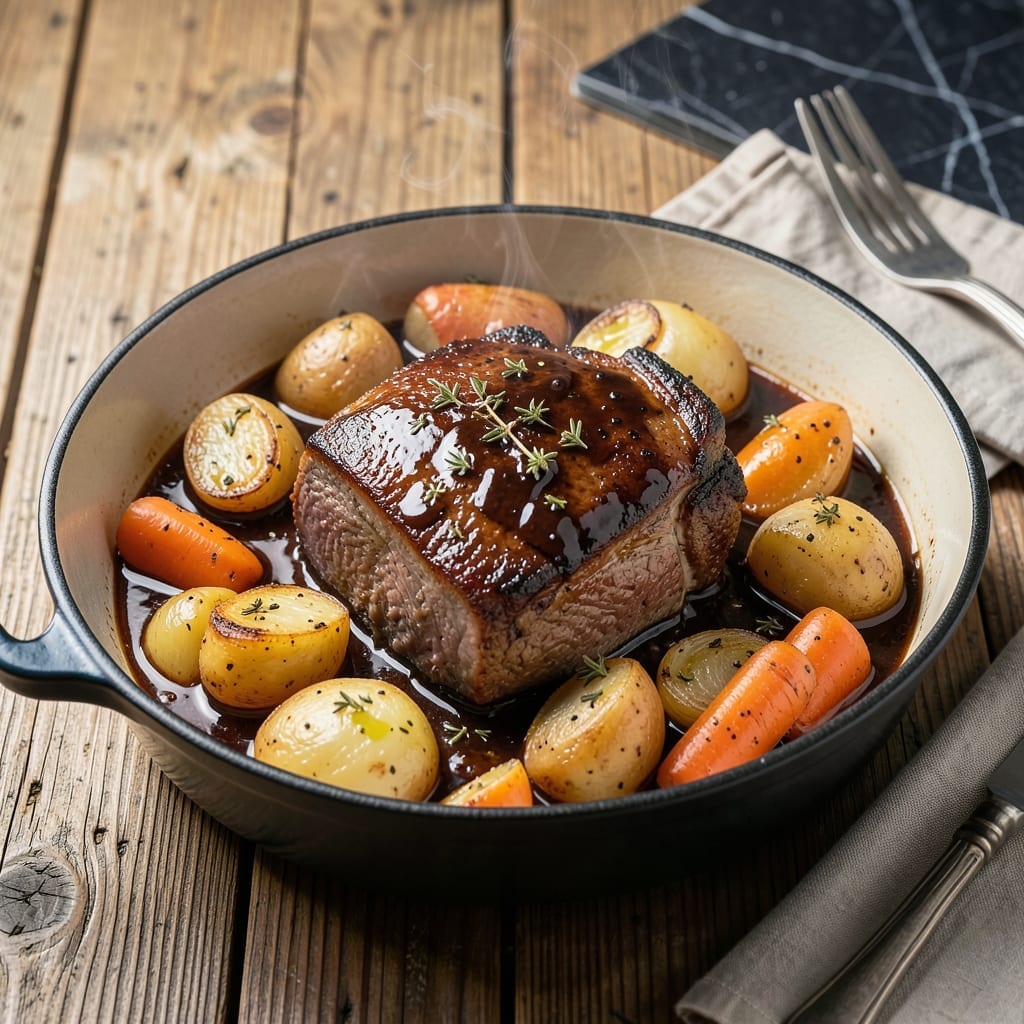
There’s a reason this pot roast recipe has become my go-to for Sunday dinners. The balsamic vinegar transforms the braising liquid into a rich, deeply flavorful sauce that clings to every bite of tender beef.
Using a Dutch oven ensures even heat distribution, allowing the meat to cook low and slow until fork-tender. Caramelized onions add natural sweetness that balances the vinegar’s tang, creating a sauce that’s both savory and complex.
This method guarantees juicy, fall-apart meat with vegetables that soak up every drop of flavor. The aroma alone will have everyone gathering in the kitchen before it’s even done.
Perfect for feeding a crowd or meal prepping for the week ahead.
Ingredients for Pot Roast Recipe with Balsamic Vinegar
Rich, tender beef and caramelized vegetables braise in a Dutch oven for Sunday dinner perfection.
| Ingredient | Amount | Notes |
|---|---|---|
| Chuck Roast 🥩 | 3 lb | Well-marbled, boneless preferred |
| Balsamic Vinegar 🍷 | ½ cup | Aged for depth of flavor |
| Yellow Onions 🧅 | 3 whole | Large, thinly sliced for caramelizing |
| Carrots 🥕 | 4 whole | Peeled, cut into chunks |
| Russet Potatoes 🥔 | 1 ½ lb | Peeled, quartered |
| Beef Broth 🥘 | 2 cups | Low-sodium preferred |
| Tomato Paste 🍅 | 2 tbsp | Concentrated for richness |
| Garlic Cloves 🧄 | 6 cloves | Minced for even distribution |
| Fresh Thyme Sprigs 🌿 | 4 pieces | Stems removed, leaves chopped |
| Fresh Rosemary Sprigs 🌿 | 2 pieces | Stems removed, leaves chopped |
| Bay Leaves 🍃 | 2 pieces | Dried, whole |
| Olive Oil 🫒 | 2 tbsp | Extra-virgin for searing |
| Kosher Salt 🧂 | 1 ½ tsp | Diamond Crystal preferred |
| Black Pepper 🌶️ | 1 tsp | Freshly ground for best flavor |
The chuck roast is non-negotiable for this dish—its high fat content renders down beautifully during the long braise, creating that fork-tender texture. Whole Foods or Costco carry well-marbled cuts, but any grocery store with a good butcher counter will work. Look for beef that’s bright red with visible fat streaks. The balsamic vinegar should be aged at least 12 years for the right balance of sweetness and acidity.
No chuck roast? Short ribs or brisket offer similar richness, though cooking times may vary. Swap yellow onions for sweet onions if you prefer a milder caramelized flavor. Fire-roasted tomatoes can replace tomato paste in a pinch—use about 1 cup and reduce broth slightly. Fresh herbs are ideal, but dried at one-third the amount works if that’s what’s on hand.
This pot roast tastes even better the next day—store in the fridge for up to 4 days or freeze for 3 months. Reheat gently on the stove to preserve texture. The braising liquid also makes an incredible base for soups or stews later in the week.
Why You’ll Love This Recipe
- Set It and Forget: I toss everything in one pot and let the oven do the work—no babysitting required.
- Balsamic Richness: That deep, tangy glaze from the vinegar turns the chuck roast into melt-in-your-mouth magic.
- Feeds the Whole Crew: Perfect for Sunday dinner with the family or meal prepping lunches for the week.
- Leftovers for Days: Honestly, it tastes even better the next day and stretches to at least three more meals.
Step-by-Step Instructions for Dutch Oven Pot Roast With Balsamic Vinegar
Master these techniques for fall-apart tender meat with rich, caramelized depth in every bite.
Step 1: Sear and Season the Chuck Roast
Pat the 3 lb chuck roast thoroughly dry with paper towels—this ensures a proper sear rather than steaming. Season generously on all sides with the 1.5 tsp kosher salt and 1 tsp black pepper, pressing the seasoning into the meat for adhesion.
Heat the 2 tbsp olive oil in a Dutch oven over medium-high heat until shimmering. Add the chuck roast and sear undisturbed for 4-5 minutes per side until a deep, mahogany crust forms. This creates the flavor foundation for the entire dish through the Maillard reaction.
Transfer the seared roast to a plate and set aside. The fond (browned bits) left in the pot will dissolve into the braising liquid, adding incredible depth to the finished sauce.
Step 2: Caramelize the Onions and Build the Base
In the same Dutch oven, add the 3 whole yellow onions (thinly sliced) to the hot fat. Cook over medium heat for 10-12 minutes, stirring occasionally, until they turn deep golden brown and begin to caramelize at the edges.
Add the 6 cloves garlic cloves (minced), 2 tbsp tomato paste, and 0.5 cup balsamic vinegar. Stir constantly for 2-3 minutes until the tomato paste darkens and the vinegar reduces by half. This step intensifies the umami and sweet-tart complexity of the braising liquid.
The mixture should become thick and glossy, coating the back of a spoon. If it begins to stick, deglaze with a splash of the 2 cups beef broth to prevent burning.
Step 3: Deglaze and Add Aromatics
Pour in the remaining 2 cups beef broth, using a wooden spoon to scrape up all the browned bits from the bottom of the pot. Add the 4 pieces fresh thyme sprigs, 2 pieces fresh rosemary sprigs, and 2 pieces bay leaves.
Return the seared chuck roast to the Dutch oven along with any accumulated juices. Add the 4 whole carrots (peeled, cut into chunks) and 1.5 lb russet potatoes (peeled, quartered), arranging them around the meat. The liquid should come about halfway up the roast.
Bring the mixture to a gentle simmer over medium-high heat, then immediately reduce to low heat to maintain a slow, steady bubble. This controlled temperature ensures the meat breaks down without toughening.
Step 4: Braise to Perfection
Cover the Dutch oven and transfer it to a preheated 325°F oven. Braise undisturbed for 3 to 3.5 hours, or until the chuck roast is fork-tender and easily shreds with a gentle twist of the fork.
Check the dish at the 2.5-hour mark—if the liquid is reducing too quickly, add a small amount of hot water to maintain the braising environment. The onions should be jammy, and the carrots and potatoes should be tender but not mushy.
The balsamic vinegar will have mellowed into a rich, tangy glaze that coats the vegetables and meat. This transformative process is what gives the dish its signature depth.
Remove the pot from the oven and let the roast rest in the braising liquid for 15 minutes before serving. This allows the juices to redistribute, ensuring every slice is moist and flavorful.
Pro Tips For Making Pot Roast Recipe With Balsamic Vinegar
- Sear the Chuck: Brown the chuck roast in batches—about 4-5 minutes per side in a screaming hot Dutch oven. I learned this the hard way: crowding the pan steams the meat instead of searing it, and you lose that deep, caramelized crust that makes the balsamic vinegar really sing.
- Reduce the Balsamic: Simmer the balsamic vinegar for 3-4 minutes before adding it to the pot. Sounds fussy, but it mellows the sharpness and thickens it just enough to cling to the roast and veggies.
- Skip the Small Potatoes: Cut the russet potatoes into 2-inch chunks—any smaller and they’ll turn to mush before the roast is tender. My grandmother swore by this, and she was right: big pieces hold their shape and soak up the balsamic braising liquid like little flavor sponges.
- Wait to Add Carrots: Toss the carrots in during the last hour of cooking. After burning a few batches to sludge, I finally figured out they turn bitter and mushy if they cook the whole time with the acidic balsamic.
Health Benefits of This pot roast recipe with balsamic vinegar
Rich in Protein
This dish delivers a substantial 60-70 grams of protein per serving from the chuck roast, supporting muscle repair and immune function. The slow cooking preserves all the amino acids your body needs for sustained energy throughout the day. 💪
Iron and Zinc Boost
Beef is one of the best sources of heme iron, with a 3 lb roast providing about 30% of your daily iron needs per serving. It also contains zinc, crucial for immune health and metabolism.
Balsamic’s Antioxidants
Aged balsamic vinegar brings polyphenols that act as antioxidants, protecting your cells from damage. The 0.5 cup in this recipe contributes to heart health and may help regulate blood sugar levels.
Vegetable Nutrition
The carrots provide beta-carotene (converted to vitamin A), while the onions offer quercetin, a flavonoid with anti-inflammatory properties. Together they add fiber and essential vitamins to the meal.
Bone Health Support
The combination of beef and vegetables offers calcium, phosphorus, and vitamin K—all vital for maintaining strong bones. The potatoes add a healthy dose of potassium too.
Low-Carb Friendly
Each serving contains approximately 15-20g net carbs, mostly from the vegetables. I often reduce the potatoes by half to make it even more keto-friendly without sacrificing flavor. 🥗
Nutrition Facts
Frequently Asked Questions
Can I use a different type of vinegar?
Red wine vinegar works well as a substitute, though it has a sharper taste. Use the same 0.5 cup amount but consider adding a touch of honey to balance the acidity.
How do I know when the pot roast is done?
The meat should pull apart easily with a fork after 3 to 3.5 hours at 325°F. For extra certainty, use a meat thermometer—it should read 195-205°F internally.
Can I make this in a slow cooker?
Yes! Sear the roast first, then transfer everything to a slow cooker. Cook on low for 8-10 hours or high for 5-6 hours. The flavors will develop beautifully.
What if my sauce is too thin?
Remove the meat and vegetables, then simmer the liquid on the stovetop for 10-15 minutes to reduce. For extra thickness, mix 1 tablespoon cornstarch with cold water and stir in.

- Potato Patty Recipe No Egg: Crispy Edges Without the Binder - October 30, 2026
- Paula Deen’s Potato Chip Cookies Recipe: Salty-Sweet Crunch in Every Bite - October 30, 2026
- Potato Gnocchi Recipe Ideas: Pillowy Soft Dumplings With Rustic Charm - October 30, 2026