
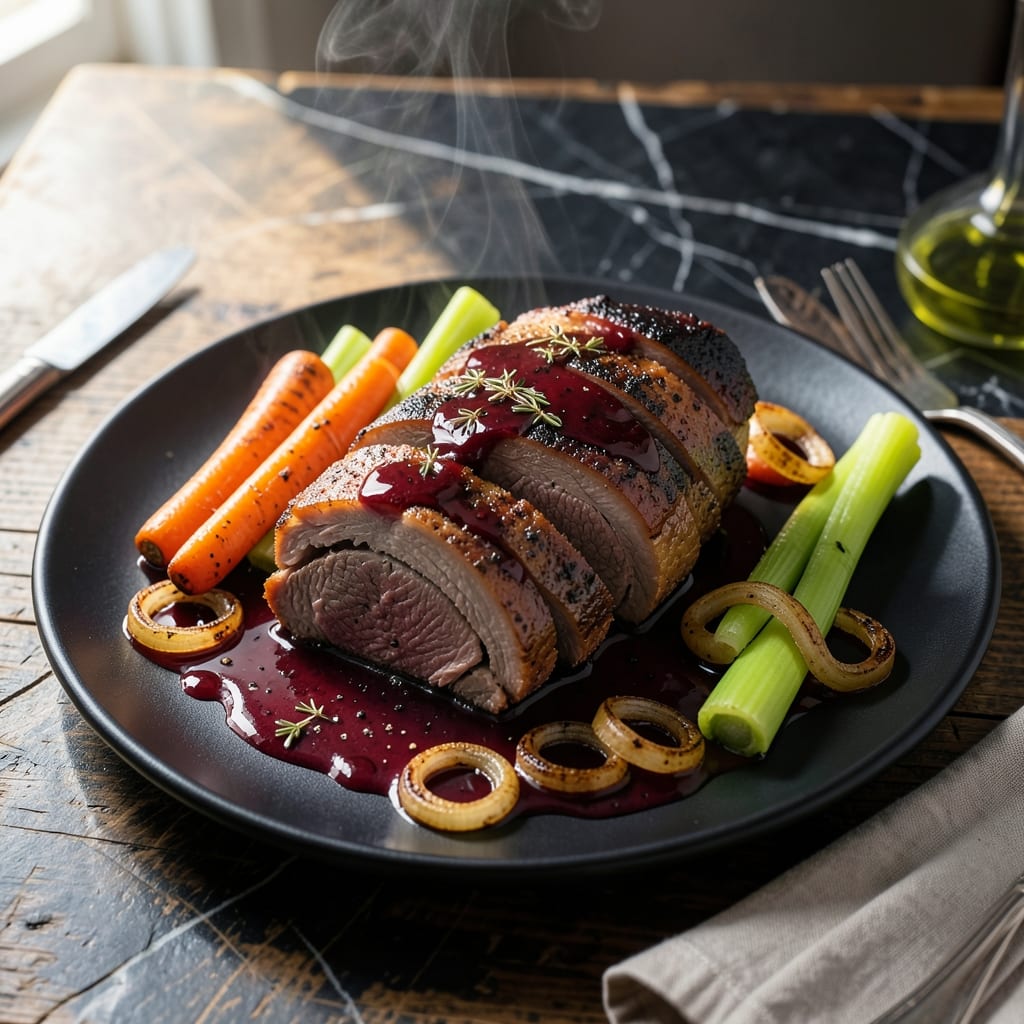
There’s a reason pot roast remains a Sunday dinner classic—this version elevates the standard with red wine vinegar for unexpected depth. The slow cook transforms tough cuts into fall-apart tender perfection.
The Dutch oven method locks in moisture while allowing flavors to concentrate. Herbs and vinegar create a complex sauce that soaks into every bite. It’s comfort food with restaurant-quality results.
You’ll start with a simple sear to develop rich browning, then let time work its magic. The vinegar’s acidity balances the meat’s richness without overpowering it.
Serve with crusty bread to soak up every drop of the savory sauce. Here’s how to make this tender masterpiece.
Ingredients for Pot Roast Recipe with Red Wine Vinegar
A well-marbled chuck roast and a handful of aromatics build the foundation for this Dutch oven masterpiece.
| Ingredient | Amount | Notes |
|---|---|---|
| Beef Chuck Roast 🥩 | 3 lb | Well-marbled, trimmed of excess fat |
| Red Wine Vinegar 🍷 | ¼ cup | For balancing richness and depth |
| Olive Oil 🫒 | 2 tbsp | For searing the roast |
| Yellow Onion 🧅 | 1 whole | Large, roughly chopped |
| Carrots 🥕 | 3 whole | Peeled and cut into chunks |
| Celery Stalks 🥬 | 3 whole | Cut into large pieces |
| Garlic Cloves 🧄 | 6 cloves | Smashed, peeled |
| Dry Red Wine 🍷 | 1 cup | Bold and dry variety |
| Beef Stock 🥣 | 2 cups | Low-sodium preferred |
| Tomato Paste 🍅 | 2 tbsp | For depth and umami |
| Fresh Thyme 🌿 | 4 pieces | Sprigs, leaves stripped |
| Fresh Rosemary 🍃 | 2 pieces | Sprigs, leaves stripped |
| Bay Leaves 🍂 | 2 whole | Dried, for aromatic depth |
| Kosher Salt 🧂 | 2 tsp | Diamond Crystal preferred |
| Black Pepper 🌶️ | 1 tsp | Freshly ground for best flavor |
The beef choice is critical. Chuck roast with visible marbling yields the most tender results—avoid leaner cuts like round or sirloin. Source from Whole Foods or a trusted butcher for consistent quality. The red wine vinegar adds the signature depth, so opt for a robust variety. Colavita or Lucini offer excellent options at most grocery stores.
No red wine vinegar? Balsamic vinegar at half the amount provides similar complexity. For the wine, a bold Cabernet Sauvignon or Merlot works perfectly (no need for cooking wine). Fresh herbs are ideal, but dried at one-third the quantity will suffice. If beef stock is unavailable, vegetable stock plus a splash of soy sauce mimics the umami.
The roast can be prepped a day ahead—pat dry, season, and refrigerate overnight for enhanced flavor. Leftovers keep for 4-5 days refrigerated or freeze for 3 months. Always slice against the grain for maximum tenderness when serving.
Why You’ll Love This Recipe
- One roast feeds us twice: sandwiches the next day taste even better, and the broth? Gold for quick soups.
- Set and Forget: It’s just sear, dump, and let the oven do the work—no stirring, no fuss, just a chuck roast, vinegar, and veggies turning into magic while I do laundry.
- Tangy Depth: That splash of red wine vinegar cuts through the richness and gives the beef this bright, almost jammy flavor against the sweet carrots and onions.
- Sunday or Tuesday: I’ve served it for company and also scarfed it straight from the pot on a random Wednesday—works both ways.
Step-by-Step Instructions for Pot Roast With Red Wine Vinegar
This method transforms tough beef into fork-tender perfection with rich, layered flavors.
Step 1: Sear the Beef Chuck Roast
Heat the 2 tbsp olive oil in a Dutch oven over medium-high heat until shimmering. Pat the 3 lb beef chuck roast completely dry with paper towels—this ensures a proper sear rather than steaming. Season all sides generously with the 2 tsp kosher salt and 1 tsp black pepper.
Carefully place the roast in the hot oil and sear for 4-5 minutes per side until deeply browned. Don’t rush this step; a dark crust develops the Maillard reaction that underpins the dish’s depth. You’ll know it’s ready to flip when it releases easily from the pan. Transfer the seared roast to a plate and set aside.
Step 2: Sauté the Aromatics
In the same Dutch oven, reduce heat to medium and add the roughly chopped 1 whole yellow onion, 3 whole carrots, and 3 whole celery stalks. Cook for 5-6 minutes, stirring occasionally, until the vegetables begin to soften and brown slightly around the edges.
Add the 6 cloves garlic cloves, 2 tbsp tomato paste, 4 pieces fresh thyme, 2 pieces fresh rosemary, and 2 whole bay leaves. Stir constantly for 1-2 minutes until the tomato paste darkens slightly—this builds a flavor foundation. Be careful not to let the garlic burn.
Step 3: Deglaze and Braise
Pour in the 1 cup dry red wine and 0.25 cup red wine vinegar, using a wooden spoon to scrape up all the browned bits from the bottom of the pan. This step lifts all the caramelized flavors into the braising liquid. Let the mixture simmer for 3-4 minutes until reduced by about half.
Return the seared roast to the Dutch oven along with any accumulated juices. Pour in the 2 cups beef stock—it should come about halfway up the roast. Bring the liquid to a gentle simmer, then reduce heat to low, cover, and let it braise for 2.5-3 hours, turning the roast occasionally.
Step 4: Finish and Serve
The pot roast is done when it shreds easily with a fork and the internal temperature reaches 195-200°F. At this point, the collagen in the beef chuck roast has fully broken down, yielding that melting tenderness promised in the title.
Remove the roast and strain the braising liquid if you prefer a smoother sauce, or leave the vegetables in for a rustic presentation. Skim off any excess fat from the surface, then adjust seasoning with additional kosher salt and black pepper if needed. Serve the pot roast with the vegetables and sauce, ensuring each portion is generously moistened with the rich, herbed braising liquid.
Pro Tips For Making Pot Roast Recipe With Red Wine Vinegar
- Sear the Chuck: I learned this the hard way—skipping the sear leaves your pot roast bland and pale. Crank the heat to medium-high and give each side of the beef a solid 3-4 minutes in olive oil until deeply browned.
- Deglaze with Vinegar: After pulling the meat out, pour in 1/4 cup red wine vinegar and scrape the bottom of the pot. Those browned bits dissolve into the liquid, adding layers of flavor you can’t get otherwise.
- Don’t Crowd the Veggies: Sounds weird but it works: cut carrots and onions into uniform, 2-inch chunks so they cook evenly. If you pile them in, they’ll steam instead of caramelize.
- Use a Meat Thermometer: My grandmother swore by this, and she was right: pull the roast at 195°F internal temp for fall-apart tenderness. Guessing by time alone usually overcooks it.
Troubleshooting This Recipe
Tough Meat Issues
If your roast isn’t tender after 3 hours, the liquid level might be too low. Add 1 cup hot beef stock and continue cooking. Also check that your oven maintains a steady 300°F—temperature fluctuations prevent proper collagen breakdown. 🌡️
Sauce Too Thin
Uncover the Dutch oven and simmer the braising liquid for 10-15 minutes to reduce. For faster results, transfer the sauce to a saucepan and boil. A cornstarch slurry (1 tbsp cornstarch + 1 tbsp water) works in a pinch.
Overly Sour Flavor
The red wine vinegar can dominate if reduced too much. Balance with a pinch of brown sugar or 1 tsp honey. If the vinegar taste is sharp, add ½ cup more beef stock to dilute the acidity.
Vegetables Mushy
To keep carrots and celery intact, add them 1 hour before the roast finishes. Alternatively, roast them separately at 400°F for 20 minutes and add just before serving. This preserves texture while soaking up flavor.
Sauce Too Greasy
After cooking, refrigerate the sauce for 30 minutes—the fat will solidify on top for easy removal. Or skim with a ladle while the sauce is warm. Avoid vigorously stirring, which emulsifies the fat back into the liquid. 💡
Bland Flavor
Boost depth with 1 tbsp soy sauce or Worcestershire sauce for umami. Fresh herbs at the end brighten the dish. Taste and adjust seasoning with kosher salt and black pepper before serving.
Nutrition Facts
Frequently Asked Questions
What cut works best for this method?
Use chuck roast with good marbling for the most tender results. Lean cuts like round or sirloin won’t break down as well during the long braise. A well-marbled 3 lb piece is ideal.
Can I make this in a slow cooker?
Yes! Sear the roast first, then transfer everything to a slow cooker. Cook on low for 8-10 hours or high for 5-6 hours. The flavor will be slightly different but still delicious.
Why does the vinegar not taste overly sour?
The 0.25 cup balances the richness and reduces during cooking. The wine and stock further mellow the acidity, creating depth without sharpness.
How do I know when it’s done?
The meat should shred easily with a fork and reach 195-200°F internally. If it resists, give it more time—collagen needs 2.5-3 hours to fully break down.

- Potato Patty Recipe No Egg: Crispy Edges Without the Binder - October 30, 2026
- Paula Deen’s Potato Chip Cookies Recipe: Salty-Sweet Crunch in Every Bite - October 30, 2026
- Potato Gnocchi Recipe Ideas: Pillowy Soft Dumplings With Rustic Charm - October 30, 2026