
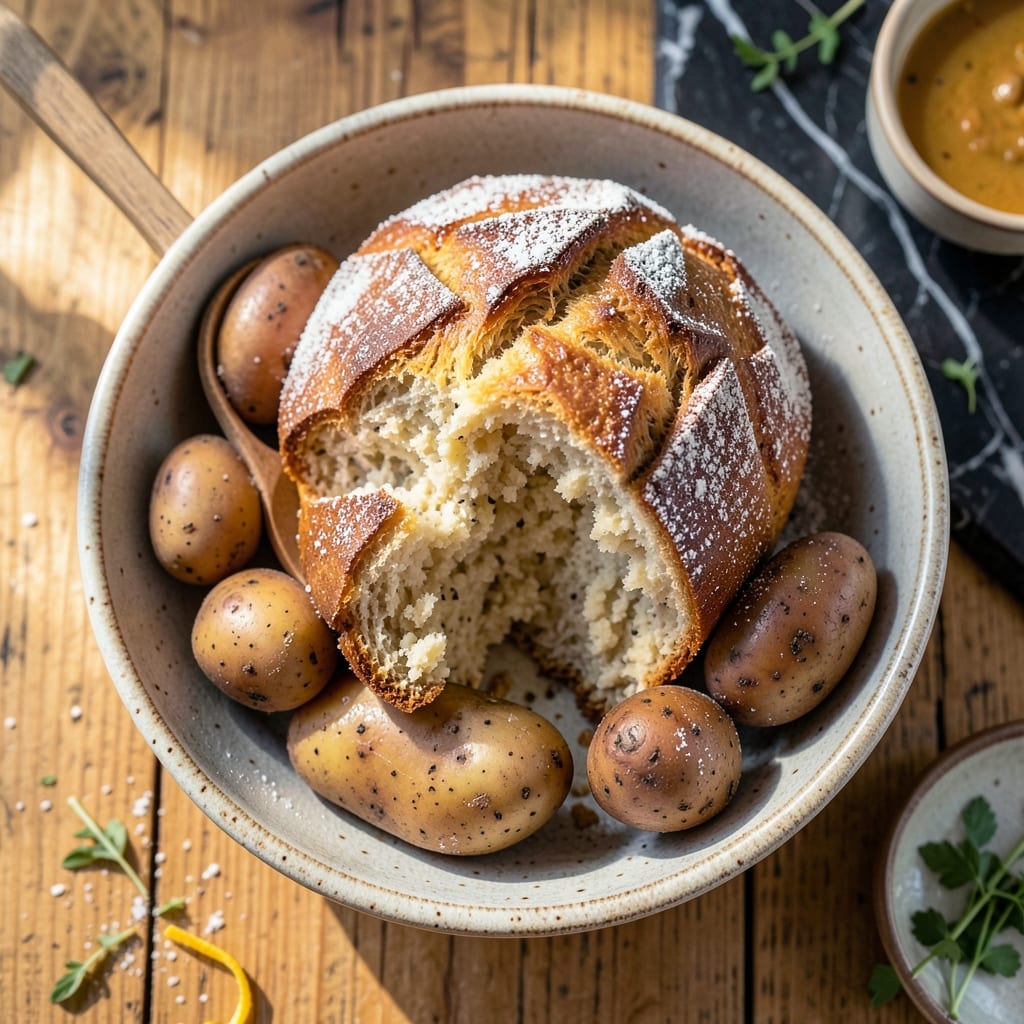
I discovered this no-yeast potato bread while adapting my grandmother’s Sicilian recipes for modern kitchens.
This method uses baking powder instead of yeast, delivering soft, pillowy bread without the wait. The potatoes create a tender crumb that’s both hearty and light.
What you’ll love most is the simplicity—just mix, shape, and bake. No rising time, no fuss, just warm bread ready in under an hour.
Serve it fresh from the oven with butter or as a side to any meal. This is bread-making at its most accessible.
Ingredients for Potato Bread Recipe No Yeast
Pantry staples plus a couple potatoes. Nothing complicated, just good old-fashioned bread.
| Ingredient | Amount | Notes |
|---|---|---|
| Russet Potatoes 🥔 | 2 whole | Medium-sized, peeled and cubed |
| All-Purpose Flour 🌾 | 4 cups | Plus extra for dusting |
| Baking Powder 🧂 | 2 ½ tsp | Ensures proper rise |
| Salt 🧂 | 1 ½ tsp | Fine sea salt preferred |
| Granulated Sugar 🍚 | 2 tbsp | Balances the flavor |
| Large Eggs 🥚 | 2 whole | Room temperature preferred |
| Whole Milk 🥛 | 1 cup | Warm for best texture |
| Unsalted Butter 🧈 | 4 tbsp | Melted and cooled |
| Olive Oil 🫒 | 2 tbsp | For greasing the bowl |
| Fresh Rosemary 🌿 | 1 tbsp | Chopped finely (optional) |
The potatoes are the soul here. Russets give the fluffiest texture, but Yukon Golds work if that’s what you’ve got. Most grocery stores carry them year-round. I grab mine from Whole Foods when I’m already there for other staples. Boil them until fork-tender—don’t overcook or they’ll get waterlogged and ruin the dough’s consistency.
No Russets? Sweet potatoes add a nice twist (use the same amount). Out of fresh rosemary? Dried at one-third the amount or skip it entirely—this bread shines without herbs. If you’re avoiding dairy, swap the milk for oat milk and use vegan butter. The eggs help with structure, but I’ve had luck with flax eggs in a pinch (1 tbsp ground flax + 3 tbsp water per egg).
Dough keeps in the fridge for 2 days if you want to prep ahead. Baked loaves stay fresh wrapped at room temp for 3 days, or freeze for up to 3 months. Slice before freezing for easy toasting later.
Why You’ll Love This Recipe
- No Yeast Needed: I love that there’s no waiting for dough to rise—just mix, shape, and bake.
- Soft and Slightly Sweet: The mashed Russets give it a tender crumb, while the sugar adds just the right touch.
- Feeds a Crowd: One batch makes two loaves, so it’s ideal for Sunday suppers or potlucks.
- Budget Baking: Russet potatoes and basic pantry staples keep the cost low, but the taste is anything but cheap.
Step-by-Step Instructions for Potato Bread No Yeast
Here’s the simple method for creating this no-fuss bread with perfect texture every time.
Step 1: Prepare and Cook the Russet Potatoes
Peel and cube the 2 whole Russet Potatoes into even, 1-inch pieces. This ensures they cook uniformly and mash smoothly later. Place them in a pot of cold, salted water and bring to a boil over medium-high heat.
Cook for 12-15 minutes until the potatoes are fork-tender—a knife should slide in with no resistance. Drain immediately and return them to the pot. Mash until completely smooth with no lumps, then let them cool to room temperature. Warm potatoes can melt the butter prematurely.
Step 2: Mix the Dry Ingredients
In a large bowl, whisk together the 4 cups All-Purpose Flour, 2.5 tsp Baking Powder, 1.5 tsp Salt, and 2 tbsp Granulated Sugar. This step aerates the flour and ensures the leavening agent is evenly distributed for a consistent rise.
If you’re using the 1 tbsp Fresh Rosemary, chop it finely and add it now. The herbs will infuse the dough with a subtle, aromatic flavor as it bakes. Set this mixture aside while you prepare the wet ingredients.
Step 3: Combine Wet Ingredients with Mashed Potatoes
In a separate bowl, beat the 2 whole Large Eggs lightly, then whisk in the 1 cup Whole Milk and 4 tbsp Unsalted Butter (melted and cooled). Add the cooled mashed potatoes and mix until fully incorporated. The potatoes add moisture and a tender crumb to the bread.
Pour the wet mixture into the dry ingredients and stir with a wooden spoon until just combined. The dough will be sticky and slightly shaggy—that’s exactly what you want. Overmixing can develop gluten, making the bread dense instead of pillowy.
Step 4: Knead, Rise, and Shape the Dough
Turn the dough out onto a lightly floured surface and knead gently for 2-3 minutes. Use just enough of the extra flour to prevent sticking, but avoid adding too much. The dough should remain soft and slightly tacky to the touch.
Grease a large bowl with 2 tbsp Olive Oil, place the dough inside, and turn to coat it lightly. Cover with a clean kitchen towel and let it rise in a warm place for 45-60 minutes, or until nearly doubled in size. This step ensures a light, airy texture without yeast.
Step 5: Bake to Golden Perfection
Preheat your oven to 375°F. Shape the dough into a round loaf and place it on a parchment-lined baking sheet. Use a sharp knife to make a shallow X on the top for even expansion.
Bake for 30-35 minutes until the bread is golden brown and sounds hollow when tapped on the bottom. If the top browns too quickly, tent loosely with foil. Transfer to a wire rack and let it cool for 15 minutes before slicing to allow the crumb to set.
Pro Tips For Making Potato Bread Recipe No Yeast
- Rice the Potatoes: Use a ricer for the cooked Russets—it gives the lightest texture and prevents gummy bread. I learned this the hard way after mashing by hand and getting dense loaves.
- Warm the Milk: If your recipe includes milk, heat it to about 110°F before mixing. Cold liquid can make the dough tough, and nobody wants a brick for bread.
- Don’t Overmix: Stir the dough just until the flour disappears. Overworking it develops gluten, and without yeast, you’ll end up with a chewy, flat loaf.
- Check Baking Powder: Make sure it’s fresh—baking powder loses potency over time. A quick test: drop a teaspoon in hot water. If it fizzes, it’s good to go.
Common Mistakes When Making Perfect Results
Overworking the Dough
This is the most common mistake I see with no-yeast breads. Mix until just combined, then stop. Over-kneading develops gluten, turning your soft bread into a dense brick. 2-3 minutes of gentle kneading is all you need. 💪
Potato Temperature
Always let your mashed potatoes cool completely before mixing. Hot potatoes will melt the butter, creating a greasy dough that won’t hold its shape. I learned this the hard way in my grandmother’s kitchen.
Incorrect Leavening
Baking powder is your rising agent here, not yeast. Using expired baking powder is like using no leavening at all. I always check my 2.5 tsp is fresh by dropping a bit in hot water—it should bubble vigorously.
Over-flouring Surface
Too much flour while kneading makes tough bread. Use just enough to prevent sticking—about 2-3 tbsp total. The dough should remain slightly tacky, not dry.
Skipping the Rise
Even without yeast, this bread needs 45-60 minutes to rise. The baking powder creates air pockets during this time. I set mine near the warm oven to speed it up slightly.
Premature Slicing
Cutting too soon causes crumbling. Always let your loaf cool for 15 minutes on a wire rack. This allows the structure to set properly, just like Nonna taught me. 🍞
Nutrition Facts
Frequently Asked Questions
What if I don’t have baking powder?
Use 1 tsp baking soda + 1 tbsp lemon juice or vinegar per 1 tsp baking powder needed. This creates the same leavening effect for your bread.
Can I use sweet potatoes instead?
Replace Russets with the same amount of cooked sweet potatoes. They’ll add natural sweetness and a slightly denser texture.
Why did my bread turn out dense?
This usually happens from over-kneading or using too much flour. Stick to 2-3 minutes of gentle kneading and minimal extra flour.
How do I know when it’s done?
Bake until golden brown and it sounds hollow when tapped. For precision, use a thermometer—internal temp should reach 190-200°F.

- Potato Patty Recipe No Egg: Crispy Edges Without the Binder - October 30, 2026
- Paula Deen’s Potato Chip Cookies Recipe: Salty-Sweet Crunch in Every Bite - October 30, 2026
- Potato Gnocchi Recipe Ideas: Pillowy Soft Dumplings With Rustic Charm - October 30, 2026