
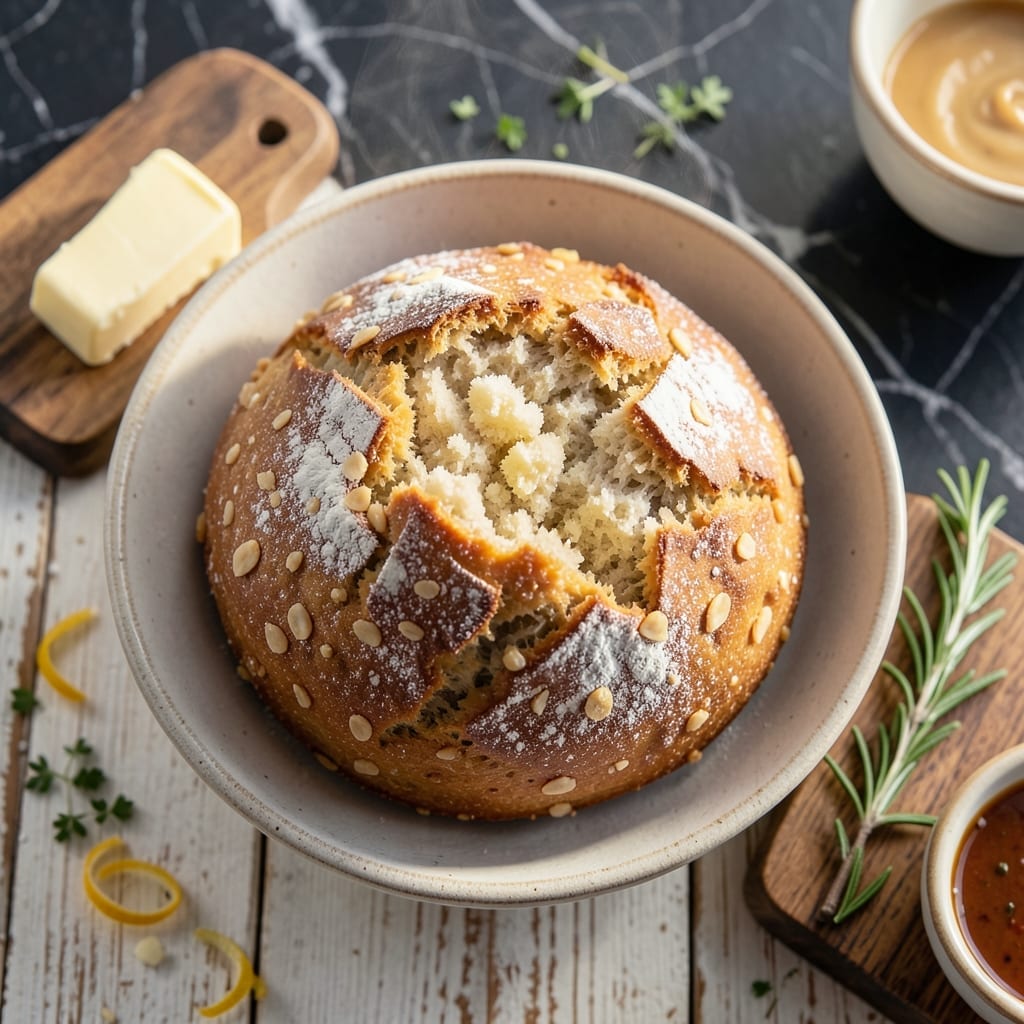
There’s something special about homemade bread with a moist crumb and rustic texture. This recipe delivers exactly that, using a simple ingredient you likely already have on hand.
The secret lies in the potato flakes, which add natural sweetness and help retain moisture without making the bread dense. The process is straightforward, with a hands-off rise time that fits easily into your day.
You’ll end up with a golden loaf that stays moist for days, perfect for sandwiches or toast. The texture is tender yet sturdy, with just the right amount of chew.
This method proves that exceptional bread doesn’t require special equipment or complicated techniques. The results speak for themselves.
Ingredients for Potato Bread Recipe Using Potato Flakes
Simple pantry staples plus potato flakes for that signature moist, tender crumb everyone loves.
| Ingredient | Amount | Notes |
|---|---|---|
| Instant Potato Flakes 🥔 | ¾ cup | Unsalted, for moisture retention |
| Bread Flour 🌾 | 4 ½ cups | Plus extra for dusting |
| Warm Water 💧 | 1 ¼ cups | 110-115°F for yeast activation |
| Active Dry Yeast 🍞 | 2 ¼ tsp | One packet plus extra |
| Granulated Sugar 🍚 | 2 tbsp | Feeds the yeast |
| Salt 🧂 | 1 ½ tsp | Fine sea salt preferred |
| Unsalted Butter 🧈 | 2 tbsp | Melted and cooled |
| Whole Milk 🥛 | ½ cup | Warmed to 110°F |
| Large Egg 🥚 | 1 whole | Room temperature |
| Honey 🍯 | 1 tbsp | For subtle sweetness |
| Olive Oil 🫒 | 1 tbsp | For greasing the bowl |
The potato flakes are the secret weapon. Idahoan brand is my go-to—consistent texture, no weird additives. Find them near the mashed potato mixes at any grocery store. Bread flour is non-negotiable here (the higher protein gives structure), but if you’re stuck, all-purpose plus 1 tbsp vital wheat gluten per cup gets you close. Always check your yeast’s expiration—old yeast is a sad loaf.
No potato flakes? Mashed real potatoes at half the volume (cooled completely, no lumps). Out of bread flour? All-purpose in a pinch, but expect a slightly denser crumb. Milk swapped for water? Use powdered milk plus water—1/4 cup powder to 1 cup water. The honey can be maple syrup or sugar, but honey’s moisture helps keep things soft longer.
The dough rises beautifully at room temp—give it 1-2 hours or until doubled. Baked loaves stay moist for 3-4 days wrapped in foil. Freeze slices for up to 3 months (toast straight from frozen). Pro tip: slice before freezing for easy grab-and-go breakfast.
Why You’ll Love This Recipe
- No-Fuss Dough: Honestly, mixing potato flakes with warm water and yeast feels like cheating—it comes together faster than my morning coffee.
- That Golden Crust: The sugar caramelizes just enough to give it a subtle sweetness with a crisp edge, while the inside stays pillowy soft.
- Meal Prep Hero: I bake two loaves on Sunday—one for fresh sandwiches, one sliced and frozen for emergency grilled cheese nights.
- Pantry Savior: Between us, a bag of potato flakes costs pennies and turns basic bread flour into something special without a grocery run.
Step-by-Step Instructions for Potato Bread Using Potato Flakes
This method delivers that promised moist crumb with rustic texture you’re after.
Step 1: Activate the Yeast and Bloom the Potato Flakes
In a stand mixer bowl, combine the 1.25 cups Warm Water, 2 tbsp Granulated Sugar, and 2.25 tsp Active Dry Yeast. Let this sit for 5-7 minutes until the mixture becomes foamy with a distinct yeast aroma.
While the yeast activates, pour the 0.5 cup Whole Milk into a microwave-safe bowl and warm it to 110°F. Stir in the 0.75 cup Instant Potato Flakes and let them sit for 2 minutes to absorb the liquid and soften—the mixture should look like thick mashed potatoes.
Step 2: Combine Wet Ingredients and Develop the Dough
Add the bloomed potato mixture to the yeast along with the 2 tbsp Unsalted Butter, 1 whole Large Egg, and 1 tbsp Honey. Use the dough hook attachment and mix on low speed until just combined.
Gradually add the 4.5 cups Bread Flour and 1.5 tsp Salt, mixing on medium-low speed for 6-8 minutes. The dough should pull away from the bowl and be smooth but slightly tacky—don’t add extra flour unless it’s sticking badly.
Step 3: First Rise Until Doubled in Volume
Lightly grease a large bowl with the 1 tbsp Olive Oil and transfer the dough into it. Cover with a damp towel and place in a warm, draft-free spot. Let it rise for 1 to 1.5 hours, or until it has nearly doubled in size.
The dough is ready when it springs back slowly when poked with a finger. If your kitchen is cool, this might take a bit longer—watch the dough, not the clock. This rise develops the gluten structure for that perfect rustic texture.
Step 4: Shape, Second Rise, and Bake to Golden Perfection
Punch down the risen dough to release the air, then turn it out onto a lightly floured surface. Shape it into a loaf and place it into a greased 9×5-inch loaf pan. Cover and let it rise again for 45-60 minutes, until it domes about 1 inch above the pan.
Preheat your oven to 375°F. Bake the loaf for 30-35 minutes, until the top is deep golden brown and the internal temperature reaches 190-200°F. If the top browns too quickly, tent it with foil.
Remove from the pan and let it cool on a wire rack for at least 20 minutes before slicing. This waiting period ensures the bread sets properly, giving you that moist, tender crumb with every bite.
Pro Tips For Making Potato Bread Recipe Using Potato Flakes
- Proof the Yeast: Always activate your yeast in the warm water with sugar first—if it doesn’t foam within 5 minutes, your loaf won’t rise. I learned this the hard way after wasting a batch of dough.
- Rehydrate Flakes Fully: Mix the potato flakes with warm water and let them sit for 5 minutes to absorb all the liquid. Sounds weird, but it works: this prevents dry spots in your bread.
- Skip Cold Ingredients: Make sure your water and even the potato flakes are at least room temperature. After burning three batches, I finally figured out cold ingredients kill yeast momentum.
- Add Extra Flour Slowly: Bread flour absorbs moisture differently with potato flakes—start with less, then add 1 tablespoon at a time until the dough pulls away from the bowl. My grandmother swore by this, and she was right.
Storing and Reheating This Recipe
Room Temperature Storage
Once completely cooled, wrap your loaf in aluminum foil or place it in a ziplock bag. It stays fresh at room temperature for 2-3 days. The potato flakes help maintain that signature moistness longer than regular bread. I keep mine on the counter in a cool, dark spot. ❄️
Refrigerator Storage
For longer freshness, store your bread in the fridge for up to 1 week. Slice it first and wrap each piece in plastic wrap before placing in a sealed container. This prevents the loaf from drying out while keeping it ready for quick toasting.
Freezer Storage
This bread freezes beautifully for up to 3 months. Wrap the whole loaf or individual slices tightly in plastic wrap, then in a freezer-safe bag. Squeeze out all air to prevent freezer burn. I always label mine with the date to keep track.
Toasting Method
For the best texture, toast slices directly from frozen. Use a toaster on medium setting for 2-3 minutes or a toaster oven at 350°F for 5-7 minutes. The result is warm, crispy edges with a soft, moist center. 🔥
Oven Reheating
To revive a whole loaf, wrap it in aluminum foil and warm in a 300°F oven for 10-15 minutes. Add a sprinkle of water before sealing the foil to restore moisture. This method works great for day-old bread.
Microwave Refresh
For a quick fix, wrap a slice in a damp paper towel and microwave for 15-20 seconds. The steam helps soften the crumb while keeping it from getting rubbery. I use this trick when I’m in a hurry for breakfast.
Nutrition Facts
Frequently Asked Questions
Can I use regular mashed potatoes instead of flakes?
Yes, substitute 1/2 cup mashed potatoes for the flakes. Cool completely and ensure no lumps remain to maintain smooth texture.
Why did my bread turn out dense?
Overworking the dough or using too much flour can cause this. Stick to 6-8 minutes kneading and only add extra flour if absolutely necessary.
Can I make this without a stand mixer?
Knead by hand for 10-12 minutes until smooth. The process takes more effort but yields the same rustic texture.
How do I know when it’s fully baked?
Use an instant-read thermometer: 190-200°F internally means it’s done. The top should be deep golden brown with a hollow sound when tapped.

- Potato Patty Recipe No Egg: Crispy Edges Without the Binder - October 30, 2026
- Paula Deen’s Potato Chip Cookies Recipe: Salty-Sweet Crunch in Every Bite - October 30, 2026
- Potato Gnocchi Recipe Ideas: Pillowy Soft Dumplings With Rustic Charm - October 30, 2026