
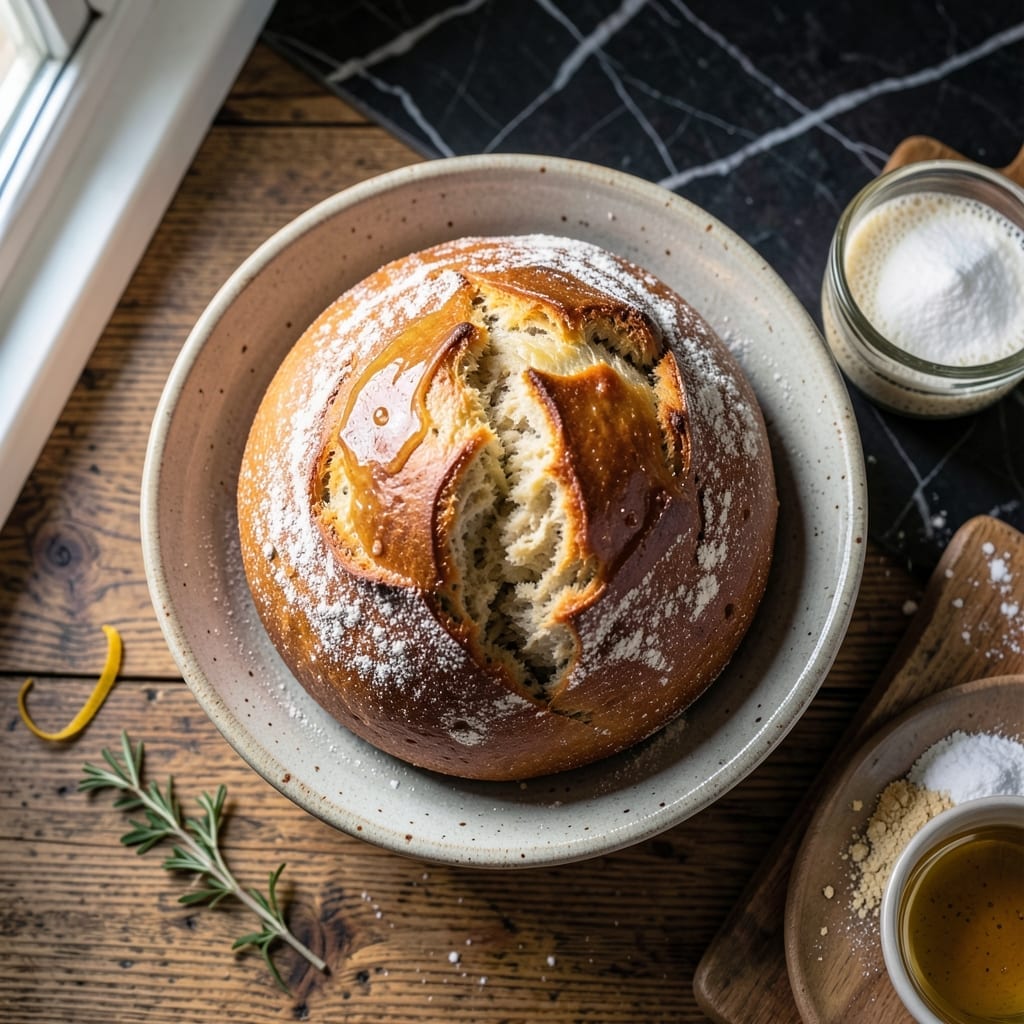
This potato bread delivers a soft, tender crumb with a hint of rustic earthiness that’s hard to resist.
Using potato flour creates a lighter texture while keeping the bread moist for days. The dough comes together easily with basic pantry staples and just a bit of patience for rising.
Once baked, you’ll have a golden loaf with a delicate crust and a flavor that’s subtly sweet and comforting. It’s perfect for sandwiches, toast, or simply enjoying on its own.
This recipe proves that homemade bread doesn’t have to be complicated to be delicious.
Ingredients for Potato Bread Recipe Using Potato Flour
Soft, tender bread starts with these simple pantry staples and a touch of potato flour.
| Ingredient | Amount | Notes |
|---|---|---|
| All-Purpose Flour 🌾 | 4 cups | Plus extra for dusting |
| Potato Flour 🥔 | ¾ cup | Not potato starch |
| Warm Water 💧 | 1 ¼ cups | About 110°F |
| Active Dry Yeast 🍞 | 2 ¼ tsp | One packet plus extra |
| Granulated Sugar 🍚 | 2 tbsp | To activate yeast |
| Salt 🧂 | 1 ½ tsp | Fine grain preferred |
| Unsalted Butter 🧈 | 2 tbsp | Softened, for dough |
| Whole Milk 🥛 | ½ cup | Warm, about 110°F |
| Large Egg 🥚 | 1 whole | Room temperature |
| Vegetable Oil 🫒 | 1 tbsp | For greasing bowl |
| Honey 🍯 | 1 tbsp | Optional for sweetness |
Potato flour is key here—Bob’s Red Mill is my go-to, but any brand from the baking aisle works. Don’t confuse it with potato starch (totally different texture). The yeast needs to be fresh, so check that expiration date. Most supermarkets carry it in the baking section (the little packets or jars). I grab mine from King Arthur Baking online when I’m stocking up.
No potato flour? Mashed potato flakes at half the amount can work in a pinch, but the texture won’t be quite as light. Out of whole milk? Any milk or even warm water will do—just don’t skip the butter. The honey’s optional but adds that subtle sweetness. For a richer loaf, swap water for more warm milk (use 1¾ cups total).
Dough rises best in a warm, draft-free spot—on top of the fridge works great. Baked loaf stays fresh for 3-4 days wrapped in foil at room temp, or freeze for up to 3 months. Slice before freezing for easy toast-ready portions.
Why You’ll Love This Recipe
- No-Knead Magic: I just mix, let it rise, and bake—potato flour does all the heavy lifting with the yeast.
- Subtle Sweetness: The sugar and potato flour give it a soft, slightly sweet crumb that’s irresistible warm from the oven.
- Meal Prep Hero: I bake a loaf on Sunday and it stays moist for days, perfect for sandwiches or toast.
- Pantry Friendly: All-purpose flour and potato flour are shelf-stable staples, so I can make this anytime without a grocery run.
Step-by-Step Instructions for Potato Bread Using Potato Flour
Here’s how I make this bread with that perfect soft texture and rustic flavor.
Step 1: Activate the Yeast and Mix Wet Ingredients
In a small bowl, combine the 1.25 cups Warm Water, 2.25 tsp Active Dry Yeast, and 2 tbsp Granulated Sugar. Stir gently and let it sit for 5-10 minutes until foamy and bubbly—this confirms your yeast is alive and active.
Meanwhile, warm the 0.5 cup Whole Milk to about 110°F (it should feel warm but not hot to the touch). In a large mixing bowl, whisk together the milk, 1 whole Large Egg, 2 tbsp Unsalted Butter (softened), and 1 tbsp Honey until smooth.
Step 2: Combine Dry Ingredients and Form the Dough
In a separate bowl, whisk together the 4 cups All-Purpose Flour, 0.75 cup Potato Flour, and 1.5 tsp Salt. The potato flour is key here—it gives the bread that signature moist crumb and slightly sweet flavor.
Once the yeast mixture is foamy, pour it into the wet ingredients and stir to combine. Gradually add the dry ingredients, mixing with a wooden spoon until a shaggy dough forms. The dough will be slightly sticky—that’s normal.
Step 3: Knead Until Smooth and Elastic
Turn the dough onto a lightly floured surface (use some of the extra all-purpose flour for dusting). Knead for 8-10 minutes until the dough becomes smooth and elastic. You’ll notice it transforms from rough and sticky to silky and supple.
If the dough sticks to your hands or the surface, add a little more flour, but be sparing—too much can make the bread dense. I like to use a bench scraper to help lift and fold the dough during kneading. You’re aiming for a dough that springs back slowly when poked.
Step 4: Let the Dough Rise Until Doubled
Lightly grease a large bowl with 1 tbsp Vegetable Oil and place the kneaded dough inside. Turn it once to coat all sides with oil. Cover the bowl with a damp towel or plastic wrap and let it rise in a warm, draft-free spot for 1-1.5 hours, or until doubled in size.
I usually place mine near (but not on) a preheated oven—the warmth helps speed up the process. You’ll know it’s ready when the dough has visibly expanded and springs back slowly when gently pressed with a finger.
Step 5: Shape, Proof, and Bake to Golden Perfection
Punch down the risen dough to release the air, then turn it onto a lightly floured surface. Shape it into a loaf and place it into a greased 9×5-inch loaf pan. Cover and let it proof for another 30-45 minutes until it rises just above the rim of the pan.
Preheat your oven to 375°F. Bake the loaf for 30-35 minutes, or until the top is deep golden brown and the bread sounds hollow when tapped. If the top browns too quickly, tent it with foil. Let it cool in the pan for 10 minutes before transferring to a wire rack to cool completely.
Pro Tips For Making Potato Bread Recipe Using Potato Flour
- Test the Yeast: I learned this the hard way—always proof your yeast in the warm water with a pinch of sugar for 5 minutes before mixing. If it doesn’t bubble, your bread won’t rise, no matter how good your potato flour is.
- Measure Potato Flour Carefully: Potato flour is dense and absorbs liquid differently, so spoon it into your measuring cup and level it off—never scoop directly from the bag. One extra tablespoon can turn your dough into a brick.
- Skip Over-Kneading: After burning out my mixer motor once, I now stop kneading as soon as the dough pulls away from the bowl and feels smooth. Potato flour makes it sticky at first, but resist the urge to overwork it.
- Add Extra Warmth: Sounds weird, but it works: place your rising dough in the oven with a bowl of boiling water on the rack below. The steam keeps the top from drying out and gives it that perfect, soft texture.
Perfect Pairings for This Recipe
Best Sandwich Pairings
This bread makes incredible grilled cheese with sharp cheddar and a slice of tomato. The potato flour gives it just enough sweetness to pair perfectly with smoked turkey and Swiss for a next-level lunch. 🥪
Soup Companions
A warm slice alongside tomato basil soup is pure comfort food. It also soaks up creamy potato leek soup beautifully without falling apart. I love the way the soft crumb holds up to hearty broths.
Breakfast Favorites
Toasted with peanut butter and banana makes a satisfying breakfast. For a savory option, try it with scrambled eggs and avocado—the mild sweetness balances rich flavors wonderfully.
Dinner Sides
Serve warm with roasted chicken and garlic mashed potatoes for a cozy meal. It’s also fantastic with meatloaf and green beans, soaking up all those delicious juices. 💛
Sweet Spreads
Try it with honey butter or strawberry jam for a simple treat. The subtle sweetness of the bread means you don’t need much to make it special.
Charcuterie Boards
Cube it for charcuterie alongside aged cheddar and prosciutto. The soft texture contrasts nicely with cured meats and hard cheeses.
Nutrition Facts
Frequently Asked Questions
Can I use regular flour instead of potato flour?
No, swapping regular flour for potato flour will change the texture. Potato flour adds moisture and a tender crumb. For a substitute, use instant mashed potato flakes at half the amount, but expect slightly different results.
Why does my bread turn out dense?
Dense bread usually means the dough was overworked or under-proofed. Knead just until smooth, and let it rise until doubled in size in a warm spot. Patience is key for that light, airy texture.
How do I store leftover bread?
Wrap the cooled loaf tightly in foil or plastic and store at room temperature for 3-4 days. For longer storage, slice and freeze for up to 3 months. Thaw slices as needed.

- Protein Pudding Recipe With Sugar Free Pudding: High-Protein Creamy Indulgence - November 3, 2026
- Progresso Recipe Starters Creamy Parmesan Basil Cooking Sauce: Rich Herb-Infused Base for Pasta and More - November 3, 2026
- Pudding Recipe With Egg Yolks: Silky Smooth Custard in Minutes - November 3, 2026