
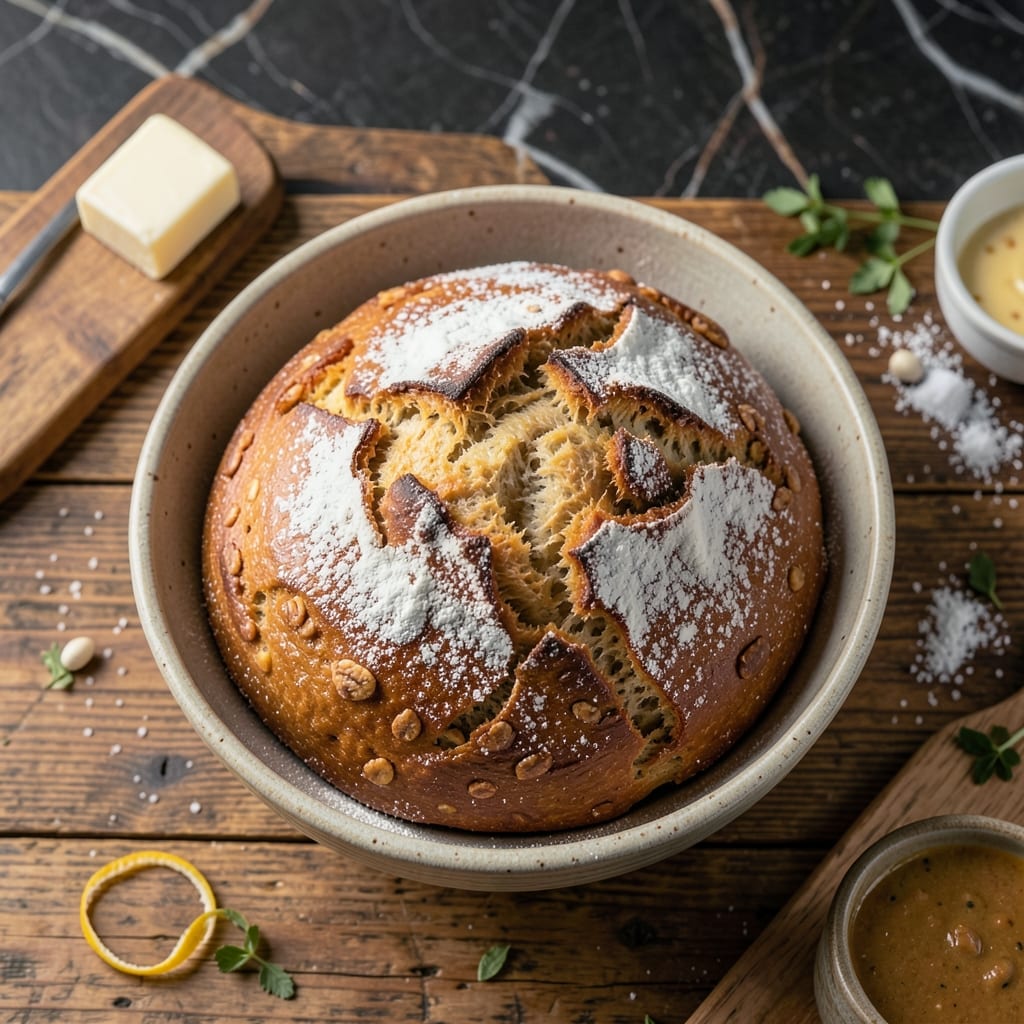
This potato bread delivers a soft crumb and rustic flavor that transforms any meal. I developed this recipe to capture the essence of traditional potato bread without the fuss of cooking fresh potatoes.
The secret lies in using potato flakes, which add moisture and subtle sweetness while keeping the process simple. The dough comes together easily, requiring just a few basic ingredients and minimal hands-on time.
You’ll end up with a loaf that’s tender on the inside, with a slightly chewy crust and a rich, buttery taste. It’s perfect for sandwiches, toast, or serving alongside soups and stews.
This bread proves that pantry staples can yield bakery-quality results. Here’s how to make it.
Ingredients for Potato Bread Recipe with Potato Flakes
Pantry staples and a few fresh items create this bakery-quality loaf with ease.
| Ingredient | Amount | Notes |
|---|---|---|
| Instant Potato Flakes 🥔 | 1 cup | Unsalted, unseasoned variety |
| Warm Water 💧 | 1 ¼ cups | About 110-115°F |
| Active Dry Yeast ⚡ | 2 ¼ tsp | One packet plus extra |
| Granulated Sugar 🍚 | 2 tbsp | Divided for yeast activation |
| Salt 🧂 | 1 ½ tsp | Fine sea salt preferred |
| Unsalted Butter 🧈 | ¼ cup | Softened to room temperature |
| Large Egg 🥚 | 1 whole | Room temperature |
| Bread Flour 🌾 | 4 ½ cups | Plus extra for dusting |
| Whole Milk 🥛 | ¼ cup | Warmed slightly |
| Honey 🍯 | 1 tbsp | Optional for sweetness |
| Olive Oil 🫒 | 1 tbsp | For greasing bowl |
The potato flakes are key here—Idahoan brand works perfectly and you’ll find them in most grocery stores near the mashed potatoes. Use the plain, unsalted variety (the seasoned kinds can throw off the flavor). For the yeast, Fleischmann’s or Red Star are reliable. Check your expiration date—old yeast won’t activate properly. The bread flour makes a difference in texture (higher protein content), but all-purpose works in a pinch.
No bread flour? All-purpose plus 1 tbsp vital wheat gluten per cup gets you close. Out of potato flakes? Instant mashed potato mix (unprepared) works too—just check for added salt. The milk can be swapped for water plus 1 tbsp powdered milk. For a richer loaf, heavy cream instead of milk adds wonderful tenderness. The honey is optional but adds subtle sweetness.
Store the flakes in a cool, dry place—they’ll keep for 18 months unopened. Once opened, use within 1 year. The bread stays fresh for 3-4 days wrapped tightly at room temperature, or freeze for up to 3 months. Slice before freezing for easy toasting later.
Why You’ll Love This Recipe
- No Fuss Mixing: I just dump the potato flakes, warm water, yeast, sugar, and salt together—no fancy steps or hard-to-find ingredients.
- Soft and Slightly Sweet: The potato flakes give this bread a tender crumb with just the right hint of sweetness from the sugar.
- Meal Prep Hero: I bake a loaf on Sunday and use it all week for sandwiches, toast, or even French toast.
- Budget Stretcher: Honestly, it costs pennies per slice, and the ingredients last for multiple batches.
Step-by-Step Instructions for Potato Bread With Potato Flakes
Here is the method. Straightforward, tested, works every time.
Step 1: Activate the Yeast and Hydrate the Potato Flakes
In a large mixing bowl, combine the 1.25 cups Warm Water, 2.25 tsp Active Dry Yeast, and 1 tbsp Granulated Sugar. Stir gently and let it sit for 5 minutes until the mixture becomes frothy and bubbly. This confirms the yeast is active and ready to work.
Add the 1 cup Instant Potato Flakes to the yeast mixture and stir until fully hydrated. The potato flakes will absorb the liquid and soften, creating a slightly thick, smooth base for your dough. This step ensures the potato flavor is evenly distributed.
Step 2: Combine Wet and Dry Ingredients
To the potato-yeast mixture, add the 0.25 cup Whole Milk, 0.25 cup Unsalted Butter, 1 whole Large Egg, remaining 1 tbsp Granulated Sugar, 1 tbsp Honey, and 1.5 tsp Salt. Mix these together until well combined.
Gradually add the 4.5 cups Bread Flour, one cup at a time, mixing until a shaggy dough forms. The dough will be sticky at this stage, but resist the urge to add more flour. The potato flakes contribute moisture, so the consistency will change as it rests.
Step 3: Knead the Dough to Smooth Perfection
Turn the dough out onto a lightly floured surface. Knead for 8-10 minutes until it becomes smooth and elastic. You’ll notice the dough transforms from sticky to silky as the gluten develops. Use extra bread flour only as needed to prevent sticking.
To test if the dough is ready, press a finger into it gently. If the dough springs back slowly, it’s properly kneaded. If it springs back quickly or doesn’t spring back at all, continue kneading for another 2-3 minutes.
Step 4: First Rise Until Doubled
Lightly grease a large bowl with the 1 tbsp Olive Oil and place the dough inside, turning once to coat all sides. Cover the bowl with a clean kitchen towel or plastic wrap and let it rise in a warm, draft-free place for 1 to 1.5 hours or until doubled in size.
You can tell the dough is ready for the next step when it no longer springs back quickly when gently pressed with a finger. This indicates that the yeast has fully activated and the dough is properly proofed.
Step 5: Shape, Second Rise, and Bake
Punch down the risen dough to release the air, then shape it into a loaf and place it into a greased 9×5-inch loaf pan. Cover again and let it rise for another 30-45 minutes until it domes slightly above the rim of the pan.
Preheat your oven to 375°F. Bake the loaf for 30-35 minutes until the top is golden brown and the internal temperature reaches 190-200°F. If the top browns too quickly, tent with aluminum foil for the remaining bake time. Remove from the pan and let it cool on a wire rack before slicing.
Pro Tips For Making Potato Bread Recipe With Potato Flakes
- Proof the Yeast: Always dissolve the active dry yeast in the warm water with a pinch of sugar first—if it doesn’t foam within 5-10 minutes, your bread won’t rise.
- Hydrate the Flakes: Soak the instant potato flakes in warm water for 5 minutes before mixing; dry flakes won’t soften properly in the dough.
- Skip Cold Water: Using water that’s too cool will kill the yeast, and too hot will scald it—aim for 105-110°F, the temp of a warm baby bottle.
- Add Extra Salt: Potato flakes can taste bland, so I add an extra ½ teaspoon of salt to balance the dough’s flavor—sounds small, but it’s noticeable.
Creative Variations of This potato bread recipe with potato flakes
Herb-Infused Version
Add 2 tbsp fresh rosemary or 1 tbsp dried rosemary to the dry ingredients for an aromatic twist. I also love mixing in 1 tbsp fresh thyme—it pairs beautifully with the buttery notes. These herbs add a sophisticated touch without complicating the process. 🌿
Cheddar and Chive
Fold in 1 cup shredded sharp cheddar and ¼ cup chopped fresh chives during the final kneading stage. The cheese melts into pockets of gooey goodness, while the chives add a mild oniony bite. This variation is perfect for grilled cheese sandwiches or serving with chili.
Whole Wheat Blend
Replace 1.5 cups bread flour with whole wheat flour for a nuttier, heartier loaf. The potato flakes keep the crumb tender despite the denser flour. I recommend King Arthur’s white whole wheat for a milder flavor that still delivers whole-grain benefits.
Sweet Potato Swirl
Swap the potato flakes for 1 cup instant sweet potato flakes and add 1 tsp cinnamon to the dough. The result is a subtly sweet loaf with a warm, spiced aroma. It’s fantastic toasted with cream cheese for breakfast or as a base for French toast. 💛
Garlic and Parmesan
Mix in 3 minced garlic cloves and ½ cup grated Parmesan for a savory, umami-packed loaf. This version is ideal for garlic bread lovers or serving alongside Italian dishes. The Parmesan adds a salty depth that complements the potato beautifully.
Honey Butter Glaze
After baking, brush the warm loaf with a mixture of 2 tbsp melted butter and 1 tbsp honey. This adds a glossy finish and extra sweetness, making it irresistible straight from the oven. I do this for special occasions—it’s a simple touch with big impact.
Nutrition Facts
Frequently Asked Questions
Can I substitute fresh potatoes for the flakes?
Yes, use 1 cup mashed fresh potatoes (about 2 medium potatoes) cooled to room temperature. Reduce water by ¼ cup since fresh potatoes add more moisture. The flavor will be similar, but texture may vary slightly.
Why did my bread turn out dense?
Dense loaves usually mean underproofed dough or too much flour. Ensure the dough doubles in size during rises and avoid adding extra flour beyond the recipe. 8-10 minutes of kneading develops proper gluten structure.
How do I store leftover bread?
Wrap cooled loaf tightly in plastic or aluminum foil at room temperature for 3-4 days. For longer storage, slice and freeze in a ziplock bag for up to 3 months. Toast slices directly from frozen.
Can I make this dough in a bread machine?
Add liquid ingredients first, then dry, with yeast on top. Use the dough setting, then shape and bake as directed. Check your machine’s capacity—this recipe fits most 1.5-2 lb models.

- Pressure Cooker Ketchup Recipe With Canned Tomatoes: Homemade Tangy Richness in Half the Time - October 30, 2026
- Pottukadalai Sweet Recipe in Tamil: Festive Roasted Gram Delight - October 30, 2026
- Potato Salad Recipe With Egg and Sour Cream: Creamy Tang With Classic Crunch - October 30, 2026