
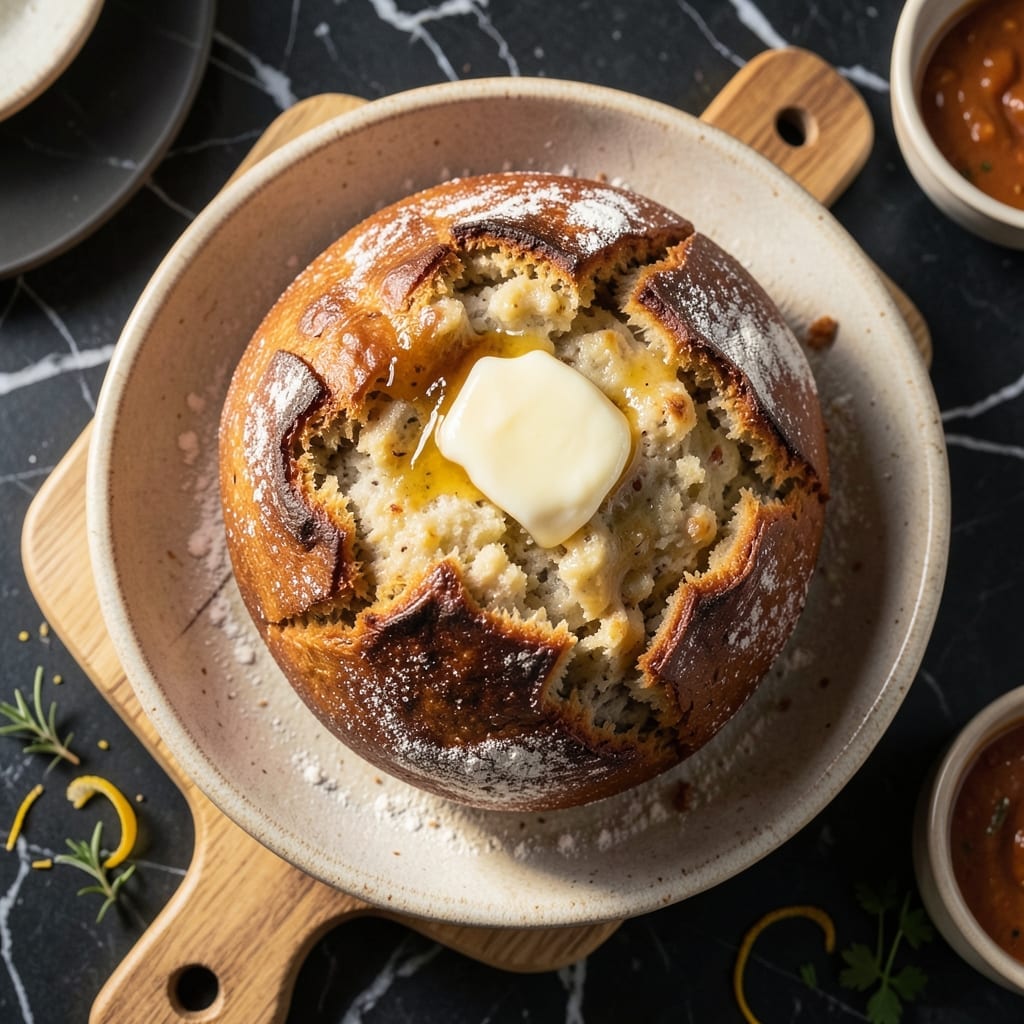
Potato Bread Recipe Without Yeast: Soft and Fluffy with Rustic Charm

Potato Bread Recipe Without Yeast: Soft and Fluffy with Rustic Charm

There’s something deeply satisfying about fresh-baked bread, especially when it’s soft, fluffy, and made without yeast. This recipe relies on baking powder for lift, creating a tender crumb with rustic charm.

Potatoes add natural sweetness and moisture, making the loaf stay fresh longer. The process is straightforward, with no waiting for dough to rise—just mix, shape, and bake.

What emerges is a golden loaf with a slightly crisp crust and a pillowy interior. It’s perfect for sandwiches, toast, or serving alongside hearty meals.

The result is a bread that feels homemade in the best way, with a subtle richness that pairs beautifully with butter or jam.

👨‍🍳
Difficulty
Medium
🌿
Diet
Vegetarian
⏱️
Total Time
30 min
🔥
Calories
Med Cal

Ingredients for Potato Bread Recipe Without Yeast

Pantry staples and a couple potatoes create this tender, no-yeast loaf with rustic charm.

Ingredient Amount Notes
All-Purpose Flour 🌾 4 cups Plus extra for dusting
Baking Powder 🧂 2 ½ tbsp Ensures proper rise
Salt 🧂 1 ½ tsp Fine sea salt preferred
Granulated Sugar 🍚 2 tbsp Balances the flavor
Russet Potatoes 🥔 2 whole Peeled, boiled, mashed
Whole Milk 🥛 1 cup Warm for best results
Unsalted Butter 🧈 ¼ cup Melted and cooled
Large Eggs 🥚 2 whole Room temperature
Olive Oil 🫒 1 tbsp For greasing the pan
Honey 🍯 1 tbsp Optional for sweetness

The potatoes are key here. Russets give you the right texture—Yukon Golds work too but are a bit waxier. Most grocery stores carry both, but I grab mine from Whole Foods when I want organic. Boil them until fork-tender, then mash while warm for the smoothest consistency. The flour should be all-purpose; bread flour is too dense for this.

No whole milk? Any plant-based milk at the same amount works, though the loaf might be slightly less rich. Short on baking powder? Double-check it’s fresh—old leaveners lose potency fast. No honey? Maple syrup or agave at the same quantity. The butter can be swapped for coconut oil, but melted butter gives the best flavor and crumb.

This bread stays fresh for about 3 days at room temperature in an airtight container. For longer storage, slice and freeze for up to 3 months. Reheat slices in a toaster or oven to restore that fresh-baked feel.

❤️

Why You’ll Love This Recipe

  • No Yeast Needed: I skip the waiting game—baking powder does all the rising in this unfussy recipe.
  • Warm, Earthy Sweetness: The mashed Russet potatoes give it a subtle richness that pairs perfectly with the hint of sugar.
  • Meal Prep Hero: I bake a loaf on Sunday and it’s still soft and fresh for sandwiches by Wednesday.
  • Pantry Staples: Honestly, I already have flour, baking powder, and potatoes on hand—no extra shopping trip required.

Step-by-Step Instructions for Potato Bread Without Yeast

This method ensures a tender crumb and golden crust every time.

Step 1: Prepare the Potato Base

Peel and dice the 2 whole Russet Potatoes, then boil them in salted water until fork-tender. This should take about 15-20 minutes depending on the size of your dice. Drain thoroughly and return them to the pot.

Mash the potatoes until completely smooth, with no lumps remaining. I use a potato ricer for the silkiest texture. Let the mashed potatoes cool to room temperature before proceeding. This step is crucial—hot potatoes can cook the eggs prematurely when combined.

Step 2: Combine Wet Ingredients

In a large mixing bowl, whisk together the 1 cup Whole Milk, 0.25 cup Unsalted Butter (melted and cooled), 2 whole Large Eggs, 2 tbsp Granulated Sugar, and 1 tbsp Honey until fully emulsified. The mixture should look pale and slightly thickened.

Gradually incorporate the cooled mashed potatoes into the wet mixture. Use a spatula to fold them in gently but thoroughly, ensuring no streaks of potato remain. The consistency should resemble a thick batter. Here’s the thing—this base provides both moisture and structure to your bread.

Step 3: Incorporate Dry Ingredients

In a separate bowl, sift together the 4 cups All-Purpose Flour, 2.5 tbsp Baking Powder, and 1.5 tsp Salt. This aerates the dry ingredients for a lighter texture. Make a well in the center and pour in the wet potato mixture.

Using a wooden spoon or dough whisk, gently fold the dry ingredients into the wet until just combined. The dough will be sticky and shaggy—that’s exactly what you want. Over-mixing at this stage develops gluten, which can make your bread dense rather than soft and fluffy.

Step 4: Shape and Proof the Dough

Turn the dough out onto a lightly floured surface. With floured hands, gently pat it into a 9×5-inch loaf shape. Avoid kneading—this isn’t traditional bread dough. The baking powder will do the leavening work during baking.

Place the shaped dough into a loaf pan greased with the 1 tbsp Olive Oil. Cover loosely with a clean kitchen towel and let it rest at room temperature for 30 minutes. You’ll notice the dough rise slightly as the baking powder begins to activate.

Step 5: Bake to Golden Perfection

Preheat your oven to 375°F. Once heated, bake the loaf on the center rack for 45-50 minutes. Rotate the pan halfway through for even browning. The bread is done when the top is deep golden brown and a toothpick inserted in the center comes out clean.

Remove from the oven and let the bread cool in the pan for 10 minutes, then transfer to a wire rack. Resist the urge to slice immediately—letting it cool for at least 1 hour allows the crumb to set properly. The result should be a loaf with a tender, moist interior and a slightly crisp, golden crust.

👨‍🍳

Pro Tips For Making Potato Bread Recipe Without Yeast

  • Boil Potatoes Whole: Keep the skins on while boiling the russets—it prevents them from turning waterlogged and gives you a drier mash, which means less flour needed later.
  • Warm the Milk: If your recipe uses milk or liquid, heat it to about 110°F before mixing. I learned this the hard way after my first loaf came out dense from cold liquid shocking the baking powder.
  • Skip Overmixing: Stir just until the dough comes together—any more and you’ll develop gluten, making the bread tough instead of tender.
  • Use Starchy Potatoes: Russets are non-negotiable here; their high starch content makes the bread light and fluffy. I tried waxy potatoes once and ended up with a gummy mess.

Common Mistakes When Making Great potato bread recipe without yeast

Overmixing the Dough

Once you add the dry ingredients, mix just until combined. Overworking the dough develops gluten, which turns your bread dense and tough. Use a wooden spoon or dough whisk and stop as soon as the flour disappears.

Skipping the Cooling Step

Hot mashed potatoes can cook the eggs prematurely, creating curdled bits in your batter. Always let the potatoes cool to room temperature before mixing with wet ingredients. I learned this the hard way with a lumpy loaf. 🔥

Patience here ensures a smooth, uniform texture throughout the bread.

Using Cold Ingredients

Cold milk or eggs can shock the dough and prevent proper rising. Bring all wet ingredients to room temperature before starting. This helps the baking powder activate evenly for a consistent rise.

Incorrect Pan Size

A 9×5-inch loaf pan is ideal. Too large, and your bread will spread thin and bake unevenly. Too small, and it may overflow or bake unevenly in the center. Grease it well with olive oil to prevent sticking.

Underbaking the Loaf

Don’t pull the bread out too soon. At 375°F, it needs 45-50 minutes to bake through fully. Test with a toothpick—it should come out clean with no wet batter clinging to it.

Slicing Too Soon

Let the bread cool in the pan for 10 minutes, then transfer to a rack. Slicing while hot causes the loaf to crumble and lose moisture. Wait at least 1 hour for the best texture. 💡

Nutrition Facts

Servings 4
Amount Per Serving
Calories 480kcal
% Daily Value
Total Fat 14g18%
Saturated Fat 7g35%
Cholesterol 115mg38%
Sodium 850mg37%
Total Carbohydrate 75g27%
Dietary Fiber 4g14%
Sugars 6g
Protein 12g24%
Percent Daily Values are based on a 2,000 calorie diet. Your daily values may be higher or lower depending on your calorie needs.

Frequently Asked Questions

1

Why does this bread not need yeast?

Baking powder provides the leavening instead. It reacts with liquid and heat to create air bubbles, giving the bread lift without requiring rising time.

2

Can I use sweet potatoes instead?

Yes, but texture may differ slightly. Sweet potatoes add more moisture and sweetness. Reduce sugar by 1 tbsp to balance flavors.

3

How do I store leftover bread?

Keep in an airtight container at room temperature for up to 3 days. For longer storage, freeze slices for up to 3 months.

4

What if my bread is dense?

Likely overmixed or underbaked. Mix dry ingredients just until combined and ensure full 45-50 minutes baking time.

★★★★★4.5(3 reviews)
Allison Carter

Potato Bread Recipe Without Yeast: Soft and Fluffy with Rustic Charm

Potato Bread Recipe Without Yeast: Soft and Fluffy with Rustic Charm

There’s something deeply satisfying about fresh-baked bread, especially when it’s soft, fluffy, and made without yeast. This recipe relies on baking powder for lift, creating a tender crumb with rustic charm.

Potatoes add natural sweetness and moisture, making the loaf stay fresh longer. The process is straightforward, with no waiting for dough to rise—just mix, shape, and bake.

What emerges is a golden loaf with a slightly crisp crust and a pillowy interior. It’s perfect for sandwiches, toast, or serving alongside hearty meals.

The result is a bread that feels homemade in the best way, with a subtle richness that pairs beautifully with butter or jam.

👨‍🍳
Difficulty
Medium
🌿
Diet
Vegetarian
⏱️
Total Time
30 min
🔥
Calories
Med Cal

Ingredients for Potato Bread Recipe Without Yeast

Pantry staples and a couple potatoes create this tender, no-yeast loaf with rustic charm.

Ingredient Amount Notes
All-Purpose Flour 🌾 4 cups Plus extra for dusting
Baking Powder 🧂 2 ½ tbsp Ensures proper rise
Salt 🧂 1 ½ tsp Fine sea salt preferred
Granulated Sugar 🍚 2 tbsp Balances the flavor
Russet Potatoes 🥔 2 whole Peeled, boiled, mashed
Whole Milk 🥛 1 cup Warm for best results
Unsalted Butter 🧈 ¼ cup Melted and cooled
Large Eggs 🥚 2 whole Room temperature
Olive Oil 🫒 1 tbsp For greasing the pan
Honey 🍯 1 tbsp Optional for sweetness

The potatoes are key here. Russets give you the right texture—Yukon Golds work too but are a bit waxier. Most grocery stores carry both, but I grab mine from Whole Foods when I want organic. Boil them until fork-tender, then mash while warm for the smoothest consistency. The flour should be all-purpose; bread flour is too dense for this.

No whole milk? Any plant-based milk at the same amount works, though the loaf might be slightly less rich. Short on baking powder? Double-check it’s fresh—old leaveners lose potency fast. No honey? Maple syrup or agave at the same quantity. The butter can be swapped for coconut oil, but melted butter gives the best flavor and crumb.

This bread stays fresh for about 3 days at room temperature in an airtight container. For longer storage, slice and freeze for up to 3 months. Reheat slices in a toaster or oven to restore that fresh-baked feel.

❤️

Why You’ll Love This Recipe

  • No Yeast Needed: I skip the waiting game—baking powder does all the rising in this unfussy recipe.
  • Warm, Earthy Sweetness: The mashed Russet potatoes give it a subtle richness that pairs perfectly with the hint of sugar.
  • Meal Prep Hero: I bake a loaf on Sunday and it’s still soft and fresh for sandwiches by Wednesday.
  • Pantry Staples: Honestly, I already have flour, baking powder, and potatoes on hand—no extra shopping trip required.

Step-by-Step Instructions for Potato Bread Without Yeast

This method ensures a tender crumb and golden crust every time.

Step 1: Prepare the Potato Base

Peel and dice the 2 whole Russet Potatoes, then boil them in salted water until fork-tender. This should take about 15-20 minutes depending on the size of your dice. Drain thoroughly and return them to the pot.

Mash the potatoes until completely smooth, with no lumps remaining. I use a potato ricer for the silkiest texture. Let the mashed potatoes cool to room temperature before proceeding. This step is crucial—hot potatoes can cook the eggs prematurely when combined.

Step 2: Combine Wet Ingredients

In a large mixing bowl, whisk together the 1 cup Whole Milk, 0.25 cup Unsalted Butter (melted and cooled), 2 whole Large Eggs, 2 tbsp Granulated Sugar, and 1 tbsp Honey until fully emulsified. The mixture should look pale and slightly thickened.

Gradually incorporate the cooled mashed potatoes into the wet mixture. Use a spatula to fold them in gently but thoroughly, ensuring no streaks of potato remain. The consistency should resemble a thick batter. Here’s the thing—this base provides both moisture and structure to your bread.

Step 3: Incorporate Dry Ingredients

In a separate bowl, sift together the 4 cups All-Purpose Flour, 2.5 tbsp Baking Powder, and 1.5 tsp Salt. This aerates the dry ingredients for a lighter texture. Make a well in the center and pour in the wet potato mixture.

Using a wooden spoon or dough whisk, gently fold the dry ingredients into the wet until just combined. The dough will be sticky and shaggy—that’s exactly what you want. Over-mixing at this stage develops gluten, which can make your bread dense rather than soft and fluffy.

Step 4: Shape and Proof the Dough

Turn the dough out onto a lightly floured surface. With floured hands, gently pat it into a 9×5-inch loaf shape. Avoid kneading—this isn’t traditional bread dough. The baking powder will do the leavening work during baking.

Place the shaped dough into a loaf pan greased with the 1 tbsp Olive Oil. Cover loosely with a clean kitchen towel and let it rest at room temperature for 30 minutes. You’ll notice the dough rise slightly as the baking powder begins to activate.

Step 5: Bake to Golden Perfection

Preheat your oven to 375°F. Once heated, bake the loaf on the center rack for 45-50 minutes. Rotate the pan halfway through for even browning. The bread is done when the top is deep golden brown and a toothpick inserted in the center comes out clean.

Remove from the oven and let the bread cool in the pan for 10 minutes, then transfer to a wire rack. Resist the urge to slice immediately—letting it cool for at least 1 hour allows the crumb to set properly. The result should be a loaf with a tender, moist interior and a slightly crisp, golden crust.

👨‍🍳

Pro Tips For Making Potato Bread Recipe Without Yeast

  • Boil Potatoes Whole: Keep the skins on while boiling the russets—it prevents them from turning waterlogged and gives you a drier mash, which means less flour needed later.
  • Warm the Milk: If your recipe uses milk or liquid, heat it to about 110°F before mixing. I learned this the hard way after my first loaf came out dense from cold liquid shocking the baking powder.
  • Skip Overmixing: Stir just until the dough comes together—any more and you’ll develop gluten, making the bread tough instead of tender.
  • Use Starchy Potatoes: Russets are non-negotiable here; their high starch content makes the bread light and fluffy. I tried waxy potatoes once and ended up with a gummy mess.

Common Mistakes When Making Great potato bread recipe without yeast

Overmixing the Dough

Once you add the dry ingredients, mix just until combined. Overworking the dough develops gluten, which turns your bread dense and tough. Use a wooden spoon or dough whisk and stop as soon as the flour disappears.

Skipping the Cooling Step

Hot mashed potatoes can cook the eggs prematurely, creating curdled bits in your batter. Always let the potatoes cool to room temperature before mixing with wet ingredients. I learned this the hard way with a lumpy loaf. 🔥

Patience here ensures a smooth, uniform texture throughout the bread.

Using Cold Ingredients

Cold milk or eggs can shock the dough and prevent proper rising. Bring all wet ingredients to room temperature before starting. This helps the baking powder activate evenly for a consistent rise.

Incorrect Pan Size

A 9×5-inch loaf pan is ideal. Too large, and your bread will spread thin and bake unevenly. Too small, and it may overflow or bake unevenly in the center. Grease it well with olive oil to prevent sticking.

Underbaking the Loaf

Don’t pull the bread out too soon. At 375°F, it needs 45-50 minutes to bake through fully. Test with a toothpick—it should come out clean with no wet batter clinging to it.

Slicing Too Soon

Let the bread cool in the pan for 10 minutes, then transfer to a rack. Slicing while hot causes the loaf to crumble and lose moisture. Wait at least 1 hour for the best texture. 💡

Nutrition Facts

Servings 4
Amount Per Serving
Calories 480kcal
% Daily Value
Total Fat 14g18%
Saturated Fat 7g35%
Cholesterol 115mg38%
Sodium 850mg37%
Total Carbohydrate 75g27%
Dietary Fiber 4g14%
Sugars 6g
Protein 12g24%
Percent Daily Values are based on a 2,000 calorie diet. Your daily values may be higher or lower depending on your calorie needs.

Frequently Asked Questions

1

Why does this bread not need yeast?

Baking powder provides the leavening instead. It reacts with liquid and heat to create air bubbles, giving the bread lift without requiring rising time.

2

Can I use sweet potatoes instead?

Yes, but texture may differ slightly. Sweet potatoes add more moisture and sweetness. Reduce sugar by 1 tbsp to balance flavors.

3

How do I store leftover bread?

Keep in an airtight container at room temperature for up to 3 days. For longer storage, freeze slices for up to 3 months.

4

What if my bread is dense?

Likely overmixed or underbaked. Mix dry ingredients just until combined and ensure full 45-50 minutes baking time.

★★★★★4.5(3 reviews)
Allison Carter