
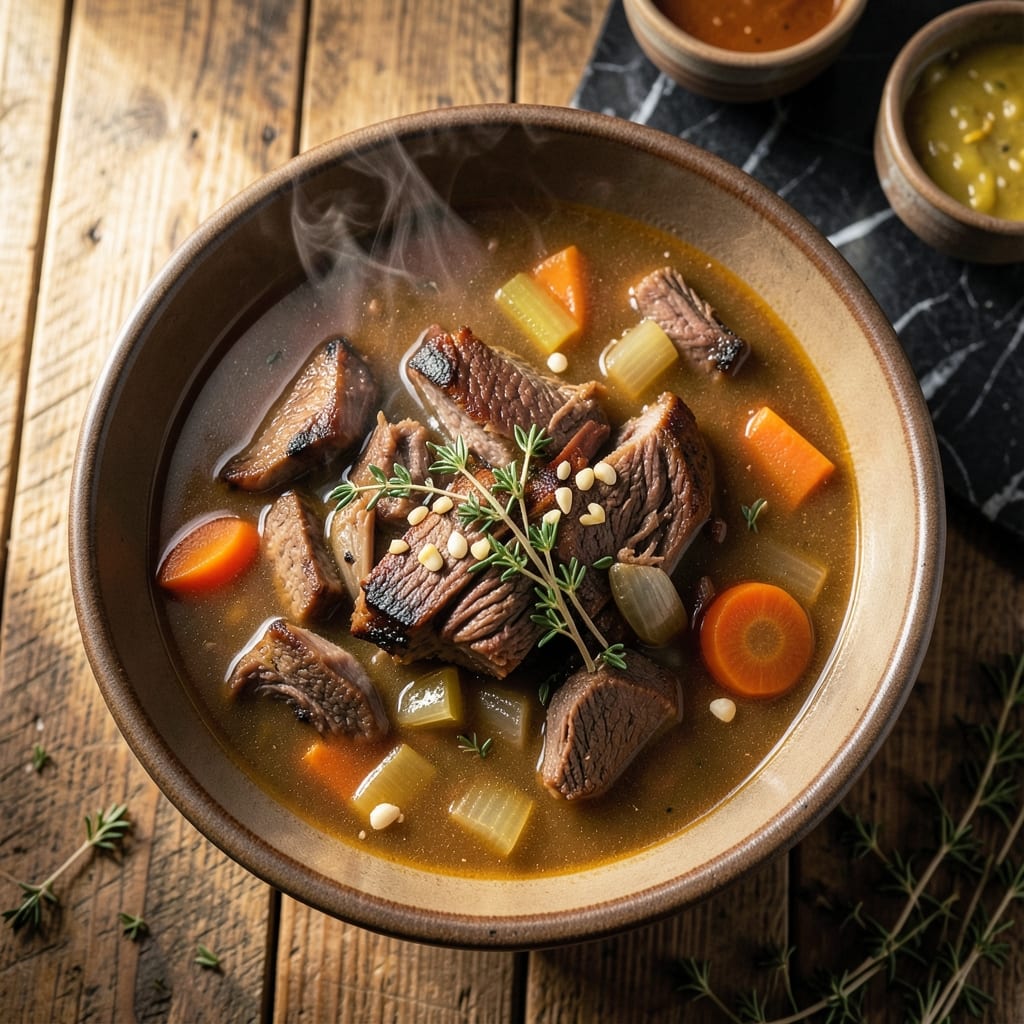
Transform leftover prime rib into a tender, deeply flavorful soup that rivals the original meal. This method builds rich beefy layers through slow simmering and careful seasoning.
The key is using the bone with any remaining meat for maximum flavor extraction. Vegetables and herbs add depth while keeping the process simple and straightforward.
You’ll end up with a hearty soup featuring tender beef pieces, soft vegetables, and a robust broth that tastes like it simmered all day.
Perfect for cold evenings or when you want to stretch a special meal into two. Here’s how to make this comforting classic.
Ingredients for Prime Rib Soup Recipe Pioneer Woman
Leftover prime rib gets a second life with hearty veggies and rich broth. Simple but impressive.
| Ingredient | Amount | Notes |
|---|---|---|
| Prime Rib Bone with Remaining Meat 🥩 | 2 lb | Leftover from roast, with some meat attached |
| Yellow Onion 🧅 | 1 whole | Medium-sized, diced |
| Carrots 🥕 | 3 whole | Peeled and chopped into chunks |
| Celery Stalks 🌿 | 3 whole | Chopped, leaves included if fresh |
| Garlic Cloves 🧄 | 4 cloves | Minced for deeper flavor |
| Fresh Thyme Sprigs 🍃 | 3 whole | Plus extra for garnish |
| Fresh Rosemary Sprig 🌿 | 1 whole | Stem removed, chopped |
| Bay Leaves 🍃 | 2 whole | Dried, for broth depth |
| Beef Stock 💧 | 8 cups | Low-sodium preferred for control |
| Tomato Paste 🍅 | 2 tbsp | For umami richness |
| Worcestershire Sauce 🫒 | 1 tbsp | Adds savory complexity |
| Kosher Salt 🧂 | 1 tsp | Adjust to taste after simmering |
| Black Pepper 🌶️ | 1 tsp | Freshly ground for best flavor |
| Olive Oil 🫒 | 2 tbsp | For sautéing vegetables |
The bone-in prime rib leftovers are non-negotiable here—they’re the flavor engine. Butcher shops or Whole Foods often sell just the bones if you didn’t roast one yourself. Look for pieces with a decent amount of meat still clinging (that’s the good stuff). Fresh thyme and rosemary make a difference, so grab them from the produce section instead of the dried aisle if you can. The carrots and celery? Any size works, just keep the chunks even so they cook at the same rate.
No prime rib bone? Use beef short ribs or oxtail for similar depth. Swap fresh herbs for dried at one-third the amount. Out of beef stock? Better Than Bouillon paste plus water gets you close—just go easy on the salt. The tomato paste can be skipped in a pinch, but it adds a richness you’ll miss. Trader Joe’s sells it in convenient tubes if you don’t want to open a can for just two tablespoons.
This soup tastes even better the next day once the flavors meld. Stores in the fridge for 4-5 days or freezes for 3 months. Reheat gently to keep the beef tender (don’t boil). Leftovers make great lunches—just add a splash of water if it thickens too much.
Why You’ll Love This Recipe
- One Pot Wonder: I just toss the prime rib bone with the meaty bits, carrots, celery, and onion into a single pot—minimal cleanup, maximum flavor.
- Deep, Meaty Richness: The bone simmers all day, filling my kitchen with that unbeatable beefy aroma that makes everyone hover near the stove.
- Feeds a Hungry Crowd: Between us, this soup stretches a holiday prime rib into a whole new meal that satisfies a table full of people.
- Budget Stretcher: Honestly, it’s the best way to use every last bit of that expensive roast—no waste, just another delicious meal.
Step-by-Step Instructions for Prime Rib Soup
Here’s the method I swear by for extracting every last bit of flavor from that leftover bone.
Step 1: Roast the Prime Rib Bone for Depth
Preheat your oven to 400°F. Place the 2 lb Prime Rib Bone with Remaining Meat on a baking sheet and roast for 20-25 minutes until the exposed meat and bone are deeply browned. This caramelization builds the rich, beefy foundation that defines this soup.
You’ll notice the kitchen fills with an incredible aroma—that’s the Maillard reaction working its magic. Don’t skip this step; raw bones make a flat, dull broth. The meat attached to the bone will become tender enough to fall off during simmering.
Step 2: Sauté the Aromatic Base
Heat the 2 tbsp Olive Oil in a large pot over medium-high heat. Add the diced 1 whole Yellow Onion, chopped 3 whole Carrots, and chopped 3 whole Celery Stalks. Cook for 8-10 minutes, stirring occasionally, until the vegetables soften and begin to caramelize at the edges.
Add the minced 4 cloves Garlic Cloves and cook for 1 minute until fragrant. Stir in the 2 tbsp Tomato Paste and cook for 2 minutes more—this deepens its flavor and prevents a raw taste in the finished soup.
Step 3: Build and Simmer the Broth
Add the roasted Prime Rib Bone with Remaining Meat to the pot along with the 8 cups Beef Stock, 1 tbsp Worcestershire Sauce, 3 whole Fresh Thyme Sprigs, chopped 1 whole Fresh Rosemary Sprig, and 2 whole Bay Leaves. Bring to a boil, then reduce heat to maintain a gentle simmer.
Partially cover and simmer for 2-3 hours, skimming off any foam that rises to the surface. You’ll know it’s ready when the broth is deep amber and the meat on the bone falls apart with a gentle nudge. This slow extraction is what creates that luxurious mouthfeel.
Step 4: Strain and Season the Soup
Remove the bone and strain the broth through a fine-mesh sieve into a clean pot. Discard the solids, but pick off any tender meat from the bone and set it aside. Return the broth to a simmer and add the reserved meat back in—this gives you those promised tender bites in every spoonful.
Stir in the 1 tsp Kosher Salt and 1 tsp Black Pepper, then taste and adjust seasoning as needed. The flavors should be balanced and robust, with the beef taking center stage. Serve hot with crusty bread for dipping.
Pro Tips For Making Prime Rib Soup Recipe Pioneer Woman
- Roast the Bones: Toss those prime rib bones in a 400°F oven for 20-30 minutes first—it caramelizes the meat and fat, giving your soup a depth of flavor you just can’t get from the stovetop alone. I learned this the hard way after making bland broth for years.
- Sear the Veggies: Don’t just dump the onion, carrots, and celery in raw; sauté them in the same pot after browning the bones for 5-7 minutes until they start to soften. Sounds like an extra step, but it actually changes the outcome by building a rich base.
- Skim the Foam: As the soup simmers, skim off the gray foam that rises to the top with a spoon. Steer clear of leaving it in—it’ll make your broth cloudy and bitter. My grandmother swore by this, and she was right.
- Use Cold Water: Start your bones and veggies in cold water, then bring it to a gentle boil. Hot water from the start can make the meat tough and the broth murky. I was skeptical until I tried it—now it’s non-negotiable.
Storing and Reheating This prime rib soup recipe pioneer woman
Refrigerator Storage
Let this soup cool to room temperature within 2 hours of cooking. Transfer to airtight containers—I prefer glass for better heat retention. It keeps beautifully in the fridge at 40°F or below for up to 4-5 days. The flavors actually deepen overnight. ❄️
Freezer Storage
For longer storage, portion the soup into freezer-safe containers or heavy-duty quart-sized bags. Leave 1-inch headspace to prevent expansion damage. It freezes well for up to 3 months without losing quality. I always label with the date to track freshness.
Stovetop Reheating
This is my preferred method for best texture. Reheat gently over medium-low heat in a saucepan, stirring occasionally. Add a splash of water or beef stock if it thickens too much. Bring to 165°F and simmer for 5-10 minutes. 🔥
Microwave Reheating
For quick meals, microwave individual portions in 1-minute intervals at 70% power. Stir between intervals and cover with a damp paper towel. Stop when reaching 165°F. Avoid boiling to keep the beef tender.
Nutrition Facts
Frequently Asked Questions
Can I use a slow cooker instead of the stovetop?
Combine all ingredients except seasoning in your slow cooker and cook on low for 8 hours or high for 4-5 hours. Season to taste before serving for the best results.
What if I don’t have a prime rib bone?
Beef short ribs or oxtail work wonderfully as substitutes. Use 2 lbs of these cuts and follow the same roasting and simmering process for rich, meaty flavor.
How do I know when the soup is done?
The broth should be deep amber and the meat should fall apart easily when nudged. This usually takes 2-3 hours of gentle simmering. Don’t rush it—slow cooking extracts maximum flavor.
Can I add other vegetables?
Yes! Potatoes, mushrooms, or parsnips complement the flavors beautifully. Add them during the last 30 minutes of simmering so they don’t turn mushy.

- Protein Pudding Recipe With Sugar Free Pudding: High-Protein Creamy Indulgence - November 3, 2026
- Progresso Recipe Starters Creamy Parmesan Basil Cooking Sauce: Rich Herb-Infused Base for Pasta and More - November 3, 2026
- Pudding Recipe With Egg Yolks: Silky Smooth Custard in Minutes - November 3, 2026