
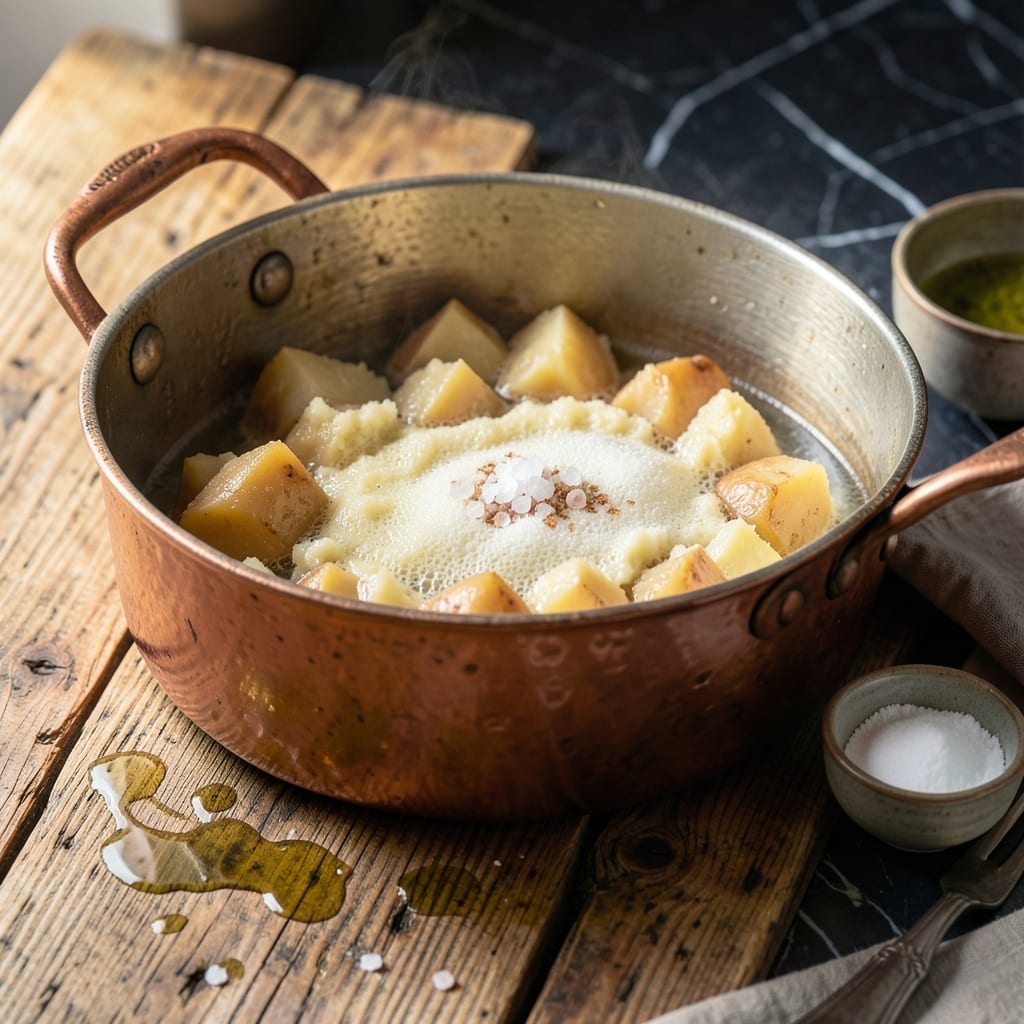
This traditional Irish spirit carries centuries of history in every drop, crafted from humble potatoes with simple, time-honored methods. The process transforms ordinary spuds into a smooth, potent beverage that defined rural Irish life.
I’ve refined this approach to stay true to its roots while ensuring clarity for modern makers. Fermentation and distillation require patience, but the reward is a traditional drink with deep cultural significance.
The result is a clear, strong spirit with earthy notes from the potatoes, best enjoyed responsibly. Every step honors the craftsmanship of generations past.
Where legal, this method delivers authentic poteen with minimal equipment and maximum respect for tradition.
Ingredients for Poteen Recipe Potato
Simple, traditional ingredients transform humble potatoes into an authentic Irish spirit with deep cultural roots.
| Ingredient | Amount | Notes |
|---|---|---|
| Russet Potatoes 🥔 | 10 lb | Peeled and roughly chopped |
| Granulated Sugar 🍚 | 2 cups | For fermentation activation |
| Active Dry Yeast 🍞 | 2 tbsp | Bread yeast preferred |
| Water 💧 | 4 cups | Filtered, room temperature |
| Citric Acid 🧪 | 1 tsp | Food-grade, for pH balance |
| Diamond Crystal Kosher Salt 🧂 | 1 tsp | Dissolved in water |
The potatoes are the foundation—Russet is ideal for their high starch content, which yields a clean, neutral spirit. Source from a reputable grocery store or farmers market for the freshest, unblemished spuds. Avoid waxy varieties like red or Yukon Gold, as they produce a cloudy, less refined final product. The yeast should be fresh and active; check the expiration date and proof it first if unsure.
No Russets? Yukon Gold in a pinch (though the result will be less smooth). Swap granulated sugar for turbinado or demerara at a 1:1 ratio for a subtle molasses note. If you lack citric acid, lemon juice at double the amount works, but monitor the pH carefully. The water must be chlorine-free—use filtered or spring water to avoid killing the yeast.
Store potatoes in a cool, dark place until ready to use—do not refrigerate. Once fermented, the mash must be processed within 24 hours to prevent spoilage. The final spirit keeps indefinitely in a sealed glass container, away from light.
Why You’ll Love This Recipe
- Minimal Effort: I just toss Russet potatoes with sugar, yeast, and water—no fancy techniques, just let the fermentation do the work.
- Unexpected Depth: The citric acid gives it this tangy kick that balances the sweetness perfectly, way more interesting than plain potatoes.
- Batch Friendly: I make a big jar and it keeps for weeks, so I can pull it out for impromptu gatherings or a quiet night in.
Step-by-Step Instructions for Poteen From Potatoes
This authentic method transforms humble potatoes into a smooth traditional spirit with proper fermentation and distillation.
Step 1: Prepare and Cook the Russet Potatoes
Peel the 10 lb Russet Potatoes and cut them into rough 2-inch chunks. I leave the pieces slightly uneven for varied texture, but avoid overly small bits that might burn. Rinse the chunks under cold water to remove excess starch, which can create off-flavors during fermentation.
Place the potatoes in a large pot and cover with the 4 cups Water. Add the 1 tsp Diamond Crystal Kosher Salt and bring to a boil over high heat. Reduce to a simmer and cook for 25-30 minutes until the potatoes are fork-tender but not mushy. Drain thoroughly, reserving the cooking liquid.
Step 2: Create the Fermentation Mash
While the potatoes are still hot, transfer them to a sanitized fermentation vessel. I use a food-grade plastic bucket with an airlock for this purpose. Add the 2 cups Granulated Sugar and 1 tsp Citric Acid to the potatoes and stir vigorously to break them down into a rough mash.
Let the mixture cool to room temperature (70-80°F)—this is critical. If the mash is too hot, it will kill the yeast. I place the vessel in a cool water bath to speed this process. Once cooled, stir in the 2 tbsp Active Dry Yeast until fully dissolved. The mixture should begin bubbling within 30-60 minutes, signaling active fermentation.
Step 3: Ferment the Mash to Completion
Cover the vessel with a clean cloth and secure the airlock. Store in a dark place at 68-72°F for 5-7 days. You’ll notice vigorous bubbling during the first 24-48 hours as the yeast consumes the sugars, which gradually slows as fermentation progresses.
Check the mash daily. It’s ready when the bubbling has nearly stopped and the liquid appears relatively clear with a layer of sediment at the bottom. The mash should have a clean, slightly sweet aroma with no sour or off odors. If it smells sharp or vinegary, fermentation has gone too long.
Step 4: Distill the Fermented Mash
Strain the fermented liquid through a fine mesh into your still, leaving the potato solids behind. I recommend discarding the first ½ cup of distillate (the “foreshots”), as it contains methanol and other undesirable compounds. Collect the “hearts” portion, which comes over at 173-190°F, in a clean glass container.
Discard the distillate once the temperature exceeds 200°F (the “tails”), as it contains fusel oils that create harsh flavors. The finished poteen should be clear with a smooth, slightly sweet potato character. Age in glass for at least 2 weeks to allow flavors to mellow before enjoying.
Pro Tips For Making Poteen Recipe Potato
- Use Starchy Russets: Russets break down best for poteen mash—other potatoes leave it gluey or thin. I learned this the hard way after a batch with red potatoes turned to paste.
- Activate Yeast First: Bloom the yeast in warm (not hot) water with a pinch of sugar for 5-10 minutes until foamy. Skip this and you risk a stalled fermentation that ruins the whole batch.
- Watch the Temperature: Keep your mash between 70-80°F during fermentation—any hotter kills the yeast, any colder puts it to sleep. A thermometer is non-negotiable here.
- Add Citric Acid Last: Stir in the citric acid right before distillation to prevent it from inhibiting the yeast early on. Sounds weird, but it works—your yield will be noticeably better.
Dietary Considerations for This poteen recipe potato
Gluten-Free Naturally
This traditional spirit is inherently gluten-free since it’s made exclusively from potatoes, sugar, and yeast. No grains are involved, making it safe for those with celiac disease or gluten sensitivity. Always verify your yeast is gluten-free certified if you have severe allergies.
Vegan and Vegetarian
The recipe contains no animal products, making it fully vegan and vegetarian. The fermentation process uses simple plant-based ingredients, so it aligns perfectly with these dietary lifestyles. The potatoes provide all the necessary starches for conversion to alcohol.
Low-Carb Considerations
While potatoes are high in carbohydrates, the distillation process removes most carbs from the final product. The finished poteen contains minimal residual sugars, but the mash itself is very carb-dense. Those on strict keto diets should consume the final spirit in moderation. 💪
Allergen Information
The primary allergen concern is yeast. If you have a yeast allergy, this recipe isn’t suitable. The potatoes and sugar pose no common allergen risks. Always sanitize equipment thoroughly to prevent cross-contamination with other allergens.
Sugar Content Notes
The 2 cups Granulated Sugar is fully consumed during fermentation, converting to alcohol. The final product contains no added sugars. However, those monitoring blood sugar should be aware that distilled spirits can still impact glucose levels. 💡
Alcohol Content
The finished poteen typically reaches 40-60% ABV depending on your distillation process. This high alcohol content means it should be consumed responsibly. The strength can be adjusted by diluting with water, but this may affect flavor.
Nutrition Facts
Frequently Asked Questions
What type of potatoes work best?
Russets are ideal due to their high starch content. Avoid waxy varieties like red or Yukon Gold, as they produce a cloudier spirit.
How long does fermentation take?
Typically 5-7 days at 68-72°F. You’ll see vigorous bubbling for the first 24-48 hours, slowing as fermentation completes.
Do I need special equipment for distillation?
A food-grade still is required, along with a thermometer to monitor temperatures between 173-190°F for the best quality.
Can I skip the aging process?
You can, but aging for at least 2 weeks in glass helps mellow the flavors significantly for a smoother finish.

- Pudding Recipe With Egg Yolks: Silky Smooth Custard in Minutes - November 3, 2026
- Pudding Pops Recipe Cook and Serve: Silky Frozen Treats Without the Machine - November 3, 2026
- Protein Ice Cream Recipe Blender Xanthan Gum: Ultra Creamy Texture Without the Guilt - November 3, 2026