
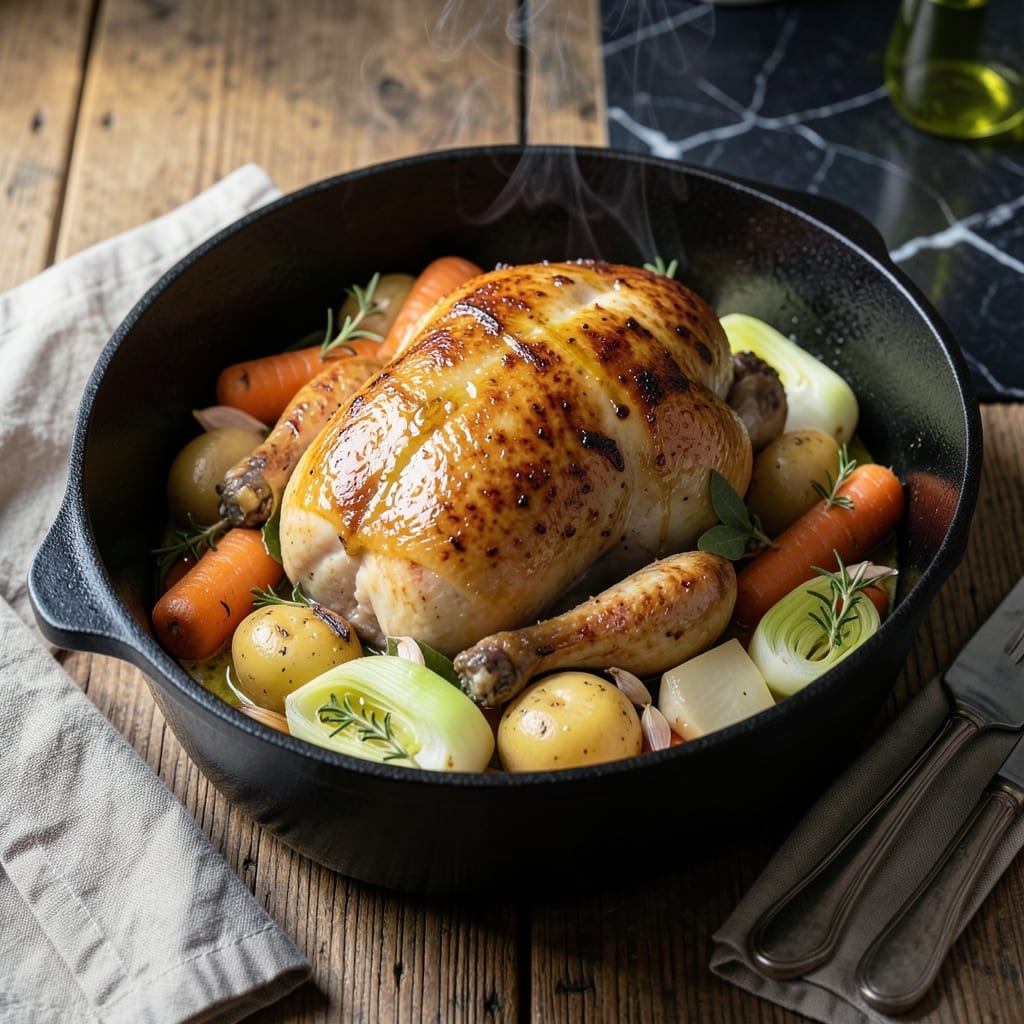
There’s something timeless about a classic French farmhouse dish that brings warmth to any table. This one-pot creation delivers comfort in every bite, with tender chicken, hearty vegetables, and a rich, aromatic broth.
Jamie Oliver’s approach simplifies tradition without sacrificing depth. The slow simmer coaxes out layers of flavor, turning simple ingredients into a meal that feels like a hug on a cold evening.
The beauty lies in its simplicity—chicken, root vegetables, and herbs come together effortlessly. The result is a dish that’s rustic yet refined, perfect for feeding a crowd or enjoying as leftovers.
Serve it straight from the pot for a meal that’s as nourishing as it is delicious.
Ingredients for Poule Au Pot Recipe Jamie Oliver
A rustic French classic built on simple, hearty ingredients for soul-warming comfort in every bowl.
| Ingredient | Amount | Notes |
|---|---|---|
| Whole Chicken 🍗 | 3 lb | Free-range preferred, cut into pieces |
| Carrots 🥕 | 4 whole | Peeled, cut into large chunks |
| Leeks 🧅 | 2 whole | White and light green parts only, sliced |
| Celery Root 🌿 | 1 whole | Peeled, diced into 1-inch cubes |
| Turnips 🥔 | 2 whole | Peeled, quartered |
| Garlic Cloves 🧄 | 6 cloves | Unpeeled, smashed |
| Fresh Thyme 🍃 | 4 pieces | Sprigs, plus extra for garnish |
| Fresh Bay Leaves 🌿 | 2 pieces | Whole leaves |
| Butter 🧈 | 2 tbsp | Unsalted, for richness |
| Olive Oil 🫒 | 2 tbsp | Extra-virgin for depth |
| Sea Salt 🧂 | 1 tbsp | Adjust to taste |
| Black Peppercorns 🌶️ | 1 tsp | Lightly crushed |
| Water 💧 | 6 cups | Enough to cover the chicken |
| Dry White Wine 🍷 | ½ cup | Optional, for acidity |
| Fresh Parsley 🌿 | ¼ cup | Chopped, for garnish |
The chicken should be high-quality—free-range or organic ensures better flavor and texture. Whole Foods or local butchers often carry suitable birds. For the vegetables, choose firm, fresh specimens; farmers markets are ideal for celery root and leeks. Don’t skip the thyme and bay leaves—they’re essential for that authentic French farmhouse aroma worth the extra minute.
No white wine? A splash of apple cider vinegar or lemon juice mimics the acidity. Celery root can be swapped for parsnips or additional turnips. Fresh herbs are preferred, but dried thyme at one-third the amount works in a pinch. If using store-bought stock instead of water, opt for low-sodium to control seasoning.
This dish improves overnight as flavors meld. Refrigerate leftovers in an airtight container for up to 4 days. The broth also freezes beautifully for 3 months—perfect for quick soups or sauces later. Reheat gently to preserve the chicken’s tenderness.
Why You’ll Love This Recipe
- One Pot Wonder: I just toss the whole chicken and veggies in, let it simmer, and the oven does the rest—minimal fuss, maximum flavor.
- Rich and Rustic: The leeks and celery root soak up the juices, making every bite ridiculously good and hearty.
- Feeds the Crew: Honestly, it’s my go-to for Sunday dinner, with enough leftovers for lunches all week.
- Budget Stretcher: A whole chicken and seasonal veggies mean I’m serving up a filling meal without breaking the bank.
Step-by-Step Instructions for Poule Au Pot
This classic technique delivers tender chicken and vegetables steeped in rich, aromatic broth.
Step 1: Sear the Chicken and Aromatics
Heat the 2 tbsp Olive Oil and 2 tbsp Butter in a large Dutch oven over medium-high heat. Pat the 3 lb Whole Chicken pieces dry, then season with the 1 tbsp Sea Salt and 1 tsp Black Peppercorns.
Sear the chicken in batches for 4-5 minutes per side until deep golden brown. Remove and set aside. In the same pot, add the 4 whole Carrots, 2 whole Leeks, 1 whole Celery Root, and 2 whole Turnips, cooking for 5 minutes until lightly caramelized.
Step 2: Build the Flavor Base
Add the 6 cloves Garlic Cloves, 4 pieces Fresh Thyme, and 2 pieces Fresh Bay Leaves to the pot. Pour in the 0.5 cup Dry White Wine and deglaze, scraping up any browned bits from the bottom.
Let the wine reduce by half, about 3-4 minutes. This step concentrates the flavors and creates a foundation for the broth. The aroma should be rich and fragrant, signaling that the base is ready for the liquid.
Step 3: Simmer to Perfection
Return the chicken to the pot and pour in the 6 cups Water until the chicken is just covered. Bring to a boil, then reduce heat to low and cover. Simmer gently for 45-50 minutes until the chicken is fork-tender and the vegetables are soft.
Avoid a rolling boil—this can toughen the chicken. Instead, maintain a gentle simmer where small bubbles occasionally break the surface. The broth should be aromatic and deeply flavored by this point.
Step 4: Finish and Serve
Remove the chicken and vegetables with a slotted spoon and arrange on a serving platter. Skim any excess fat from the broth, then ladle some of the hot liquid over the chicken and vegetables.
Garnish with the 0.25 cup Fresh Parsley for a pop of color and freshness. Serve the remaining broth on the side for dipping crusty bread. This dish is best enjoyed family-style, with everyone sharing from the same platter.
Pro Tips For Making Poule Au Pot Recipe Jamie Oliver
- Simmer, Don’t Boil: Keep the liquid at a gentle simmer—tiny bubbles, not a rolling boil. I learned this the hard way when my first poule au pot turned the chicken rubbery.
- Tie the Chicken: Truss the bird tightly with kitchen twine before adding it to the pot. It keeps the shape intact and makes sure everything cooks evenly.
- Skim the Foam: For the first 15 minutes, skim off the gray foam that rises to the surface. Sounds tedious, but it actually changes the outcome, giving you a clear, clean broth.
- Add Root Veggies Late: Toss in the carrots, turnips, and celery root during the last 45 minutes. They’ll soften perfectly without turning to mush.
Make-Ahead Tips for Leftovers
Overnight Flavor Boost
This dish tastes even better the next day as the flavors meld together. I always make it in the morning and let it sit in the fridge for 8-12 hours before reheating. The chicken becomes more tender, and the broth deepens in richness. 💡
Vegetable Prep Ahead
You can peel and chop all the vegetables—carrots, leeks, celery root, and turnips—the night before. Store them in airtight containers in the fridge to save time. Just give them a quick rinse before cooking to remove any excess starch.
Broth for Later
The broth is liquid gold for future meals. Strain and store it in the fridge for up to 4 days or freeze for 3 months. I use mason jars for easy portioning. It’s perfect for soups, risottos, or even cooking grains.
Chicken Storage
If you’re not serving the chicken immediately, remove it from the broth and store it separately in the fridge. This prevents it from becoming overly soft. Keep it in an airtight container for up to 4 days, and reheat gently in the broth to restore moisture. ❄️
Make-Ahead Assembly
You can fully assemble the dish up to the simmering step, then refrigerate it overnight. The next day, bring it to a simmer and cook as directed. This is a great option for meal prepping or hosting stress-free dinners.
Reheating Tips
Reheat the chicken and vegetables in the broth over medium-low heat for 10-15 minutes until warmed through. If the broth has thickened, add a splash of water or stock to loosen it. Avoid boiling to keep the chicken tender.
Nutrition Facts
Frequently Asked Questions
Can I use chicken thighs instead of a whole chicken?
Bone-in, skin-on thighs work beautifully and stay juicy. Use about 6-8 thighs for this recipe. They’ll add rich flavor to the broth and hold up well during the 45-50 minutes simmer.
What if I don’t have a Dutch oven?
A heavy pot with a tight lid is key. A stockpot or deep oven-safe casserole dish works if it’s large enough. Just ensure it retains heat well at low temperature. Avoid thin pots—they can scorch the broth.
Can I add other vegetables to the pot?
Yes, hearty options like parsnips or potatoes work well. Add them during the last 20 minutes of simmering so they don’t turn mushy. Avoid delicate veggies like zucchini—they’ll overcook.
How do I know when the chicken is done?
The internal temperature should reach 165°F. The meat should pull away from the bone easily. If it shreds with a fork, it’s ready. Overcooking can dry it out, so check at 45 minutes.

- Pudding Recipe With Egg Yolks: Silky Smooth Custard in Minutes - November 3, 2026
- Pudding Pops Recipe Cook and Serve: Silky Frozen Treats Without the Machine - November 3, 2026
- Protein Ice Cream Recipe Blender Xanthan Gum: Ultra Creamy Texture Without the Guilt - November 3, 2026