
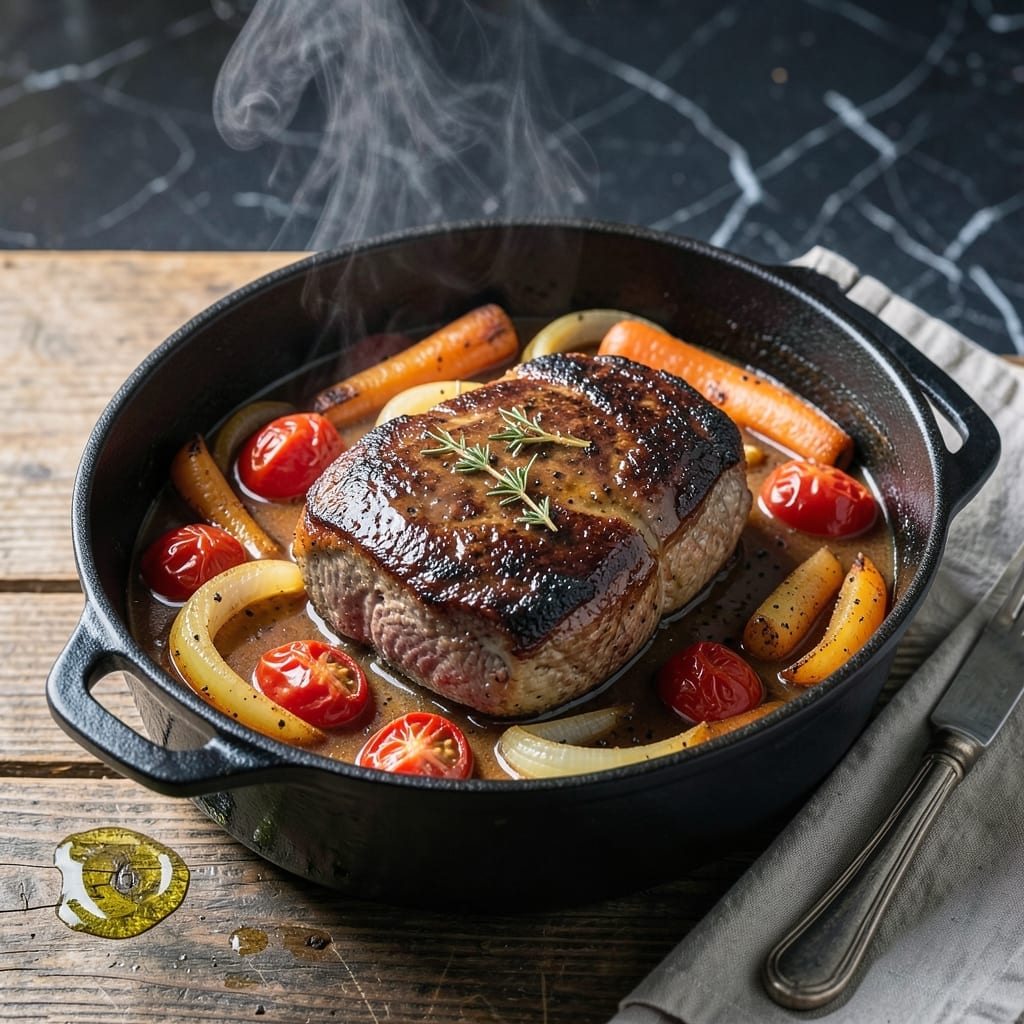
There’s nothing like the aroma of a slow-braised pot roast filling the kitchen on a Sunday afternoon. This classic method transforms tough cuts into tender, fall-apart meat with rich, garden-fresh flavor.
I developed this recipe after years of testing different approaches in my small Boston kitchen. The tomatoes add a bright acidity that cuts through the richness of the beef, creating a perfectly balanced dish.
The secret is patience. Low and slow cooking allows the connective tissue to break down completely, resulting in that signature melting texture that makes pot roast so irresistible.
Serve with mashed potatoes or crusty bread to soak up the flavorful juices. This is comfort food at its finest.
Ingredients for Pot Roast Recipe with Tomatoes
Slow-braised chuck roast meets garden-fresh tomatoes for irresistibly tender results.
| Ingredient | Amount | Notes |
|---|---|---|
| Chuck Roast 🥩 | 3 lb | Well-marbled, trimmed of excess fat |
| Kosher Salt 🧂 | 2 tsp | Diamond Crystal preferred for even distribution |
| Black Pepper 🌶️ | 1 ½ tsp | Freshly cracked for optimal aroma |
| Olive Oil 🫒 | 2 tbsp | Extra-virgin for high-heat searing |
| Yellow Onion 🧅 | 2 whole | Medium, cut into thick wedges |
| Carrots 🥕 | 3 whole | Large, peeled and cut into chunks |
| Celery Stalks 🌿 | 3 whole | Cut into 2-inch pieces |
| Garlic Cloves 🧄 | 6 cloves | Smashed for robust flavor |
| Canned San Marzano Tomatoes 🍅 | 28 oz | Whole peeled, with juices reserved |
| Tomato Paste 🍅 | 2 tbsp | Double-concentrated for depth |
| Red Wine 🍷 | 1 ½ cups | Dry variety like Cabernet Sauvignon |
| Beef Stock 🥣 | 2 cups | Low-sodium preferred for control |
| Fresh Thyme Sprigs 🌿 | 4 whole | Stems intact for easy removal |
| Fresh Rosemary Sprig 🌿 | 1 whole | About 6 inches long |
| Bay Leaf 🍃 | 2 pieces | Dried, for aromatic depth |
The chuck roast is non-negotiable here—look for good marbling at Whole Foods or Costco. The fat renders down during the long cook, creating that signature unctuous texture. San Marzano tomatoes (canned, not fresh) are the gold standard for their sweet, low-acid profile. Trader Joe’s and Eataly stock them consistently. For the wine, any dry red works, but avoid anything too oaky—it can overpower the dish.
No red wine? Substitute 1.5 cups beef stock plus 1 tbsp balsamic vinegar. Fresh herbs are ideal, but dried thyme and rosemary at one-third the amount will suffice. If you can’t find San Marzano tomatoes, Muir Glen organic are a solid backup. For gluten-free, ensure your beef stock is certified—most store-bought versions contain wheat.
The roast can be prepped a day ahead—sear, then refrigerate before braising. Leftovers keep for 4 days in the fridge or 3 months frozen. The flavor actually improves overnight, so make extra for sandwiches or tacos the next day.
Why You’ll Love This Recipe
- Set It & Forget: I just brown the chuck roast, toss in onions and tomatoes, and let the oven do the heavy lifting.
- Tomato-Rich Depth: The slow-cooked tomatoes melt into the meat, creating a sauce so rich I skip gravy.
- Feeds the Gang: One pot serves my whole family, with enough for sandwiches the next day.
- Budget Hero: Chuck roast stays affordable, and a few pantry staples turn it into a meal that feels fancy.
Step-by-Step Instructions for Pot Roast With Tomatoes
Master the technique for fall-apart tender meat with rich tomato depth and aromatic complexity.
Step 1: Season and Sear the Chuck Roast
Pat the 3 lb chuck roast completely dry with paper towels. This ensures a proper sear rather than steaming the surface. Season generously on all sides with the 2 tsp kosher salt and 1.5 tsp black pepper. I press the seasoning in firmly so it adheres during searing.
Heat the 2 tbsp olive oil in a Dutch oven over medium-high heat until it shimmers. Sear the roast for 4-5 minutes per side until deeply browned. You’ll know it’s ready to flip when it releases easily from the pot. Transfer to a plate and set aside.
Step 2: Sauté the Aromatic Base
In the same pot, add the 2 whole yellow onion wedges, 3 whole carrots, and 3 whole celery stalks. Cook over medium heat for 5-6 minutes, stirring occasionally, until the vegetables begin to soften and develop color.
Add the 6 cloves garlic cloves and cook for 1 minute until fragrant. Stir in the 2 tbsp tomato paste and cook for 2 minutes, which deepens its flavor and prevents a raw taste in the finished dish.
Step 3: Deglaze and Build the Braising Liquid
Pour in the 1.5 cups red wine to deglaze the pot, scraping up all the browned bits from the bottom with a wooden spoon. These fond bits are packed with flavor. Let the wine reduce by half, about 3-4 minutes.
Add the 28 oz canned San Marzano tomatoes (with their juices), 2 cups beef stock, 4 whole fresh thyme sprigs, 1 whole fresh rosemary sprig, and 2 pieces bay leaf. Stir to combine, then return the seared chuck roast to the pot, nestling it into the liquid.
Step 4: Braise to Melting Tenderness
Bring the liquid to a simmer, then reduce the heat to low. Cover the pot and let it braise for 2.5 to 3 hours, turning the roast every 45 minutes to ensure even cooking. The meat is done when it shreds easily with a fork.
As it cooks, the liquid should gently bubble, and the tomatoes will break down, creating a rich, velvety sauce. If the liquid reduces too much, add a splash of water or stock to maintain the level. The aroma will fill your kitchen with a deep, savory scent.
Step 5: Rest and Serve
Once the chuck roast is tender, transfer it to a cutting board and tent loosely with foil. Let it rest for 15 minutes to allow the juices to redistribute. Skim any excess fat from the surface of the sauce if desired, then serve the roast with the vegetables and sauce spooned over the top.
The meat should pull apart with minimal effort, and the sauce will be thick, rich, and infused with the bright acidity of the tomatoes. This is comfort food elevated to its highest form.
Pro Tips For Making Pot Roast Recipe With Tomatoes
- Brown the Meat Well: I learned this the hard way—sear the chuck roast in olive oil until deeply browned on all sides, about 4-5 minutes per side. That crust adds serious flavor to the finished dish.
- Salt the Roast Early: Pat the chuck roast dry, then salt it generously with kosher salt at least 30 minutes before cooking. It draws out moisture initially, but then reabsorbs for juicier meat.
- Don’t Rush the Onions: After removing the roast, cook the yellow onions in the same pot until soft and golden, about 8-10 minutes. Raw onions will make the sauce taste harsh.
- Add Tomatoes Last: Stir in the tomatoes only after the onions are caramelized—this prevents them from turning bitter. A 10-minute head start on the onions makes a real difference.
Serving Suggestions for This Recipe
Classic Pairings
Serve this dish with creamy mashed potatoes to soak up the rich sauce. The starchy base balances the acidity of the tomatoes beautifully. I always make extra potatoes for leftovers.
Bread Options
A crusty Italian loaf or sourdough works wonders for mopping up every last bit of the braising liquid. Warm the bread in the oven for 5 minutes before serving for best results. 🥖
For a Boston touch, try brown bread from a local bakery—its molasses notes complement the savory beef.
Fresh Sides
A simple green salad with a light vinaigrette cuts through the richness. I like arugula with lemon and olive oil, just like Nonna taught me.
Vegetable Additions
Roasted Brussels sprouts or asparagus add a nice textural contrast. Toss with 1 tbsp olive oil and roast at 400°F for 20 minutes.
Wine Pairing
The same dry red wine you used in the recipe makes a perfect pairing. A Cabernet Sauvignon or Chianti enhances the tomato depth. I always pour a glass while cooking too. 🍷
Nutrition Facts
Frequently Asked Questions
What cut of beef works best for this?
Chuck roast is ideal for its marbling and connective tissue. It breaks down beautifully during the 2.5-3 hour braise. Avoid lean cuts like sirloin—they won’t get as tender.
Can I use fresh tomatoes instead of canned?
Fresh tomatoes can work but require peeling and may need extra cooking to break down. Canned San Marzano are preferred for their consistent sweetness and low acidity.
How do I know when it’s done?
The meat should pull apart easily with a fork. If it resists, give it another 30 minutes and check again. The internal temp should reach 195-205°F for perfect tenderness.

- Pudding Recipe With Egg Yolks: Silky Smooth Custard in Minutes - November 3, 2026
- Pudding Pops Recipe Cook and Serve: Silky Frozen Treats Without the Machine - November 3, 2026
- Protein Ice Cream Recipe Blender Xanthan Gum: Ultra Creamy Texture Without the Guilt - November 3, 2026